
Fireplace warmth for Broomfield homes, no venting required.
Zone heat and real-flame ambiance for Broomfield's newer subdivisions and townhomes—no chimney, no gas line, no permit headaches. Find the right unit and connect with a trusted local dealer.
Every Project Starts From One of These Five Situations
The practical choice for a fast-growing suburb.
Broomfield sits at 5,348 feet between Denver and Boulder, in climate zone 5B with a heating season on par with a long, cold Front Range winter and winter lows averaging 19°F. That's real heating demand, but it's a different situation than a mountain town—most Broomfield homes, from Anthem Ranch to the Broadlands to Wildgrass, are newer, tightly built, and already heated by efficient forced-air furnaces. An electric fireplace fits that reality: it adds visible warmth and ambiance to a specific room without asking the house for a new heating system.
Electric service here comes from Public Service Company of Colorado (Xcel Energy) in most of the city and United Power in some outlying zip codes, at roughly $0.15 to $0.16 per kWh. Because electric units need nothing more than a standard or dedicated circuit, they sidestep the two biggest obstacles other fuels run into locally: HOA covenants in Broomfield's many planned communities that restrict wood-burning appliances, and the venting and gas-line work a masonry retrofit or new gas fireplace requires. Wood and pellet stoves are genuinely uncommon here—Broomfield is a dense, master-planned suburb, not a forested foothills community, and most subdivisions were built without chimneys or wood-stove infrastructure in the first place.
Three steps. No salesperson until you're ready.
Tell us about your project
Your zip code, your situation, and the fuel you're leaning toward—or let the answers point you to one.
See what's actually available
The brands dealers within 100 miles genuinely carry—real options, never a catalog mirage.
Get your dealer & Project Guide
A trusted local dealer, plus the free Project Guide & Parts List that names every component of the job.
Frequently Asked Questions
How much does an electric fireplace installation cost in Broomfield?
A wall-mounted or freestanding plug-in electric fireplace typically runs $300 to $1,000 installed in Broomfield, since most units simply need a standard outlet and mounting hardware. Built-in linear electric fireplaces or inserts that require wall framing, a recessed opening, and a dedicated 20-amp circuit run higher—usually $1,500 to $4,500 depending on the size of the unit and whether an electrician needs to run new wiring from the panel. Homes in newer Broomfield subdivisions with modern electrical panels are usually on the lower end of that range.
Do I need a permit to install an electric fireplace in Broomfield?
It depends on the scope. A plug-in electric fireplace that uses an existing outlet generally doesn't require a permit. If your installer needs to add a dedicated circuit or do any wiring modifications, that electrical work falls under the City and County of Broomfield Building Division, which is unusual in Colorado as a consolidated city-county government handling both city and county permitting in one office. Most local electricians and hearth dealers pull this permit as part of the job, so you typically don't have to coordinate it yourself.
Will an electric fireplace actually heat my room during a cold Broomfield winter?
Most electric fireplaces put out about 5,000 BTUs (roughly 1,500 watts), which is enough to noticeably warm a bedroom, den, or basement family room—useful supplemental heat on the mornings when Broomfield's average winter low sits around 19°F. It's not a whole-home solution, and it isn't meant to be; think of it as zone heat layered on top of your furnace, not a replacement for one. If you're trying to heat an open great room or offset gas heating costs across a larger space, a gas fireplace or insert is usually the better fit.
Electric vs. gas fireplace—which makes more sense for my Broomfield home?
Gas fireplaces put out real heat (20,000+ BTUs on many models) and work well as a primary or near-primary heat source in a main living area—a meaningful advantage on the coldest Front Range nights. Electric units trade heat output for simplicity: no venting, no gas line, no annual gas appliance service, and installation that often takes a few hours instead of a full day. For a secondary bedroom, a basement, a rental property, or a townhome where running new gas line isn't practical, electric is usually the more sensible call. Many Broomfield homeowners run gas in the main living room and add an electric unit in a bedroom or office for supplemental warmth and ambiance.
Can I install an electric fireplace in a Broomfield condo or townhome with an HOA?
In most cases, yes—this is one of the strongest reasons electric fireplaces do well in Broomfield's densely built subdivisions. Because there's no chimney, no exterior venting, and no open flame, electric units typically fall outside the wood-burning and gas-appliance restrictions written into many local HOA covenants. That said, some HOAs still have rules about exterior wall penetrations for built-in units or require design review for anything visible from outside, so it's worth a quick check with your HOA before a built-in installation—plug-in freestanding units almost never require approval.
What's the difference between a plug-in electric fireplace, a built-in unit, and an insert?
A plug-in electric fireplace is a freestanding or wall-mounted unit you can install yourself in an afternoon—no electrician needed if you're using an existing outlet. A built-in electric fireplace is recessed into a wall or custom cabinetry for a cleaner, more permanent look, usually wired to a dedicated circuit. An electric insert is sized to slide into an existing masonry fireplace opening, which is a common option in Broomfield's older homes and gives you the look of a working fireplace without burning anything. A local dealer can tell you which option fits your specific opening or wall.
How much will an electric fireplace add to my electric bill?
A typical 1,500-watt electric fireplace costs roughly $0.22 to $0.24 per hour to run at full heat, based on current residential rates from Public Service Company of Colorado (about $0.1505/kWh) and United Power (about $0.1575/kWh), depending on which utility serves your address. Running it a few hours an evening through a Broomfield winter adds up to somewhere in the $20 to $40 monthly range for typical use—most units also let you run the flame effect alone, with the heater off, for close to zero added cost.
Why don't more Broomfield homes have wood or pellet stoves?
It comes down to how Broomfield was built. Most of the city's homes are in newer, master-planned subdivisions constructed without wood-burning chimneys, and many HOA covenants here restrict or prohibit wood-burning appliances outright. There's also a practical air-quality piece: wildfire smoke is already a recurring summer and fall concern along the Front Range, and added wood smoke isn't something most local covenants or neighbors want. If you're set on burning wood, cutting permits are available through the Arapaho-Roosevelt National Forest for $5 to $20 per cord during the May-through-October season—but that's a drive into the foothills, not a Broomfield backyard project. For heat and ambiance inside city limits, gas and electric are the far more common and practical routes.
Does it matter which electric utility serves my Broomfield address?
It affects your operating cost slightly more than your installation. Public Service Company of Colorado (Xcel Energy) serves most of Broomfield at around $0.1505 per kWh, while United Power serves some outlying zip codes at closer to $0.1575 per kWh—a small difference that mostly matters if you plan to run the fireplace's heater for long stretches each day. Installation requirements don't change based on utility; either way, your electrician or dealer will size the circuit to your panel and the unit's wattage.
Can I put a TV above my fireplace?
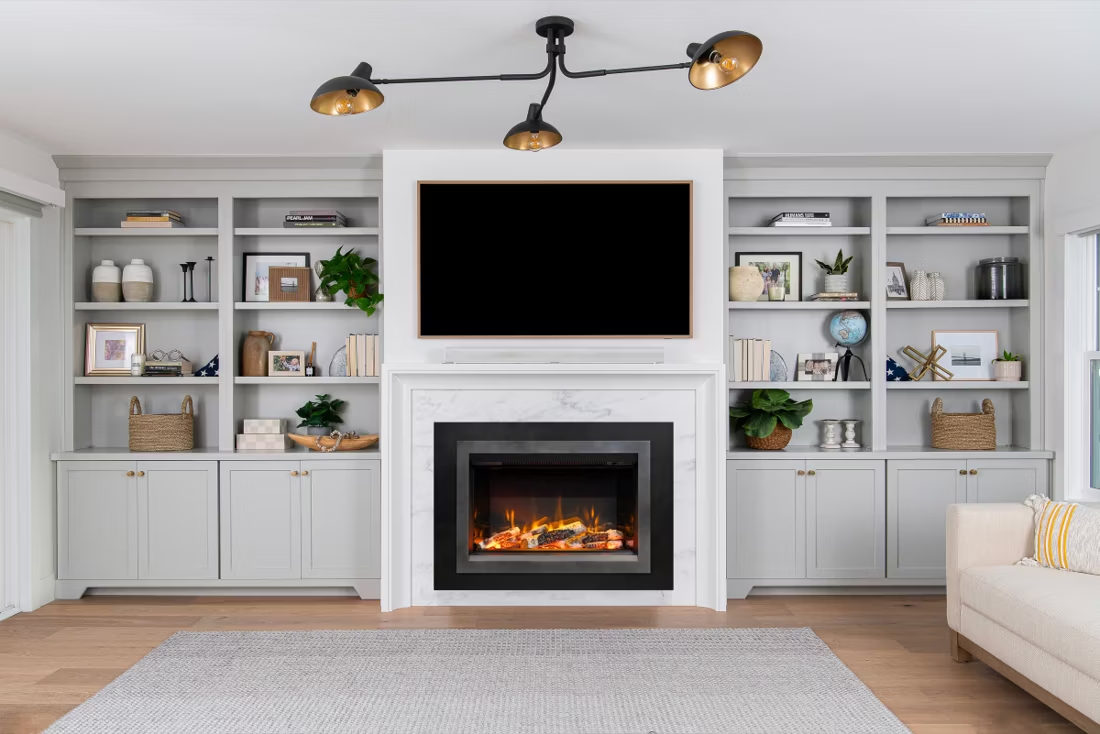
Yes—with an asterisk. Fireplaces are hot and TVs don't like heat. Either put a mantel between them to deflect rising warmth, or choose a fireplace with heat-management technology that creates a cool zone on the wall above—the wall stays around 125 degrees, barely warm, while the room still gets full heat. If you like clean lines and don't want a mantel, heat management is the answer.
Do electric fireplaces actually produce heat?
Yes—most put out around 4,800–5,000 BTUs from a standard outlet, which comfortably warms a bedroom, office, or den as a comfort-zone heater. What they won't do is carry a whole house the way wood, gas, or pellet can. Think of electric as ambiance-first with honest supplemental heat: flames on with no heat in July, flames plus warmth in January.
Does a fireplace add value to my home?
On average, a fireplace adds back to the home about the same amount you spent installing it. Add the monthly savings from heating the rooms you actually use instead of the whole house—often hundreds of dollars a year—and the value case is strong before you even count what a fire does for how your family uses the room.
Can I install a fireplace myself?
If you're putting a fire in your house on purpose, it's best to work with an expert. Unless you're genuinely experienced in framing, gas line, vent pipe, and the national code on clearances to combustibles, have a professional do it—and ideally the same company that sells you the fireplace, so warranty, service, and liability all live under one roof.
Nearby Dealers
Hearth shops serving Broomfield and the surrounding area. Every listing shows whether it is a WhyFire partner, a dealer we have verified as authorized for the brands we recommend, or a local business carrying hearth products. No manufacturer pays for placement. How we verify dealers →
Spa Brokers
Paramount Remodeling Co
Spa Brokers
Distinctive Mantel Designs
Aria Custom Design
Rio Grande Co.
Fireplace And Grill Experts - Service Only
Spa Brokers (Corporate)
Outdoor Kitchen Dist. Inc
Spa Brokers V
Proud Souls Barbecue & Provisions
Electric Service in Broomfield
An electric fireplace's heater draws about 1,500 watts—pennies per hour at local rates.
Public Service Co Of Colorado
United Power, Inc
Find your electric fireplace fit in Broomfield.
Tell us a bit about your home and we'll put together a free Project Guide & Parts List for your electric fireplace project—then connect you with a trusted local dealer who can install it right.
Find Your Fireplace →