
No Chimney? No Problem in Berkley.
Zero-clearance, no-vent heat and ambiance for Berkley homes, condos, and townhomes—sized right and installed by a local pro, not a big-box guess.
Every Project Starts From One of These Five Situations
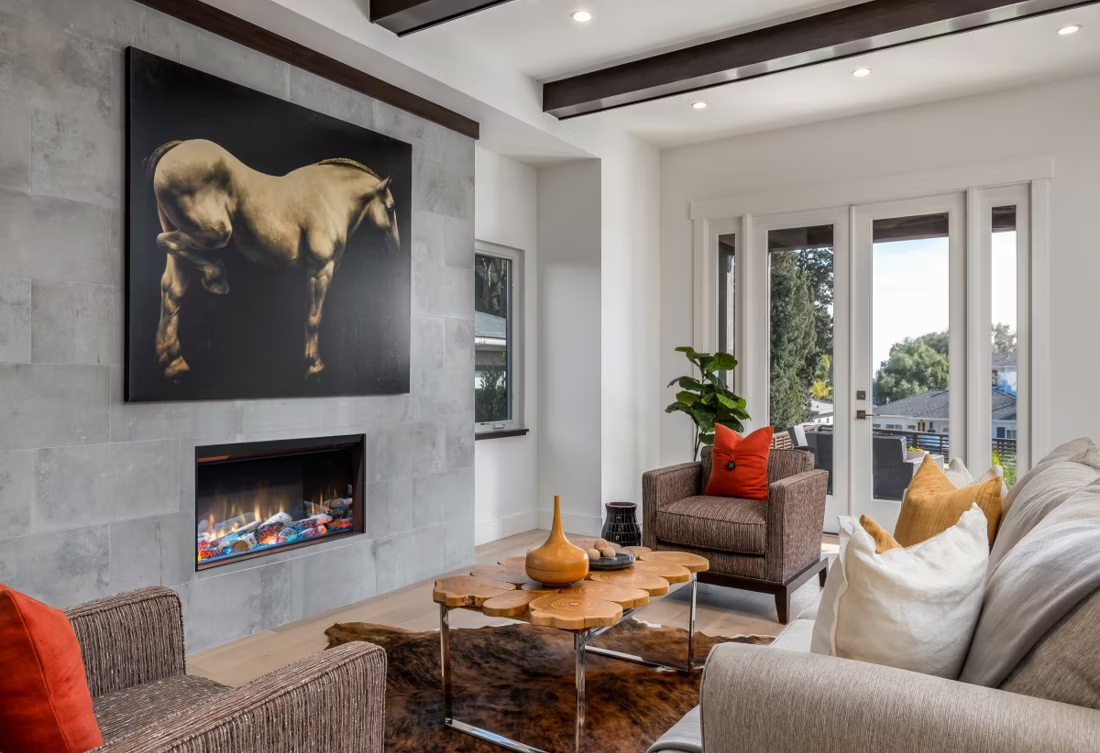
Electric heat that fits Berkley's condos, townhomes, and code restrictions alike.
Berkley sits at 5,212 feet on the northern edge of the Denver metro, straddling the Westminster and unincorporated Adams County line. Winters here are real—average lows around 17°F and a winter heating season that stretches long and stays solidly cold—but they're Front Range winters: sunny days, cold nights, and a lot of housing stock that's condos, townhomes, and homes without a masonry chimney or existing gas line. That's exactly the gap electric fireplaces fill.
Adams County also sits inside the Denver metro's ozone and PM2.5 nonattainment area, and winter inversions along the Front Range regularly trigger high pollution advisories. New wood-burning installations are largely off the table here for that reason, and pellet appliances see little demand as a result. Electric units produce zero indoor or outdoor emissions, need no flue or venting, and run on the same Public Service Co of Colorado (Xcel Energy) account that already powers the rest of the house—which is a big part of why electric has become a standard, practical choice in Berkley rather than a novelty.
Three steps. No salesperson until you're ready.
Tell us about your project
Your zip code, your situation, and the fuel you're leaning toward—or let the answers point you to one.
See what's actually available
The brands dealers within 100 miles genuinely carry—real options, never a catalog mirage.
Get your dealer & Project Guide
A trusted local dealer, plus the free Project Guide & Parts List that names every component of the job.
Frequently Asked Questions
How much does an electric fireplace installation cost in Berkley?
Plug-in electric inserts and stoves that slide into an existing fireplace opening typically run $300 to $1,200 installed, since there's no venting or gas line to run. Built-in, wall-recessed linear units—the kind commonly used in Berkley's newer townhome and condo remodels—run higher, often $1,500 to $4,000, mostly for framing, a dedicated 120V or 240V circuit, and finish work around the unit. A licensed electrician or your installing dealer will confirm whether your existing circuit can handle the draw or whether a new one is needed.
Do I need a permit for an electric fireplace in Berkley?
A simple plug-in insert generally doesn't require a permit. A built-in unit wired to a new dedicated circuit usually does, since it involves electrical work—that permit runs through the Adams County Building Division for unincorporated areas near 80221, or the City of Westminster Building Division if your address falls within city limits near 80003. Most hearth dealers installing built-in units coordinate this permit as part of the job rather than leaving you to pull it yourself.
Will an electric fireplace actually heat my Berkley home, or is it just for looks?
Most electric fireplaces put out 4,600 to 5,000 BTUs from a 1,500-watt heater, enough to comfortably warm a single room—a bedroom, den, or basement rec room—but not a whole house. With Berkley's winters running long and staying solidly cold for much of the year, electric units work best as zone heat: something you run in the room you're actually using while your furnace handles the rest of the house, rather than a primary heat source for a cold January night.
What does it cost to run an electric fireplace on my Xcel Energy bill?
Public Service Co of Colorado bills residential electric at roughly $0.1505 per kWh. A typical 1,500-watt unit running 5 hours a day uses about 7.5 kWh, or roughly $1.13 a day—around $34 a month if you run it every evening. Most owners use theirs a few nights a week rather than daily, which brings the real-world cost down well below that. It's inexpensive to operate compared to central electric resistance heat, but costs more per BTU than a gas insert would on the same utility account.
Can I put an electric insert into my existing wood-burning fireplace?
Yes, and it's one of the more common projects for older Berkley homes near the Westminster line that still have a masonry wood-burning fireplace. An electric insert slides into the existing opening, uses no chimney or venting, and is often the simplest path forward given that new wood-burning installations face restrictions in the Denver metro's nonattainment area. Fit varies by firebox opening size and depth, so a local dealer will measure before recommending a specific model.
What happens to my electric fireplace during a power outage?
It won't run—electric fireplaces need continuous power for both the heater and the flame effect, so during a Public Service Co of Colorado outage you'll have neither heat nor ambiance from it. That's the main tradeoff against gas, where a standing-pilot unit can keep working. For Berkley homeowners who want backup heat during winter storms, a lot of local dealers will walk you through pairing an electric unit for daily zone heat with a gas or propane option elsewhere in the home.
Why aren't wood or pellet stoves recommended for Berkley?
Adams County sits inside the Denver metro's ozone and particulate nonattainment area, and winter temperature inversions along the Front Range trap wood smoke close to the ground on high pollution advisory days. New wood-burning fireplace and stove installations are largely restricted as a result, and pellet appliances see very little local demand—most regional pellet brands like Bear Mountain and Lignetics get sold into mountain and rural Colorado markets rather than metro Denver suburbs like Berkley. Gas and electric are the two fuels that make practical sense here, which is why this page focuses on electric.
Electric vs. gas fireplace—which is right for my Berkley home?
Gas delivers real heat output—often 20,000+ BTUs from a direct-vent unit—and can be installed with a standing pilot that works during a power outage, but it requires a gas line and venting, both of which add real cost if your home doesn't already have them. Electric needs neither, installs in an afternoon in most cases, and produces zero emissions, but it's a supplemental heat source, not a furnace replacement, and it goes dark in an outage right along with the rest of your house. Public Service Co of Colorado serves both gas and electric accounts in Berkley, so the choice usually comes down to whether your home already has a gas line and how much real heat output you need from the unit.
What's the difference between an electric fireplace, insert, and stove?
An electric fireplace is typically a built-in, wall-recessed unit—often a linear design—installed during a remodel or new construction. An electric insert is sized to slide into an existing masonry or factory-built fireplace opening, which is common in Berkley's older housing stock. An electric stove is a freestanding cabinet unit that sits on the floor like a wood stove but plugs into a standard outlet, a good fit for a room with no existing fireplace at all. All three use the same basic heating element and LED flame technology—the decision mostly comes down to what opening or wall space you're working with.
Do electric fireplaces actually produce heat?
Yes—most put out around 4,800–5,000 BTUs from a standard outlet, which comfortably warms a bedroom, office, or den as a comfort-zone heater. What they won't do is carry a whole house the way wood, gas, or pellet can. Think of electric as ambiance-first with honest supplemental heat: flames on with no heat in July, flames plus warmth in January.
Can I put a TV above my fireplace?
Yes—with an asterisk. Fireplaces are hot and TVs don't like heat. Either put a mantel between them to deflect rising warmth, or choose a fireplace with heat-management technology that creates a cool zone on the wall above—the wall stays around 125 degrees, barely warm, while the room still gets full heat. If you like clean lines and don't want a mantel, heat management is the answer.
How much should I budget for a fireplace?
For an average home—covering the fireplace, the vent pipe, and basic installation—a budget between $3,900 and $5,500 gives you a lot of options across wood, gas, and pellet. By the time you add finish work, gas line, and electrical, the average complete installation lands between $5,000 and $12,000 all-in. In a remodel or new build, a good rule is to put about 2.5% of the total project cost toward the fireplace.
Can I install a fireplace myself?
If you're putting a fire in your house on purpose, it's best to work with an expert. Unless you're genuinely experienced in framing, gas line, vent pipe, and the national code on clearances to combustibles, have a professional do it—and ideally the same company that sells you the fireplace, so warranty, service, and liability all live under one roof.
Nearby Dealers
Hearth shops serving Berkley and the surrounding area. Every listing shows whether it is a WhyFire partner, a dealer we have verified as authorized for the brands we recommend, or a local business carrying hearth products. No manufacturer pays for placement. How we verify dealers →
Spa Brokers
Spa Brokers
Distinctive Mantel Designs
Aria Custom Design
Rio Grande Co.
Outdoor Kitchen Dist. Inc
Fireplace And Grill Experts - Service Only
Proud Souls Barbecue & Provisions
Spa Brokers V
Spa Brokers (Corporate)
Spa Brokers
Spa Brokers Iii
Electric Service in Berkley
An electric fireplace's heater draws about 1,500 watts—pennies per hour at local rates.
Public Service Co Of Colorado
Find your electric fireplace in Berkley.
Tell us about your home and we'll match you with a trusted local dealer and send over a free Project Guide & Parts List—sized right for your space, with no chimney or big-box guesswork involved.
Find Your Fireplace →