
Warm, reliable heat for Archuleta County's high-country winters.
With winter lows averaging 10°F and a long, demanding heating season, Archuleta County homes need heat that comes on instantly and keeps running. A gas fireplace or insert delivers that, whether you're on propane in the Blanco Basin or closer to town in Pagosa Springs. Find the right unit and get matched with a trusted local dealer.
Every Project Starts From One of These Five Situations
Consistent heat when propane is the rule, not the exception.
Archuleta County sits in the San Juan Mountains at elevations around 7,100 feet, with a climate zone (6B) and winters on par with places like Bozeman, Montana or Helena. Winter lows average 10°F, and the county's roughly 2,000 residents are spread across a rural landscape running from Pagosa Springs out to Chromo, Trujillo, Arboles, and the Blanco Basin. Wood heat has deep roots here—ponderosa pine, aspen, pinyon, and juniper are all abundant and cut locally through San Juan and Rio Grande National Forest permits—but gas has become the go-to for homeowners who want dependable heat without daily tending, especially in second homes and cabins that sit empty for stretches of the winter.
Natural gas infrastructure is limited across most of Archuleta County, so propane is the standard fuel for the majority of gas fireplace installations outside the immediate Pagosa Springs area. A local propane supplier and tank setup is a normal part of most projects here, not an exception. Gas also sidesteps a real seasonal concern: wildfire smoke. When smoke settles into the valley during dry summers and falls into fire season, a sealed gas unit produces zero additional smoke output, which matters in a county where air quality can already be compromised for weeks at a time.
Three steps. No salesperson until you're ready.
Tell us about your project
Your zip code, your situation, and the fuel you're leaning toward—or let the answers point you to one.
See what's actually available
The brands dealers within 100 miles genuinely carry—real options, never a catalog mirage.
Get your dealer & Project Guide
A trusted local dealer, plus the free Project Guide & Parts List that names every component of the job.
Frequently Asked Questions
How much does a gas fireplace installation cost in Archuleta County?
Most gas fireplace and insert installations in Archuleta County run $4,000 to $11,000, with the wide range driven mostly by propane setup. If you already have a propane tank and line run to the home, a direct-vent insert into an existing fireplace sits toward the lower end. If you need a new propane tank installed, a long line run to a detached structure, or venting through a wall in new construction, expect the higher end. Rural properties out toward Chromo, Trujillo, or the Blanco Basin sometimes carry a modest travel charge from installers based in or near Pagosa Springs.
Can I convert my existing wood fireplace to gas?
Yes, and it's a common request from homeowners who've grown tired of hauling ponderosa pine or pinyon up icy driveways. A gas insert typically slides into your existing masonry opening, using a stainless liner run through your current chimney for venting. In Archuleta County this usually runs $4,500 to $9,000, with propane conversions on the higher side if a new line or tank is needed. The finished look keeps your existing hearth and mantel while eliminating ash cleanup and firewood storage.
Do I need natural gas, or is propane the standard here?
For most of Archuleta County, propane is the standard, not a backup option. Natural gas lines reach only limited parts of the Pagosa Springs area, and even there, coverage isn't universal. Homes in Chromo, Trujillo, Arboles, and the Blanco Basin should plan on propane, either from an existing tank or a new tank set up by a local supplier as part of the installation. Nearly every gas fireplace and insert sold today can be configured for propane, so fuel availability shouldn't limit your options—it just needs to be planned for up front with your dealer.
Will my gas fireplace still work if the power goes out?
Most modern gas fireplaces will, which matters in a mountain county where winter storms regularly knock out power for hours at a time. Units with intermittent pilot ignition (IPI) run on a small battery backup that kicks in automatically and lets you light the fireplace on demand even with no grid power. Valor fireplaces take a different approach: they generate their own electricity through the pilot's thermocouple, so there's no battery to remember or replace. Given how often storms roll through the San Juans in January and February, ask your local dealer specifically about the ignition system on any unit you're considering.
What's the difference between a gas fireplace, insert, and stove?
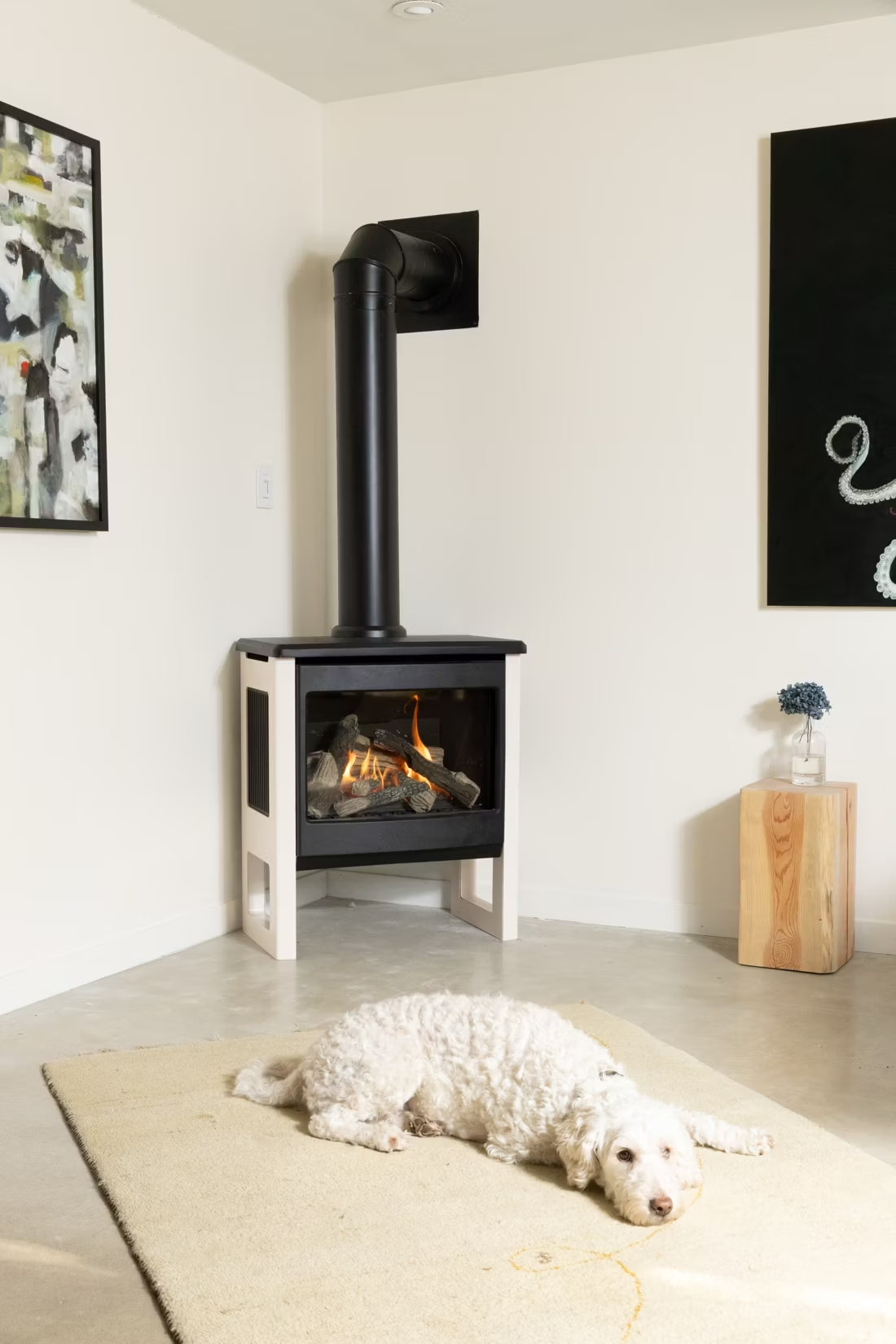
A gas fireplace is a built-in unit installed into new framing—the right choice for new construction or a full remodel. A gas insert is built to slide into an existing masonry fireplace opening, using your current chimney as the venting path, which makes it the natural upgrade for older Pagosa Springs homes with an existing hearth. A gas stove is a freestanding cast-iron or steel unit that sits on a hearth pad like a wood stove but runs on gas or propane, useful in cabins or additions without an existing fireplace. Your local dealer can walk through which fits your specific structure.
Do I need a permit to install a gas fireplace in Archuleta County?
Yes. New gas fireplace and insert installations require a building permit through the Archuleta County Building Department, and any new propane line work needs to be handled by a licensed gas-fitter as part of that permit. Most established local hearth dealers coordinate the permitting, propane line work, and inspection as one package, which is one of the main reasons to go through a certified installer rather than a handyman install.
Should I get a vented or vent-free gas fireplace?
Vented (direct-vent) gas fireplaces pull combustion air from outside and exhaust it back outside through a sealed system—they're the cleaner, safer, and more universally code-compliant option. Vent-free units burn fuel directly into the living space without external venting, and Colorado is one of a handful of states, along with California and Washington, that restricts or prohibits their use in many applications. For Archuleta County homes, direct-vent units are the standard recommendation—they deliver strong heat output at high elevation without any indoor air quality tradeoffs, which matters in a home that's already sealed tight against 10°F winter nights.
How often does a gas fireplace need to be serviced?
Plan on an annual inspection, ideally in late summer or early fall before the county's heating season ramps up. A technician checks the burner, pilot assembly, gas connections, and any battery backup or electronic ignition components, and cleans the glass and interior. This is a quick, inexpensive visit compared to wood chimney sweeping—typically $150 to $250—but skipping it is the most common cause of pilot and ignition failures on the coldest nights of the year, when you least want a service call.
Gas vs. wood—which makes more sense in Archuleta County?
Wood remains a strong choice here—ponderosa pine, aspen, pinyon, and juniper are all locally abundant, and Forest Service cutting permits through San Juan National Forest run just $5 to $20 per cord during the May-to-October season, so fuel cost can be minimal for homeowners willing to cut and haul their own. Wood also keeps working with no electricity, which matters during winter outages. Gas wins on convenience: no ash, no wood storage, instant on-off heat, and no smoke output during the wildfire-smoke stretches of late summer when air quality in the valley can turn poor for days. Many full-time Archuleta County residents keep both—wood for backup and ambiance, gas for the primary living space where daily convenience matters most.
Is my gas fireplace wasting gas?
If it was installed more than 15 years ago, probably. Older gas fireplaces keep a standing pilot light burning all the time, and that little flame can cost a couple hundred dollars a year. Newer models use pilot-on-demand ignition—the pilot lights only when you use the fireplace and goes out when you turn it off.
What's the difference between an insert and a zero-clearance fireplace?
An insert is a fireplace that slides into a pre-existing wood-burning fireplace—if you don't have one, there's nothing to insert it into. A zero-clearance fireplace is built into a framed wall, which makes it the answer for remodels and new construction. Simple test: existing masonry fireplace means insert; blank or framed wall means zero-clearance.
How much should I budget for a fireplace?
For an average home—covering the fireplace, the vent pipe, and basic installation—a budget between $3,900 and $5,500 gives you a lot of options across wood, gas, and pellet. By the time you add finish work, gas line, and electrical, the average complete installation lands between $5,000 and $12,000 all-in. In a remodel or new build, a good rule is to put about 2.5% of the total project cost toward the fireplace.
Does a fireplace add value to my home?
On average, a fireplace adds back to the home about the same amount you spent installing it. Add the monthly savings from heating the rooms you actually use instead of the whole house—often hundreds of dollars a year—and the value case is strong before you even count what a fire does for how your family uses the room.
Stove and Fireplace Dealers in Archuleta County
Find your gas fireplace in Archuleta County.
Tell us about your home and propane setup, and we'll match you with a trusted local dealer and send over a free Project Guide & Parts List—the exact parts, including the vent kit, for your Archuleta County gas fireplace project.
Find Your Fireplace →