
Gas Fireplace Heat Built for West Sacramento's Air Quality Rules
Mild Delta winters don't call for a furnace-replacement fire—they call for clean, on-demand gas heat that stays legal on the Sacramento Valley's worst air days. Find the right unit and connect with a trusted local dealer.
Every Project Starts From One of These Five Situations
Gas fireplaces thrive where wood can't burn.
West Sacramento sits at 13 feet of elevation on the Sacramento River's west bank, in a climate zone where winter lows average a mild 39°F and the overall winter heating load is light for the year—a fraction of what a mountain or high-desert town racks up. Nobody here is fighting single-digit nights like Bozeman or Fargo. What West Sacramento does contend with is the Sacramento Valley Air Basin's non-attainment status and regular wildfire smoke events, which is exactly why wood stoves barely register locally and gas has become the default for real heat plus ambiance.
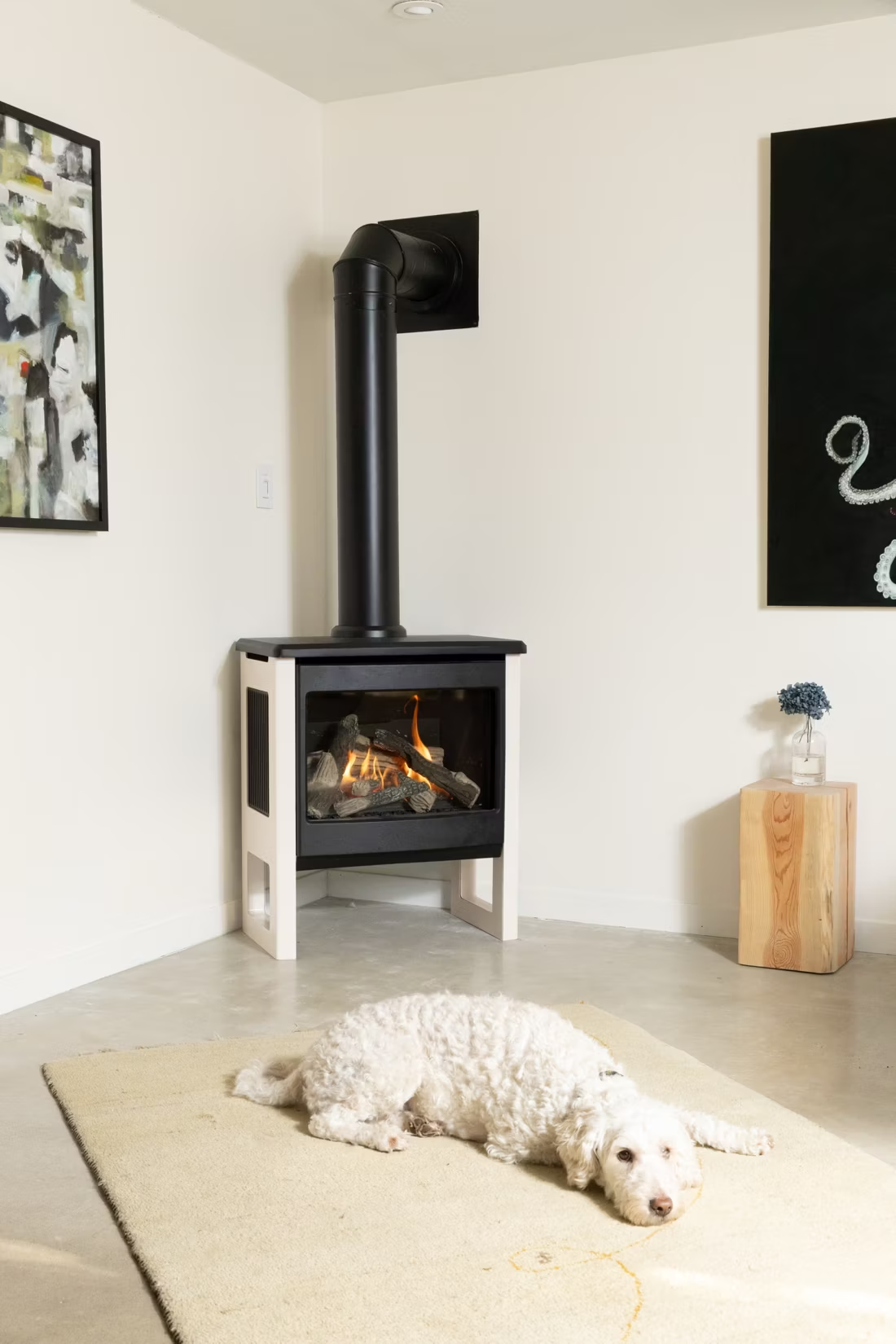
Yolo-Solano Air Quality Management District curtails uncertified wood burning on high-pollution winter days, which puts a real ceiling on wood as a heat source here. Gas appliances aren't subject to those burn restrictions, so a direct-vent gas fireplace or insert delivers the zone heat and ambiance homeowners want on cool, foggy Delta evenings without worrying about a no-burn notice. PG&E serves both natural gas and electric within city limits, and with residential electric running $0.317/kWh, a gas fireplace also tends to be the cheaper way to heat a room compared to running electric resistance heat all evening.
Three steps. No salesperson until you're ready.
Tell us about your project
Your zip code, your situation, and the fuel you're leaning toward—or let the answers point you to one.
See what's actually available
The brands dealers within 100 miles genuinely carry—real options, never a catalog mirage.
Get your dealer & Project Guide
A trusted local dealer, plus the free Project Guide & Parts List that names every component of the job.
Frequently Asked Questions
How much does a gas fireplace installation cost in West Sacramento?
Most gas fireplace and insert installations in West Sacramento run $4,500 to $10,500, depending on the unit, whether you're routing a new gas line, and the venting path. A direct-vent insert into an existing masonry fireplace with gas already run to that wall sits on the lower end. New construction or a remodel in one of the newer Southport or Bridgeway-area developments—where framing, venting, and a fresh gas line all have to happen—lands in the middle to upper range. The City of West Sacramento Building Division requires a permit for the appliance and, separately, for the gas line, and most local installers roll that paperwork into the job.
Can I convert my wood-burning fireplace to gas?
Yes, and it's one of the more common calls local hearth dealers get here. West Sacramento has plenty of older homes near the river and downtown with existing masonry fireplaces that predate today's air quality rules—a gas insert drops into that firebox and uses a stainless liner run through the existing chimney. Because Yolo-Solano AQMD restricts wood burning on high-pollution days, converting to gas means you're never checking a no-burn advisory before lighting up. Expect $4,500 to $9,000 for the conversion depending on whether new gas line work is needed to reach the fireplace.
Do I need natural gas, or can I run propane instead?
Natural gas service through PG&E covers most of West Sacramento within city limits, so if your home already has a gas water heater, range, or furnace, adding a fireplace is usually a straightforward tie-in. Propane is more of a fallback for homes on the edges of Yolo County that fall outside the natural gas footprint. Nearly every gas fireplace on the market can be configured for either fuel—your installer sets the correct orifice and regulator for whichever you're running.
Will my gas fireplace still work if the power goes out?
Most modern gas fireplaces with IPI (intermittent pilot ignition) run on a small battery backup that kicks in the moment the power drops, so the unit lights on demand just like normal. Valor fireplaces skip batteries entirely—their pilot generates its own current through a thermocouple, so there's nothing to remember to replace. That matters in West Sacramento's Delta lowlands, where winter storms occasionally knock out power for a few hours; a gas fireplace with backup ignition keeps a room warm and lit without waiting on PG&E to restore service.
What's the difference between a gas fireplace, insert, and stove?
A gas fireplace is a built-in unit framed into a wall—common in the newer stucco tract homes going up in Southport and Bridgeway Lakes. A gas insert slides into an existing masonry firebox, which is the right call for older homes near the river with a fireplace already in place. A gas stove is a freestanding cast-iron or steel unit that sits on the floor and vents out a wall or through the roof, useful in homes without any existing fireplace opening. For most West Sacramento remodels, an insert into an existing firebox is the simplest and least invasive upgrade.
Do I need a permit to install a gas fireplace in West Sacramento?
Yes. The City of West Sacramento Building Division requires a building permit for the fireplace installation and a separate permit for any new gas line work, which has to be run by a licensed gas-fitter or plumber. A certified hearth dealer typically coordinates both permits along with the venting inspection, so you're not managing multiple trades and two separate city sign-offs yourself.
Should I get a vented or vent-free gas fireplace?
Vented (direct-vent) gas fireplaces pull combustion air from outside and exhaust it back outside through sealed venting—they're the standard, code-compliant choice everywhere in California. Vent-free units burn directly into the room air and face significant restrictions under California's building and mechanical codes; most local jurisdictions, West Sacramento included, don't approve them for permanent installation. Practically speaking, that means every dealer in the area will point you toward a direct-vent model, and that's the right call for both code compliance and indoor air quality in a home that already deals with wildfire smoke intrusion part of the year.
How often does a gas fireplace need to be serviced?
Plan on an annual inspection, ideally in early fall before you start using it regularly through the cooler months. A technician checks the burner, pilot assembly, venting, and gas connections, and cleans the glass and interior. It's a quick visit compared to wood-stove chimney sweeping, but skipping it is how pilot and ignition problems go unnoticed. Local gas appliance service providers typically charge $150 to $250 for the annual visit.
Gas vs. wood vs. electric—what actually makes sense in West Sacramento?
Wood is essentially off the table here—the Sacramento Valley Air Basin's non-attainment status and Yolo-Solano AQMD's winter burn curtailments make wood stoves impractical for anything beyond an occasional, permitted-use scenario, which is why we flag wood as not applicable for this city. Electric fireplaces work anywhere with an outlet and skip venting entirely, but at $0.317/kWh through PG&E, running one as real heat night after night gets expensive fast. Gas splits the difference: instant on-off operation, real BTU output for those foggy 39°F evenings, no smoke to worry about on a Spare the Air day, and a fuel cost that beats electric resistance heat for regular use. For most West Sacramento homes, gas is the practical default.
Why is my open fireplace making my house colder?
Open fireplaces suck—literally. As the fire burns, it consumes air your furnace already paid to heat and pulls it out through the chimney, so the house is actually colder after the fire goes out than before you lit it. An insert fixes this: it seals the chimney, puts fixed glass across the front, and turns that hole in your house into a real heat source.
Can I put a TV above my fireplace?
Yes—with an asterisk. Fireplaces are hot and TVs don't like heat. Either put a mantel between them to deflect rising warmth, or choose a fireplace with heat-management technology that creates a cool zone on the wall above—the wall stays around 125 degrees, barely warm, while the room still gets full heat. If you like clean lines and don't want a mantel, heat management is the answer.
Can I install a fireplace myself?
If you're putting a fire in your house on purpose, it's best to work with an expert. Unless you're genuinely experienced in framing, gas line, vent pipe, and the national code on clearances to combustibles, have a professional do it—and ideally the same company that sells you the fireplace, so warranty, service, and liability all live under one roof.
How much should I budget for a fireplace?
For an average home—covering the fireplace, the vent pipe, and basic installation—a budget between $3,900 and $5,500 gives you a lot of options across wood, gas, and pellet. By the time you add finish work, gas line, and electrical, the average complete installation lands between $5,000 and $12,000 all-in. In a remodel or new build, a good rule is to put about 2.5% of the total project cost toward the fireplace.
Find your gas fireplace in West Sacramento.
Tell us about your home and we'll put together a free Project Guide & Parts List—the right gas fireplace or insert, the vent kit it needs, and a trusted local West Sacramento dealer to install it.
Find Your Fireplace →