
Warmth and Ambiance, No Chimney Required.
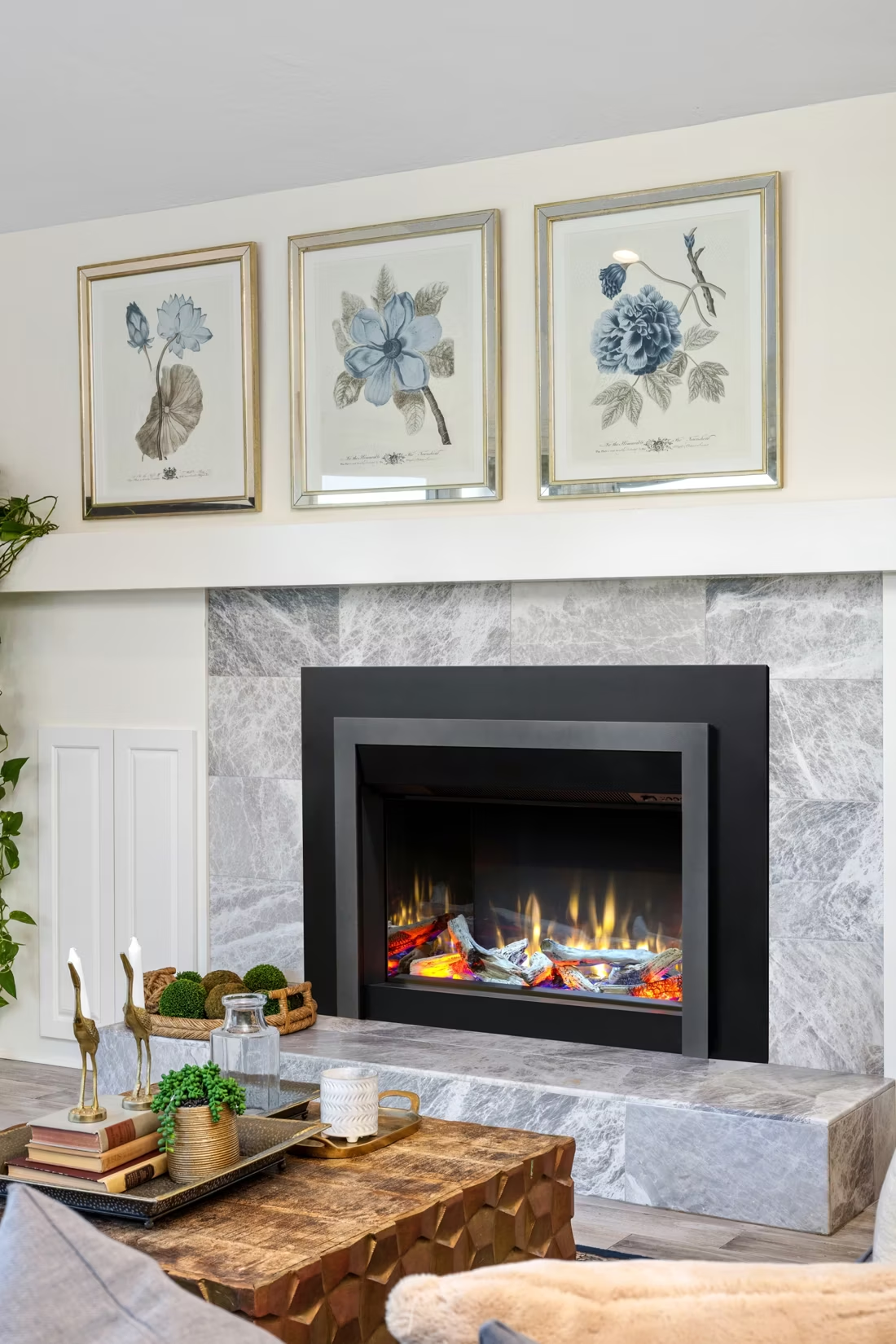
For WeHo's condos, mid-century apartments, and hillside homes, electric delivers real flame effect and supplemental warmth without a gas line or venting. Find the right unit and connect with a trusted local dealer.
Every Project Starts From One of These Five Situations
Built for condo living and clean-air rules.
West Hollywood sits at 232 feet in the Los Angeles Basin, where the average winter low hovers around 52°F and the city has a very short, mild heating season—a fraction of what a place like Duluth, Minnesota sees in a single hard winter. Nobody here is heating a house through a January cold snap. What homeowners and renters actually want is a real-looking flame in a living room, bedroom, or built-in media wall, with warmth that's a pleasant bonus on the rare 45-degree night rather than a survival necessity.
That mild-climate reality, combined with West Hollywood's dense stock of condos, courtyard apartments, and mid-century multi-family buildings, makes electric the fuel that fits the housing here. There's no chimney to build, no gas line to run through a shared wall, and nothing for an HOA to object to on safety grounds. It also sidesteps the South Coast Air Quality Management District's non-attainment status and wood-smoke restrictions entirely—an electric unit run off Southern California Edison or LADWP power produces zero combustion byproducts, no permitting fight, and no smoke complaint from the neighbor next door.
Three steps. No salesperson until you're ready.
Tell us about your project
Your zip code, your situation, and the fuel you're leaning toward—or let the answers point you to one.
See what's actually available
The brands dealers within 100 miles genuinely carry—real options, never a catalog mirage.
Get your dealer & Project Guide
A trusted local dealer, plus the free Project Guide & Parts List that names every component of the job.
Frequently Asked Questions
How much does an electric fireplace installation cost in West Hollywood?
A plug-in electric insert or freestanding unit—the option most renters and condo owners choose—typically runs $200 to $800 installed, since it just needs a standard outlet and no electrical or building permit. A built-in wall-mount or linear electric fireplace set into a media wall or new framing runs closer to $1,500 to $4,000, once you factor in a licensed electrician to run a dedicated circuit, drywall or tile finishing, and in some buildings, HOA sign-off on the wall modification. Local dealers will quote the difference once they know whether you're renting, in a condo, or in a single-family Spanish or Craftsman up in the hills.
Does an electric fireplace actually produce meaningful heat, or is it mostly for looks?
Most electric fireplaces sold for West Hollywood homes run a 4,600 to 5,200 BTU heater—enough to noticeably warm a bedroom or living room on a cool 50-degree evening, but not sized to replace central heat. Given the city's mild winters (an average low around 52°F and only a short, light heating season each year), that's usually plenty. Buyers here tend to prioritize flame realism—LED ember beds, adjustable flame color and speed—over raw heat output, and can run the unit with the heater switched off for ambiance alone on warmer nights.
Will running an electric fireplace spike my electric bill, given SCE and LADWP rates?
West Hollywood households split between Southern California Edison (around $0.2825/kWh) and LADWP (around $0.2384/kWh) depending on the block. A typical 1,500-watt electric fireplace heater draws 1.5 kWh per hour, which works out to roughly $0.36–$0.42 an hour of heater use on SCE and a bit less on LADWP. Run a few hours in the evening a handful of nights a month and the added cost is modest—most owners run the flame effect alone (a few watts) far more often than the heater, since the mild climate rarely calls for supplemental heat.
Do I need a permit to install an electric fireplace in West Hollywood?
A plug-in freestanding or insert unit needs no permit at all—it's treated like any other appliance you plug into the wall. A built-in wall-mount unit that requires a new dedicated circuit or a recessed electrical box does require an electrical permit through the City of West Hollywood Building and Safety Division, and most licensed electricians or hearth dealers pull that permit as part of the install. If you're in a condo or HOA building, check your building's alteration rules separately—several WeHo buildings require board approval before any wall modification, permit or not.
I rent or own a condo in West Hollywood—what's realistic for my unit?
West Hollywood's housing stock skews heavily toward rentals and condos, and that shapes which electric fireplace makes sense. A freestanding electric stove or a mantel-style unit needs nothing beyond a standard outlet, so it moves with you and requires zero landlord or HOA approval. A recessed wall-mount insert looks more built-in but usually needs an electrician and, in a condo, board sign-off before any wall is opened. For most renters and lease-holders in WeHo, the freestanding or tabletop route is the one that avoids any conversation with a landlord.
Why don't more people in West Hollywood use wood or pellet stoves?
Los Angeles County, including West Hollywood, sits inside a South Coast Air Quality Management District non-attainment area, and SCAQMD Rule 445 restricts installing new wood-burning devices in most circumstances—on top of that, wildfire smoke is already a recurring air-quality issue here in fall. Add a climate where winter lows average 52°F and the heating season stays short and mild, and there's simply no functional case for a wood or pellet stove the way there would be in a place like Bozeman, Montana. Electric sidesteps the air-quality restrictions entirely and matches the mild-climate, ambiance-driven demand that actually exists here.
What types of electric fireplaces are available—insert, wall-mount, freestanding?
Freestanding electric stoves look like a small wood stove and plug into any outlet—good for renters and anyone who wants zero installation. Wall-mount and linear electric fireplaces hang flush or recessed into a wall for a sleeker, built-in look common in WeHo's newer condo renovations, but usually need an electrician. Mantel packages pair a surround with an electric insert for a more traditional fireplace look without any masonry. Local dealers carry all three and can walk you through which fits your unit's layout and whether you're renting or own.
Gas is also common in West Hollywood—how do I choose between gas and electric?
Gas fireplaces need a gas line and proper venting, which is straightforward in a single-family hillside home but often expensive or impossible in a mid-rise condo or a historic courtyard building without existing gas infrastructure. Electric needs only a standard or dedicated circuit, which makes it the more practical choice in most of WeHo's multi-family stock. Gas does deliver more real heat output and a closer approximation of a live flame, so it tends to win out in single-family homes in the hills where a gas line and chimney or direct-vent path are already feasible. A local dealer can tell you quickly which is realistic for your specific building.
What features actually matter when choosing an electric fireplace for a West Hollywood home?
Since most WeHo buyers are after ambiance more than heat, flame realism is the feature worth spending on—look at brands like Dimplex, Napoleon, and Amantii, which use layered LED and mirror-effect technology for a more convincing flame than entry-level units. Check the unit's width against your wall or media console before buying, confirm whether the heater can be run independently of the flame effect (useful given the mild climate here), and if you're in an older WeHo building, have an electrician confirm the circuit can handle the heater's draw before you commit to a built-in installation.
Can I put a TV above my fireplace?
Yes—with an asterisk. Fireplaces are hot and TVs don't like heat. Either put a mantel between them to deflect rising warmth, or choose a fireplace with heat-management technology that creates a cool zone on the wall above—the wall stays around 125 degrees, barely warm, while the room still gets full heat. If you like clean lines and don't want a mantel, heat management is the answer.
Do electric fireplaces actually produce heat?
Yes—most put out around 4,800–5,000 BTUs from a standard outlet, which comfortably warms a bedroom, office, or den as a comfort-zone heater. What they won't do is carry a whole house the way wood, gas, or pellet can. Think of electric as ambiance-first with honest supplemental heat: flames on with no heat in July, flames plus warmth in January.
Can a fireplace actually lower my heating bill?
Yes—by creating a comfort zone. A furnace heats every square foot of the house just to warm the one room you're in; a gas fireplace on low burns roughly a sixth of the gas a typical furnace does. Set the furnace around 55–60 degrees as a baseline, then heat the rooms your family actually uses. Families who heat this way commonly save $20–$60 a month.
What is an in-home preview and do I need one?
It's a visit where a hearth professional measures your space, confirms the model you picked actually works in your home, and walks the specs—framing, gas line, venting, finish work—before anything is ordered. Some details you just can't know until you see the house. Never make a down payment without one; it's the single most-skipped step that burns buyers.
Nearby Dealers
Hearth shops serving West Hollywood and the surrounding area.
All Valley Distrib. Dba Marco Distrib
The Heat Source (Burrico) - Lancaster
Tropicana Outdoor Living
Electric Service in West Hollywood
An electric fireplace's heater draws about 1,500 watts—pennies per hour at local rates.
Southern California Edison Co
Los Angeles Department Of Water & Power
Find your electric fireplace in West Hollywood.
Tell us about your unit—condo, rental, or hillside home—and we'll match you with the right electric fireplace or insert, plus a free Project Guide & Parts List and a trusted local dealer to install it.
Find Your Fireplace →