
Instant, clean warmth for Tustin's mild winter nights.
With such a short, mild heating season, Tustin doesn't need a furnace-grade fire—it needs a clean, instant-on gas fireplace for the handful of genuinely cool evenings. Find the right unit and connect with a trusted local dealer.
Every Project Starts From One of These Five Situations
Mild coastal winters, still worth a real fire.
Tustin sits at just 97 feet above sea level in coastal Orange County, where winter lows average a mild 49°F and the heating season is short by any national comparison—a fraction of what a city like Bozeman, MT or Duluth, MN sees in a single month. Wood stoves and pellet stoves are essentially off the table here: the South Coast Air Quality Management District classifies this region as a non-attainment area, and Rule 445 restricts new wood-burning device installs, while seasonal wildfire smoke already strains air quality without adding residential wood smoke on top of it.
Gas fills that gap cleanly. A direct-vent gas fireplace or insert gives Tustin homeowners real, controllable heat and the look of a wood fire without smoke, ash, or a permit fight with local air-quality rules. Most homes here are already served by natural gas lines run through the neighborhood, which makes adding or converting to a gas fireplace a straightforward retrofit rather than a major utility project. For homes without easy gas access, electric fireplaces are the standard fallback—though at Southern California Edison's residential rate of roughly $0.2825 per kWh, running one as a heat source rather than pure ambiance adds up faster than gas does.
Three steps. No salesperson until you're ready.
Tell us about your project
Your zip code, your situation, and the fuel you're leaning toward—or let the answers point you to one.
See what's actually available
The brands dealers within 100 miles genuinely carry—real options, never a catalog mirage.
Get your dealer & Project Guide
A trusted local dealer, plus the free Project Guide & Parts List that names every component of the job.
Frequently Asked Questions
How much does a gas fireplace installation cost in Tustin?
In Tustin, a direct-vent gas fireplace or insert installation typically runs $3,800 to $8,500, depending on the unit, the venting run, and whether new gas line work is required. Because most Tustin neighborhoods already have gas service to the home, converting an existing masonry fireplace to a gas insert tends to land on the lower end of that range—you're usually just running a gas line to the firebox and adding a vent liner. New construction or a fireplace added where none previously existed, with fresh framing and a longer vent run through the roof or wall, sits toward the higher end. A local retailer will confirm the number after seeing your specific layout.
Can I convert my existing wood-burning fireplace to gas?
Yes, and in Tustin it's often the more practical path forward. New wood-burning fireplace and stove installs are heavily restricted under South Coast AQMD Rule 445, but converting an existing masonry fireplace to a gas insert or vented gas log set isn't subject to that restriction the same way. Most conversions use the existing chimney as a chase for a stainless liner and run a new gas line to the firebox, typically landing in the $3,500 to $7,000 range depending on the insert and whether the gas line already terminates near the fireplace.
Does my Tustin home have natural gas, or will I need propane?
The large majority of homes in Tustin's 92780, 92781, and 92782 zip codes already have natural gas service, which is what makes gas fireplace retrofits relatively simple here—most installers just need to extend an existing line rather than bring gas to the house for the first time. Propane comes into play mainly for detached structures like a pool house or ADU that isn't on the home's existing gas meter, or in the rare case where a property genuinely has no gas service. Either fuel works in most fireplace models; your installer sets the orifice and regulator accordingly.
Will my gas fireplace still work if the power goes out?
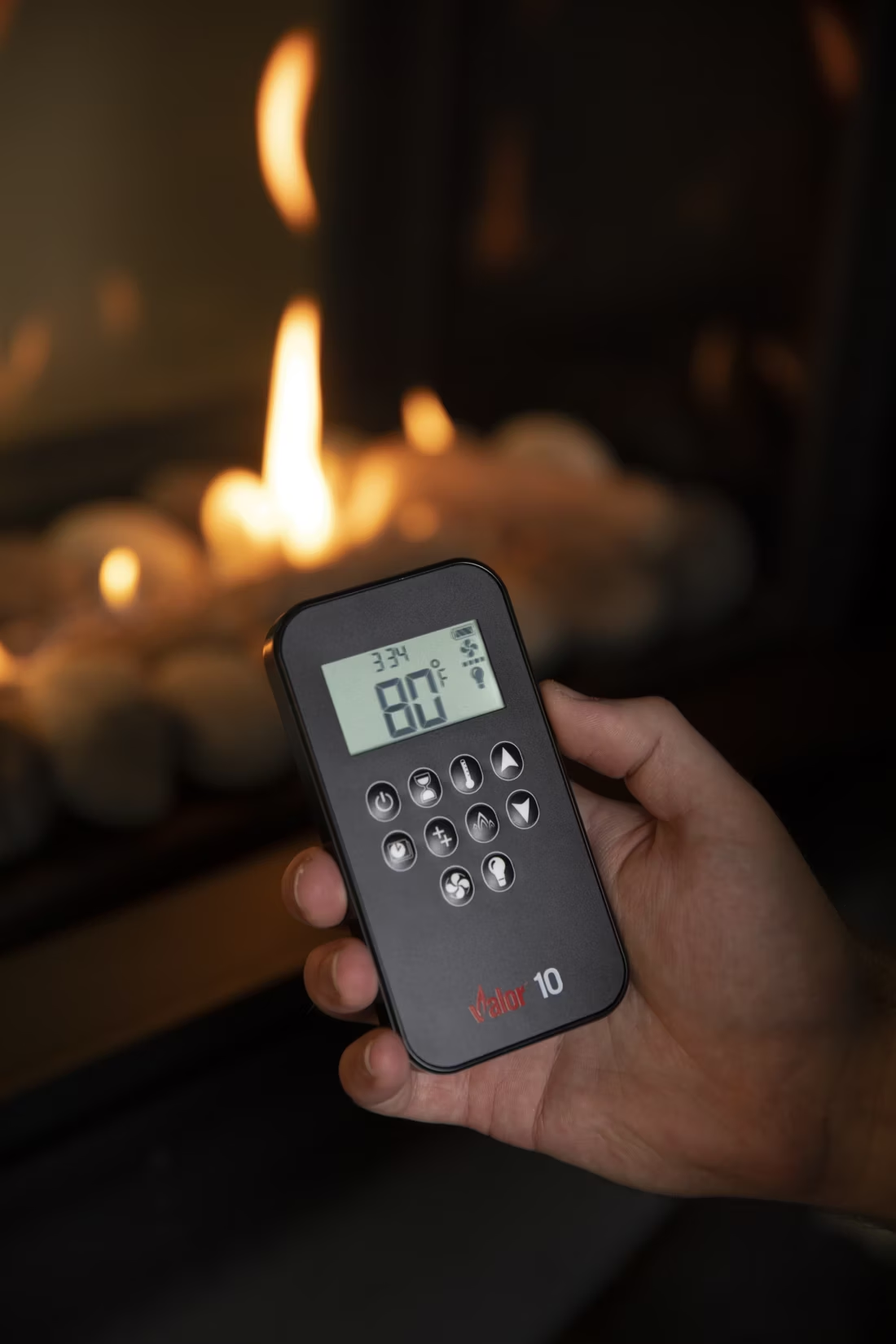
Most direct-vent gas fireplaces with IPI (intermittent pilot ignition) include a battery backup, usually a few AA batteries inside the unit, that lets the fireplace ignite normally even with no power at the house. Given how few true winter storm outages Tustin sees compared to snow-belt climates, this matters less for emergency heat here than it does elsewhere—but it's still a nice feature if SCE service is interrupted during a Santa Ana wind event, when utilities sometimes proactively shut off power. Valor fireplaces take a different approach worth knowing: their pilot generates its own electricity through a thermocouple, so there's no battery to remember at all.
What's the difference between a gas fireplace, gas insert, and gas stove?
A gas fireplace is a fully built-in unit framed into a wall, typically used in new construction or a remodel. A gas insert is sized to slide into an existing masonry firebox, sealing it and using the existing chimney as a vent chase. A gas stove is a freestanding cabinet-style unit that sits on a hearth pad, similar in footprint to a wood stove but running on gas. For Tustin homes with an existing wood fireplace they're no longer using for wood, an insert is usually the simplest upgrade path.
Do I need a permit to install a gas fireplace in Tustin?
Yes. The City of Tustin Building Division requires a building permit for gas fireplace installations, and any new or extended gas line requires work by a licensed gas-fitter as part of that permit. Most established hearth retailers in the area pull the permit and coordinate the inspection as part of the installation, so it's rarely something the homeowner has to manage directly—but it's worth confirming before work starts, especially on a conversion where the fireplace itself is being changed from wood to gas.
Can I install a vent-free gas fireplace in Tustin?
Practically speaking, no—California's building and mechanical codes are among the strictest in the country on unvented combustion appliances, and vent-free gas fireplaces are effectively not permitted for installation in the state, unlike in many other parts of the country. Direct-vent gas fireplaces, which draw combustion air from outside and exhaust it back outside through a sealed pipe, are the standard and essentially the only option local retailers will install in Tustin. The upside is that direct-vent units are also the safer, more efficient choice regardless of what the code requires.
How often should my gas fireplace be serviced?
An annual inspection is the standard recommendation for any gas fireplace or insert, even one that only runs occasionally during Tustin's short cool season. A technician checks the burner, pilot assembly, venting, and gas connections, and cleans the glass and interior—a lighter service than a wood chimney sweep, but still important since a fireplace that sits unused for eight or nine months a year can develop pilot or ignition issues that only show up once you try to light it in November. Expect to pay in the $125 to $225 range for a standard annual service call in the area.
Gas or electric—which makes more sense for a Tustin home?
Given that wood and pellet appliances are largely off the table under South Coast AQMD rules, gas and electric are really the two options worth comparing here. Gas gives you real flame, real radiant heat output, and lower running cost per hour of use, which matters if you actually want supplemental warmth on the occasional 40-degree evening. Electric fireplaces skip the venting and permit process entirely and can go almost anywhere, but at Southern California Edison's rate of about $0.2825 per kWh, running one as a heat source rather than an ambiance feature costs meaningfully more per hour than gas. For homes with existing gas service, gas is usually the better fit for anyone who wants actual heat; electric tends to win in bedrooms, rentals, or rooms where running a gas line isn't practical.
Can I put a TV above my fireplace?
Yes—with an asterisk. Fireplaces are hot and TVs don't like heat. Either put a mantel between them to deflect rising warmth, or choose a fireplace with heat-management technology that creates a cool zone on the wall above—the wall stays around 125 degrees, barely warm, while the room still gets full heat. If you like clean lines and don't want a mantel, heat management is the answer.
What's the difference between an insert and a zero-clearance fireplace?
An insert is a fireplace that slides into a pre-existing wood-burning fireplace—if you don't have one, there's nothing to insert it into. A zero-clearance fireplace is built into a framed wall, which makes it the answer for remodels and new construction. Simple test: existing masonry fireplace means insert; blank or framed wall means zero-clearance.
What is an in-home preview and do I need one?
It's a visit where a hearth professional measures your space, confirms the model you picked actually works in your home, and walks the specs—framing, gas line, venting, finish work—before anything is ordered. Some details you just can't know until you see the house. Never make a down payment without one; it's the single most-skipped step that burns buyers.
Does a fireplace add value to my home?
On average, a fireplace adds back to the home about the same amount you spent installing it. Add the monthly savings from heating the rooms you actually use instead of the whole house—often hundreds of dollars a year—and the value case is strong before you even count what a fire does for how your family uses the room.
Nearby Dealers
Hearth shops serving Tustin and the surrounding area.
Find your gas fireplace in Tustin.
Tell us a bit about your home and we'll put together a free Project Guide & Parts List for your Tustin gas fireplace project—the right unit, the exact venting and parts, and a trusted local dealer to install it.
Find Your Fireplace →