
The Cleanest Way to Heat a Tracy Home.
Mild Central Valley winters and strict Valley air rules make gas the practical hearth choice in Tracy. Find the right fireplace or insert, and connect with a trusted local dealer.
Every Project Starts From One of These Five Situations
Built for mild winters and strict air rules.
Tracy sits at just 61 feet in the San Joaquin Valley, where winters are mild by any standard—average lows hover around 36°F and the city has a short, mild heating season compared to a place like Duluth, MN, which sees a much longer, harsher winter. Tule fog and damp, chilly mornings are more the story here than deep freezes, which changes what a hearth needs to do: less survival heat, more comfortable zone heat and ambiance during the coolest weeks of December and January.
Wood and pellet stoves are genuinely uncommon in Tracy, and that's not an accident of taste. The city sits inside a federal non-attainment air basin regulated by the San Joaquin Valley Air Pollution Control District, which issues mandatory wood-burning curtailments—the Check Before You Burn program—on high-pollution winter days and during wildfire smoke events. Gas fireplaces sidestep those burn-day restrictions entirely, which is a big part of why gas is the standard hearth fuel here. PG&E provides natural gas service across most of the city, making a direct-vent gas fireplace or insert straightforward to install and operate on demand, restriction-free, all winter.
Three steps. No salesperson until you're ready.
Tell us about your project
Your zip code, your situation, and the fuel you're leaning toward—or let the answers point you to one.
See what's actually available
The brands dealers within 100 miles genuinely carry—real options, never a catalog mirage.
Get your dealer & Project Guide
A trusted local dealer, plus the free Project Guide & Parts List that names every component of the job.
Frequently Asked Questions
How much does a gas fireplace installation cost in Tracy?
Costs vary with the unit and the venting path, but a straightforward direct-vent gas insert into an existing masonry fireplace with gas already run to the room typically lands in the $3,500 to $6,500 range. A new built-in gas fireplace in a remodel or addition—with framing, direct-vent piping through an exterior wall, and a new gas line from the meter—usually runs $6,500 to $10,000 or more. Homes in Tracy's older ranch-style neighborhoods near downtown, many built with wood-burning fireplaces in the 1960s through 1980s, are common insert-conversion candidates. A local dealer will quote a firm number after seeing your existing chimney and gas service.
Can I convert my existing wood fireplace to gas?
Yes, and in Tracy it's often the more practical move given local air rules. Many homes in established neighborhoods still have the original wood-burning masonry fireplace, which the San Joaquin Valley Air Pollution Control District restricts on Check Before You Burn days throughout the winter. Installing a direct-vent or B-vent gas insert into that same firebox, using a stainless liner run up the existing chimney, gives you a usable fireplace on every cold, foggy morning without checking a burn-ban alert first. Most conversions in Tracy run $4,000 to $7,500 depending on the insert and whether new gas line work is needed.
Do I need natural gas, or is propane more common in Tracy?
Most of Tracy is served by natural gas through Pacific Gas & Electric, so if your home already has a gas water heater, range, or furnace, tying in a gas fireplace is usually a simple addition to the existing line. PG&E also handles electric service here, and Lathrop Irrigation District supplies electricity to a smaller slice of the area, but neither is relevant to your gas hookup if you're inside PG&E's gas territory. Propane shows up mainly on the rural fringes of unincorporated San Joaquin County outside the city's gas mains, where a tank installation from a local propane supplier is the standard workaround.
Will my gas fireplace work during a power outage?
Most modern gas fireplaces will, which matters in Tracy given how often PG&E calls Public Safety Power Shutoffs during fall wildfire-risk wind events. Units with intermittent pilot ignition (IPI) run on a small battery backup that kicks in the moment grid power drops, so the fireplace lights normally without any manual effort. Valor fireplaces take a different approach—their pilot assembly generates its own electricity through a thermocouple, so there's no battery to remember or replace. Ask your local dealer which ignition system a given model uses if outage performance matters to you.
What's the difference between a gas fireplace, gas insert, and gas stove?
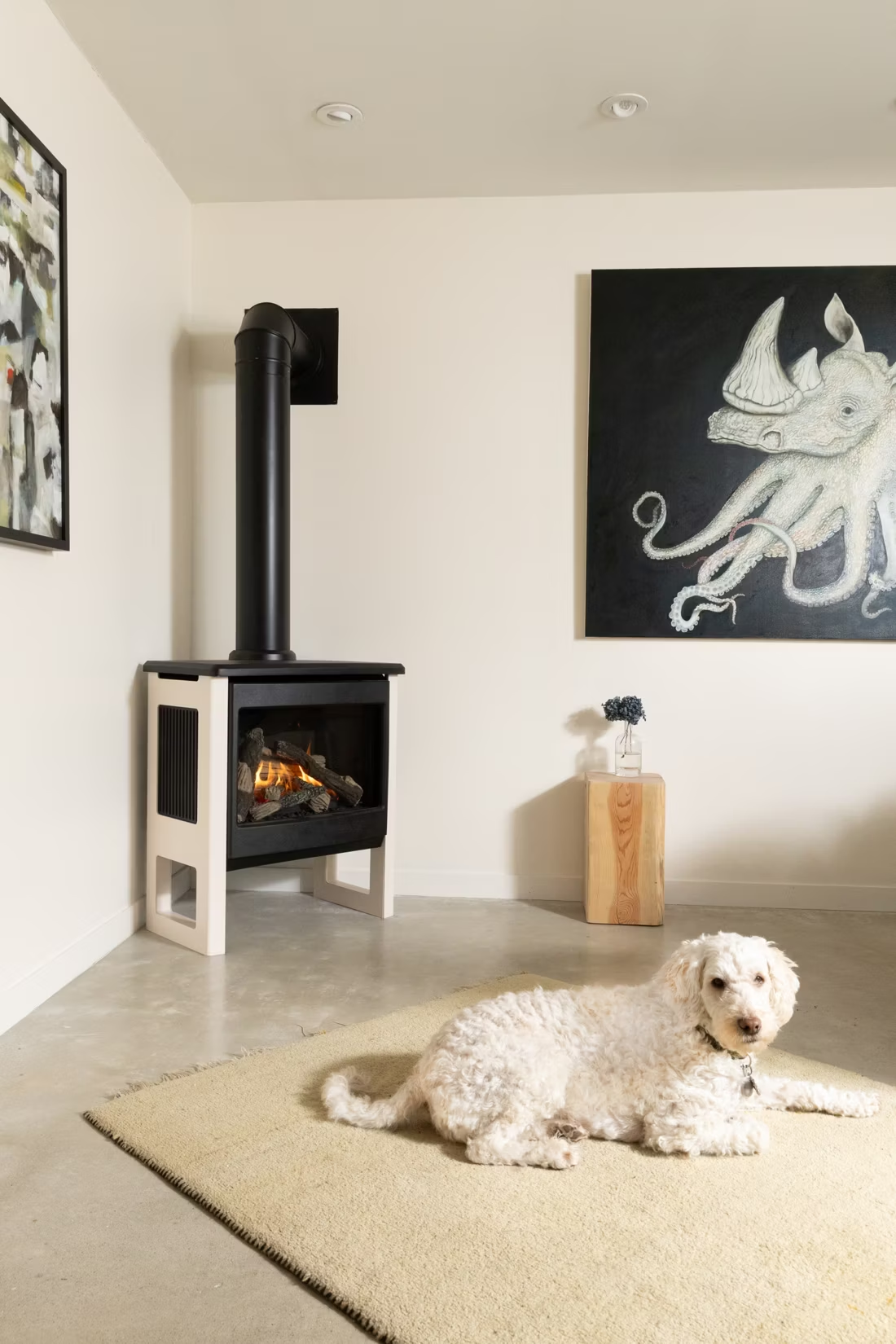
A gas fireplace is a fully built-in unit framed into a wall—the right call for new construction or a remodel without an existing firebox. A gas insert slides into an existing masonry fireplace and uses the chimney as its vent path, which is the common upgrade for Tracy's older ranch homes with a dated wood-burning hearth. A gas stove is a freestanding cabinet-style unit that sits on the floor, useful when you want fireplace-style heat in a room that never had one. For most Tracy homeowners working with an existing fireplace, an insert is the straightforward answer.
Do I need a permit to install a gas fireplace in Tracy?
Yes. New gas fireplace installations require a building permit through the City of Tracy Building Division, or San Joaquin County if you're in an unincorporated pocket near the city, plus a gas line permit for any new piping. A licensed gas fitter has to handle the line work regardless of who installs the fireplace itself, which is why working with a certified hearth dealer simplifies things—they coordinate the gas line, venting, and inspection sign-off as one job instead of you juggling separate contractors.
What's the difference between vented and vent-free gas fireplaces?
Vented, direct-vent units draw combustion air from outside and exhaust it back outside through sealed venting—they're the standard, code-friendly choice everywhere including California. Vent-free (ventless) units burn gas directly into the room air without any outside venting, and California restricts their use more heavily than most states, along with Colorado and Washington. Given the Valley's existing air quality challenges—Tracy sits in a federal non-attainment basin already dealing with winter inversion and wildfire smoke—most local dealers steer homeowners toward direct-vent models, and it's the setup you'll see recommended for nearly every installation in Tracy.
How often should my gas fireplace be serviced?
Plan on an annual inspection, ideally in early fall before the first cool, foggy nights set in. A technician checks the burner, pilot assembly, venting, and gas connections, and cleans the glass and interior—a much smaller job than a wood-stove chimney sweep, but not one to skip. Local gas appliance service providers in Tracy typically charge $150 to $225 for a standard annual inspection.
Why is gas so much more common than wood or pellet in Tracy?
It comes down to air quality rules as much as climate. Tracy's winters are mild—average lows around 36°F and a short, mild heating season overall—so a hearth here is mostly about zone heat and comfort rather than survival warmth. On top of that, the San Joaquin Valley Air Pollution Control District regulates this whole basin as a non-attainment area and issues mandatory no-burn alerts for wood stoves and fireplaces on high-pollution winter days. Gas fireplaces aren't subject to those curtailments, which is why they're the default hearth appliance across Tracy while wood and pellet stoves stay rare, mostly limited to older homes that haven't converted their original masonry fireplace yet.
Can I put a TV above my fireplace?
Yes—with an asterisk. Fireplaces are hot and TVs don't like heat. Either put a mantel between them to deflect rising warmth, or choose a fireplace with heat-management technology that creates a cool zone on the wall above—the wall stays around 125 degrees, barely warm, while the room still gets full heat. If you like clean lines and don't want a mantel, heat management is the answer.
Is my gas fireplace wasting gas?
If it was installed more than 15 years ago, probably. Older gas fireplaces keep a standing pilot light burning all the time, and that little flame can cost a couple hundred dollars a year. Newer models use pilot-on-demand ignition—the pilot lights only when you use the fireplace and goes out when you turn it off.
What is an in-home preview and do I need one?
It's a visit where a hearth professional measures your space, confirms the model you picked actually works in your home, and walks the specs—framing, gas line, venting, finish work—before anything is ordered. Some details you just can't know until you see the house. Never make a down payment without one; it's the single most-skipped step that burns buyers.
Can a fireplace actually lower my heating bill?
Yes—by creating a comfort zone. A furnace heats every square foot of the house just to warm the one room you're in; a gas fireplace on low burns roughly a sixth of the gas a typical furnace does. Set the furnace around 55–60 degrees as a baseline, then heat the rooms your family actually uses. Families who heat this way commonly save $20–$60 a month.
Nearby Dealers
Hearth shops serving Tracy and the surrounding area.
Elite Fireplace Service & Repair (Parts Only)
Find your gas fireplace in Tracy.
Tell us about your home and we'll match you with a trusted local Tracy dealer and send over a free Project Guide & Parts List—the exact parts, vent kit, and recommended installer for your gas fireplace project.
Find Your Fireplace →