
Steady gas heat for Sutter County's mild Valley winters.
From Yuba City to the farm roads around the Sutter Buttes, gas fireplaces deliver clean, on-demand warmth without the smoke concerns that come with wood burning during Valley air alerts. Find the right unit and get matched with a trusted local dealer.
Every Project Starts From One of These Five Situations
Convenient heat for the Sacramento Valley's mild winters.
Sutter County sits in the flat farmland of the Sacramento Valley, ringed by rice fields, orchards, and the volcanic Sutter Buttes rising out of the plain. Winters here are mild by any national comparison—average lows sit around 40°F and the county has a winter heating load that's just a fraction of what a place like Duluth, MN or Burlington, VT racks up. But mild doesn't mean heat-free: Tule fog settles into the Valley from December through February, damp cold seeps into older farmhouses in Meridian, Robbins, and Tudor, and a gas fireplace is often the most practical way to take the chill off a room without running a full HVAC cycle.
In Yuba City, Live Oak, and Sutter, PG&E natural gas service covers most homes, making a direct gas line straightforward for a new fireplace or insert. Out in the unincorporated farm country—Robbins, Rio Oso, Trowbridge, Tudor—propane is the standard fuel, delivered and stored in a tank on the property. Either way, gas fireplaces sidestep a real local concern: wildfire smoke. The Feather River Air Quality Management District, which covers Sutter County, administers winter burn restrictions on wood-burning devices during high-pollution days under the state's Check Before You Burn program. Gas appliances aren't subject to those curtailments, which makes them an increasingly common choice for homeowners who want reliable zone heat without worrying about a burn ban on a cold, foggy night.
Three steps. No salesperson until you're ready.
Tell us about your project
Your zip code, your situation, and the fuel you're leaning toward—or let the answers point you to one.
See what's actually available
The brands dealers within 100 miles genuinely carry—real options, never a catalog mirage.
Get your dealer & Project Guide
A trusted local dealer, plus the free Project Guide & Parts List that names every component of the job.
Frequently Asked Questions
How much does a gas fireplace installation cost in Sutter County?
A typical gas fireplace or insert installation in Sutter County runs roughly $4,500 to $9,500, depending on the unit, whether a new gas line needs to be run, and the venting path. A direct-vent insert going into an existing masonry fireplace with gas already stubbed nearby sits toward the lower end. New construction or a fireplace added to a room without existing gas service—common in the newer subdivisions around Yuba City—costs more once line work and framing are factored in. Rural properties on propane may also need a tank installation or upsizing, which a local propane supplier handles separately from the fireplace install.
Can I convert my existing wood fireplace to gas?
Yes, and it's a common upgrade in older Sutter County neighborhoods where original masonry fireplaces are drafty and rarely used. A gas insert slides into the existing firebox and vents through a stainless liner run up the same chimney, so you keep the look of the fireplace while gaining instant, controllable heat. The cost typically falls in the $4,500 to $8,500 range locally, with the main variable being whether the home already has a nearby gas line or needs new plumbing run from the meter. It's also a practical move given the county's Check Before You Burn restrictions on wood smoke during winter inversion days—a gas insert isn't affected by those curtailments.
Do I need natural gas, or can I run a fireplace on propane?
Both work fine. Inside Yuba City, Live Oak, and Sutter, PG&E natural gas service reaches most homes, so if you already cook or heat water with gas, adding a fireplace usually means tapping an existing line. Out in the unincorporated farm areas—Robbins, Meridian, Rio Oso, Tudor, Trowbridge—natural gas mains often don't reach the property, and propane from a local supplier is the standard setup, either off an existing tank or a new one sized for the fireplace's BTU load. Almost every gas fireplace on the market can be configured for either fuel; your installer sets the correct orifice and regulator for whichever you have.
Will my gas fireplace still work if the power goes out?
Most modern gas fireplaces will, which matters during the Valley's occasional winter storms and PG&E Public Safety Power Shutoffs. Units with intermittent pilot ignition (IPI) run on a battery backup that kicks in automatically when line power drops, so the fireplace lights and operates as normal. Valor fireplaces take a different approach—the pilot's thermocouple generates its own electricity, so there's no battery to check or replace at all. If backup heat during an outage is a priority for your Sutter County home, ask your local dealer about the ignition system before you buy.
What's the difference between a gas fireplace, gas insert, and gas stove?
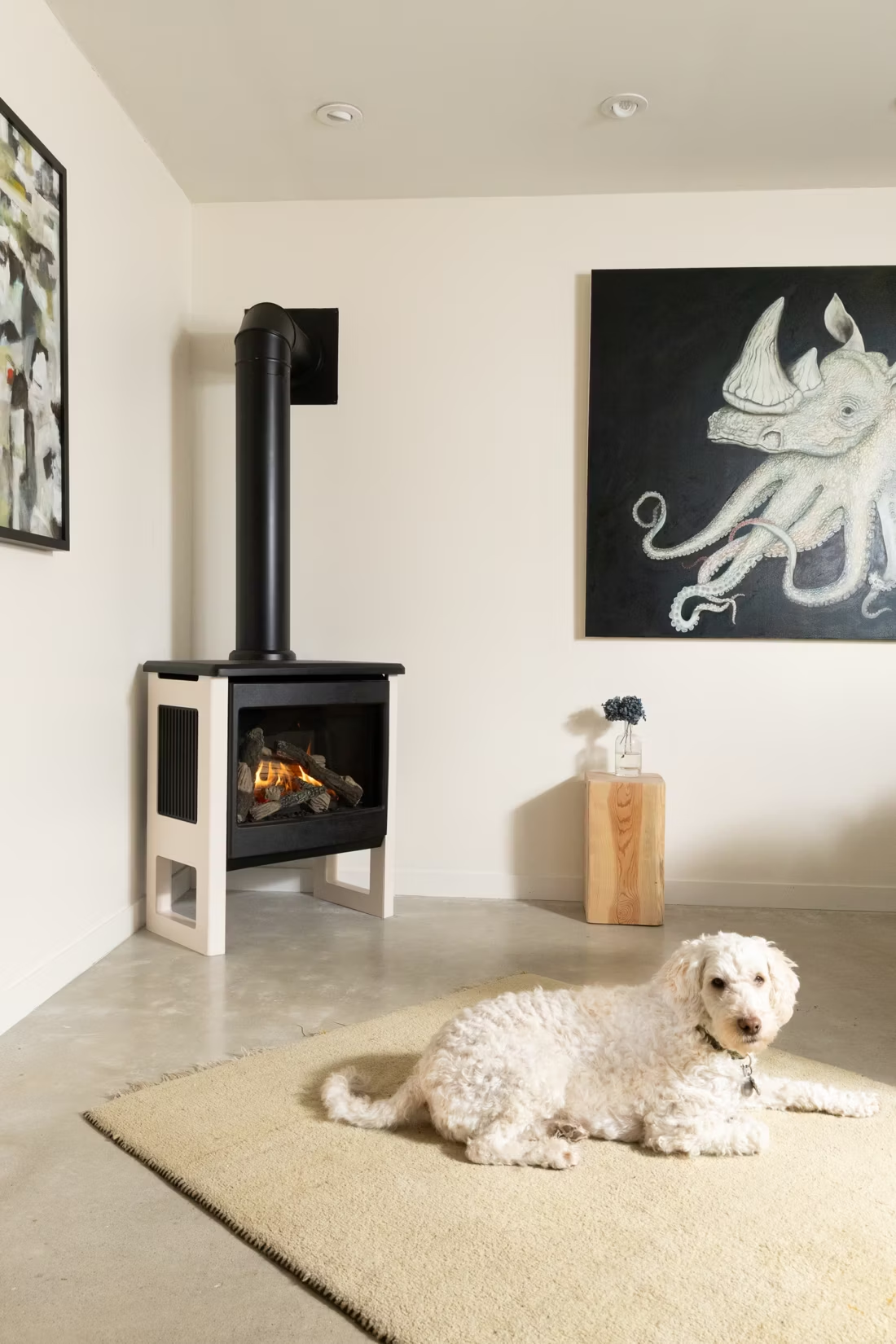
A gas fireplace is a fully built-in unit framed into a wall—the right call for new construction or a remodel in a Yuba City subdivision without an existing hearth. A gas insert is sized to slide into an existing masonry firebox, converting an old wood fireplace into a sealed, efficient gas unit using the existing chimney as the vent chase. A gas stove is freestanding, sitting on the floor on its own hearth pad, and works well in a farmhouse or older home in Sutter, Live Oak, or the rural county where there's no existing fireplace to build around. Most homeowners with an existing fireplace go with an insert; new spaces usually call for a built-in unit or freestanding stove.
Do I need a permit to install a gas fireplace in Sutter County?
Yes—new gas fireplace installations require a building permit and gas line permit through the Sutter County Building Division for unincorporated areas, or the City of Yuba City's building department if the property is within city limits. The gas line work has to be done by a licensed gas-fitter, which is one reason it's worth going through a hearth retailer who coordinates the gas line, venting, and inspection sign-off as one job rather than juggling separate contractors.
What's the difference between vented and vent-free gas fireplaces?
Vented (direct-vent) gas fireplaces pull combustion air from outside and exhaust the byproducts back outside through a sealed pipe—they're the standard, code-compliant choice everywhere including California. Vent-free units burn gas directly into the room with no external venting; they're legal in California under specific room-size and oxygen-sensor requirements, but they release water vapor and trace combustion gases indoors. In a Valley climate where wildfire smoke already affects indoor air quality several weeks a year, most Sutter County homeowners and installers lean toward direct-vent units—they deliver real heat output without adding anything to the air inside the house. Ask your local dealer to walk through both options if you're comparing them.
How often should a gas fireplace be serviced?
Plan on an annual inspection, ideally before the foggy stretch of Valley winter sets in around late fall. A technician checks the burner, pilot assembly, venting, and gas connections, and cleans the glass and interior—a much lighter job than a wood chimney sweep, but still important, since a dirty burner or failing thermocouple is the most common reason a gas fireplace stops lighting reliably. Local gas appliance service providers in the Yuba City area typically charge $150 to $250 for the annual visit.
Gas vs. wood—which makes more sense for a Sutter County home?
Wood is still common in the county, especially on larger rural properties where oak, madrone, and Douglas fir are available and Forest Service cutting permits through Tahoe National Forest or Mendocino National Forest run as low as $5 to $20 per cord. But Sutter County's air quality concern is wildfire smoke, and the Feather River Air Quality Management District enforces winter no-burn days for wood-burning devices under the Check Before You Burn program—days when a wood stove simply can't be used. Gas fireplaces aren't subject to those restrictions, light instantly, and don't require stacking or hauling cordwood, which is why they've become the default choice in Yuba City and Live Oak subdivisions. Wood still has a place for rural homeowners who want backup heat during a power outage or who already have a woodlot to draw from; for most in-town homes, gas is the simpler, more consistently usable option.
Why is my open fireplace making my house colder?
Open fireplaces suck—literally. As the fire burns, it consumes air your furnace already paid to heat and pulls it out through the chimney, so the house is actually colder after the fire goes out than before you lit it. An insert fixes this: it seals the chimney, puts fixed glass across the front, and turns that hole in your house into a real heat source.
Does a gas fireplace work when the power is out?
Yes—modern gas fireplaces have a battery backup for the ignition system that lasts for weeks, so no power equals no problem. Your furnace can't say that: no electricity, no blower, no heat. It's one of the most common reasons families add a fireplace, and worth confirming on any model you're considering.
What is an in-home preview and do I need one?
It's a visit where a hearth professional measures your space, confirms the model you picked actually works in your home, and walks the specs—framing, gas line, venting, finish work—before anything is ordered. Some details you just can't know until you see the house. Never make a down payment without one; it's the single most-skipped step that burns buyers.
How much should I budget for a fireplace?
For an average home—covering the fireplace, the vent pipe, and basic installation—a budget between $3,900 and $5,500 gives you a lot of options across wood, gas, and pellet. By the time you add finish work, gas line, and electrical, the average complete installation lands between $5,000 and $12,000 all-in. In a remodel or new build, a good rule is to put about 2.5% of the total project cost toward the fireplace.
Stove and Fireplace Dealers in Sutter County
Find your gas fireplace in Sutter County.
Tell us about your home in Yuba City, Live Oak, or anywhere else in Sutter County, and we'll match you with a trusted local dealer and put together a free Project Guide & Parts List—the exact parts, vent kit included, for your gas fireplace project.
Find Your Fireplace →