
The Fireplace Santa Barbara Evenings Deserve—Without the Smoke.
With winter lows averaging 46°F, most Santa Barbara homes want a real flame for ambiance and cool-evening comfort, not a wood-burning heat source. Find the right gas fireplace or insert, and connect with a trusted local dealer.
Every Project Starts From One of These Five Situations
Ambiance first, heat second—that's how gas fits here.
Santa Barbara sits at just 129 feet along the coast in climate zone 3C, one of the mildest zones in the country. The city logs roughly 1,427 heating degree days a year—a fraction of what a place like Bozeman, MT or Duluth, MN racks up in a single January. That means a fireplace here almost never has to carry the load of heating a home through a hard winter. It's about the glow on a 50-degree evening, a focal point in a living room, and instant heat you can flip on and off without tending a fire.
Wood-burning appliances are essentially off the table in Santa Barbara—between the mild climate and the recurring wildfire smoke concerns that affect the South Coast in late summer and fall, few homeowners want to add another combustion source to the air. Gas solves that: it burns clean, produces no particulate smoke, and most of the city is served by Southern California Gas Company, so adding a fireplace to a home with existing gas service (water heater, range, furnace) is usually a straightforward tie-in rather than a new utility connection.
Three steps. No salesperson until you're ready.
Tell us about your project
Your zip code, your situation, and the fuel you're leaning toward—or let the answers point you to one.
See what's actually available
The brands dealers within 100 miles genuinely carry—real options, never a catalog mirage.
Get your dealer & Project Guide
A trusted local dealer, plus the free Project Guide & Parts List that names every component of the job.
Frequently Asked Questions
How much does a gas fireplace installation cost in Santa Barbara?
Most Santa Barbara gas fireplace installations run in the $4,000 to $9,500 range, with the low end covering a direct-vent gas insert dropped into an existing masonry fireplace that already has gas service nearby, and the higher end covering new direct-vent units in a remodel that require framing, venting through an exterior wall, and a fresh gas line run by a licensed gas-fitter. Many of Santa Barbara's older Spanish Revival and Craftsman homes have existing masonry hearths that were originally built for wood, which makes them good insert candidates once a liner and gas line are added. A local retailer will give you a firm number after seeing your chimney and gas access in person.
Can I convert my existing wood-burning fireplace to gas?
Yes, and it's one of the most common projects in Santa Barbara's older housing stock. Many homes built before mid-century have a masonry fireplace originally designed to burn oak or Douglas fir, but between the mild coastal climate and periodic wildfire smoke advisories from the Santa Barbara County Air Pollution Control District, most owners no longer want an active wood fire in the house. A gas insert uses your existing chimney with a stainless liner, typically running $4,000 to $8,500 depending on the insert and whether new gas piping is needed. You keep the look of the original hearth and gain a fireplace you can run with a remote instead of kindling.
Do I need natural gas, or should I plan on propane?
Most of Santa Barbara proper is served by Southern California Gas Company, so if your home already has a gas water heater, range, or furnace, adding a fireplace usually means tapping into existing service. Homes further up into the foothills and canyon areas outside the main gas distribution grid sometimes rely on propane instead, delivered and stored in a tank on the property. Nearly every gas fireplace model on the market can be configured for either fuel—your installer sets the correct orifice and regulator for whichever you have.
Will my gas fireplace work during a power outage?
Most modern gas fireplaces will, which matters more in Santa Barbara than the mild climate might suggest—Southern California Edison periodically initiates Public Safety Power Shutoffs during high fire-risk wind events, sometimes for a day or more. Units with IPI (intermittent pilot ignition) include a battery backup that kicks in automatically when grid power drops, so the fireplace still lights on demand. Valor fireplaces take a different approach: their pilot assembly generates its own electricity through the thermocouple, so there are no batteries to maintain at all. Ask your local dealer about the ignition system on any unit you're considering if outage backup matters to you.
What's the difference between a gas fireplace, gas insert, and gas stove?
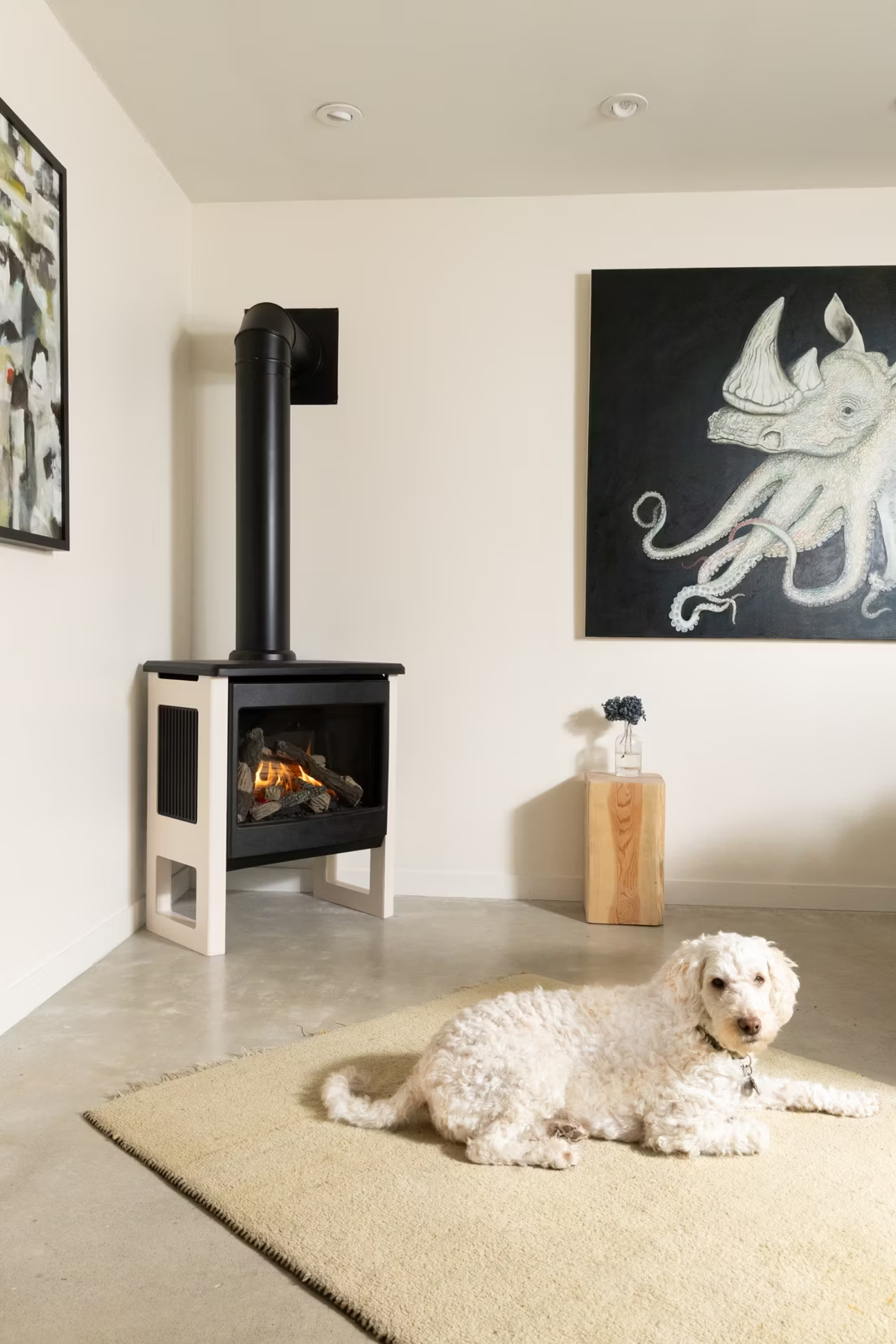
A gas fireplace is a fully built-in unit framed into a wall—the right call for new construction or a full remodel. A gas insert slides into an existing masonry opening and uses your current chimney as the vent path, which fits a lot of Santa Barbara's older Spanish Revival and Craftsman homes with a hearth already in place. A gas stove is a freestanding cast-iron or steel unit that sits on the floor, useful in a room without an existing fireplace opening. For most Santa Barbara homeowners upgrading an existing fireplace, an insert is the simplest and most cost-effective path.
Do I need a permit to install a gas fireplace in Santa Barbara?
Yes. New gas fireplace installations require a building permit and a gas line permit, pulled through the City of Santa Barbara Building & Safety Division for homes within city limits or the Santa Barbara County Building & Safety Division for unincorporated areas like Montecito or Goleta Valley. The gas piping itself must be run by a licensed gas-fitter. Most local hearth retailers handle the full permit package as part of the installation, coordinating the gas work, venting, and inspection so you're not managing multiple trades yourself.
Are vent-free gas fireplaces allowed in Santa Barbara?
California places tight restrictions on vent-free (unvented) gas appliances, and in practice, vented direct-vent units are what nearly every Santa Barbara installer recommends and installs. Direct-vent fireplaces draw combustion air from outside and exhaust it back outside through a sealed pipe, so they don't add moisture or combustion byproducts to indoor air—a real consideration in a coastal climate already dealing with wildfire smoke intrusion during fire season. If you're weighing options, ask your local dealer directly; most won't stock vent-free units for California installs at all.
How often should my gas fireplace be serviced?
Plan on an annual inspection, ideally in early fall before you start using the fireplace regularly for the cooler months. A certified technician checks the burner, pilot assembly, venting, and gas connections, and cleans the glass and interior—a service that typically runs $150 to $250 locally. It's a much lighter lift than wood-stove chimney sweeping, but skipping it is still the most common cause of pilot and ignition failures down the road.
Gas vs. electric fireplace—which makes more sense in Santa Barbara?
Given Southern California Edison's residential rate of roughly 28 cents per kWh—among the higher rates in the country—running an electric fireplace or heater for daily ambiance can add up faster than you'd expect, even though the upfront electric install is cheap and requires no venting or gas line. A gas fireplace costs more to install but burns far more efficiently for real heat output, and delivers a genuine flame rather than an LED simulation. For a primary living room fireplace that gets regular use, gas is usually the better long-term value in Santa Barbara. For a bedroom or secondary room where you just want occasional glow with zero installation hassle, electric can make sense.
Why is my open fireplace making my house colder?
Open fireplaces suck—literally. As the fire burns, it consumes air your furnace already paid to heat and pulls it out through the chimney, so the house is actually colder after the fire goes out than before you lit it. An insert fixes this: it seals the chimney, puts fixed glass across the front, and turns that hole in your house into a real heat source.
What do I measure to size a fireplace insert?
Four numbers tell you what fits: the front width, the front height, the back width, and the overall depth of your existing fireplace opening. Grab a tape measure, jot those down, and snap a photo of the wall—those two things do more to move your project forward than anything else you can do today.
Can a fireplace actually lower my heating bill?
Yes—by creating a comfort zone. A furnace heats every square foot of the house just to warm the one room you're in; a gas fireplace on low burns roughly a sixth of the gas a typical furnace does. Set the furnace around 55–60 degrees as a baseline, then heat the rooms your family actually uses. Families who heat this way commonly save $20–$60 a month.
What is an in-home preview and do I need one?
It's a visit where a hearth professional measures your space, confirms the model you picked actually works in your home, and walks the specs—framing, gas line, venting, finish work—before anything is ordered. Some details you just can't know until you see the house. Never make a down payment without one; it's the single most-skipped step that burns buyers.
Nearby Dealers
Hearth shops serving Santa Barbara and the surrounding area.
Find your gas fireplace in Santa Barbara.
Tell us about your home and we'll match you with the right gas fireplace, insert, or stove, and hand you a free Project Guide & Parts List with your recommended local dealer in Santa Barbara.
Find Your Fireplace →