
Warmth That Doesn't Wait on the Grid.
San Carlos winters are mild, but PG&E outages aren't rare. A properly vented gas fireplace gives you instant heat and ambiance year-round—and keeps working when the power doesn't. We'll match you with a trusted local dealer.
Every Project Starts From One of These Five Situations
Mild winters, strict air rules, and an aging grid.
At 111 feet elevation on the Peninsula, San Carlos sees a winter low average of just 40°F and only a light annual heating load—a fraction of what a place like Duluth, Minnesota racks up in a single hard winter. Nobody in San Carlos is heating a home to survive January. What homeowners here actually want from a fireplace is instant, controllable warmth for a foggy evening, a design centerpiece for the living room, and—increasingly—a heat source that doesn't depend on the electric grid staying up.
Two local realities push most San Carlos homeowners toward gas rather than wood. First, the Bay Area Air Quality Management District regulates new wood-burning device installations closely, and San Mateo County sits in a designated non-attainment area that also deals with seasonal wildfire smoke—factors that make a zero-particulate gas appliance the practical, code-friendly choice for new fireplaces and remodels. Second, PG&E's Public Safety Power Shutoffs affect Peninsula neighborhoods during dry, windy weather, and a gas fireplace with battery-backup or self-powered ignition keeps producing real heat when the lights and the furnace blower go out. PG&E is also the natural gas provider across San Carlos, so most homes already have gas service to build from.
Three steps. No salesperson until you're ready.
Tell us about your project
Your zip code, your situation, and the fuel you're leaning toward—or let the answers point you to one.
See what's actually available
The brands dealers within 100 miles genuinely carry—real options, never a catalog mirage.
Get your dealer & Project Guide
A trusted local dealer, plus the free Project Guide & Parts List that names every component of the job.
Frequently Asked Questions
How much does a gas fireplace installation cost in San Carlos?
In San Carlos and the surrounding Peninsula, a gas fireplace or insert installation typically runs $5,000 to $12,000, with Bay Area labor rates pushing costs above what you'd see inland. A direct-vent insert going into an existing masonry fireplace that already has a gas line nearby sits at the lower end. A new built-in gas fireplace for a remodel—with framing, venting through an exterior wall, and a gas line extension—lands in the middle to upper range. Jobs that require running new gas line any real distance, or venting through multiple floors, push toward the top. A local dealer will give you a firm number after seeing the space.
Can I install a wood-burning fireplace in San Carlos instead of gas?
Not easily. BAAQMD Regulation 6, Rule 3 prohibits installing new wood-burning fireplaces and stoves across the Bay Area, including San Mateo County, with only narrow exceptions—which is why wood isn't a realistic option for San Carlos homeowners today. Pellet stoves aren't outright banned under that rule, but between the district's air-quality posture and San Carlos's mild 40°F average winter lows, there's little practical demand for biomass heat here. Gas is the default clean-burning fireplace fuel for the city, and it's what nearly every local hearth dealer stocks and installs.
Can I convert my existing wood fireplace to gas?
Yes, and it's one of the more common projects local dealers handle in older San Carlos homes near the tree-lined streets around Laurel and Cedar. A gas insert typically drops into the existing masonry firebox with a stainless liner run up your current chimney, and the job usually runs $4,500 to $9,500 depending on the insert and whether new gas piping is needed. It also sidesteps the BAAQMD restriction on new wood-burning installs entirely, since you're removing a wood appliance rather than adding one—several homeowners do this specifically to stay compliant while keeping the fireplace as a design feature.
Will my gas fireplace still work during a PG&E power outage?
Most will, which is a real selling point in San Carlos given how often PG&E calls Public Safety Power Shutoffs during dry, windy conditions. Units with intermittent pilot ignition (IPI) run on a small internal battery that kicks in automatically when grid power drops, so the fireplace lights and heats normally on batteries alone. A few manufacturers, including Valor, go a step further with millivolt pilot systems that generate their own electricity from the pilot flame's thermocouple, so there's no battery to remember at all. If PSPS events are a concern for your street, ask your local dealer specifically about the ignition system before you choose a model.
Does my San Carlos home need natural gas, or can I use propane?
Nearly all of San Carlos is served by PG&E natural gas, so if your home already has a gas water heater, range, or furnace, adding a fireplace typically means tapping into existing service rather than starting from scratch. Propane is rarely necessary here and is really only a fallback for a handful of properties without existing gas infrastructure. Most gas fireplace models can be configured for either fuel, so this is more about what's already run to your house than which fuel performs better.
What's the difference between a gas fireplace, gas insert, and gas stove?
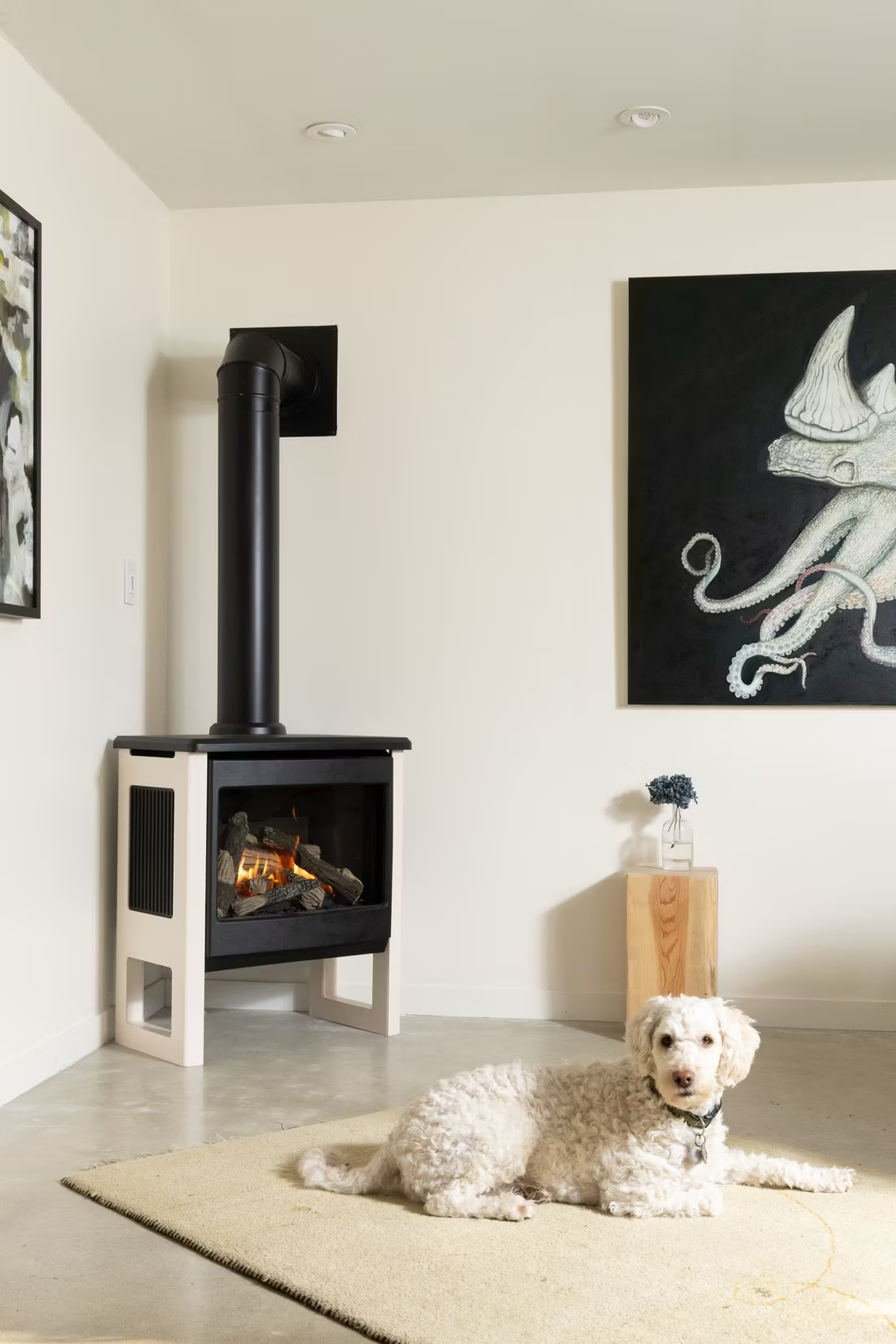
A gas fireplace is a fully built-in unit framed into a wall—the typical choice for new construction or a full remodel in San Carlos's newer homes near Laurel Street. A gas insert slides into an existing masonry firebox, which is common in the city's older ranch and Eichler-adjacent homes that already have a fireplace opening. A gas stove is a freestanding unit that sits on the floor and vents like a stove but burns gas rather than wood—useful when you want a self-contained heat source without an existing fireplace cavity. For most San Carlos homeowners upgrading a dated wood fireplace, the insert is the straightforward path.
Do I need a permit to install a gas fireplace in San Carlos?
Yes. The City of San Carlos Building Division requires a building permit for the installation and a separate gas line permit if new piping is being run, and the gas connection itself has to be completed by a licensed contractor. Most established hearth dealers handle the permit filing and inspection scheduling as part of the installation, which is one of the main reasons to work with a dealer rather than a handyman—mismatched venting or an unpermitted gas tap is exactly what a final inspection is designed to catch.
Can I install a vent-free gas fireplace in San Carlos?
Practically, no. California's mechanical code and most Bay Area building departments, including San Carlos, do not permit unvented ('vent-free') gas fireplaces as a room's primary decorative appliance in most residential occupancies. Direct-vent gas fireplaces and inserts—which draw combustion air from outside and exhaust it back outside through a sealed pipe—are the standard here, and they're what every local dealer will spec. That's actually a benefit: direct-vent units keep combustion byproducts out of the living space entirely, which matters in a city that already deals with wildfire smoke intrusion during fire season.
Gas fireplace vs. electric fireplace—which makes more sense in San Carlos?
With PG&E residential electricity running about $0.317 per kWh—among the highest rates in the country—a gas fireplace is meaningfully cheaper to run for real heat output than an electric resistance unit, and it keeps working during a PSPS outage if you choose the right ignition system. Electric fireplaces have their place too: no venting or gas line needed, simple installation, and a low $400–$1,200 typical cost, which makes them a reasonable choice for a secondary room or a rental unit where ambiance matters more than heating capacity. For a primary living space in San Carlos's mild but not heatless winters, gas is usually the better long-term investment.
Why is my open fireplace making my house colder?
Open fireplaces suck—literally. As the fire burns, it consumes air your furnace already paid to heat and pulls it out through the chimney, so the house is actually colder after the fire goes out than before you lit it. An insert fixes this: it seals the chimney, puts fixed glass across the front, and turns that hole in your house into a real heat source.
Is my gas fireplace wasting gas?
If it was installed more than 15 years ago, probably. Older gas fireplaces keep a standing pilot light burning all the time, and that little flame can cost a couple hundred dollars a year. Newer models use pilot-on-demand ignition—the pilot lights only when you use the fireplace and goes out when you turn it off.
Can a fireplace actually lower my heating bill?
Yes—by creating a comfort zone. A furnace heats every square foot of the house just to warm the one room you're in; a gas fireplace on low burns roughly a sixth of the gas a typical furnace does. Set the furnace around 55–60 degrees as a baseline, then heat the rooms your family actually uses. Families who heat this way commonly save $20–$60 a month.
What is an in-home preview and do I need one?
It's a visit where a hearth professional measures your space, confirms the model you picked actually works in your home, and walks the specs—framing, gas line, venting, finish work—before anything is ordered. Some details you just can't know until you see the house. Never make a down payment without one; it's the single most-skipped step that burns buyers.
Nearby Dealers
Hearth shops serving San Carlos and the surrounding area.
Find your gas fireplace in San Carlos.
Tell us about your home and we'll match you with a trusted local San Carlos dealer and send over a free Project Guide & Parts List—the exact parts, vent kit, and permit-ready plan for your gas fireplace project.
Find Your Fireplace →