
Instant heat for the high desert, without the smoke.
Ridgecrest winters are mild by most standards, but desert nights in the Indian Wells Valley still drop into the 20s and 30s. Find the right gas fireplace, insert, or stove and connect with a trusted local dealer who can install it correctly.
Every Project Starts From One of These Five Situations
A cleaner way to warm cool desert evenings.
At 2,279 feet in the Indian Wells Valley, Ridgecrest sits in a climate zone 3B pocket of the Mojave—winters average a low of 31°F and the area logs only about 2,491 heating degree days a year, a fraction of what a place like Duluth, MN sees in a single hard month. That mild total doesn't mean the nights are comfortable, though. Clear desert skies mean fast radiational cooling once the sun drops, and homes built around China Lake Naval Air Weapons Station over the past seven decades—from older masonry-fireplace ranch houses downtown to newer stucco tract homes near the base—all deal with the same swing between warm days and cold nights.
Ridgecrest and the surrounding Kern County high desert are part of a designated non-attainment area under the Eastern Kern Air Pollution Control District, and winter inversions can trap wildfire smoke and particulate low in the valley for days at a time. That's part of why gas fireplaces are a popular choice here: they deliver real, on-demand heat and fire ambiance without adding smoke to an airshed that's already under scrutiny. Natural gas mains generally reach homes inside the city core, while properties on the outskirts of the valley—toward Inyokern or unincorporated county land—more often rely on propane tanks from regional suppliers. Either fuel source works with most direct-vent gas fireplace models.
Three steps. No salesperson until you're ready.
Tell us about your project
Your zip code, your situation, and the fuel you're leaning toward—or let the answers point you to one.
See what's actually available
The brands dealers within 100 miles genuinely carry—real options, never a catalog mirage.
Get your dealer & Project Guide
A trusted local dealer, plus the free Project Guide & Parts List that names every component of the job.
Frequently Asked Questions
How much does a gas fireplace installation cost in Ridgecrest?
Most gas fireplace and insert installations in the Ridgecrest area run in the $3,500 to $9,000 range, with the low end covering a direct-vent insert going into an existing masonry fireplace that already has gas or propane plumbed nearby, and the higher end covering new construction or remodel installs that require framing, venting, and a new gas line run. Homes outside the city's natural gas mains that need a new propane tank set and line from a local propane supplier should expect costs toward the top of that range or slightly above. A local dealer will give you a firm number after seeing your existing chimney or wall cavity in person.
Can I convert my existing wood-burning fireplace to gas?
Yes, and it's a common request in Ridgecrest's older neighborhoods, many of which were built with masonry fireplaces when the town grew up around the Naval Ordnance Test Station in the 1950s. A gas insert typically slides into that existing masonry opening with a stainless liner run up the old chimney, which keeps the original brick or stone surround intact while swapping out the smoke and ash for push-button flame. These conversions generally land in the $3,500 to $8,000 range depending on the insert and whether new gas piping is needed to reach the fireplace.
Is natural gas available in Ridgecrest, or will I need propane?
It depends on where in the Indian Wells Valley you're located. Homes within the Ridgecrest city core are generally within reach of natural gas mains, while properties farther out—toward Inyokern or unincorporated stretches of Kern County—more commonly run on propane, supplied and refilled by regional propane companies. Southern California Edison handles electric service everywhere in the area, but gas service is the piece that varies by address, so it's worth confirming what's already run to your house before you shop for a unit.
Will my gas fireplace still work during a power outage?
In most cases, yes. Units with IPI (intermittent pilot ignition) run on battery backup that kicks in automatically if the power drops, so the fireplace lights on demand just like normal. Valor fireplaces take it a step further—their pilot's thermocouple generates its own electricity, so there's no battery to remember at all. That matters in this part of the Mojave: Southern California Edison, like other California utilities, sometimes calls Public Safety Power Shutoffs during high-wind events, and with SCE's residential rate running around 28 cents per kWh, a gas fireplace that keeps working without grid power is both a comfort and a cost hedge during an outage.
What's the difference between a gas fireplace, gas insert, and gas stove?
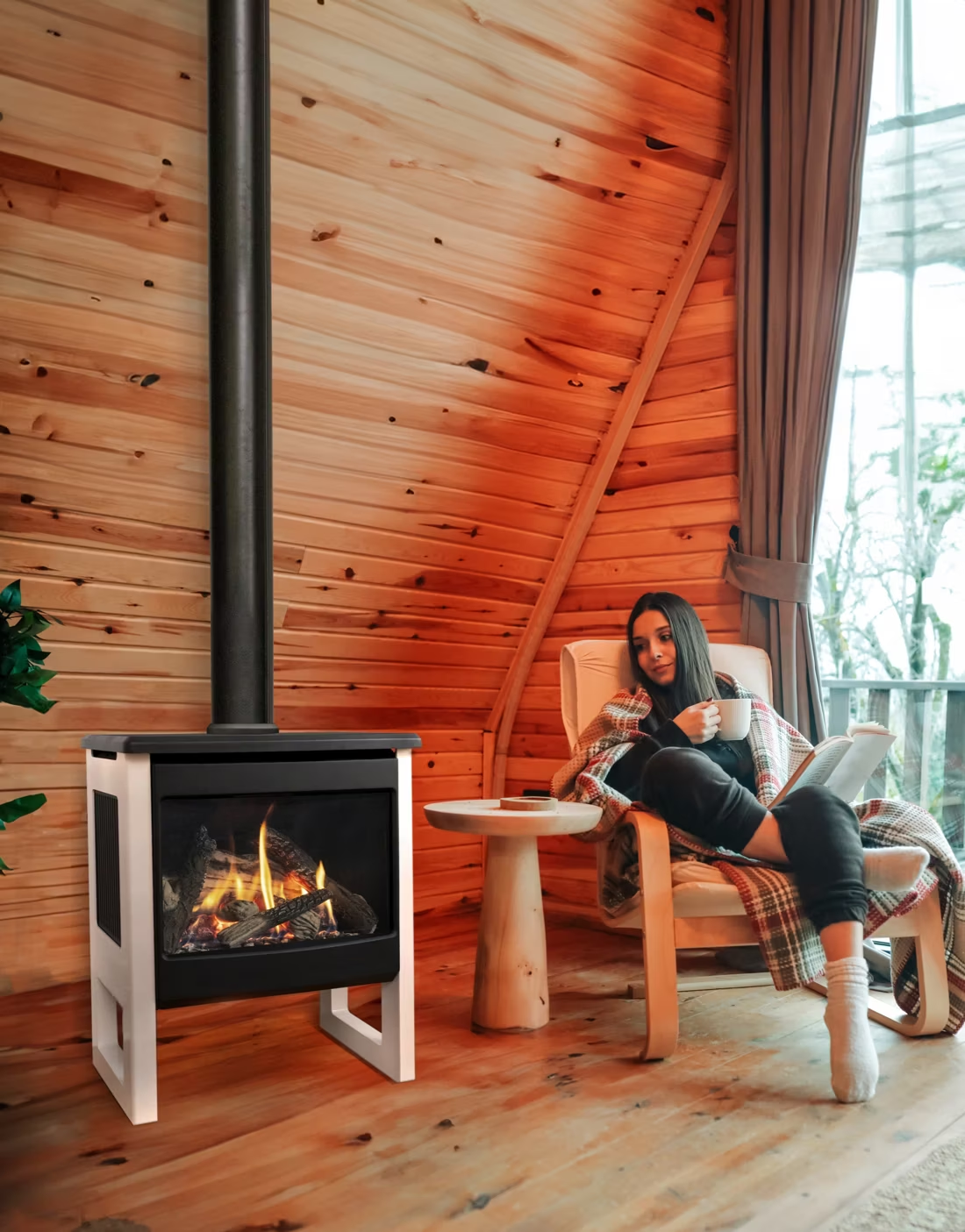
A gas fireplace is a fully built-in unit framed into a wall—the right call for new construction or a remodel that doesn't already have a fireplace opening. A gas insert drops into an existing masonry fireplace and uses the chimney as its vent path, which suits many of Ridgecrest's older homes with fireplaces already in place. A gas stove is a freestanding cabinet-style unit that sits on the floor and vents through a wall or roof, a good fit for homes without any existing fireplace structure at all, including many of the newer stucco tract homes near China Lake.
Do I need a permit to install a gas fireplace in Ridgecrest?
Yes. Inside city limits, permitting runs through the City of Ridgecrest Building & Safety Division; outside city limits, it's handled through the Kern County Building Department. Either way, the gas line portion of the work needs to be pulled by a licensed contractor, which is one reason it's worth using a hearth dealer who coordinates the gas fitting, venting, and inspection together rather than juggling separate trades yourself.
Are vent-free gas fireplaces allowed in Ridgecrest?
They're legal in California, but given that Ridgecrest sits in a designated non-attainment area under the Eastern Kern Air Pollution Control District, with winter inversions that can trap smoke and particulate in the valley for days, most local dealers steer homeowners toward sealed, direct-vent gas units instead. Vented models draw combustion air from outside and exhaust it back outside, keeping your indoor air clean regardless of what the inversion is doing to the air outside. It's worth asking your dealer to walk through both options before you decide.
How often should a gas fireplace be serviced in Ridgecrest?
Plan on an annual inspection, ideally in October or November before the coldest stretch of desert nights sets in. A technician will check the burner, pilot or ignition system, venting, and gas connections, and clean the glass and interior. This is a much smaller job than wood-stove chimney sweeping, but skipping it is still the most common cause of nuisance shutoffs and pilot problems. Expect to pay somewhere in the $150 to $250 range for a standard annual service call.
Gas vs. wood—which makes more sense for a Ridgecrest home?
Wood is still an option here—oak, madrone, and Douglas fir are the common species available through Sequoia National Forest cutting permits, which run $5 to $20 per cord during the May-to-October season. But with only about 2,491 heating degree days a year, Ridgecrest doesn't have the sustained cold that makes wood heat a daily necessity the way it is in colder parts of the country, and the Eastern Kern Air Pollution Control District's non-attainment status plus regular wildfire-smoke advisories make an already smoky airshed a real consideration before adding wood smoke to it. Many local homeowners lean toward gas for everyday ambiance and quick heat, keeping wood-burning appliances, where they exist, mostly for backup or occasional use.
Is my gas fireplace wasting gas?
If it was installed more than 15 years ago, probably. Older gas fireplaces keep a standing pilot light burning all the time, and that little flame can cost a couple hundred dollars a year. Newer models use pilot-on-demand ignition—the pilot lights only when you use the fireplace and goes out when you turn it off.
What's the difference between an insert and a zero-clearance fireplace?
An insert is a fireplace that slides into a pre-existing wood-burning fireplace—if you don't have one, there's nothing to insert it into. A zero-clearance fireplace is built into a framed wall, which makes it the answer for remodels and new construction. Simple test: existing masonry fireplace means insert; blank or framed wall means zero-clearance.
What is an in-home preview and do I need one?
It's a visit where a hearth professional measures your space, confirms the model you picked actually works in your home, and walks the specs—framing, gas line, venting, finish work—before anything is ordered. Some details you just can't know until you see the house. Never make a down payment without one; it's the single most-skipped step that burns buyers.
Can a fireplace actually lower my heating bill?
Yes—by creating a comfort zone. A furnace heats every square foot of the house just to warm the one room you're in; a gas fireplace on low burns roughly a sixth of the gas a typical furnace does. Set the furnace around 55–60 degrees as a baseline, then heat the rooms your family actually uses. Families who heat this way commonly save $20–$60 a month.
Nearby Dealers
Hearth shops serving Ridgecrest and the surrounding area.
Find your gas fireplace in Ridgecrest.
Tell us about your home and we'll match you with a trusted local dealer and send a free Project Guide & Parts List—the right insert or built-in, correctly sized venting, and a clear plan for your Ridgecrest gas fireplace project.
Find Your Fireplace →