
Real Fireplace Warmth, Zero Wildfire Smoke Risk.
Clean, code-simple warmth for Santa Maria Valley's mild winters. Find the right electric fireplace or insert, and connect with a trusted local dealer.
Every Project Starts From One of These Five Situations
Mild winters make electric the easiest fireplace to add.
Orcutt sits in the Santa Maria Valley on California's south-central coast, at just 451 feet of elevation, where the Pacific marine layer keeps winters mild—the average winter low is 41°F, and the whole heating season adds up to only about 2,484 heating degree days a year. Compare that to a place like Bozeman, Montana, which sees more than 7,000 HDD, and it's clear Orcutt homes were never built around punishing cold. Central heat runs sparingly here, which is exactly why an electric fireplace fits so well: it's built for ambiance and zone warmth on the cool, damp evenings that roll in off the coast, not for battling sub-zero nights.
Wood burning is a tough sell here for reasons beyond the mild climate. Santa Barbara County Air Pollution Control District enforces wood-smoke curtailment during wildfire season and inversion events, and much of the surrounding hillside feeds into Los Padres National Forest, where fire risk keeps everyone thinking twice about smoke. Pellet stoves face the same air-quality friction. Electric fireplaces sidestep all of it—no combustion, no smoke, no chimney to maintain, and no curtailment days to track. The tradeoff is the region's electric rate: PG&E residential customers here pay around $0.317 per kWh, among the higher rates in the state, so most homeowners run their electric fireplace as supplemental heat and ambiance rather than as a replacement for a furnace or heat pump.
Three steps. No salesperson until you're ready.
Tell us about your project
Your zip code, your situation, and the fuel you're leaning toward—or let the answers point you to one.
See what's actually available
The brands dealers within 100 miles genuinely carry—real options, never a catalog mirage.
Get your dealer & Project Guide
A trusted local dealer, plus the free Project Guide & Parts List that names every component of the job.
Frequently Asked Questions
How much does it cost to install an electric fireplace in Orcutt?
Electric fireplace costs in Orcutt scale with how built-in you want the final look. A freestanding or mantel-style plug-in unit runs $200 to $1,000 and needs nothing more than a standard 120V outlet—no permit, no electrician. A wall-mounted linear electric fireplace or an insert retrofitted into an old masonry firebox typically runs $1,500 to $4,000 installed, and often calls for a dedicated 20-amp circuit if the unit draws a full 1,500 watts. A full built-in with custom surround, niche framing, and finish carpentry can run $3,000 to $8,000. Local dealers can tell you quickly which tier fits your space during a walkthrough.
Do I need a permit to install an electric fireplace in Orcutt?
Santa Barbara County Building & Safety, which covers unincorporated Orcutt, generally doesn't require a permit for a plug-in electric fireplace since there's no gas line, venting, or chimney involved. Where a permit comes into play is the electrical work: if your installer is running a new dedicated circuit for a hardwired built-in unit, that's an electrical permit and should be pulled by a licensed electrician. Ask your dealer whether your chosen unit is cord-and-plug or hardwired—that answer determines whether the county gets involved at all.
How much does it cost to run an electric fireplace with PG&E rates?
At PG&E's residential rate of about $0.317 per kWh, a typical 1,500-watt electric fireplace heater costs roughly $0.48 an hour to run on high heat. Most Orcutt homeowners don't run the heater setting constantly, though—with winter lows only averaging 41°F, many use the flame effect on its own (drawing 50 to 100 watts for the LEDs) for ambiance most evenings and switch on the heater only during an occasional cold snap or damp, foggy night.
Can an electric fireplace be my main heat source in a climate this mild?
In a lot of Orcutt homes, yes—at least for the rooms where it's installed. With only about 2,484 heating degree days a year and winter lows rarely dropping much below the low 40s, a single electric fireplace can comfortably heat a living room or bedroom without help from central heat on all but the coldest nights of the year. Homeowners in older, larger, or leakier homes still lean on central heat for whole-house comfort, but zone heating with an electric unit is a legitimate way to cut down on how often the furnace runs.
Why isn't wood burning more common in Orcutt?
Wood-burning fireplaces and stoves are a hard sell here for reasons that go beyond mild winters. Santa Barbara County APCD issues wood-smoke curtailment advisories during wildfire season and winter inversions, and the surrounding hills feed into Los Padres National Forest, where fire risk is a year-round concern for residents. If you own land elsewhere and want to cut your own wood, Los Padres does issue personal-use cutting permits for $5 to $20 per cord during the May-through-October season—but that's not a realistic heating strategy inside Orcutt. It's one more reason electric has become the practical fireplace choice locally.
What's the best type of electric fireplace for an Orcutt home?
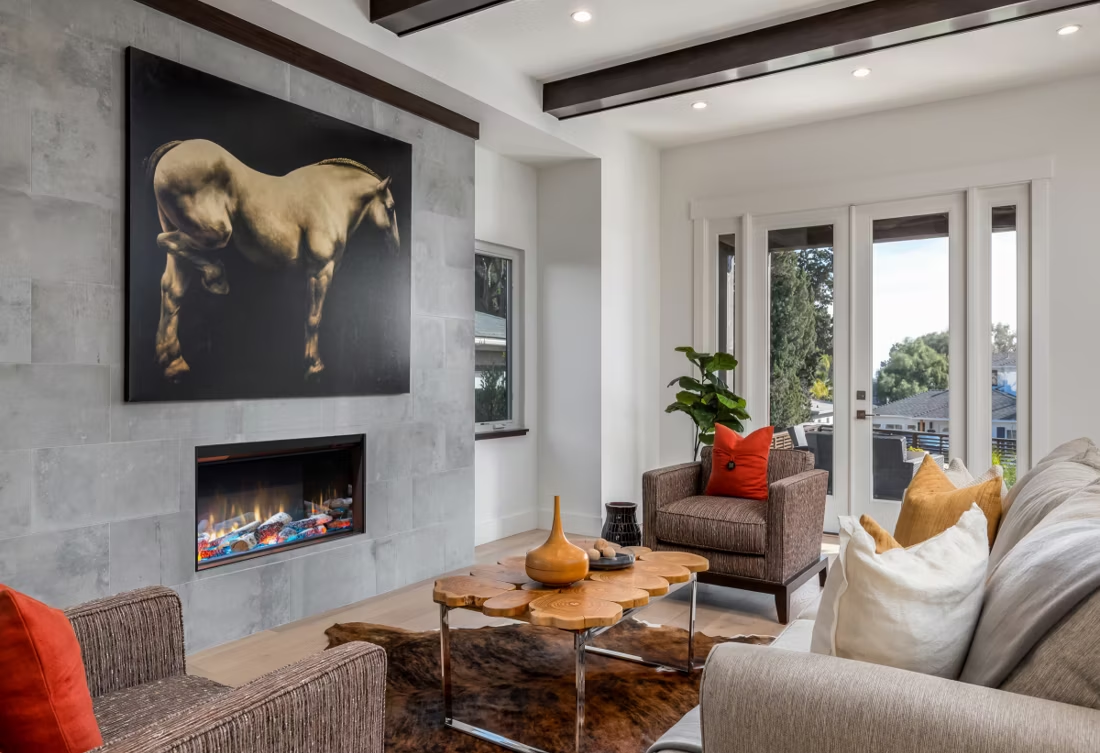
Linear wall-mount units are popular in Orcutt's newer construction because they fit the clean, low-profile look of contemporary living rooms without needing a chimney chase. In the older homes around Old Orcutt with an existing masonry fireplace, an electric insert sized to the firebox opening is usually the better retrofit—it reuses the existing opening and mantel, and skips the venting and gas-line work a conversion to gas would require. Both styles are widely available through local hearth dealers who can match the insert dimensions to your specific firebox.
Can I convert my old wood fireplace to electric?
This is one of the more common projects local dealers see in Orcutt's older neighborhoods. Many homes built before current air-quality rules have a masonry wood fireplace that's rarely used because of curtailment days or simple smoke concerns. An electric insert slides into that same firebox opening, uses the existing mantel and surround, and plugs into a nearby outlet or a new dedicated circuit if the unit calls for one. There's no chimney sweep, no liner, and no combustion byproducts to vent—it's usually the fastest and least invasive way to bring an old fireplace back into regular use.
Electric vs. gas—which is right for my Orcutt home?
Gas is a real option in Orcutt—natural gas service reaches most of the area—and it delivers more raw heat output than electric, which matters if you want a fireplace to seriously offset central heating. But gas installation means running a gas line and venting, whether direct-vent or through an existing chimney, which adds cost and permitting. Electric skips both: no gas line, no venting, and no combustion byproducts to manage, which is part of why it's gained ground in newer, all-electric construction across Santa Barbara County. If your goal is ambiance and zone warmth in a room that doesn't already have gas plumbed to it, electric is usually the simpler and cheaper path.
How much maintenance does an electric fireplace need?
Electric fireplaces are close to maintenance-free compared to wood or gas units. There's no chimney to sweep, no gas lines to inspect annually, and no combustion byproducts to worry about. Maintenance amounts to occasionally dusting the unit, wiping the glass front, and replacing LED light strips every several years of heavy use—most manufacturers rate them for 20,000-plus hours. The heater blower is the only moving part, and it occasionally benefits from a filter clean, similar to a space heater.
Does an electric fireplace need a vent or chimney?
No—that's its superpower. An electric fireplace needs a wall and an outlet, period. No vent pipe, no gas line, no clearances to design around, which is why it works in bedrooms, offices, apartments, and walls where venting a gas or wood unit would be impractical or impossible. Installation is typically the simplest and least expensive of any fireplace type.
Can I put a TV above my fireplace?
Yes—with an asterisk. Fireplaces are hot and TVs don't like heat. Either put a mantel between them to deflect rising warmth, or choose a fireplace with heat-management technology that creates a cool zone on the wall above—the wall stays around 125 degrees, barely warm, while the room still gets full heat. If you like clean lines and don't want a mantel, heat management is the answer.
Can I install a fireplace myself?
If you're putting a fire in your house on purpose, it's best to work with an expert. Unless you're genuinely experienced in framing, gas line, vent pipe, and the national code on clearances to combustibles, have a professional do it—and ideally the same company that sells you the fireplace, so warranty, service, and liability all live under one roof.
What is an in-home preview and do I need one?
It's a visit where a hearth professional measures your space, confirms the model you picked actually works in your home, and walks the specs—framing, gas line, venting, finish work—before anything is ordered. Some details you just can't know until you see the house. Never make a down payment without one; it's the single most-skipped step that burns buyers.
Nearby Dealers
Hearth shops serving Orcutt and the surrounding area.
Electric Service in Orcutt
An electric fireplace's heater draws about 1,500 watts—pennies per hour at local rates.
Pacific Gas & Electric Co.
Find your electric fireplace in Orcutt.
Tell us a bit about your home and we'll match you with the right electric fireplace or insert size—and hand you a free Project Guide & Parts List with the exact components and a trusted local Orcutt-area dealer to install it.
Find Your Fireplace →