
Warmth on demand for Oceanside's cool coastal evenings.
With winter lows hovering around 40°F and a marine layer that rolls in most nights, Oceanside homes want instant, controllable heat—not a full furnace replacement. Find the right gas fireplace and connect with a trusted local dealer.
Every Project Starts From One of These Five Situations
Comfort heat for a coastal climate, not survival heat.
Oceanside sits right on the Pacific in climate zone 3B, at just 239 feet of elevation, with an average winter low around 40°F and one of the lightest winter heating loads of any market we cover. Nobody here is burning wood or pellets to survive a cold snap the way homeowners do in places like Bozeman or Duluth. Wood-burning is also flagged not-applicable for this area for good reason: San Diego County enforces wood-smoke curtailment during wildfire and air-quality events, and most Oceanside tract homes built from the 1960s through the 1980s that came with a masonry fireplace have long since been converted away from open wood burning.
Natural gas service from San Diego Gas & Electric (SDG&E) reaches nearly every zip code in Oceanside, from the older neighborhoods near the pier (92054) to newer development inland toward 92057 and 92058. That makes a direct-vent gas fireplace or insert the practical choice for the handful of cool, damp evenings each winter—instant flame at the flip of a switch, no smoke, no ash, and no conflict with county air-quality rules. It's also worth knowing SDG&E's residential electric rate runs among the highest in the country at roughly $0.32/kWh, which is part of why gas remains the more economical option here when you actually want real heat output rather than just the look of a flame.
Three steps. No salesperson until you're ready.
Tell us about your project
Your zip code, your situation, and the fuel you're leaning toward—or let the answers point you to one.
See what's actually available
The brands dealers within 100 miles genuinely carry—real options, never a catalog mirage.
Get your dealer & Project Guide
A trusted local dealer, plus the free Project Guide & Parts List that names every component of the job.
Frequently Asked Questions
How much does a gas fireplace installation cost in Oceanside?
Most gas fireplace installations in Oceanside run $4,500 to $10,000, with Southern California labor rates and coastal-home construction pushing costs toward the upper end for anything beyond a straightforward insert swap. A direct-vent gas insert dropped into an existing masonry fireplace with a gas line already nearby is the least expensive path. A new built-in gas fireplace for a remodel—with framing, venting through an exterior wall, and a new gas line run from the meter—lands in the middle to upper range. Local retailers will walk your home and give you a firm number after seeing the existing chimney or wall conditions.
Can I convert my existing wood fireplace to gas?
Yes, and it's one of the most common projects for Oceanside homeowners, especially in the older housing stock near downtown and the harbor where original 1960s-70s masonry fireplaces are still common. Because open wood burning is discouraged here under San Diego County air-quality rules, a gas insert that reuses your existing chimney with a stainless liner is usually the preferred fix. Expect $4,000 to $8,500 depending on the insert and whether new gas line work is needed to reach the firebox. The result keeps your original mantel and surround while giving you clean, instant heat.
Do I need natural gas, or is propane common in Oceanside?
Natural gas from SDG&E reaches virtually all of Oceanside's incorporated zip codes, so the vast majority of gas fireplace installs here tap directly into existing gas service. Propane is really only a consideration for a handful of unincorporated pockets east toward the county backcountry that fall outside the natural gas footprint. If you already have a gas range, water heater, or furnace, adding a fireplace to that same natural gas line is the standard and most cost-effective route.
Will my gas fireplace still work if SDG&E shuts off power?
Most modern gas fireplaces with intermittent pilot ignition (IPI) include a battery backup that keeps the unit lighting on demand even when the grid is down. That matters in Oceanside because SDG&E occasionally initiates Public Safety Power Shutoffs (PSPS) during Santa Ana wind and wildfire-risk events, and those shutoffs can hit inland neighborhoods even when the coast itself is calm. Valor's gas fireplaces take a different approach—the pilot's thermocouple generates its own electricity, so the unit never depends on batteries at all. Ask your local dealer about the ignition system on any model you're considering if outage resilience matters to you.
What's the difference between a gas fireplace, gas insert, and gas stove?
A gas fireplace is a fully built-in unit framed into a wall—the right call for new construction or a full remodel. A gas insert slides into an existing masonry firebox and uses your current chimney as the vent path, which is the common upgrade for Oceanside's older tract homes with an original wood-burning fireplace. A gas stove is a freestanding cast-iron or steel unit that sits on the floor and vents through a wall or existing chimney, often chosen for a sunroom or added living space that never had a fireplace. For most homeowners here with an existing hearth, an insert is the simplest and least invasive option.
Do I need a permit to install a gas fireplace in Oceanside?
Yes—the City of Oceanside Building Division requires a building permit for gas fireplace installations, along with a mechanical or gas permit for the line work itself, which must be run by a licensed gas fitter. Most hearth retailers handle the permit paperwork and inspection scheduling as part of the install price, so you're not coordinating separate trades yourself. Skipping the permit can create real problems later at resale, since a home inspector will flag unpermitted gas appliance work.
Can I install a vent-free (ventless) gas fireplace in Oceanside?
California is one of the states that restricts vent-free gas appliances, and in practice you'll find almost no vent-free units installed in Oceanside homes—local code officials and retailers steer nearly everyone toward direct-vent sealed-combustion units instead. Direct-vent fireplaces draw combustion air from outside and exhaust it back outside through a sealed pipe, which keeps indoor air quality clean and satisfies inspection every time. If a retailer or online listing is pushing a vent-free unit for your Oceanside home, confirm with the Building Division before you buy.
How often should my gas fireplace be serviced?
Plan on an annual inspection, ideally in early fall before the coolest, dampest weeks of December and January. A certified technician checks the burner, pilot assembly, venting, and gas connections, and cleans the glass—salt air near the coast in zip codes like 92054 and 92049 can accelerate corrosion on venting hardware faster than it would inland, so don't skip years even if the unit sees light use. Most local service providers charge $150 to $250 for a standard annual visit.
Gas vs. electric fireplace—which makes more sense in Oceanside?
Given SDG&E's residential electric rate of roughly $0.32/kWh—among the highest in the country—running an electric fireplace as a real heat source gets expensive fast, though electric units are the simpler install: no gas line, no venting, often just a 120-volt plug, which makes them a good fit for a rental, an apartment, or a room where running gas line isn't practical. A vented gas fireplace costs more upfront but delivers genuine radiant heat at a lower operating cost per BTU and holds its value better in a home sale. For most Oceanside living rooms and primary spaces, gas remains the more popular choice; electric tends to win out for secondary rooms, bedrooms, or condos with HOA restrictions on venting.
What's the difference between an insert and a zero-clearance fireplace?
An insert is a fireplace that slides into a pre-existing wood-burning fireplace—if you don't have one, there's nothing to insert it into. A zero-clearance fireplace is built into a framed wall, which makes it the answer for remodels and new construction. Simple test: existing masonry fireplace means insert; blank or framed wall means zero-clearance.
Can I put a TV above my fireplace?
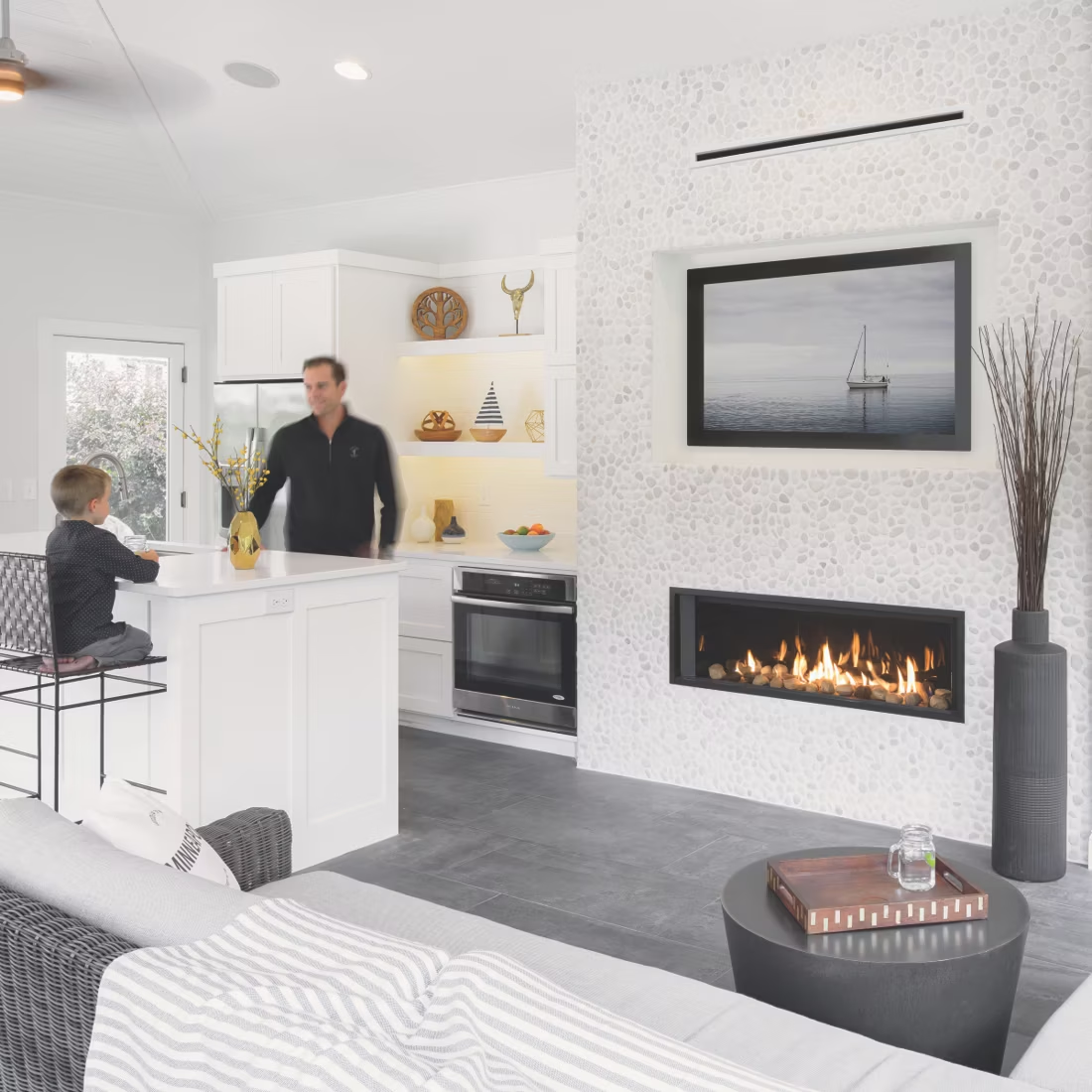
Yes—with an asterisk. Fireplaces are hot and TVs don't like heat. Either put a mantel between them to deflect rising warmth, or choose a fireplace with heat-management technology that creates a cool zone on the wall above—the wall stays around 125 degrees, barely warm, while the room still gets full heat. If you like clean lines and don't want a mantel, heat management is the answer.
How much should I budget for a fireplace?
For an average home—covering the fireplace, the vent pipe, and basic installation—a budget between $3,900 and $5,500 gives you a lot of options across wood, gas, and pellet. By the time you add finish work, gas line, and electrical, the average complete installation lands between $5,000 and $12,000 all-in. In a remodel or new build, a good rule is to put about 2.5% of the total project cost toward the fireplace.
Can I install a fireplace myself?
If you're putting a fire in your house on purpose, it's best to work with an expert. Unless you're genuinely experienced in framing, gas line, vent pipe, and the national code on clearances to combustibles, have a professional do it—and ideally the same company that sells you the fireplace, so warranty, service, and liability all live under one roof.
Nearby Dealers
Hearth shops serving Oceanside and the surrounding area.
Fan Diego Ceiling Fans & Lighting Showroom
Find your gas fireplace in Oceanside.
Tell us about your home and your existing fireplace, if you have one, and we'll send you a free Project Guide & Parts List—the exact parts your project needs, including the vent kit, plus a match with a trusted local Oceanside dealer who can install it right.
Find Your Fireplace →