
Warmth That Fits Monterey's Mild Winters.
No chimney, no gas line, no smoke—just clean supplemental heat sized for a coastal climate that rarely sees a hard freeze. Find the right unit and connect with a trusted local dealer.
Every Project Starts From One of These Five Situations
Mild coastal climate, modern comfort.
Monterey sits right at sea level—23 feet of elevation—wrapped in the marine layer that keeps winter lows hovering around 45°F. With one of the lightest winter heating loads in the country, this is one of the mildest heating climates in the country. Compare that to a place like Duluth, MN, which has a winter heating load several times heavier most winters, and it's clear why Monterey homes were never built around a serious combustion-heat system the way colder regions were.
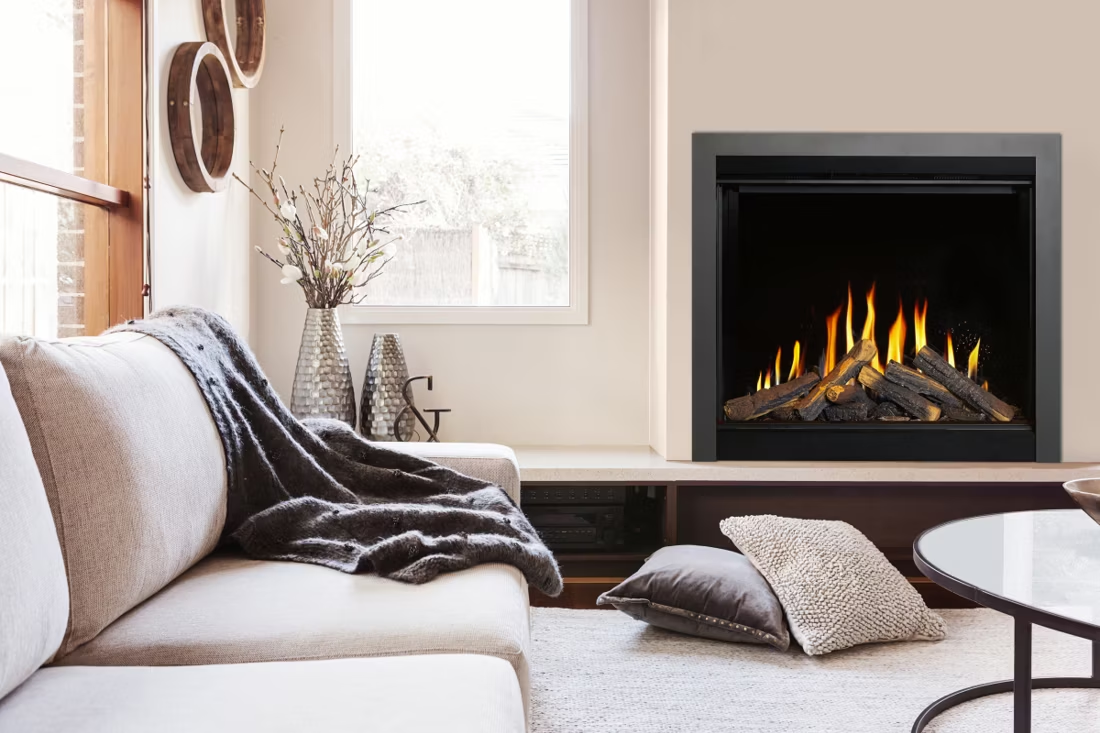
That's exactly where electric fireplaces earn their keep. They deliver instant, controllable zone heat to a living room or bedroom without a flue, a gas line, or an open flame—a real advantage in a county where wildfire smoke already puts pressure on outdoor and indoor air quality. Electric service here comes through Pacific Gas & Electric Co. for delivery, with Central Coast Community Energy supplying generation to most residential accounts by default—and the difference between PG&E's standard generation rate (around $0.317/kWh) and CCCE's rate (around $0.1301/kWh) can meaningfully change what a fireplace costs to run night after night.
Three steps. No salesperson until you're ready.
Tell us about your project
Your zip code, your situation, and the fuel you're leaning toward—or let the answers point you to one.
See what's actually available
The brands dealers within 100 miles genuinely carry—real options, never a catalog mirage.
Get your dealer & Project Guide
A trusted local dealer, plus the free Project Guide & Parts List that names every component of the job.
Frequently Asked Questions
How much does it cost to install an electric fireplace in Monterey?
It depends heavily on the type. A plug-in freestanding or mantel unit needs no installation at all beyond finding an outlet—many Monterey homeowners in older Victorians and Craftsman-style houses near downtown go this route for a single room. A built-in linear insert set into an existing fireplace opening or a new wall cavity typically runs $400 to $1,200 in labor, and if the circuit needs upgrading to support a 1,500-watt heater element, add an electrician's visit for a dedicated 20-amp circuit. Local dealers will tell you quickly which category your project falls into during a walkthrough.
Will an electric fireplace actually keep a Monterey home warm?
For most Monterey homes, yes—as supplemental, zone heat rather than a whole-house furnace replacement. With winter lows averaging 45°F and one of the lightest winter heating loads around, the heating load here is modest compared to inland or northern climates. A typical 5,000 to 9,000 BTU electric insert is plenty to take the chill off a living room or bedroom on a foggy 50-degree evening, especially in the older, less-insulated homes common in Monterey's historic neighborhoods. It's not designed to replace central heat in a poorly insulated house during a cold snap, but that scenario is rare here.
Why don't more Monterey homes use wood or pellet stoves?
Wood and pellet appliances are essentially not a fit for this climate and airshed. Monterey's mild winters don't generate the heating demand that makes cordwood or pellet fuel worthwhile, and the Monterey Bay Unified Air Pollution Control District's wildfire-smoke concerns already strain local air quality in fire season—adding routine wood smoke on top of that is a hard sell. A small number of homeowners still install a wood-burning fireplace purely for ambiance in a remodel, but it's uncommon, and most local dealers will steer you toward electric or gas instead.
Do I need a permit to install an electric fireplace in Monterey?
Usually not for a plug-in unit—it's no different than plugging in a space heater. If you're having a built-in insert wired into a dedicated circuit, or you're cutting into a wall for a linear unit during a remodel, that electrical work typically requires a permit through the City of Monterey Building Division (or Monterey County Building Services if you're outside city limits). A licensed electrician pulling the permit as part of the install is the norm, and most hearth dealers coordinate this for you rather than leaving you to schedule inspections yourself.
Why do I have two electric utilities listed for Monterey—PG&E and Central Coast Community Energy?
Pacific Gas & Electric still owns the wires and handles delivery and billing, but Central Coast Community Energy (CCCE) is the default generation provider for most Monterey County residential accounts under California's community choice aggregation program. That's why you'll see two rates: PG&E's standard generation rate runs around $0.317/kWh, while CCCE's rate is closer to $0.1301/kWh. Unless you've opted out back to PG&E generation, you're likely already on the lower CCCE rate—worth confirming on a recent bill before you estimate what a fireplace will cost to run.
What's the running cost of an electric fireplace in Monterey?
A typical 1,500-watt heater element draws 1.5 kWh per hour of heating. At CCCE's residential generation rate of roughly $0.1301/kWh, that's about $0.20 an hour. At PG&E's standard rate of $0.317/kWh, it's closer to $0.48 an hour. Either way, running an electric fireplace for a few hours most evenings during Monterey's mild winter adds up to a modest monthly cost—far less than most people assume, especially compared to central forced-air heating a whole house to compensate for one cold room.
What type of electric fireplace works best for a Monterey home?
For the older Victorian, Craftsman, and Spanish-revival homes common around downtown Monterey and Pacific Grove's edge, a built-in linear insert set into an existing fireplace opening tends to look the most natural and adds real zone heat. For newer coastal condos and rentals near the waterfront where no fireplace opening exists, a wall-mounted or recessed linear unit is popular because it needs no venting and satisfies most HOA and lease restrictions that rule out gas or wood appliances entirely. A local dealer can match the unit to your specific wall and opening dimensions.
Can I install an electric fireplace in a rented apartment or condo?
In many cases, yes—this is one of the clearest advantages electric has over wood or gas in Monterey's rental-heavy housing market. A plug-in or wall-mounted electric unit requires no chimney, no gas line, and no permanent venting modification, which makes it far more likely to be allowed under a lease or HOA agreement than a combustion appliance. Always check your specific lease or association rules first, but electric is generally the path of least resistance for renters and condo owners near Cannery Row and downtown.
Electric vs. gas fireplace—which makes more sense in Monterey?
Gas fireplaces are standard here too and offer real advantage during a power outage if the unit has a standing pilot, plus a more traditional flame look. Electric fireplaces skip the gas line and venting entirely, produce zero combustion byproducts (a real plus given regional wildfire-smoke air quality concerns), and are simpler to retrofit into a rental or condo. Given Monterey's mild heating load, most homeowners don't need gas's higher BTU output for backup heat—electric covers the ambiance and zone-heating role well. Homes wanting a fireplace as an emergency heat source during outages should lean toward gas; everyone else typically finds electric simpler and cheaper to live with.
Can I put a TV above my fireplace?
Yes—with an asterisk. Fireplaces are hot and TVs don't like heat. Either put a mantel between them to deflect rising warmth, or choose a fireplace with heat-management technology that creates a cool zone on the wall above—the wall stays around 125 degrees, barely warm, while the room still gets full heat. If you like clean lines and don't want a mantel, heat management is the answer.
Does an electric fireplace need a vent or chimney?
No—that's its superpower. An electric fireplace needs a wall and an outlet, period. No vent pipe, no gas line, no clearances to design around, which is why it works in bedrooms, offices, apartments, and walls where venting a gas or wood unit would be impractical or impossible. Installation is typically the simplest and least expensive of any fireplace type.
Can a fireplace actually lower my heating bill?
Yes—by creating a comfort zone. A furnace heats every square foot of the house just to warm the one room you're in; a gas fireplace on low burns roughly a sixth of the gas a typical furnace does. Set the furnace around 55–60 degrees as a baseline, then heat the rooms your family actually uses. Families who heat this way commonly save $20–$60 a month.
Can I install a fireplace myself?
If you're putting a fire in your house on purpose, it's best to work with an expert. Unless you're genuinely experienced in framing, gas line, vent pipe, and the national code on clearances to combustibles, have a professional do it—and ideally the same company that sells you the fireplace, so warranty, service, and liability all live under one roof.
Nearby Dealers
Hearth shops serving Monterey and the surrounding area.
Electric Service in Monterey
An electric fireplace's heater draws about 1,500 watts—pennies per hour at local rates.
Pacific Gas & Electric Co.
Central Coast Community Energy
Find your electric fireplace in Monterey.
Tell us a bit about your home and we'll put together a free Project Guide & Parts List—sized for your space and Monterey's mild climate—and match you with a trusted local dealer to install it.
Find Your Fireplace →