
Heat Your Home Without Watching the Burn-Ban Forecast.
Lathrop's mild Central Valley winters and San Joaquin Valley air rules make electric the fireplace fuel that never gets curtailed. Find the right unit and connect with a trusted local dealer.
Every Project Starts From One of These Five Situations
Mild winters and strict air rules point to one easy plug-in fix.
Lathrop sits at just 13 feet of elevation on the floor of the northern San Joaquin Valley, a few miles from the Delta and a short drive from Stockton and Manteca. Winters here are mild by any standard—average lows hover around 39°F and the city has a light winter heating load, roughly a third of what a place like Bozeman, Montana sees in a typical winter. That's simply not enough sustained cold to justify a wood stove or pellet insert as a heat source, which is why both fuels are rated not-applicable for Lathrop in our data. On top of that, San Joaquin County sits inside a federal non-attainment area for particulate matter, and the San Joaquin Valley Air Pollution Control District runs a mandatory 'Check Before You Burn' program every winter—on high-pollution days, wood-burning devices, including many EPA-certified stoves, are banned outright, no matter how cold it gets outside. Winter inversions trap smoke low over the valley floor, and wildfire smoke drifting in from the Sierra foothills adds to the pressure on air quality regulators.
Electric fireplaces sidestep all of that. There's no chimney, no venting, no wood to store, and no risk of a curtailment shutting your appliance down on the coldest night of the year—because there's no combustion at all. Most Lathrop homes are served by Pacific Gas & Electric, though a portion of the city draws power through the Lathrop Irrigation District, which also distributes retail electricity in parts of town—worth confirming which utility serves your address before you compare running costs. At PG&E's residential rate of roughly $0.317 per kWh, electric heat isn't cheap to run as a whole-house solution, but that's rarely the job here: most Lathrop buyers want a zone heater for a family room or bonus space during the handful of genuinely cold weeks each winter, plus year-round ambiance the rest of the time—and for that use case, an electric insert or built-in unit is an easy, low-maintenance fit.
Three steps. No salesperson until you're ready.
Tell us about your project
Your zip code, your situation, and the fuel you're leaning toward—or let the answers point you to one.
See what's actually available
The brands dealers within 100 miles genuinely carry—real options, never a catalog mirage.
Get your dealer & Project Guide
A trusted local dealer, plus the free Project Guide & Parts List that names every component of the job.
Frequently Asked Questions
How much does an electric fireplace installation cost in Lathrop?
Most electric fireplace projects in Lathrop run somewhere between $300 and $2,500 installed. A plug-in insert or a freestanding electric stove that uses an existing outlet is on the low end—often just the cost of the unit plus a couple hours of labor to frame it into a mantel or wall opening. A built-in wall unit or a linear electric fireplace that requires a dedicated 20-amp circuit run by a licensed electrician sits in the middle to upper end, especially if the wiring has to travel any distance from the panel. Because there's no venting or gas line involved, electric installs are consistently the least expensive fireplace project a Lathrop homeowner can take on.
Will an electric fireplace actually heat a room, or is it just for looks?
Both, depending on the model. Most electric fireplaces include a built-in fan-forced heater rated around 4,600 to 5,000 BTU, enough to comfortably supplement a 400 to 1,000 square foot space—which covers most family rooms and bonus rooms in Lathrop's newer subdivisions. Given the city's mild winters, with average lows in the high 30s, a single electric unit is often all the supplemental heat a room needs on the coldest nights of the year. The flame effect and heater run independently on most models, so you can enjoy the visual without the heat during Lathrop's long mild stretches, then switch the heater on for the handful of genuinely cold weeks in December and January.
Do I need a permit to install an electric fireplace in Lathrop?
It depends on the scope. A plug-in electric insert or freestanding stove that uses an existing outlet typically doesn't require a permit. A built-in wall unit that needs a new dedicated circuit does require an electrical permit through the City of Lathrop's Building Division, since that work has to be pulled by a licensed electrician and inspected. The good news is that electric installations skip the mechanical and gas permits that wood and gas projects require in San Joaquin County, which is part of why they're the fastest fireplace project to get approved and installed.
What's the difference between an electric fireplace, insert, and wall-mount unit?
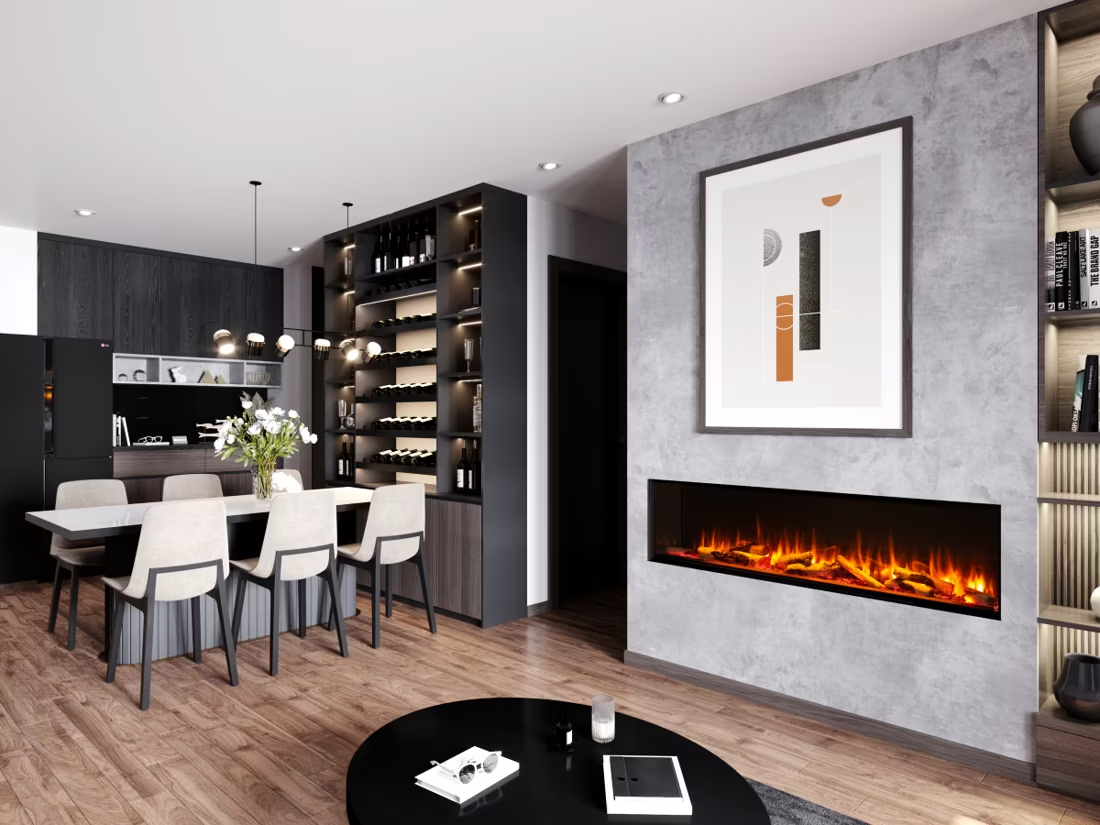
An electric insert is built to slide into an existing masonry or zero-clearance fireplace opening, using your current mantel and surround while replacing the firebox with a heater and flame-effect unit. A freestanding electric stove sits on the floor and plugs in like an appliance, so it can go almost anywhere with an outlet. A wall-mount or linear electric fireplace is installed flush into a wall—either recessed between studs or surface-mounted—and is popular in newer Lathrop homes for a clean, modern look in a family room or primary bedroom. For a home with an existing wood-burning fireplace that's no longer practical to use given the valley's burn restrictions, an insert is usually the simplest upgrade path.
What will an electric fireplace do to my PG&E bill?
At PG&E's residential rate of about $0.317 per kWh—one of the higher rates in the country—a typical electric fireplace heater running at 1,500 watts costs roughly $0.48 per hour to operate. Used for a few hours most evenings during Lathrop's cooler months, that works out to somewhere around $30 to $60 a month, depending on how often you run the heater versus just the flame effect, which draws only a few watts. Homes in the part of Lathrop served by the Lathrop Irrigation District rather than PG&E should check that district's current residential rate, since it can differ from PG&E's published rate. Either way, electric heat is best used as targeted zone heating rather than a whole-house solution given current California electric rates.
Why can't I just install a wood stove instead?
You technically can, but it's a poor fit for Lathrop on two fronts. First, the climate doesn't demand it—with an average winter low of 39°F and only a light winter heating load, there simply aren't enough cold days to make a wood stove worth the investment for most homes. Second, San Joaquin County falls inside the San Joaquin Valley Air Pollution Control District's non-attainment area, which runs a mandatory 'Check Before You Burn' program every winter. On declared high-pollution days, wood-burning devices—including many EPA-certified stoves—are banned from operating, regardless of the temperature outside. A small number of homeowners still install wood-burning fireplaces for aesthetic reasons or for use at a second property in the Sierra foothills, but for year-round, reliable heat in Lathrop itself, it's not a device we'd steer most people toward.
What's the best electric fireplace for a Lathrop home?
Because Lathrop's climate calls for supplemental heat rather than a primary heat source, look at mid-size linear or insert models from brands like Dimplex, Napoleon, Touchstone, or SimpliFire—all of which offer realistic LED flame technology and a 4,600–5,000 BTU heater sized for a single room. For a family room or open-concept living space, a 50-inch to 60-inch linear wall unit gives you strong visual impact without oversizing the heat output for a climate this mild. If you're converting an existing masonry fireplace that's no longer practical to burn wood in, an insert-style electric unit that fits the existing opening is usually the more cost-effective route than a full wall-mount installation.
Electric vs. gas fireplace—which makes more sense in Lathrop?
Gas is a standard, well-supported option here too, with natural gas service available through PG&E across most of the city—so it's a legitimate alternative if you want a fireplace that puts out real, sustained heat and can double as backup warmth during a power outage, something an electric unit can't do, since it has no function without power. Electric wins on upfront cost, installation simplicity, and zero exposure to the Valley's winter burn restrictions, since there's no combustion involved at all. For most Lathrop homeowners who want ambiance plus light supplemental heat in a family room or bedroom, electric is the lower-cost, lower-hassle choice. For homeowners who want a fireplace that can genuinely carry the heating load during a rare cold snap or outage, gas is worth a look.
Are pellet stoves an option in Lathrop?
Not really. Like wood stoves, pellet appliances are rated not-applicable for Lathrop in our data—the mild valley climate doesn't generate enough heating demand to justify one, and pellet stoves are subject to the same San Joaquin Valley Air Pollution Control District oversight that affects wood-burning devices during declared high-pollution episodes, even though pellet units burn cleaner than cordwood. Regional pellet brands like Bear Mountain, Lignetics, and Pacific Pellet are readily available in the broader Central Valley for the handful of Lathrop-area homeowners who do install one, but for most homes here, an electric or gas fireplace is the more practical and unrestricted choice.
Can I put a TV above my fireplace?
Yes—with an asterisk. Fireplaces are hot and TVs don't like heat. Either put a mantel between them to deflect rising warmth, or choose a fireplace with heat-management technology that creates a cool zone on the wall above—the wall stays around 125 degrees, barely warm, while the room still gets full heat. If you like clean lines and don't want a mantel, heat management is the answer.
What fireplace styles should I know before shopping?
Four cover most of the market: screen-front traditional (mesh front, open feel, fits craftsman homes), traditional door set (the classic look you grew up with), modern linear (wide, low, the statement piece for entertaining), and clean face contemporary (no trim—your tile or stone runs right to the fire's edge). Walk in knowing those four terms and you're ahead of most buyers.
What is an in-home preview and do I need one?
It's a visit where a hearth professional measures your space, confirms the model you picked actually works in your home, and walks the specs—framing, gas line, venting, finish work—before anything is ordered. Some details you just can't know until you see the house. Never make a down payment without one; it's the single most-skipped step that burns buyers.
Does a fireplace add value to my home?
On average, a fireplace adds back to the home about the same amount you spent installing it. Add the monthly savings from heating the rooms you actually use instead of the whole house—often hundreds of dollars a year—and the value case is strong before you even count what a fire does for how your family uses the room.
Nearby Dealers
Hearth shops serving Lathrop and the surrounding area.
Elite Fireplace Service & Repair (Parts Only)
Electric Service in Lathrop
An electric fireplace's heater draws about 1,500 watts—pennies per hour at local rates.
Pacific Gas & Electric Co.
Lathrop Irrigation District
Find your electric fireplace in Lathrop.
Tell us a bit about your home and we'll put together a free Project Guide & Parts List—the right electric fireplace or insert for your space, plus a trusted local dealer who can install it.
Find Your Fireplace →