
Ambiance heat for La Verne's mild winter nights.
With winter lows averaging 43°F, La Verne doesn't need a furnace running around the clock—but a real flame on a cool foothill evening is still worth having. Find the right gas fireplace and connect with a trusted local dealer.
Every Project Starts From One of These Five Situations
Instant heat for a climate that rarely demands it.
At 1,161 feet in the foothills of the San Gabriel Mountains, La Verne has a mild winter heating load—mild enough that most homes lean on central HVAC for the handful of genuinely cold nights each winter. That's a very different profile from a place like Duluth, MN or Bismarck, ND, where heat is a survival issue. Here, a fireplace is doing different work: ambiance most evenings, real supplemental warmth on the occasional 40-degree night, and a design feature in living rooms across La Verne's ranch and Spanish-style housing stock.
La Verne sits within the South Coast Air Basin, a federal non-attainment area, and wildfire smoke is a recurring concern most falls. Wood burning is heavily restricted here—new wood-burning fireplaces have been prohibited in new construction under SCAQMD Rule 445 since 2009, and existing wood units are subject to no-burn advisories through the Check Before You Burn program. Gas sidesteps all of that: no particulate smoke, no No-Burn-day restrictions, and instant on-off operation. Southern California Edison serves electric service in La Verne at a relatively high residential rate (about $0.28/kWh), which makes gas the more cost-effective flame-based option for homeowners comparing it against electric fireplaces for regular use.
Three steps. No salesperson until you're ready.
Tell us about your project
Your zip code, your situation, and the fuel you're leaning toward—or let the answers point you to one.
See what's actually available
The brands dealers within 100 miles genuinely carry—real options, never a catalog mirage.
Get your dealer & Project Guide
A trusted local dealer, plus the free Project Guide & Parts List that names every component of the job.
Frequently Asked Questions
How much does a gas fireplace installation cost in La Verne?
Gas fireplace and insert installations in the San Gabriel Valley typically run $4,500 to $10,500, depending on the unit, the venting path, and whether new gas line work is needed. A direct-vent insert going into an existing masonry fireplace with a gas line already stubbed in sits toward the lower end. New construction or a remodel requiring framing, venting through an exterior wall, and a fresh gas run from the meter will land higher. A local dealer will give you a firm number after seeing your fireplace opening and gas service in person.
Can I convert my existing wood-burning fireplace to gas?
Yes, and in La Verne it's often the more practical path than keeping a wood-burning unit. SCAQMD Rule 445 has prohibited new wood-burning fireplace installations in the South Coast Air Basin since 2009, and existing wood fireplaces are subject to mandatory no-burn days during winter smog advisories. Converting to a gas insert uses your existing masonry chimney with a stainless liner and typically runs $4,500 to $9,000, with the exact cost depending on whether your home already has a gas line nearby. The conversion keeps the look of your fireplace while removing the smoke, ash, and burn-day restrictions entirely.
Do I need natural gas service, or can I use propane?
Most homes in La Verne and the surrounding San Gabriel Valley are already connected to natural gas service, so adding a fireplace usually means tapping an existing gas line rather than starting from scratch. Propane is uncommon here—it typically only comes into play for outdoor fire features or homes on the edge of service areas without a nearby gas main. If you already have a gas range, water heater, or furnace, a gas fireplace installer can generally extend from your existing gas infrastructure without much added cost.
Will my gas fireplace still work if the power goes out?
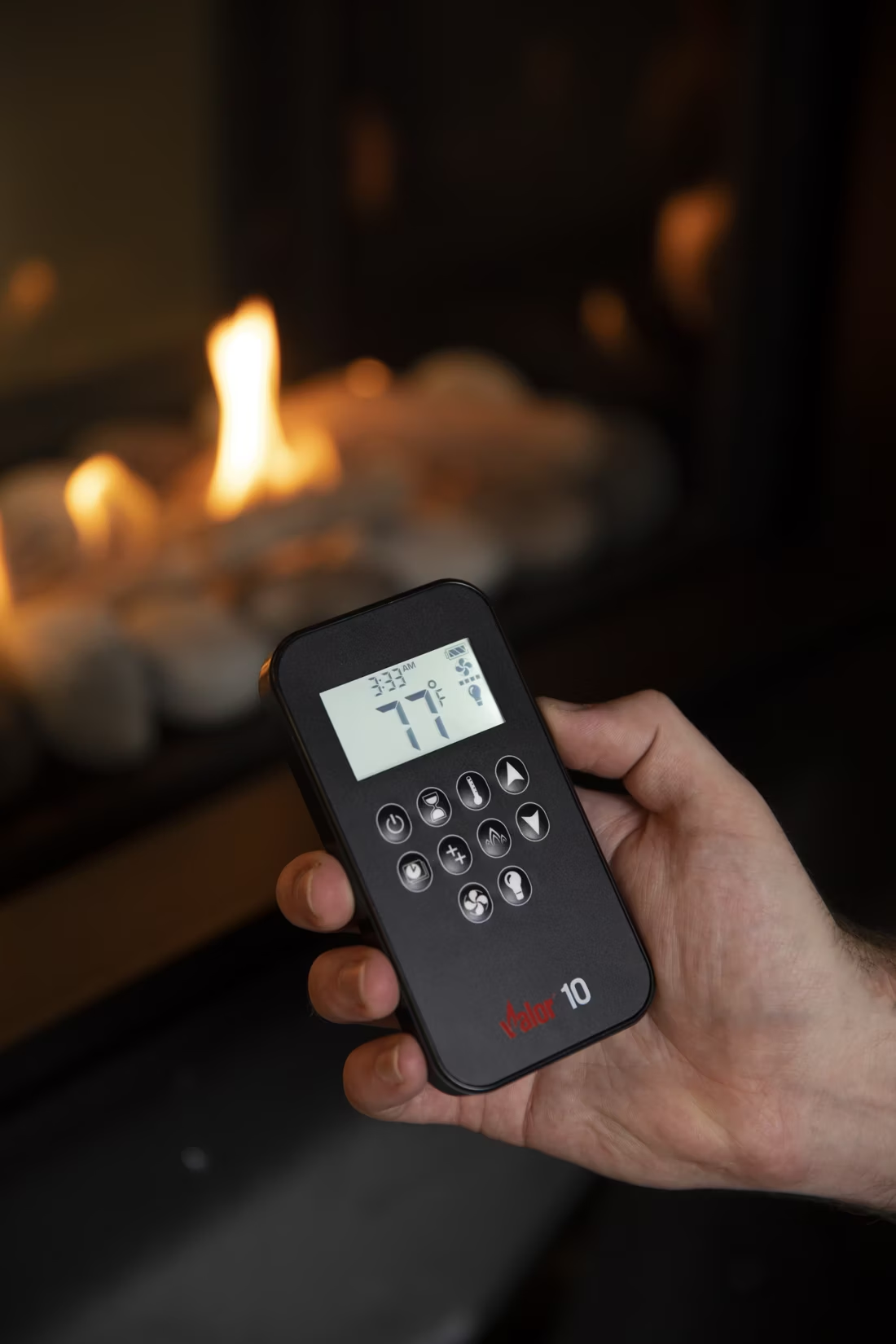
Most direct-vent gas fireplaces with IPI (intermittent pilot ignition) run on a small battery backup that kicks in automatically if power drops, so the fireplace still lights on demand. Valor units take a different approach—their pilot assembly generates its own electricity through a thermopile, so there's no battery to remember at all. Power outages in La Verne are relatively infrequent compared to areas with heavy winter storms, but Southern California does see periodic Public Safety Power Shutoffs during high fire-risk conditions, so a fireplace that doesn't depend on grid power is a real, if modest, advantage.
What's the difference between a gas fireplace, gas insert, and gas stove?
A gas fireplace is a fully built-in unit framed into a wall—the standard choice for new construction or a full remodel. A gas insert is sized to slide into an existing masonry firebox, sealing it off and using your current chimney as the vent path, which is the common route for La Verne's older ranch-style homes with an existing fireplace opening. A gas stove is a freestanding cast-iron or steel unit that sits on the floor and vents through a wall or existing chimney—less common here, but an option for rooms without an existing fireplace. Most homeowners converting an existing wood fireplace go with an insert.
Do I need a permit to install a gas fireplace in La Verne?
Yes—the City of La Verne requires a building permit and gas line permit for new gas fireplace and insert installations, and the gas work itself has to be done by a licensed contractor. Most local hearth dealers handle the permit application and inspection scheduling as part of the installation, so you generally aren't filing paperwork yourself. Working with a certified installer also matters because they coordinate the framing, venting, and gas connection together rather than leaving you to manage separate trades.
Should I get a vented or vent-free gas fireplace?
Vented (direct-vent) gas fireplaces draw combustion air from outside and exhaust it back outside through a sealed pipe—they're the standard, code-compliant choice everywhere including California. Vent-free units burn directly into the room air and are permitted in California only under specific size, ventilation, and oxygen-depletion-sensor requirements, which makes them far less common here than in other states. For La Verne homes, direct-vent units are what most local dealers install and recommend—they produce real heat output, keep combustion byproducts out of the living space, and don't run into the added restrictions vent-free units face under California code.
How often does a gas fireplace need to be serviced?
Plan on an annual inspection, ideally in early fall before you start using it regularly. A certified technician checks the burner, pilot assembly, glass seal, and venting, and cleans out any dust or debris that accumulated over the year—a real concern in La Verne given the dry, dusty conditions typical of the inland valleys. Annual service typically runs $150 to $250 and is far simpler than wood chimney sweeping, but skipping it is still the most common cause of pilot and ignition problems down the line.
Gas vs. wood—is wood even an option in La Verne?
Not really, and it's worth being upfront about that. La Verne sits in the South Coast Air Basin, a federal non-attainment area where SCAQMD Rule 445 has banned new wood-burning fireplace installations since 2009, and existing wood units face mandatory no-burn days during winter inversions. Combined with mild winters that rarely require serious heat output, wood-burning fireplaces have essentially disappeared from new installations here—a small number of older homes still have original wood-burning masonry fireplaces, but most owners either convert them to gas or use them rarely, if at all. Gas is the practical, code-friendly choice for nearly every La Verne homeowner considering a fireplace project.
Can I put a TV above my fireplace?
Yes—with an asterisk. Fireplaces are hot and TVs don't like heat. Either put a mantel between them to deflect rising warmth, or choose a fireplace with heat-management technology that creates a cool zone on the wall above—the wall stays around 125 degrees, barely warm, while the room still gets full heat. If you like clean lines and don't want a mantel, heat management is the answer.
Why is my open fireplace making my house colder?
Open fireplaces suck—literally. As the fire burns, it consumes air your furnace already paid to heat and pulls it out through the chimney, so the house is actually colder after the fire goes out than before you lit it. An insert fixes this: it seals the chimney, puts fixed glass across the front, and turns that hole in your house into a real heat source.
Can I install a fireplace myself?
If you're putting a fire in your house on purpose, it's best to work with an expert. Unless you're genuinely experienced in framing, gas line, vent pipe, and the national code on clearances to combustibles, have a professional do it—and ideally the same company that sells you the fireplace, so warranty, service, and liability all live under one roof.
How much should I budget for a fireplace?
For an average home—covering the fireplace, the vent pipe, and basic installation—a budget between $3,900 and $5,500 gives you a lot of options across wood, gas, and pellet. By the time you add finish work, gas line, and electrical, the average complete installation lands between $5,000 and $12,000 all-in. In a remodel or new build, a good rule is to put about 2.5% of the total project cost toward the fireplace.
Nearby Dealers
Hearth shops serving La Verne and the surrounding area.
All Valley Distrib. Dba Marco Distrib
The Heat Source (Burrico) - Lancaster
Tropicana Outdoor Living
Find your gas fireplace in La Verne.
Tell us about your home and your existing fireplace, if you have one, and we'll match you with a trusted local dealer plus a free Project Guide & Parts List—the exact parts, vent kit, and installer recommendation for your La Verne gas fireplace project.
Find Your Fireplace →