
Instant ambiance for La Presa's mild winter nights.
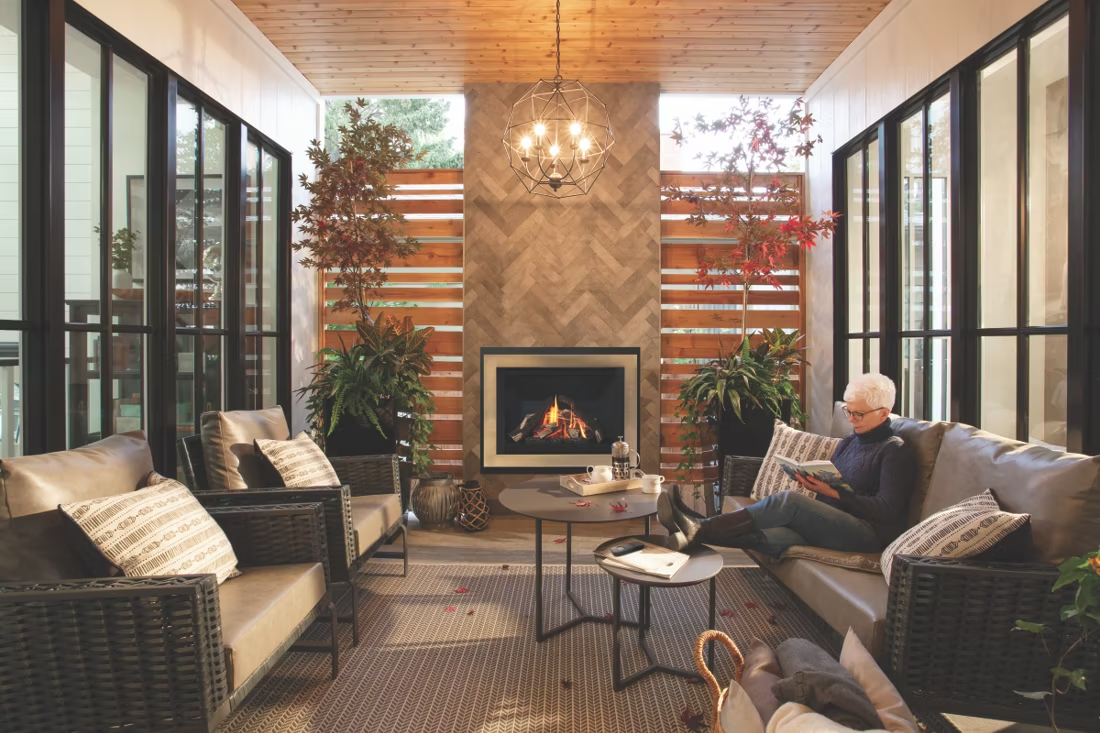
With average lows around 46°F and a very short, light heating season, La Presa doesn't need a furnace-grade wood stove—it needs a gas fireplace that lights instantly for the occasional cool, damp evening. Find the right unit and connect with a trusted local dealer.
Every Project Starts From One of These Five Situations
Reliable heat without the wildfire-smoke wood restrictions.
La Presa sits in an inland valley of San Diego County at about 294 feet elevation, near the Sweetwater Reservoir and the Spring Valley community. Winters here are mild by any national standard—average lows hover around 46°F and the area has a very short, light heating season, using a fraction of the heating a place like Duluth, MN needs in a single cold month. That climate reality shapes what actually gets installed here: gas fireplaces and inserts for ambiance, zone heat on the occasional 40-degree night, and instant on-off convenience, rather than the all-night, cold-climate wood stoves you'd find further north or at elevation.
San Diego Gas & Electric (SDG&E) serves natural gas throughout most of La Presa and the surrounding Spring Valley area, so adding a gas fireplace to an existing home is usually a matter of tapping an existing line rather than trenching a new one. Gas also sidesteps a real local concern: San Diego County Air Pollution Control District advisories during fall Santa Ana wind events, when wildfire smoke already fills the air and an extra wood-burning appliance adds smoke nobody wants. With SDG&E's residential electric rate running around $0.32 per kWh—among the highest in the country—gas heat is also usually the cheaper way to add real warmth to a room compared to running electric space heaters.
Three steps. No salesperson until you're ready.
Tell us about your project
Your zip code, your situation, and the fuel you're leaning toward—or let the answers point you to one.
See what's actually available
The brands dealers within 100 miles genuinely carry—real options, never a catalog mirage.
Get your dealer & Project Guide
A trusted local dealer, plus the free Project Guide & Parts List that names every component of the job.
Frequently Asked Questions
How much does a gas fireplace installation cost in La Presa?
A gas fireplace installation in La Presa typically runs $4,800 to $10,000, depending on the unit, the venting path, and whether new gas line work is needed. A direct-vent insert dropped into an existing masonry fireplace with gas already piped nearby sits toward the lower end. A new built-in unit for a remodel or an addition—with framing, venting, and a gas line extension from the meter—runs toward the higher end. Local retailers will give you a firm number after they've seen your specific fireplace opening and gas access.
Can I convert my wood-burning fireplace to gas?
Yes, and it's a common project for La Presa's older homes built with a traditional masonry fireplace. A gas insert typically costs $4,800 to $8,500 installed, using your existing chimney as the vent path with a stainless liner. Many homeowners convert specifically because they're tired of hauling and storing oak, madrone, or Douglas fir cut under a Cleveland National Forest permit, or because they'd rather skip wood entirely during fall wildfire-smoke season when adding more smoke to the air feels like the wrong move. The conversion keeps your existing fireplace opening and mantel while swapping in clean, instant heat.
Do I need natural gas, or can I use propane?
Most of La Presa is served by SDG&E's natural gas network, so if your home already has gas service for a water heater, range, or furnace, adding a fireplace usually just means running a branch line from the existing supply. A handful of unincorporated pockets in the surrounding hills aren't reached by the gas main and rely on propane instead—in those cases, a local propane supplier handles the tank and delivery, and the fireplace itself is simply configured with a different orifice and regulator. Either fuel works in the same fireplace models; your installer sets it up for whichever you have.
Will my gas fireplace still work if the power goes out?
Yes, if you choose the right ignition system. Units with IPI (intermittent pilot ignition) run on AA batteries that kick in automatically during an outage, so the fireplace lights on demand just like normal. Valor fireplaces take a different approach: their pilot generates its own electricity through a thermocouple, so there's no battery to remember at all. San Diego County doesn't see the extended winter outages some cold-climate regions do, but wildfire-related Public Safety Power Shutoffs (PSPS) do happen here in fall—worth asking your local dealer which ignition system a given model uses.
What's the difference between a gas fireplace, insert, and stove?
A gas fireplace is a fully built-in unit framed into a wall—the right call for new construction or a remodel. A gas insert slides into an existing masonry fireplace opening and uses the chimney as its vent path, which fits a lot of La Presa's older single-story homes with an existing hearth. A gas stove is a freestanding cabinet-style unit that sits on the floor and vents through a wall or roof, useful in a room with no existing fireplace and no interest in framing one in. For most La Presa remodels, an insert is the simplest upgrade to an existing fireplace; a stove or built-in makes more sense where there's no fireplace to start from.
Do I need a permit to install a gas fireplace in La Presa?
Yes. Because La Presa is unincorporated, permitting runs through the County of San Diego's Planning & Development Services (PDS) rather than a city building department—both a building permit and a gas line permit are required for a new installation. The gas line portion has to be pulled by a licensed contractor, which is one of the main reasons to go through a hearth dealer rather than a handyman: they coordinate the gas work, the venting, and the inspection as one job instead of leaving you to manage separate trades.
Are vent-free gas fireplaces allowed in La Presa?
Not really, in practice. California's mechanical code heavily restricts unvented (vent-free) gas room heaters in residential dwellings, and San Diego County follows that standard—most jurisdictions here will only sign off on sealed direct-vent units, which draw combustion air from outside and exhaust it back outside through a dedicated vent pipe. That's actually the better outcome for indoor air quality anyway. If a dealer or online listing is pitching a vent-free unit for your La Presa home, confirm with PDS before you buy—it likely won't pass inspection.
How often should a gas fireplace be serviced?
Plan on an annual inspection, ideally before the fall season when you'll actually start using it. A technician checks the burner, pilot assembly, venting, and gas connections, and cleans the glass and interior—a much smaller job than sweeping a wood chimney, but still important, since a dirty or misadjusted burner is the most common cause of a fireplace that won't light reliably. Local gas appliance service providers typically charge $150 to $250 for this visit.
Gas vs. wood vs. electric—what actually makes sense in La Presa?
With such a short, light heating season and average winter lows in the mid-40s, La Presa rarely needs serious heating capacity—the question is usually ambiance and comfort on the cooler nights, not survival heat. Wood is available locally (oak, madrone, and Douglas fir can be cut under a Cleveland National Forest permit for $5 to $20 a cord), but it adds smoke during a season when the county is already dealing with wildfire haze, and it means storing and hauling cordwood for a fire you'll use occasionally rather than daily. Electric fireplaces are the cheapest to install but cost the most to run given SDG&E's roughly $0.32 per kWh residential rate. Gas splits the difference: quick, clean, inexpensive to operate, and available almost everywhere in La Presa through the existing SDG&E gas network. For most homes here, that's the practical answer.
What's the difference between an insert and a zero-clearance fireplace?
An insert is a fireplace that slides into a pre-existing wood-burning fireplace—if you don't have one, there's nothing to insert it into. A zero-clearance fireplace is built into a framed wall, which makes it the answer for remodels and new construction. Simple test: existing masonry fireplace means insert; blank or framed wall means zero-clearance.
Is my gas fireplace wasting gas?
If it was installed more than 15 years ago, probably. Older gas fireplaces keep a standing pilot light burning all the time, and that little flame can cost a couple hundred dollars a year. Newer models use pilot-on-demand ignition—the pilot lights only when you use the fireplace and goes out when you turn it off.
Can I install a fireplace myself?
If you're putting a fire in your house on purpose, it's best to work with an expert. Unless you're genuinely experienced in framing, gas line, vent pipe, and the national code on clearances to combustibles, have a professional do it—and ideally the same company that sells you the fireplace, so warranty, service, and liability all live under one roof.
What is an in-home preview and do I need one?
It's a visit where a hearth professional measures your space, confirms the model you picked actually works in your home, and walks the specs—framing, gas line, venting, finish work—before anything is ordered. Some details you just can't know until you see the house. Never make a down payment without one; it's the single most-skipped step that burns buyers.
Nearby Dealers
Hearth shops serving La Presa and the surrounding area.
Fan Diego Ceiling Fans & Lighting Showroom
Find your gas fireplace in La Presa.
Tell us about your home and we'll match you with a trusted local dealer and a free Project Guide & Parts List—the exact parts, vent kit, and recommended installer for your La Presa gas fireplace project.
Find Your Fireplace →