
The Right Fireplace for Coachella Valley's Mild Winters.
Indio winters rarely dip below the mid-40s, but the right electric fireplace still delivers real ambiance and zone comfort—without venting, combustion byproducts, or wildfire-smoke concerns.
Every Project Starts From One of These Five Situations
Heat when you want it, not because you need it.
Indio sits at just 3 feet above sea level in the heart of the Coachella Valley, where the average winter low is 47°F and the entire heating season adds up to roughly 706 heating degree days. Compare that to a genuine cold-climate city like Duluth, Minnesota, which can log more than 10,000 HDD in a single winter, and it's clear Indio homes aren't fighting the cold—they're occasionally taking the edge off a cool desert evening in December or January.
That's part of why wood and pellet appliances essentially don't show up here—Indio sits in a designated air quality non-attainment area, and wildfire smoke already drifts into the valley in some summers, so adding another combustion source isn't something local air districts want to encourage. Electric fireplaces sidestep all of it: no chimney, no gas line, no emissions, and full compatibility with the HOA rules common in Indio's gated golf and resort communities. Running one through Imperial Irrigation District, at a residential rate around $0.18 per kWh, costs only pennies per hour—well suited to occasional ambiance rather than round-the-clock heat.
Three steps. No salesperson until you're ready.
Tell us about your project
Your zip code, your situation, and the fuel you're leaning toward—or let the answers point you to one.
See what's actually available
The brands dealers within 100 miles genuinely carry—real options, never a catalog mirage.
Get your dealer & Project Guide
A trusted local dealer, plus the free Project Guide & Parts List that names every component of the job.
Frequently Asked Questions
How much does an electric fireplace installation cost in Indio?
A plug-in freestanding or wall-mount electric fireplace typically runs $200 to $2,000 for the unit itself, with little to no installation cost since it plugs into a standard outlet. A built-in or recessed linear model—popular in Indio's open-concept great rooms—usually runs $1,500 to $4,000 installed, with the higher end covering a dedicated 20-amp circuit if your electrician needs to run new wiring. Because there's no venting or gas line involved, electric is consistently the least expensive fireplace category to install in the valley.
What size electric fireplace do I need for my Indio home?
Since electric units are supplementing comfort rather than fighting single-digit cold, sizing in Indio comes down more to the room's visual scale than raw BTU output. A 36- to 50-inch linear insert suits most great rooms in Coachella Valley's newer resort-style homes with 9- to 12-foot ceilings, while a compact wall-mount or mantel unit works fine for a bedroom, den, or casita. Most models offer a heat-on/heat-off setting, so you can run the flame effect year-round for ambiance and only add the heat function during the handful of genuinely cool nights each winter.
Where can I find a qualified installer for an electric fireplace near me?
Plug-in units don't require a licensed electrician, but any built-in model needing a new dedicated circuit does—look for a licensed electrical contractor familiar with C-27 fireplace or general electrical work in Riverside County. Local hearth retailers serving the Indio and Coachella Valley area typically coordinate both the unit sale and the electrical hookup, which is the simplest path since it puts warranty coverage and code compliance under one point of contact rather than splitting the job between a retailer and a separate electrician.
Electric vs. gas fireplace—which makes more sense for an Indio home?
Gas is still standard here for homes that want a stronger, more traditional-looking flame and higher heat output on the rare cold snap, and natural gas or propane service is common throughout Indio and the wider Coachella Valley. Electric wins on installation simplicity (no venting or gas line, works in any room, including interior walls with no exterior access), lower upfront cost, and zero combustion—a real plus given Indio's non-attainment air quality status and periodic wildfire smoke. For a home used mainly for ambiance and light winter comfort, electric is usually the more practical, lower-maintenance choice; for homeowners who want a fireplace that reads as a true focal point with real flame, gas remains worth considering.
Do I need a permit to install an electric fireplace in Indio?
In most cases, no. A plug-in electric fireplace on an existing outlet requires no permit at all. If your installer needs to add a new dedicated circuit or move an outlet for a built-in unit, that electrical work typically requires a permit through the City of Indio Building & Safety Department (or Riverside County Building and Safety if your property sits outside city limits). Your electrician generally pulls this permit as part of the job, so it's rarely something you have to manage yourself.
What's the best type of electric fireplace for Indio's climate?
Recessed linear electric fireplaces from brands like Dimplex, Napoleon, and Touchstone are a strong fit for Indio's open-concept, high-ceiling homes—they read as a real architectural feature even with the heat function off most of the year, which matters in a climate where flame ambiance gets used far more often than actual heat. For casitas, guest rooms, or smaller spaces, a compact wall-mount unit with a supplemental heat setting covers the occasional cool December or January night without the cost or complexity of a vented appliance.
How much does it cost to run an electric fireplace in Indio?
At Imperial Irrigation District's residential rate of roughly $0.1791 per kWh, a typical electric fireplace drawing 1,500 watts on its heat setting costs about $0.27 per hour to run. With the heat off and only the flame effect active—which draws closer to 100 watts—you're looking at under $0.02 an hour. Given how few hours a year Indio homes actually need supplemental heat, most owners find the annual operating cost is negligible compared to the appliance's upfront price.
Can I install a wood or pellet stove in Indio instead?
It's technically possible, but wood and pellet heat don't really fit Indio's situation. With only about 706 heating degree days a year and winter lows averaging 47°F, there's very little actual heating demand to justify a cordwood or pellet appliance, and Indio's non-attainment air quality status plus periodic wildfire smoke make local air districts unenthusiastic about adding combustion sources. Cutting permits do exist through the San Bernardino and Angeles National Forests, but both are a significant drive up into the mountains from the valley floor—not a practical firewood source for an Indio household. A small number of homeowners with second properties in cooler mountain communities do use wood heat there, but for a primary Indio residence, electric or gas is the far more sensible route.
Will my electric fireplace work during a power outage?
No—electric fireplaces need grid power to run, so they'll go dark along with everything else during an outage. Imperial Irrigation District's service is generally reliable, but summer heat waves occasionally strain the grid, and even a mild desert winter can see the odd outage. If backup heat or a fireplace that works no matter what is a priority, a vented gas fireplace with a battery-backed ignition system is worth comparing against electric—otherwise, most Indio homeowners simply accept that an electric unit is for ambiance and comfort, not emergency heat.
Can I put a TV above my fireplace?
Yes—with an asterisk. Fireplaces are hot and TVs don't like heat. Either put a mantel between them to deflect rising warmth, or choose a fireplace with heat-management technology that creates a cool zone on the wall above—the wall stays around 125 degrees, barely warm, while the room still gets full heat. If you like clean lines and don't want a mantel, heat management is the answer.
Does an electric fireplace need a vent or chimney?
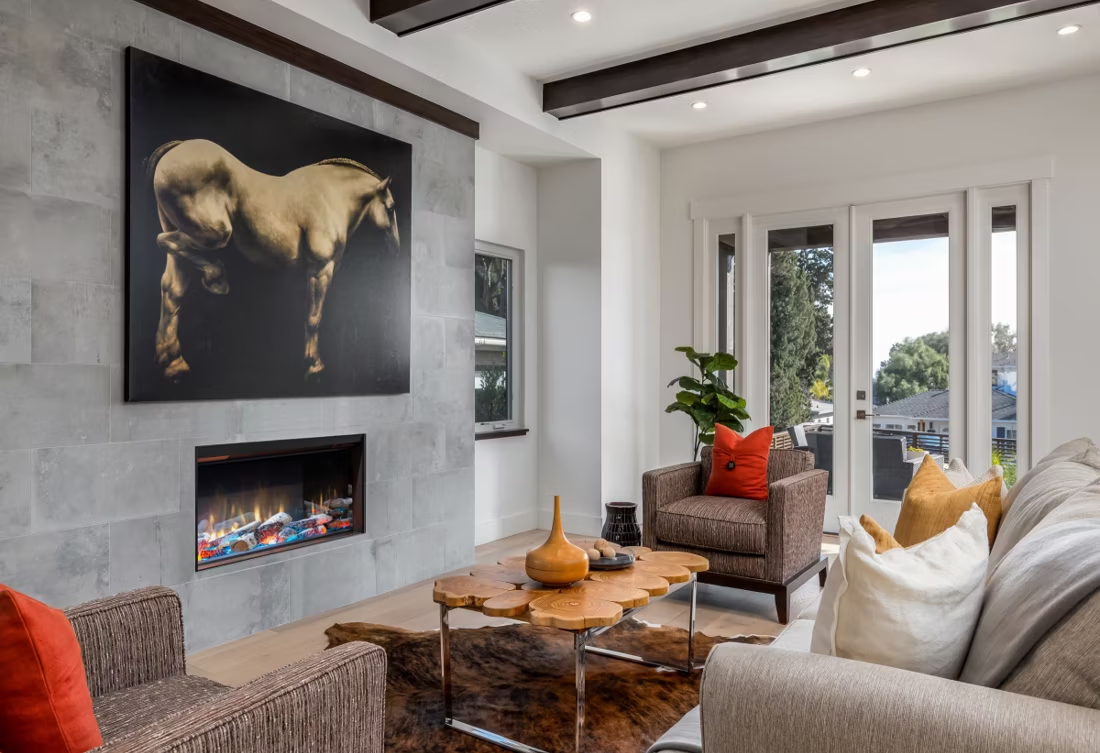
No—that's its superpower. An electric fireplace needs a wall and an outlet, period. No vent pipe, no gas line, no clearances to design around, which is why it works in bedrooms, offices, apartments, and walls where venting a gas or wood unit would be impractical or impossible. Installation is typically the simplest and least expensive of any fireplace type.
What is an in-home preview and do I need one?
It's a visit where a hearth professional measures your space, confirms the model you picked actually works in your home, and walks the specs—framing, gas line, venting, finish work—before anything is ordered. Some details you just can't know until you see the house. Never make a down payment without one; it's the single most-skipped step that burns buyers.
How much should I budget for a fireplace?
For an average home—covering the fireplace, the vent pipe, and basic installation—a budget between $3,900 and $5,500 gives you a lot of options across wood, gas, and pellet. By the time you add finish work, gas line, and electrical, the average complete installation lands between $5,000 and $12,000 all-in. In a remodel or new build, a good rule is to put about 2.5% of the total project cost toward the fireplace.
Nearby Dealers
Hearth shops serving Indio and the surrounding area.
Palm Springs True Value Hardware & Patio
Electric Service in Indio
An electric fireplace's heater draws about 1,500 watts—pennies per hour at local rates.
Imperial Irrigation District
Find your electric fireplace in Indio.
Tell us a bit about your home and we'll match you with a trusted local Indio dealer and send over a free Project Guide & Parts List—sized right for your room and ready for whatever electrical work your installer needs to do.
Find Your Fireplace →