
Heat that works on Check Before You Burn days.
Hanford's mild San Joaquin Valley winters rarely test a furnace, but wood-burning curtailment rules make gas the dependable option for real heat. Find the right fireplace or insert and get matched with a trusted local dealer.
Every Project Starts From One of These Five Situations
Gas heat fits Hanford's mild winters and strict air rules.
Hanford sits at 228 feet in the San Joaquin Valley, where winter lows average a mild 37°F and the heating season is short and light on demand—a fraction of what a place like Duluth, Minnesota logs in a single winter. Homes here don't need a heating system built for sub-zero nights, but Kings County is also part of a federal air quality non-attainment area, and winter inversions trap wildfire smoke and wood smoke close to the ground. That combination shapes what actually gets installed.
The San Joaquin Valley Air Pollution Control District runs a mandatory winter wood-burning curtailment program, so on Check Before You Burn days, wood stoves and open fireplaces simply can't be used—even if you own one. Gas fireplaces and inserts aren't subject to those restrictions, which is a big part of why they're the standard choice for Hanford homeowners who want dependable heat and ambiance without checking an air quality forecast first. Southern California Edison serves the electric side of most Hanford homes at a residential rate around 28 cents per kWh, on the higher end for California, which also makes gas an economical way to add zone heat to a living room or family room.
Three steps. No salesperson until you're ready.
Tell us about your project
Your zip code, your situation, and the fuel you're leaning toward—or let the answers point you to one.
See what's actually available
The brands dealers within 100 miles genuinely carry—real options, never a catalog mirage.
Get your dealer & Project Guide
A trusted local dealer, plus the free Project Guide & Parts List that names every component of the job.
Frequently Asked Questions
How much does a gas fireplace installation cost in Hanford?
Most gas fireplace and insert installations in Hanford run somewhere between $3,500 and $9,500, with the spread driven mainly by venting and gas line work rather than the unit itself. A direct-vent insert going into an existing masonry fireplace where a gas line is already nearby sits toward the low end. A new built-in gas fireplace in a remodel or addition—with framing, a fresh gas line run, and exterior venting—lands in the middle to upper range. Homes outside city limits that need a propane tank set and a longer gas line run typically land at the higher end. A local hearth dealer will give you a firm number after seeing your fireplace or wall in person.
Can I convert an old wood-burning fireplace to gas?
Yes, and it's a common project in Hanford's older neighborhoods around downtown and Court House Square, where many homes still have their original masonry fireplaces. A gas insert slides into the existing firebox, uses a stainless liner run through your current chimney for venting, and connects to a new or existing gas line. Beyond the convenience, converting gets your fireplace out from under the Valley's mandatory wood-burning curtailment days, since gas inserts aren't restricted on Check Before You Burn days the way an open wood fireplace is.
Do I need natural gas service, or can I run a fireplace on propane?
Either works, and a local installer can set up most gas fireplace models for whichever fuel you have. Homes within Hanford city limits are generally on natural gas service already, which is the simpler path since you're just tapping an existing line. Out in the unincorporated, agricultural parts of Kings County where gas mains don't reach, propane is the standard fallback—you'll need either an existing tank or a new one installed by a local propane supplier before the fireplace goes in.
Will a gas fireplace still work if the power goes out?
Most will, which matters more in Hanford than you might think—Southern California Edison conducts Public Safety Power Shutoffs during high fire-risk conditions in Kings County and the surrounding foothills, and those can last a day or more. Gas fireplaces with intermittent pilot ignition (IPI) run on a small battery backup that kicks in automatically when the power drops. Valor fireplaces go a step further: the pilot's thermocouple generates its own electricity, so there's no battery to remember at all. Ask your installer which ignition system a given model uses if outage performance matters to you.
What's the difference between a gas fireplace, insert, and stove?
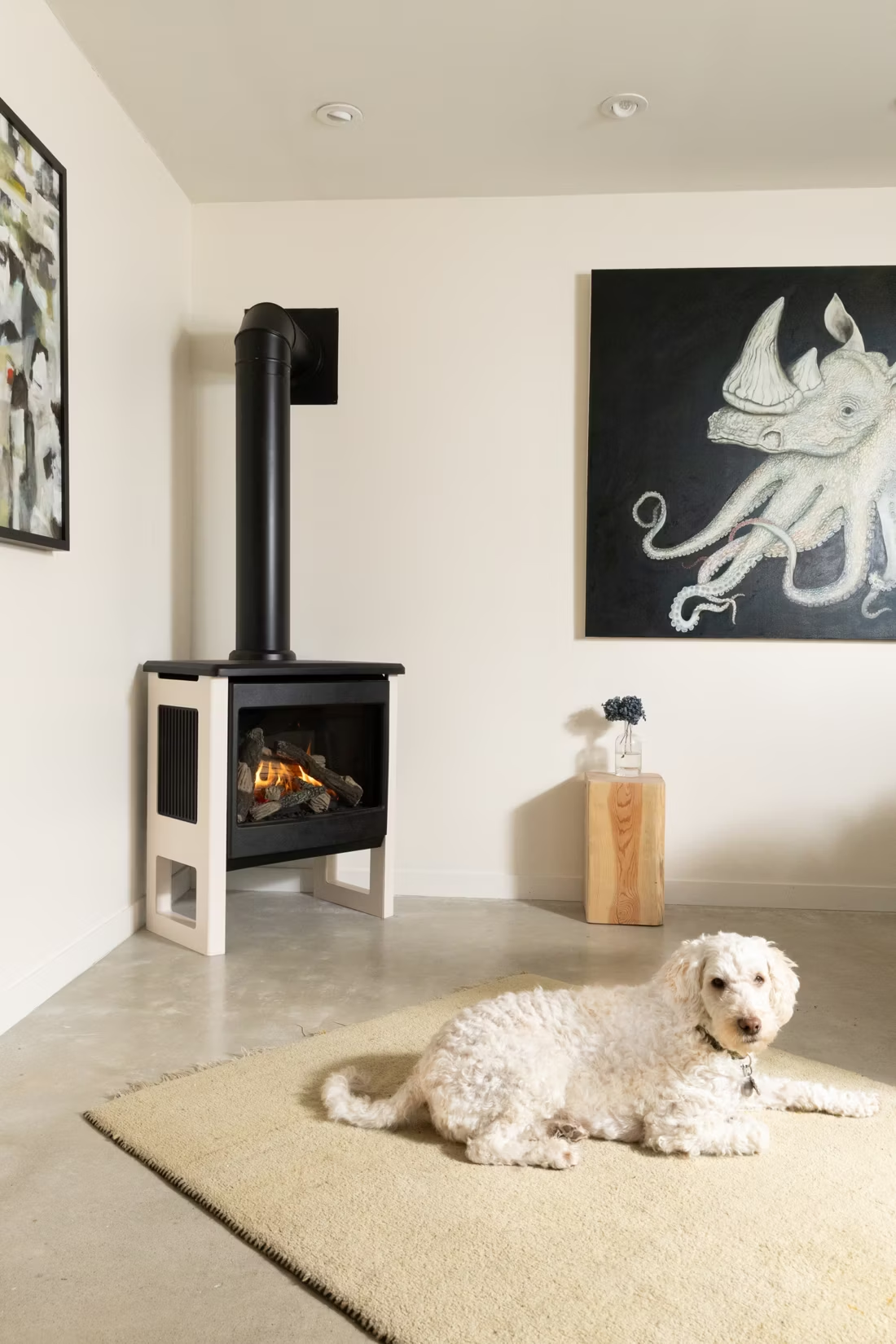
A gas fireplace is a built-in unit framed into a wall—the standard choice for new construction or a remodel without an existing hearth. A gas insert is sized to slide into an existing masonry fireplace opening, which is what most Hanford homeowners with an older house are looking for. A gas stove is a freestanding cabinet-style unit that sits on the floor, useful when you want supplemental heat in a room without an existing fireplace or chimney. All three are available as direct-vent units suited to Hanford's mild-winter, valley-air-quality context.
Do I need a permit to install a gas fireplace in Hanford?
Yes. A gas fireplace installation requires a building permit and a gas line permit, typically through the City of Hanford Building Division for homes inside city limits or the Kings County Building Department for homes in unincorporated areas. Gas line work has to be done or signed off by a licensed gas-fitter, which is one reason it's worth using a hearth dealer who coordinates the whole job—gas line, venting, and inspection—rather than piecing it together with separate contractors.
Should I get a vented or vent-free gas fireplace?
Vented, in almost every case. Vent-free (ventless) gas fireplaces burn without exterior venting and release combustion byproducts into the room, and California is one of a handful of states that heavily restricts their use—many jurisdictions here don't allow them at all for new installations. Direct-vent gas fireplaces and inserts, which draw combustion air from outside and exhaust it back outside through a sealed pipe, are the standard and the safer choice for a Valley non-attainment area that already deals with enough particulate matter from wildfire smoke and agricultural dust. A local retailer can confirm what's approved for your specific address.
How often does a gas fireplace need to be serviced?
Plan on an annual inspection, usually before the start of the winter heating season. A technician checks the burner, pilot assembly, venting, and gas connections, and cleans the glass and interior—a much smaller job than sweeping a wood chimney, but it matters for safety and keeps the warranty intact. Expect to pay somewhere in the $150–$250 range for a standard annual visit from a local hearth service provider.
Why isn't wood or pellet heat more common in Hanford?
Kings County sits inside a federal non-attainment area for air quality, and the San Joaquin Valley Air Pollution Control District's Check Before You Burn program mandates no-burn days for wood stoves and open fireplaces throughout the winter whenever particulate levels climb—which, combined with periodic wildfire smoke, happens often enough that wood heat isn't practical as a primary or even reliable supplemental source here. Pellet stoves face similar restrictions in the region. A handful of Hanford homeowners still keep a wood-burning unit for occasional use when air quality allows, or for a mountain cabin near the Sierra or Sequoia National Forest, but for day-to-day heat in town, gas and electric are what actually get installed and used.
Is my gas fireplace wasting gas?
If it was installed more than 15 years ago, probably. Older gas fireplaces keep a standing pilot light burning all the time, and that little flame can cost a couple hundred dollars a year. Newer models use pilot-on-demand ignition—the pilot lights only when you use the fireplace and goes out when you turn it off.
What's the difference between an insert and a zero-clearance fireplace?
An insert is a fireplace that slides into a pre-existing wood-burning fireplace—if you don't have one, there's nothing to insert it into. A zero-clearance fireplace is built into a framed wall, which makes it the answer for remodels and new construction. Simple test: existing masonry fireplace means insert; blank or framed wall means zero-clearance.
How much should I budget for a fireplace?
For an average home—covering the fireplace, the vent pipe, and basic installation—a budget between $3,900 and $5,500 gives you a lot of options across wood, gas, and pellet. By the time you add finish work, gas line, and electrical, the average complete installation lands between $5,000 and $12,000 all-in. In a remodel or new build, a good rule is to put about 2.5% of the total project cost toward the fireplace.
Does a fireplace add value to my home?
On average, a fireplace adds back to the home about the same amount you spent installing it. Add the monthly savings from heating the rooms you actually use instead of the whole house—often hundreds of dollars a year—and the value case is strong before you even count what a fire does for how your family uses the room.
Find your gas fireplace in Hanford.
Tell us about your home and we'll put together a free Project Guide & Parts List—the exact parts, including the vent kit, and a trusted local Hanford dealer who can install it right.
Find Your Fireplace →