
Zone Heat That Makes Sense for El Centro's Mild Desert Winters.
No chimney, no gas line, no venting—just plug-in ambiance and the occasional bit of supplemental warmth for a valley that rarely sees real cold. Find the right unit and connect with a trusted local dealer.
Every Project Starts From One of These Five Situations
The Right Fit for a Valley That Rarely Needs Real Heat.
El Centro sits at 40 feet below sea level in the Imperial Valley, one of the lowest and warmest inhabited stretches of California. The average winter low here is 43°F, and the city logs just 834 heating degree days a year—a fraction of what a cold-climate city like Bozeman, Montana racks up in a single hard month. Wood stoves and pellet inserts, common up north, essentially don't apply here; there's no real heating season to justify the chimney, the fuel storage, or the venting work.
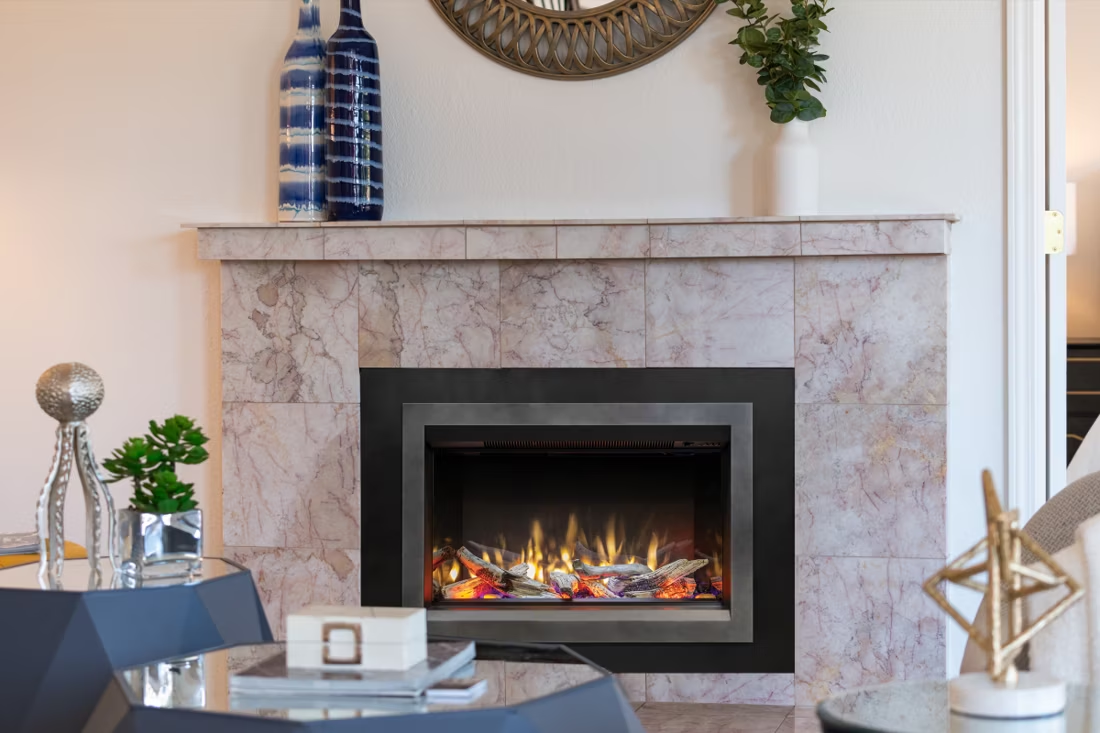
That's exactly why electric fireplaces do well in El Centro. There's no combustion, no permit-heavy venting, and no ongoing fuel supply to manage—just a unit that plugs into a wall or a dedicated circuit and gives you real flame-look ambiance, plus a modest 750–1,500 watt heater for the rare cold snap or chilly December morning. Imperial Irrigation District serves electric power locally at a residential rate around $0.1791 per kWh, which keeps occasional-use heating costs low. And in a valley already classified as a non-attainment area for particulate air quality, a zero-emission electric unit doesn't add anything to the air you and your neighbors are breathing.
Three steps. No salesperson until you're ready.
Tell us about your project
Your zip code, your situation, and the fuel you're leaning toward—or let the answers point you to one.
See what's actually available
The brands dealers within 100 miles genuinely carry—real options, never a catalog mirage.
Get your dealer & Project Guide
A trusted local dealer, plus the free Project Guide & Parts List that names every component of the job.
Frequently Asked Questions
How much does an electric fireplace installation cost in El Centro?
Plug-in electric inserts and mantel packages that use a standard 120V outlet typically run $300 to $1,200 installed, since there's no new wiring required beyond mounting. Built-in wall units or larger inserts that need a dedicated 20-amp circuit run higher, generally $1,200 to $2,800, once you factor in a licensed electrician to run the circuit—often needed if you're adding one to a bedroom or family room that doesn't already have a spare outlet nearby. Because there's no chimney, gas line, or venting to install, electric is consistently the least expensive hearth option for El Centro homeowners.
Do I need a permit to install an electric fireplace in El Centro?
A simple plug-in electric insert or freestanding unit generally doesn't require a permit since it doesn't involve new electrical work. If you're adding a dedicated circuit for a built-in wall unit, that electrical work does require a permit through the City of El Centro Building Division, and it needs to be pulled by a licensed electrician. Most local dealers either handle this coordination directly or can refer you to an electrician who's done the work before in the same neighborhoods.
Will an electric fireplace actually heat a room in El Centro's climate?
For most of the year, heat output isn't really the point—El Centro's winter lows average 43°F, so a 1,500-watt electric heater is plenty to take the edge off a cool evening or an early morning before the sun comes up. Most units let you run the flame effect with the heater off, which is the mode a lot of Imperial Valley homeowners actually use during the long stretch of the year when the last thing anyone needs is more heat in the room. Think of it as supplemental comfort for the mild season, not a primary heat source.
What does it cost to run an electric fireplace on Imperial Irrigation District rates?
At IID's residential rate of roughly $0.1791 per kWh, a 1,500-watt heater running for a few hours in the evening costs about 27 cents an hour, or a little over a dollar for a typical three-to-four-hour stretch of use on a cool night. Since El Centro only sees real chilly weather for a handful of weeks each winter, most owners find the annual running cost is minimal compared to homes in colder parts of the country running electric heat all season long.
Why would I choose electric instead of gas in El Centro?
Gas fireplaces are common in El Centro and work well for homeowners who want a more substantial, fireplace-like presence with real heat output on the rare cold night. Electric makes more sense when you want ambiance without any gas line work, when you're in a rental or don't want to alter existing gas infrastructure, or when the room in question just doesn't need meaningful heat—a bedroom, a den, a secondary living space. Given how mild winters are here, plenty of homeowners choose electric simply because it's the lower-cost, lower-hassle option that still gives them a real flame look.
What's the difference between an electric insert, a built-in wall unit, and a mantel package?
An electric insert is sized to slot into an existing masonry or gas fireplace opening, which is a common upgrade path for older El Centro homes with a fireplace nobody uses anymore. A built-in wall unit is installed into new framing, usually during a remodel, and gives the cleanest look but requires that dedicated electrical circuit. A mantel package is a freestanding, furniture-style unit that plugs into a standard outlet and can be moved between rooms—the simplest and least expensive option, and a good fit for renters or anyone not ready to commit to permanent installation.
What should I look for in an electric fireplace for a desert climate like El Centro's?
Look for a unit with an independent flame-only mode, meaning you can run the visual flame effect with the heater completely off. This matters more here than almost anywhere else—Imperial Valley summers regularly push past 110°F, and the last thing you want is a unit that forces heat output whenever the flame is on. Most quality electric fireplaces from mainstream manufacturers separate the two functions, but it's worth confirming with your local dealer before you buy, especially on older or budget models.
Are wood or pellet stoves ever used in El Centro?
Realistically, no—wood and pellet appliances don't make sense in the Imperial Valley's climate. With only 834 heating degree days a year and winter lows averaging 43°F, there's no sustained cold season to justify a wood stove's fuel handling and chimney maintenance, and the region's non-attainment air quality status makes wood smoke an added concern rather than a heritage practice like it is in colder, forested parts of the state. A small number of rural properties may have an old fireplace or a decorative unit, but it's not something local dealers stock or install as a heating solution here.
Can an electric fireplace serve as backup heat during a power outage?
No—electric fireplaces require power to run both the flame effect and the heater, so they won't help during an outage. Given El Centro's mild winters, that's rarely a serious concern for heating purposes, but it's worth knowing if you're specifically shopping for emergency backup heat. Homeowners who want that kind of redundancy typically look at a propane or natural gas unit instead, since IID outages here tend to be more of a summer cooling concern than a winter heating one.
Can I put a TV above my fireplace?
Yes—with an asterisk. Fireplaces are hot and TVs don't like heat. Either put a mantel between them to deflect rising warmth, or choose a fireplace with heat-management technology that creates a cool zone on the wall above—the wall stays around 125 degrees, barely warm, while the room still gets full heat. If you like clean lines and don't want a mantel, heat management is the answer.
Does an electric fireplace need a vent or chimney?
No—that's its superpower. An electric fireplace needs a wall and an outlet, period. No vent pipe, no gas line, no clearances to design around, which is why it works in bedrooms, offices, apartments, and walls where venting a gas or wood unit would be impractical or impossible. Installation is typically the simplest and least expensive of any fireplace type.
How much should I budget for a fireplace?
For an average home—covering the fireplace, the vent pipe, and basic installation—a budget between $3,900 and $5,500 gives you a lot of options across wood, gas, and pellet. By the time you add finish work, gas line, and electrical, the average complete installation lands between $5,000 and $12,000 all-in. In a remodel or new build, a good rule is to put about 2.5% of the total project cost toward the fireplace.
Does a fireplace add value to my home?
On average, a fireplace adds back to the home about the same amount you spent installing it. Add the monthly savings from heating the rooms you actually use instead of the whole house—often hundreds of dollars a year—and the value case is strong before you even count what a fire does for how your family uses the room.
Electric Service in El Centro
An electric fireplace's heater draws about 1,500 watts—pennies per hour at local rates.
Imperial Irrigation District
Find your electric fireplace in El Centro.
Tell us a bit about your home and we'll put together a free Project Guide & Parts List—the right electric unit, the exact parts, and a trusted local El Centro dealer to install it.
Find Your Fireplace →