
Warmth on demand for Cupertino's mild winters.
Clean, instant heat and real ambiance for Silicon Valley homes—without the smoke restrictions that come with wood. Find the right unit and get matched with a trusted local dealer.
Every Project Starts From One of These Five Situations
Where wood burning bans make gas the practical choice.
Cupertino sits at 310 feet in the South Bay, in climate zone 3C, where winter lows average a mild 42°F and the area has a short, mild heating season with a light overall heating load each year. Compare that to a genuinely cold-climate city like Duluth, MN, which has a long, intense heating season with a heating load several times greater, and it's clear a fireplace here isn't survival equipment—it's zone heat for cool marine-layer evenings and a focal point for the living room.
The Bay Area Air Quality Management District designates this region a non-attainment area, and Spare the Air alerts—which restrict or ban wood-burning devices on high-pollution winter days—are common enough that wood and pellet appliances have largely fallen out of favor here; that's reflected in how rarely they're installed locally. Gas fills that gap cleanly: it's exempt from Spare the Air curtailments, PG&E already serves nearly every home in Cupertino with natural gas alongside electric service, and a sealed direct-vent unit keeps indoor air quality unaffected by wildfire smoke drifting in during fire season.
Three steps. No salesperson until you're ready.
Tell us about your project
Your zip code, your situation, and the fuel you're leaning toward—or let the answers point you to one.
See what's actually available
The brands dealers within 100 miles genuinely carry—real options, never a catalog mirage.
Get your dealer & Project Guide
A trusted local dealer, plus the free Project Guide & Parts List that names every component of the job.
Frequently Asked Questions
How much does a gas fireplace installation cost in Cupertino?
In Cupertino, a gas fireplace installation typically runs $5,500 to $13,000, reflecting both the equipment and the higher labor rates common across Santa Clara County. A direct-vent insert dropped into an existing masonry fireplace with a gas line already stubbed in sits toward the lower end. New construction, remodels, or installs that require running a new gas line through finished walls push toward the higher end. Retrofitting an older Cupertino ranch home built before gas lines were standard in every room often adds cost for the line run itself—a local retailer can quote this accurately after seeing your home.
Can I convert my existing wood fireplace to gas?
Yes, and it's a common upgrade in Cupertino given how limited wood-burning has become under BAAQMD's Spare the Air program. Most conversions use a direct-vent gas insert set into the existing masonry firebox, running a stainless liner up the old chimney. Expect roughly $5,500 to $10,000 depending on the insert and whether new gas piping is needed. Since wood and pellet appliances are essentially not installed new in this area anymore, most of the fireplace work local dealers see is exactly this—converting an old wood-burning box into a code-compliant gas unit.
Do I need natural gas service, or is propane an option in Cupertino?
The vast majority of homes in Cupertino are already served by PG&E natural gas, which also provides electric service here, so most installations simply tap into an existing gas line or add a branch line from the meter. Propane is rarely used within city limits and mostly shows up in unusual situations—a detached structure far from the meter, for instance. If your home already runs a gas water heater, range, or furnace, adding a gas fireplace is generally straightforward.
Will my gas fireplace work during a power outage?
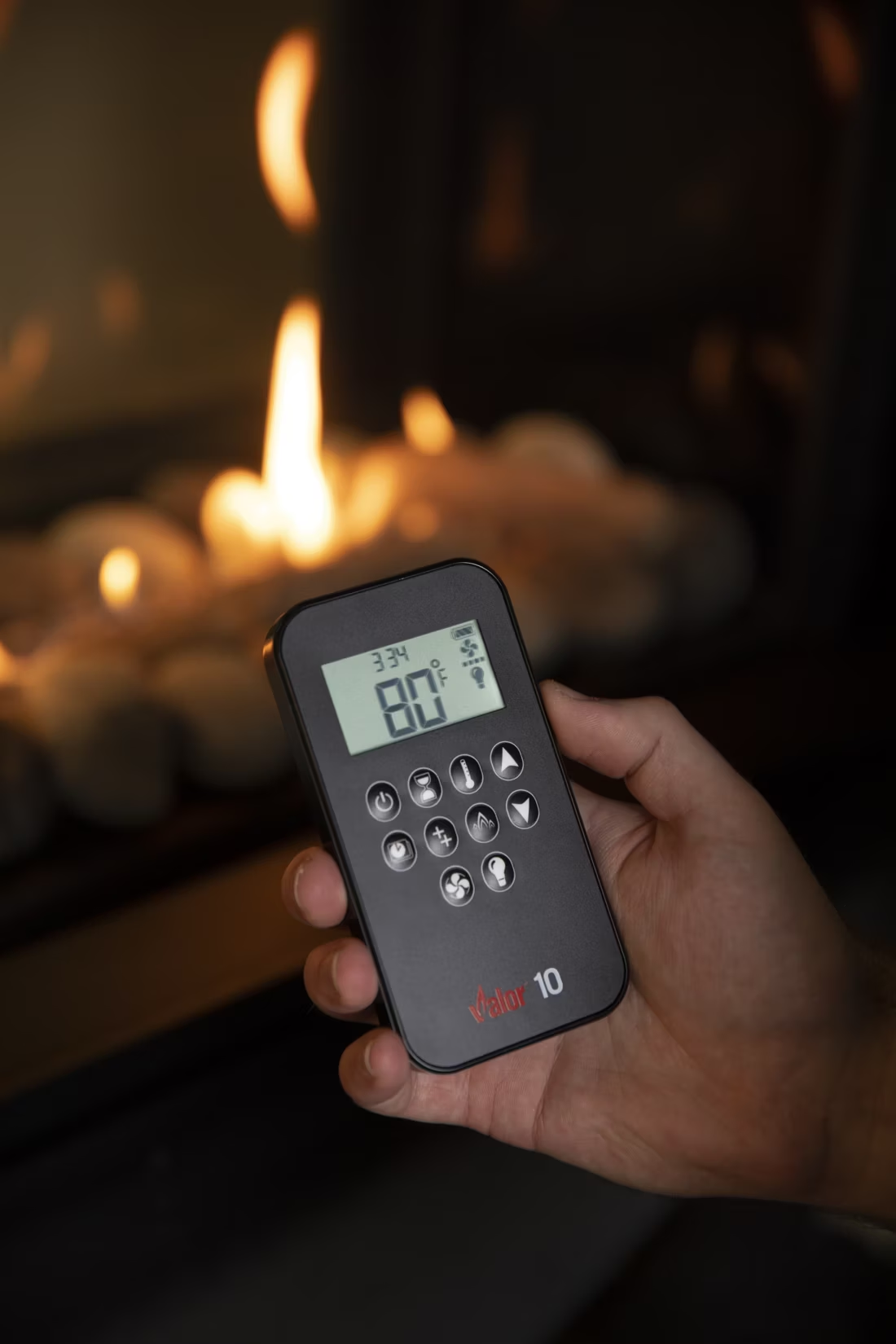
This matters more in Cupertino than in many places, since PG&E's Public Safety Power Shutoffs during high fire-risk periods can leave neighborhoods without electricity for a day or more. Most modern gas fireplaces with intermittent pilot ignition (IPI) include a battery backup that keeps the unit operable when the power drops—you just need to keep fresh batteries on hand. Valor fireplaces go a step further: their pilot assembly generates its own electricity through the thermocouple, so the fireplace lights and runs with no batteries at all, which is a genuine advantage during a PG&E shutoff. Ask a local dealer about the ignition system on any model you're considering.
What's the difference between a gas fireplace, gas insert, and gas stove?
A gas fireplace is a fully built-in unit framed into a wall, typically chosen for new construction or a full remodel. A gas insert slides into an existing masonry firebox and vents through the existing chimney with a liner—the common choice for Cupertino's older homes that already have a wood-burning fireplace sitting unused. A gas stove is a freestanding cabinet-style unit that doesn't require an existing fireplace opening at all. For most Cupertino homeowners looking to bring an old fireplace back into use, an insert is the simplest and most cost-effective path.
Do I need a permit to install a gas fireplace in Cupertino?
Yes. The City of Cupertino Building Division requires a building permit for gas fireplace installations, and any new or modified gas line needs to be signed off by a licensed gas-fitter as part of that permit. Most established local retailers handle this paperwork as part of the installation, coordinating the gas line, venting, and inspection so you aren't managing separate trades yourself.
Can I install a vent-free gas fireplace in Cupertino?
No—California is one of a small number of states that prohibits vent-free (unvented) gas fireplaces outright, so every installation in Cupertino has to be a vented unit, either direct-vent or B-vent. Direct-vent models, which draw combustion air from outside and exhaust directly outside through a sealed system, are the standard choice locally and the type nearly every dealer in the South Bay stocks. This isn't a real limitation in practice—direct-vent units deliver strong heat output and a clean look without any indoor air quality trade-offs.
How often should my gas fireplace be serviced?
Plan on an annual inspection, ideally before the cool season starts. A certified technician checks the burner, pilot assembly, gas connections, and venting, and cleans the glass and interior. In the Cupertino area this typically runs $175 to $300, a bit above the statewide average given local service rates. It's a quick appointment compared to wood-stove chimney sweeping, but skipping it is the main reason older units develop ignition or venting problems.
Gas vs. electric fireplace—which makes more sense in Cupertino?
Both are common choices here since wood and pellet appliances are largely off the table under BAAQMD's air quality rules. Gas delivers real heat output, a live flame, and lower operating cost per BTU—a meaningful factor given PG&E's residential electric rate of roughly $0.317 per kWh, among the highest in the country. Electric fireplaces cost far less to install (often under $1,500), require no gas line or venting, and work in condos or HOA settings where gas isn't permitted, but they're better suited to ambiance and light supplemental warmth than as a primary heat source. For a main living space that gets regular use on cool Cupertino evenings, gas usually wins on comfort and running cost; for a bedroom, condo, or purely decorative install, electric is often the simpler call.
Is my gas fireplace wasting gas?
If it was installed more than 15 years ago, probably. Older gas fireplaces keep a standing pilot light burning all the time, and that little flame can cost a couple hundred dollars a year. Newer models use pilot-on-demand ignition—the pilot lights only when you use the fireplace and goes out when you turn it off.
What's the difference between an insert and a zero-clearance fireplace?
An insert is a fireplace that slides into a pre-existing wood-burning fireplace—if you don't have one, there's nothing to insert it into. A zero-clearance fireplace is built into a framed wall, which makes it the answer for remodels and new construction. Simple test: existing masonry fireplace means insert; blank or framed wall means zero-clearance.
What is an in-home preview and do I need one?
It's a visit where a hearth professional measures your space, confirms the model you picked actually works in your home, and walks the specs—framing, gas line, venting, finish work—before anything is ordered. Some details you just can't know until you see the house. Never make a down payment without one; it's the single most-skipped step that burns buyers.
Can I install a fireplace myself?
If you're putting a fire in your house on purpose, it's best to work with an expert. Unless you're genuinely experienced in framing, gas line, vent pipe, and the national code on clearances to combustibles, have a professional do it—and ideally the same company that sells you the fireplace, so warranty, service, and liability all live under one roof.
Nearby Dealers
Hearth shops serving Cupertino and the surrounding area.
Find your gas fireplace in Cupertino.
Tell us a bit about your home and we'll match you with the right gas fireplace, insert, or stove—plus a free Project Guide & Parts List with the exact vent kit and parts your local dealer will need.
Find Your Fireplace →