
Ambiance and Backup Warmth for Coachella Valley Evenings.
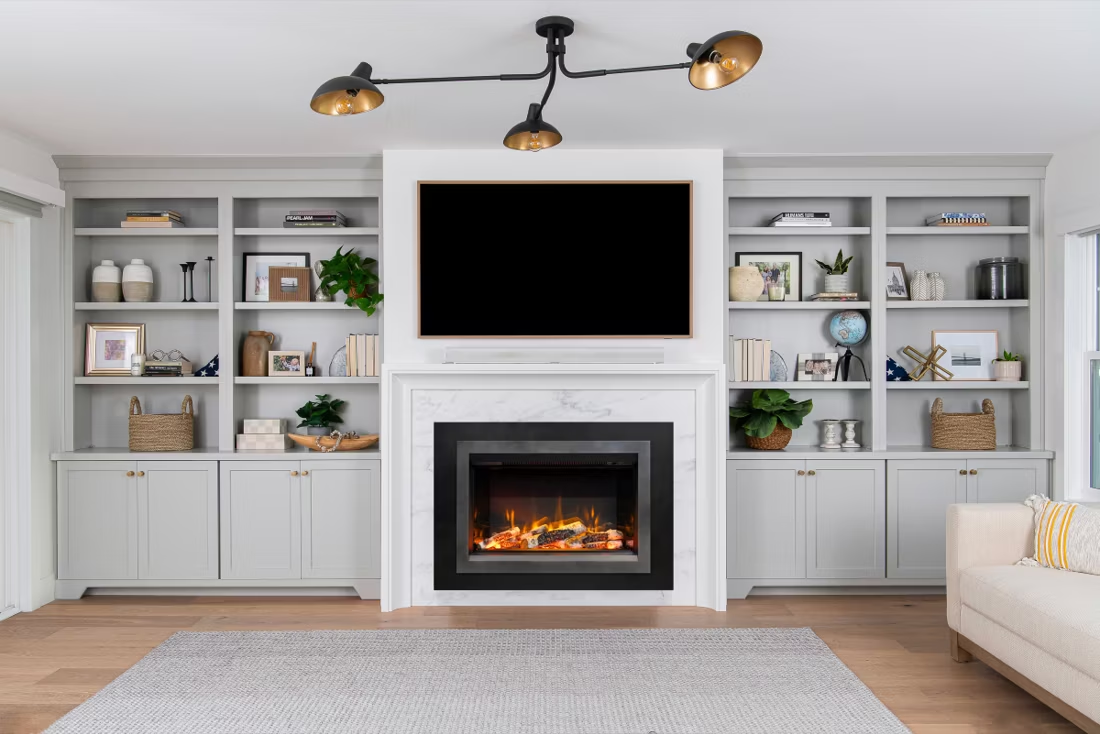
Coachella winters rarely demand serious heat, which is exactly why electric fireplaces fit so well here. No venting, no gas line, no emissions concern in a non-attainment air basin—just a real match with a local dealer who knows what actually installs cleanly in this valley.
Every Project Starts From One of These Five Situations
Heat built for a desert winter, not a mountain one.
Coachella sits at 67 feet below sea level in the low desert of the Coachella Valley, where winter lows average a mild 47°F and the city logs only about 706 heating degree days a year. Compare that to a place like Duluth, Minnesota, which racks up close to 10,000 HDD annually, and it's clear Coachella homes were never built around the idea of a roaring, all-night fire. Wood stoves and pellet stoves are essentially a non-starter here—the valley sits in a PM10 non-attainment area, wildfire smoke already drifts in during fall and summer, and the nearest cutting permits (San Bernardino and Angeles National Forests) are a two-hour drive from most Coachella addresses. Electric fireplaces sidestep all of that.
With Imperial Irrigation District serving as the local electric utility at a residential rate around $0.1791 per kWh, running an electric fireplace here is inexpensive precisely because you're rarely running it for survival heat—it's ambiance in a great room, supplemental warmth on a 40-degree January night, or a focal point on a covered patio during the valley's long outdoor-living season. Gas remains the standard choice for homeowners who want higher BTU output and a live flame, but electric wins for rentals, HOA properties, casitas, and anywhere venting or gas line work isn't practical.
Three steps. No salesperson until you're ready.
Tell us about your project
Your zip code, your situation, and the fuel you're leaning toward—or let the answers point you to one.
See what's actually available
The brands dealers within 100 miles genuinely carry—real options, never a catalog mirage.
Get your dealer & Project Guide
A trusted local dealer, plus the free Project Guide & Parts List that names every component of the job.
Frequently Asked Questions
How much does an electric fireplace installation cost in Coachella?
Plug-in electric fireplace inserts that drop into an existing mantel or media console run $300 to $900 installed, since they use a standard outlet and need no electrician. Built-in wall units or linear electric fireplaces that require a dedicated 120V or 240V circuit and finish carpentry typically run $1,200 to $3,000 in Coachella, depending on the surround and whether an electrician needs to run new wiring. Outdoor-rated units for covered patios—popular given the valley's outdoor living season—usually land in the same range, plus a modest premium for weather-resistant components. A local dealer can give you a firm number after seeing your wall, framing, and electrical panel.
Will an electric fireplace actually heat my Coachella home?
It will handle what most Coachella homes actually need, which is supplemental warmth rather than primary heat. With only about 706 heating degree days a year and winter lows averaging 47°F, a standard 1,500-watt electric fireplace is enough to take the edge off a cool desert evening in a bedroom, den, or home office. Homeowners who want it as a genuine backup heat source for the rare cold snap should look at units with a higher-output fan-forced heater rather than ambiance-only models, since not every electric fireplace is built to actually heat a room.
Do I need a permit to install an electric fireplace in Coachella?
A plug-in electric fireplace that uses an existing outlet needs no permit at all. If your installer is adding a new dedicated circuit—common for built-in wall units or larger linear fireplaces—that electrical work requires a permit through the City of Coachella Building and Safety Department. Most local dealers and their licensed electricians pull that permit as part of the install, so it's rarely something the homeowner has to manage directly.
Electric vs. gas fireplace—which makes more sense in Coachella?
Gas remains the standard choice locally for homeowners who want a live flame and meaningful heat output for the occasional cold front, and it's a well-supported option through local dealers. Electric wins on installation simplicity—no gas line, no venting, no combustion byproducts—which matters in a valley where many properties are rentals, HOA-managed condos, or manufactured homes with restrictions on gas appliances. Given Coachella's mild 706 HDD climate, most homeowners find electric covers their actual heating need just fine, reserving gas for households that specifically want a real flame and higher BTU output.
Can I install an electric fireplace on my patio in Coachella?
Yes, and it's one of the more popular electric fireplace projects in the valley given how much of Coachella life happens outdoors under a covered patio or ramada. Outdoor-rated electric fireplaces are built with sealed, weather-resistant components and are wired the same way as an indoor unit through Imperial Irrigation District's residential service. A local dealer will confirm the unit is rated for outdoor or semi-outdoor use before installing it—a standard indoor unit won't hold up to valley dust and heat over time.
How much does it cost to run an electric fireplace in Coachella?
At Imperial Irrigation District's residential rate of roughly $0.1791 per kWh, a typical 1,500-watt electric fireplace costs about 27 cents per hour to run on the heater setting, or a fraction of that on flame-only/ambiance mode, which usually draws under 100 watts. Because Coachella's heating need is so light, most households run these units a few hours on cool evenings rather than continuously, keeping monthly operating costs well below what a gas furnace or space heater would run during the valley's short winter.
Why don't more Coachella homes use wood or pellet stoves?
Two things work against wood and pellet heat here. First, the Coachella Valley sits in a PM10 non-attainment air basin and already deals with wildfire smoke drifting in during parts of the year, so adding wood smoke to the mix isn't something most local building departments or homeowners want to encourage. Second, the climate simply doesn't demand it—with winter lows averaging 47°F and only about 706 heating degree days annually, there's little practical need for the kind of sustained, high-BTU heat wood and pellet stoves are built to deliver. A small number of homeowners with cabins or second properties in the nearby mountains still use wood there, but for Coachella itself, electric and gas cover the need.
What size or wattage electric fireplace do I need?
Most electric fireplaces sold for supplemental heat are rated around 1,500 watts, which is standard across nearly every major brand and enough to noticeably warm a bedroom, den, or open living area on a cool desert night. Sizing in Coachella is less about square footage and more about intended use—a 30 to 50 inch linear unit works well as a focal point in a great room, while a smaller insert or wall-mount suits a bedroom or casita. Since heating load here is light, most local dealers focus the sizing conversation on where you want the visual centerpiece rather than raw BTU coverage.
Are electric fireplaces a good fit for rental or HOA properties in Coachella?
Very much so. A large share of Coachella's housing stock is manufactured homes, condos, and seasonal rentals where HOA rules or lease terms restrict gas line modifications, chimney work, or anything requiring venting through a shared wall or roof. A plug-in or dedicated-circuit electric fireplace sidesteps all of that—no gas permit, no venting, no structural changes to the building envelope. That's a big part of why electric has real traction here even though the valley's climate is mild: it solves an installation problem as much as a heating one.
Can I put a TV above my fireplace?
Yes—with an asterisk. Fireplaces are hot and TVs don't like heat. Either put a mantel between them to deflect rising warmth, or choose a fireplace with heat-management technology that creates a cool zone on the wall above—the wall stays around 125 degrees, barely warm, while the room still gets full heat. If you like clean lines and don't want a mantel, heat management is the answer.
Do electric fireplaces actually produce heat?
Yes—most put out around 4,800–5,000 BTUs from a standard outlet, which comfortably warms a bedroom, office, or den as a comfort-zone heater. What they won't do is carry a whole house the way wood, gas, or pellet can. Think of electric as ambiance-first with honest supplemental heat: flames on with no heat in July, flames plus warmth in January.
Can a fireplace actually lower my heating bill?
Yes—by creating a comfort zone. A furnace heats every square foot of the house just to warm the one room you're in; a gas fireplace on low burns roughly a sixth of the gas a typical furnace does. Set the furnace around 55–60 degrees as a baseline, then heat the rooms your family actually uses. Families who heat this way commonly save $20–$60 a month.
Can I install a fireplace myself?
If you're putting a fire in your house on purpose, it's best to work with an expert. Unless you're genuinely experienced in framing, gas line, vent pipe, and the national code on clearances to combustibles, have a professional do it—and ideally the same company that sells you the fireplace, so warranty, service, and liability all live under one roof.
Nearby Dealers
Hearth shops serving Coachella and the surrounding area.
Palm Springs True Value Hardware & Patio
Electric Service in Coachella
An electric fireplace's heater draws about 1,500 watts—pennies per hour at local rates.
Imperial Irrigation District
Find your electric fireplace in Coachella.
Tell us about your space and we'll match you with a trusted local Coachella dealer and send over a free Project Guide & Parts List—the right unit, the exact parts, and a plan that fits your home or patio.
Find Your Fireplace →