
Ambiance Without the Smoke, Vents, or Fuss.
Carson winters rarely call for serious heat, but a clean, no-venting electric fireplace still adds warmth and atmosphere to any room. Find the right unit and connect with a trusted local dealer.
Every Project Starts From One of These Five Situations
A climate that barely asks for heat—and rules that steer you toward electric anyway.
Carson sits at 17 feet of elevation on the coastal plain of the Los Angeles Basin, where winter lows average 47°F and the city logs only about 1,378 heating degree days a year. Compare that to a place like Duluth, MN, which racks up more than 9,000—Carson homeowners simply aren't fighting the cold the way much of the country does. That mild reality shapes what kind of hearth product actually makes sense here.
Carson also falls under the South Coast Air Quality Management District, one of the most heavily regulated air basins in the country, with ongoing non-attainment status and seasonal wildfire smoke adding to the load. New wood-burning fireplaces face steep restrictions under SCAQMD rules, and with heating demand this low, pellet stoves rarely make sense either. Electric fireplaces sidestep all of it—no combustion, no emissions, no chimney, no gas line—while still delivering the visual warmth and flicker that make a living room or condo feel finished. With Southern California Edison serving the area at a residential rate around $0.2825 per kWh, most homeowners here run electric units for ambiance and light zone heat rather than as a primary heat source, which keeps operating costs modest even at that rate.
Three steps. No salesperson until you're ready.
Tell us about your project
Your zip code, your situation, and the fuel you're leaning toward—or let the answers point you to one.
See what's actually available
The brands dealers within 100 miles genuinely carry—real options, never a catalog mirage.
Get your dealer & Project Guide
A trusted local dealer, plus the free Project Guide & Parts List that names every component of the job.
Frequently Asked Questions
How much does an electric fireplace installation cost in Carson?
A plug-in electric insert that slides into an existing mantel or media console typically runs $300 to $1,200 installed, since there's no venting or gas line to run—often just a standard outlet. A built-in linear electric fireplace set into a wall, which requires framing, a finished surround, and sometimes a dedicated 20-amp circuit pulled by an electrician, generally runs $1,500 to $4,000 in the Carson area. Local dealers can tell you within a few hundred dollars once they know your wall type and whether new wiring is needed.
Do electric fireplaces need a chimney or venting in Carson?
No. Electric fireplaces produce no combustion byproducts, so they don't require a chimney, flue, or direct-vent piping of any kind. That's a real advantage in Carson's dense residential neighborhoods and multi-family buildings across zip codes like 90745 and 90810, where running new venting through a shared wall or condo structure would be impractical or against HOA rules. An electric unit can go into an interior wall, a media wall, or a converted masonry opening with no exterior penetration at all.
Can I install an electric fireplace in a Carson condo or apartment?
In most cases, yes, and it's one of the more common electric fireplace projects locally given how much of Carson's housing stock is multi-family. A plug-in insert typically needs no permit and no HOA sign-off beyond cosmetic approval. A built-in unit that requires new electrical wiring may need a permit through the City of Carson Building and Safety Division, and renters or condo owners should check their HOA or lease terms before cutting into a wall. Local dealers who work in Carson regularly can tell you which path applies to your specific building.
How much does it cost to run an electric fireplace with SCE rates?
Southern California Edison bills residential customers in Carson around $0.2825 per kWh, which is on the higher end nationally. A typical 1,500-watt electric fireplace running on full heat costs roughly $0.42 per hour. But most Carson households use these units in flame-only or low-heat mode most of the time given the mild climate—an LED flame effect with the heater off draws closer to 50 watts, costing about a penny and a half per hour. Because Carson rarely needs supplemental heat, the realistic monthly cost for most households is modest even with SCE's rate.
Do I need a permit to install an electric fireplace in Carson?
A plug-in unit that uses an existing outlet generally doesn't require a permit. If your installation calls for a new dedicated circuit, in-wall wiring, or structural changes to accommodate a built-in linear fireplace, that electrical and framing work typically does require a permit through the City of Carson Building and Safety Division. Reputable local dealers and their electricians handle this as part of the installation, so it's worth asking upfront whether your chosen unit and location will trigger permitting.
Why isn't wood or pellet heat more common in Carson?
Two things work against wood and pellet stoves here. First, Carson falls under the South Coast Air Quality Management District, one of the strictest air basins in the country, with non-attainment status and wildfire smoke already a recurring seasonal concern—new wood-burning installations face real regulatory hurdles. Second, with winter lows averaging 47°F and only about 1,378 heating degree days a year, there's rarely enough sustained cold to justify the cost and maintenance of a wood or pellet system. Electric and gas fill the role that wood plays in colder parts of the country.
What type of electric fireplace works best for a Carson home?
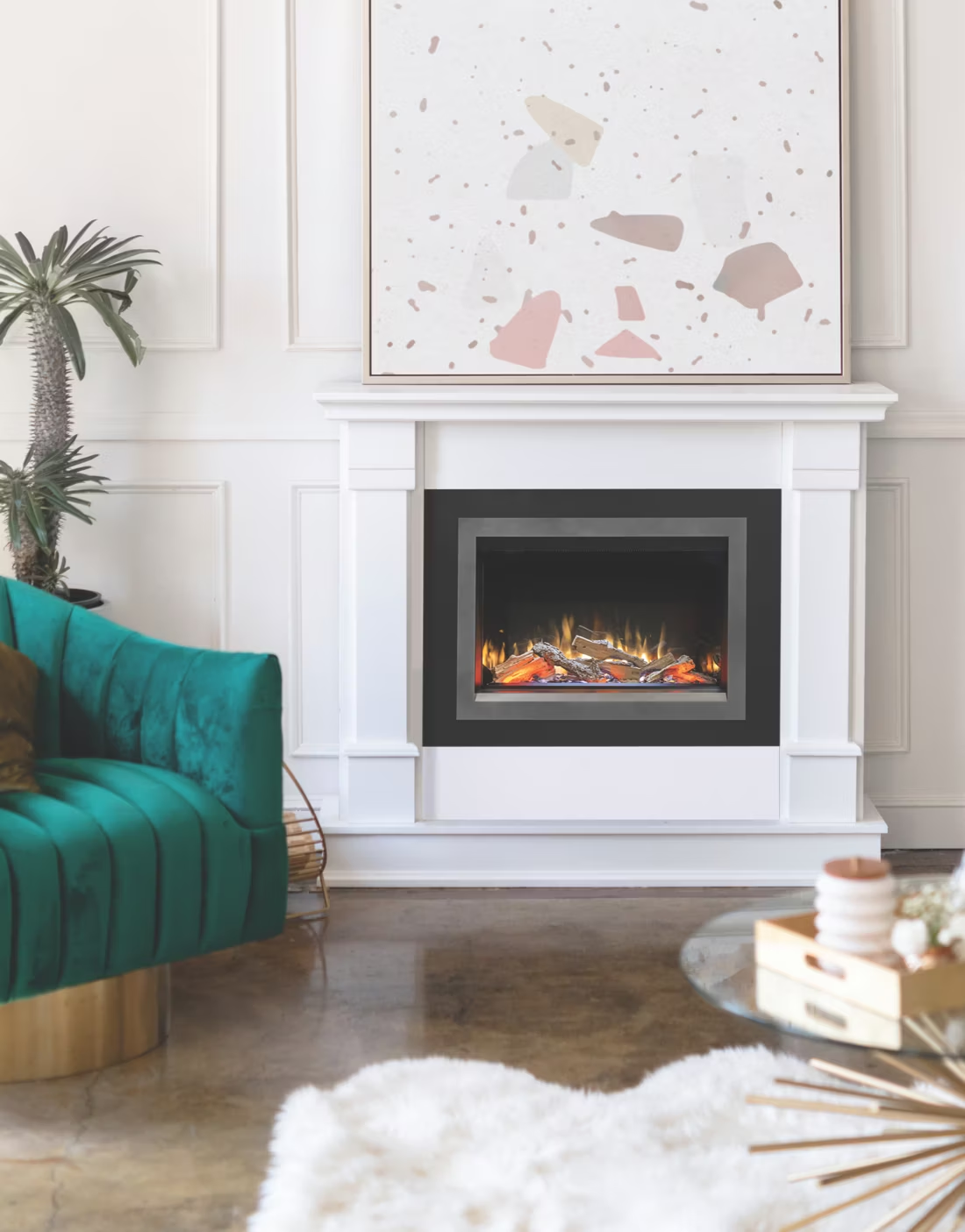
For most Carson living rooms, a built-in linear electric fireplace set into a media wall gives the cleanest look and the widest flame presentation, and it pairs well with the open-concept layouts common in newer Carson construction. For renters or homeowners who want a lower-commitment option, a freestanding electric stove or a mantel-style insert requires no wall modification and can move with you. Given the mild climate, heat output matters less here than flame realism and finish—most Carson buyers are choosing based on how the unit looks in the room, not how many BTUs it can produce.
Electric vs. gas—which is right for my Carson home?
Gas fireplaces deliver real, sustained heat output and can run during a power outage with the right ignition setup, which matters given that Southern California Edison periodically initiates Public Safety Power Shutoffs during high-wind fire-weather events. Electric fireplaces are simpler to install, cost less upfront, produce zero emissions, and avoid any gas line or venting work—but they go dark the moment the power drops. For a Carson home where the fireplace is mainly about ambiance and light supplemental warmth, electric is usually the more practical and affordable choice. For homes wanting genuine backup heat capability, gas is worth the extra installation cost.
Will my electric fireplace work during a power outage in Carson?
No—electric fireplaces require household power to operate the flame effect and any heat function, so they won't run during an outage. This is worth factoring in given that Southern California Edison periodically shuts off power in parts of its service territory during Public Safety Power Shutoffs tied to wildfire risk. If backup heat during an outage is a priority for your household, a gas fireplace with battery-backed ignition is the better fit; if your electric fireplace is primarily for daily ambiance, the outage limitation is a minor tradeoff most Carson homeowners accept.
Can I put a TV above my fireplace?
Yes—with an asterisk. Fireplaces are hot and TVs don't like heat. Either put a mantel between them to deflect rising warmth, or choose a fireplace with heat-management technology that creates a cool zone on the wall above—the wall stays around 125 degrees, barely warm, while the room still gets full heat. If you like clean lines and don't want a mantel, heat management is the answer.
Do electric fireplaces actually produce heat?
Yes—most put out around 4,800–5,000 BTUs from a standard outlet, which comfortably warms a bedroom, office, or den as a comfort-zone heater. What they won't do is carry a whole house the way wood, gas, or pellet can. Think of electric as ambiance-first with honest supplemental heat: flames on with no heat in July, flames plus warmth in January.
How much should I budget for a fireplace?
For an average home—covering the fireplace, the vent pipe, and basic installation—a budget between $3,900 and $5,500 gives you a lot of options across wood, gas, and pellet. By the time you add finish work, gas line, and electrical, the average complete installation lands between $5,000 and $12,000 all-in. In a remodel or new build, a good rule is to put about 2.5% of the total project cost toward the fireplace.
What is an in-home preview and do I need one?
It's a visit where a hearth professional measures your space, confirms the model you picked actually works in your home, and walks the specs—framing, gas line, venting, finish work—before anything is ordered. Some details you just can't know until you see the house. Never make a down payment without one; it's the single most-skipped step that burns buyers.
Nearby Dealers
Hearth shops serving Carson and the surrounding area.
All Valley Distrib. Dba Marco Distrib
The Heat Source (Burrico) - Lancaster
Tropicana Outdoor Living
Electric Service in Carson
An electric fireplace's heater draws about 1,500 watts—pennies per hour at local rates.
Southern California Edison Co
Find your electric fireplace in Carson.
Tell us a bit about your home and we'll match you with the right electric fireplace or insert, plus a free Project Guide & Parts List and a trusted local dealer to install it.
Find Your Fireplace →