
Warm up your living room without adding smoke to Butte County's air.
Instant, clean heat for Chico, Oroville, Paradise, and every community across Butte County—natural gas through PG&E in the valley, propane in the foothills. Find the right unit and connect with a trusted local dealer.
Every Project Starts From One of These Five Situations
A mild climate, but a real reason to choose gas.
Butte County sits in climate zone 3B, with an average winter low around 36°F and a fairly light winter heating load—mild compared to a place like Bozeman MT, where stoves have to hold a fire through single-digit nights. Most Butte County homes don't need a gas fireplace to survive winter. They want one for the ambiance of a real flame, for zone heat in a family room, or because wood smoke has become something residents in Chico, Oroville, Paradise, Gridley, Biggs, and Durham think twice about. Wildfire smoke settles into the valley and foothills for weeks at a stretch in late summer and fall, and a growing number of homeowners want a heat source that doesn't add to the particulate load on top of what the season already brings.
Natural gas service reaches most of Chico, Oroville, Gridley, and Biggs through PG&E, while propane is the standard fuel in the foothill communities—Paradise, Magalia, Forest Ranch, Cohasset—where many homes were rebuilt after the 2018 Camp Fire under updated Chapter 7A wildland-urban interface code. That rebuild has meant a wave of new construction with modern direct-vent gas fireplaces installed from scratch, spec'd with ember-resistant vent terminations required in the county's fire hazard severity zones. Whether you're finishing a rebuild in Paradise or converting an old masonry fireplace in a Chico bungalow, a gas fireplace or insert gives you heat on demand without a woodpile, a chimney fire risk, or another source of smoke during a season when the air is already working against you.
Three steps. No salesperson until you're ready.
Tell us about your project
Your zip code, your situation, and the fuel you're leaning toward—or let the answers point you to one.
See what's actually available
The brands dealers within 100 miles genuinely carry—real options, never a catalog mirage.
Get your dealer & Project Guide
A trusted local dealer, plus the free Project Guide & Parts List that names every component of the job.
Frequently Asked Questions
How much does a gas fireplace installation cost in Butte County?
Most gas fireplace and insert installations in Butte County run between $4,000 and $9,500, depending on the unit, the venting path, and whether new gas line work is required. A direct-vent insert dropped into an existing Chico or Oroville masonry fireplace with gas already run to the house sits toward the lower end. A new-construction install in a Paradise or Magalia rebuild—framing, direct-vent piping through an exterior wall, and a fresh gas line—runs toward the higher end, especially when the home is on propane and needs a tank set. Local retailers will give you a firm number after an in-home look at your existing chimney, gas service, and wall or floor plan.
Can I convert my existing wood fireplace to gas?
Yes, and it's a common project in older Chico and Oroville neighborhoods with original masonry fireplaces. A gas insert slides into the existing firebox and vents through the chimney with a stainless liner, so you keep the look of the fireplace while gaining instant on-off heat and no more ash or creosote. Typical cost runs $4,500 to $8,000 depending on whether the home is on PG&E natural gas or propane and whether new gas line work is needed to reach the fireplace. It's also a popular upgrade for homeowners who want to stop burning wood during wildfire smoke season without losing the fireplace as a feature of the room.
Do I need natural gas, or can I use propane?
Either works, and which one you have usually depends on where in Butte County you live. PG&E natural gas service covers most of Chico, Oroville, Gridley, and Biggs, so if your home already has gas appliances, adding a fireplace is straightforward. In the foothill communities—Paradise, Magalia, Forest Ranch, Cohasset—propane is the standard, supplied by tank from a regional propane company. Most gas fireplace models can be set up for either fuel with the correct orifice and regulator, so the choice usually comes down to what's already serving the house rather than which fireplace you want.
Will my gas fireplace work during a power outage?
For the right model, yes. Butte County has been subject to PG&E Public Safety Power Shutoffs during high fire-danger red flag conditions, and outages here can run longer than a typical storm-related blackout elsewhere. Gas fireplaces with IPI (intermittent pilot ignition) run on AA battery backup that kicks in automatically when the power drops, so the unit lights and heats normally until utility power returns. Valor fireplaces take a different approach—the pilot's thermocouple generates its own electricity, so there's no battery to check or replace, ever. For homes in Butte County's higher fire-risk zones where PSPS events are more frequent, that's worth asking your local dealer about directly.
What's the difference between a gas fireplace, gas insert, and gas stove?
A gas fireplace is a fully built-in unit framed into a wall—the standard choice for new construction, which describes a lot of the current rebuild activity in Paradise and Magalia. A gas insert is designed to drop into an existing masonry firebox, which fits the older housing stock common in Chico and Oroville. A gas stove is a freestanding cast-iron or steel unit that sits on the floor like a wood stove but runs on gas—a good option for a room without an existing chimney or the framing for a built-in unit. Your local dealer can tell you which fits your specific wall or fireplace opening.
Do I need a permit to install a gas fireplace in Butte County?
Yes—Butte County Department of Development Services requires a building permit and a gas line permit for new gas fireplace installations, and the gas line work has to be done by a licensed gas fitter. Homes in the county's higher fire hazard severity zones, including much of the Paradise ridge and Magalia, also need to meet Chapter 7A wildland-urban interface standards, which affects how the vent terminates on the exterior wall. Most established hearth retailers handle the permitting and code coordination as part of the installation, so you're not left managing separate trades and inspections yourself.
What's the difference between vented and vent-free gas fireplaces?
Vented (direct-vent) gas fireplaces pull combustion air from outside and exhaust combustion byproducts back outside through a sealed pipe—they're the standard, code-compliant option nearly everywhere, including Butte County. Vent-free gas units burn directly into the room air; California restricts their use more heavily than most states, and many local jurisdictions won't approve them at all. In practice, that means almost every gas fireplace installed in Chico, Oroville, or Paradise is a direct-vent unit, and that's generally the right call anyway—it keeps combustion byproducts out of the house and doesn't add anything to already smoke-heavy air during wildfire season.
How often should my gas fireplace be serviced?
Plan on an annual inspection, ideally before the first cold snap in late fall. A technician checks the burner, pilot assembly, venting, and gas connections, and cleans the glass and firebox interior. This runs $150 to $250 in most cases and is far simpler than chimney sweeping for a wood-burning unit, but skipping it is still the most common cause of pilot and ignition failures down the road. It's a quick way to make sure the unit is ready to go if a PG&E outage hits during a cold stretch.
Gas vs. wood—which is right for my home?
Wood is still available and used in Butte County—local oak, madrone, and Douglas fir are common species, and cutting permits through the Mendocino, Plumas, and Tahoe National Forests run $5 to $20 per cord during the May-to-October season. But Butte County's wildfire smoke seasons increasingly push homeowners toward gas: on heavy smoke days, adding wood smoke to already poor air quality is a real concern, and gas gives you heat without that trade-off. Wood still wins for homeowners who want a wholly off-grid heat source and don't mind the ash and upkeep. For most Chico, Oroville, and rebuild-area Paradise homes, gas is the lower-maintenance, cleaner-running choice, and it's what most new construction in the county is being built with.
Can I put a TV above my fireplace?
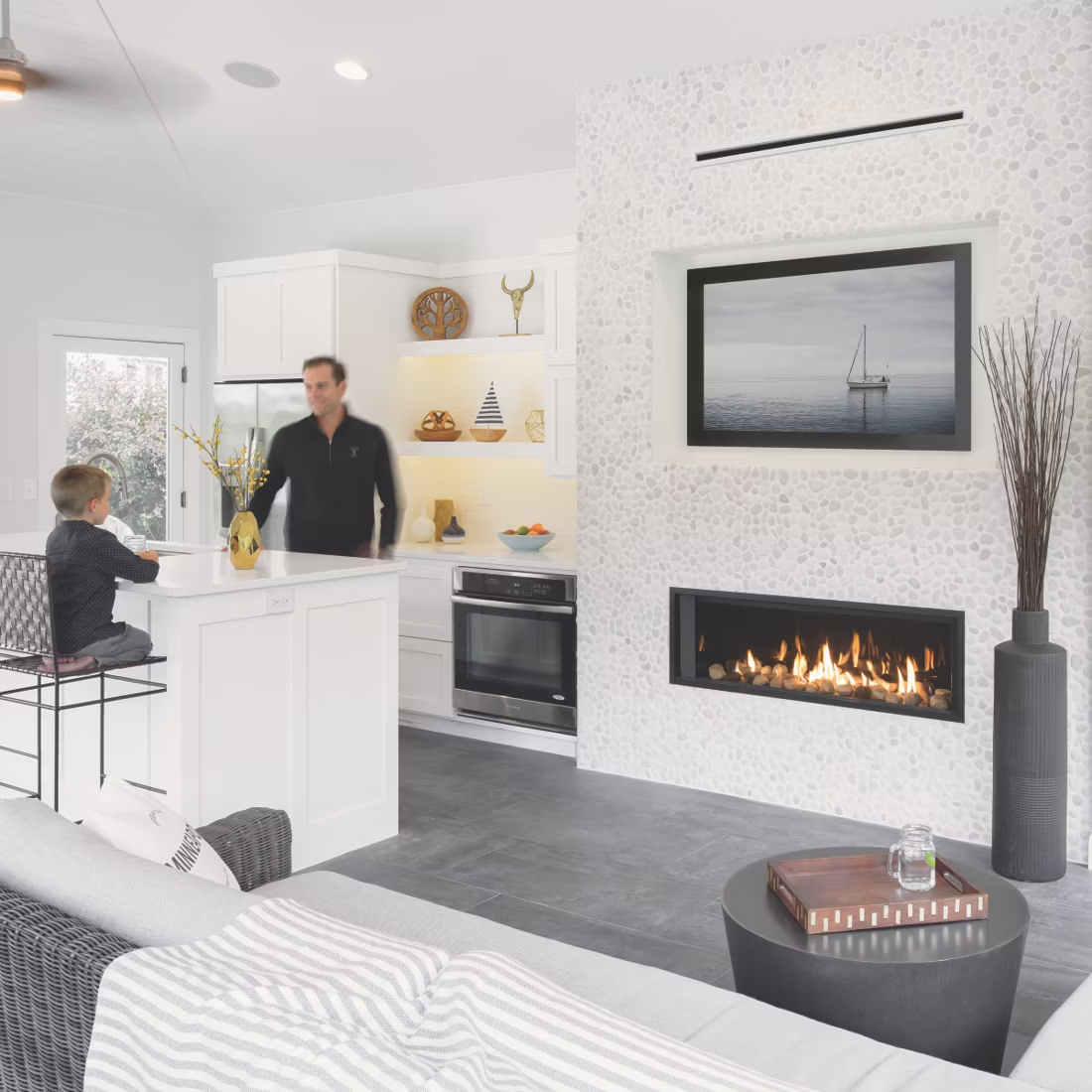
Yes—with an asterisk. Fireplaces are hot and TVs don't like heat. Either put a mantel between them to deflect rising warmth, or choose a fireplace with heat-management technology that creates a cool zone on the wall above—the wall stays around 125 degrees, barely warm, while the room still gets full heat. If you like clean lines and don't want a mantel, heat management is the answer.
Why is a fireplace insert so efficient?
An insert does two things: it seals the chimney completely, so you stop losing air you already paid to heat, and it radiates warmth into the room through the firebox and glass. Most add a heat-exchange fan that pulls cool room air underneath, wraps it around the hot firebox, and pushes it back out warm. Your home is more efficient before you've even lit the first fire.
Does a fireplace add value to my home?
On average, a fireplace adds back to the home about the same amount you spent installing it. Add the monthly savings from heating the rooms you actually use instead of the whole house—often hundreds of dollars a year—and the value case is strong before you even count what a fire does for how your family uses the room.
What is an in-home preview and do I need one?
It's a visit where a hearth professional measures your space, confirms the model you picked actually works in your home, and walks the specs—framing, gas line, venting, finish work—before anything is ordered. Some details you just can't know until you see the house. Never make a down payment without one; it's the single most-skipped step that burns buyers.
Stove and Fireplace Dealers in Butte County
Find your gas fireplace in Butte County.
Tell us a bit about your home in Butte County and we'll match you with a trusted local dealer and send over a free Project Guide & Parts List—the exact parts, including the vent kit, for your gas fireplace project.we're not a store or a manufacturer, just a neutral matchmaker helping you get it installed right.
Find Your Fireplace →