
Warm evenings on the Peninsula—without the smoke.
Burlingame's mild bayside winters and strict Bay Area air rules make gas the default hearth fuel here. Find the right fireplace or insert and get matched with a trusted local installer.
Every Project Starts From One of These Five Situations
Mild winters, strict air rules, and a fireplace built for both.
Sitting at just 23 feet above sea level on the San Francisco Bay, Burlingame's climate is about as gentle as heating climates get—an average winter low near 44°F and roughly 2,475 heating degree days a year. Compare that to a place like Duluth, Minnesota, which racks up more than 9,000 HDD in a single winter, and it's clear why nobody in Burlingame is installing a wood stove to survive January. Wood heat here is essentially off the table, not because oak and madrone aren't available in the hills nearby, but because the Bay Area Air Quality Management District's Regulation 6, Rule 3 bars new wood-burning fireplace installations across all nine Bay Area counties, and mandatory 'Spare the Air' no-burn days shut down existing ones on high-pollution nights.
Gas fills that gap cleanly. Pacific Gas & Electric serves natural gas throughout Burlingame's 94010 and 94011 zip codes, and most of the city's older Craftsman and Spanish Revival homes near Burlingame Avenue and the Easton Addition were built with masonry fireplaces that convert easily to direct-vent gas inserts. A gas fireplace here isn't chasing survival heat the way it would in a harsher climate—it's about instant, reliable warmth on foggy evenings, a real flame without the smoke restrictions, and a hearth that stays code-compliant no matter what the air district's daily advisory says.
Three steps. No salesperson until you're ready.
Tell us about your project
Your zip code, your situation, and the fuel you're leaning toward—or let the answers point you to one.
See what's actually available
The brands dealers within 100 miles genuinely carry—real options, never a catalog mirage.
Get your dealer & Project Guide
A trusted local dealer, plus the free Project Guide & Parts List that names every component of the job.
Frequently Asked Questions
How much does a gas fireplace installation cost in Burlingame?
Bay Area gas fireplace installs typically run $5,500 to $12,000, with the low end covering a direct-vent gas insert dropped into an existing masonry fireplace that already has gas plumbed nearby. The higher end applies to new construction or remodels where a gas line has to be run from the meter, framing is required for a built-in unit, or venting has to route through multiple floors—common in Burlingame's older two-story homes. Labor costs in San Mateo County run higher than the national average, so get a firm in-home quote from a local installer rather than relying on online estimates.
Can I convert my existing wood-burning fireplace to gas?
Yes, and it's one of the most common hearth projects in Burlingame given the air district's restrictions on wood burning. A gas insert or gas log set installed into your existing masonry firebox uses the chimney you already have, typically with a stainless liner for direct-vent models. Converting an old wood fireplace to gas is fully compliant with BAAQMD rules—the rule targets new wood-burning installs, not conversions away from wood—and it eliminates the smoke, ash, and no-burn-day restrictions that come with keeping the original open hearth.
Is natural gas or propane more common for fireplaces in Burlingame?
Natural gas, by a wide margin. Pacific Gas & Electric provides gas service throughout nearly all of Burlingame, so if your home already has a gas water heater, range, or furnace, adding a gas fireplace usually just means running a branch line to the hearth. Propane is rare here and mostly shows up for portable appliances rather than fixed fireplace installs—there's little reason to install a propane tank in a city this well served by PG&E's gas network.
Will my gas fireplace still work if PG&E shuts off power?
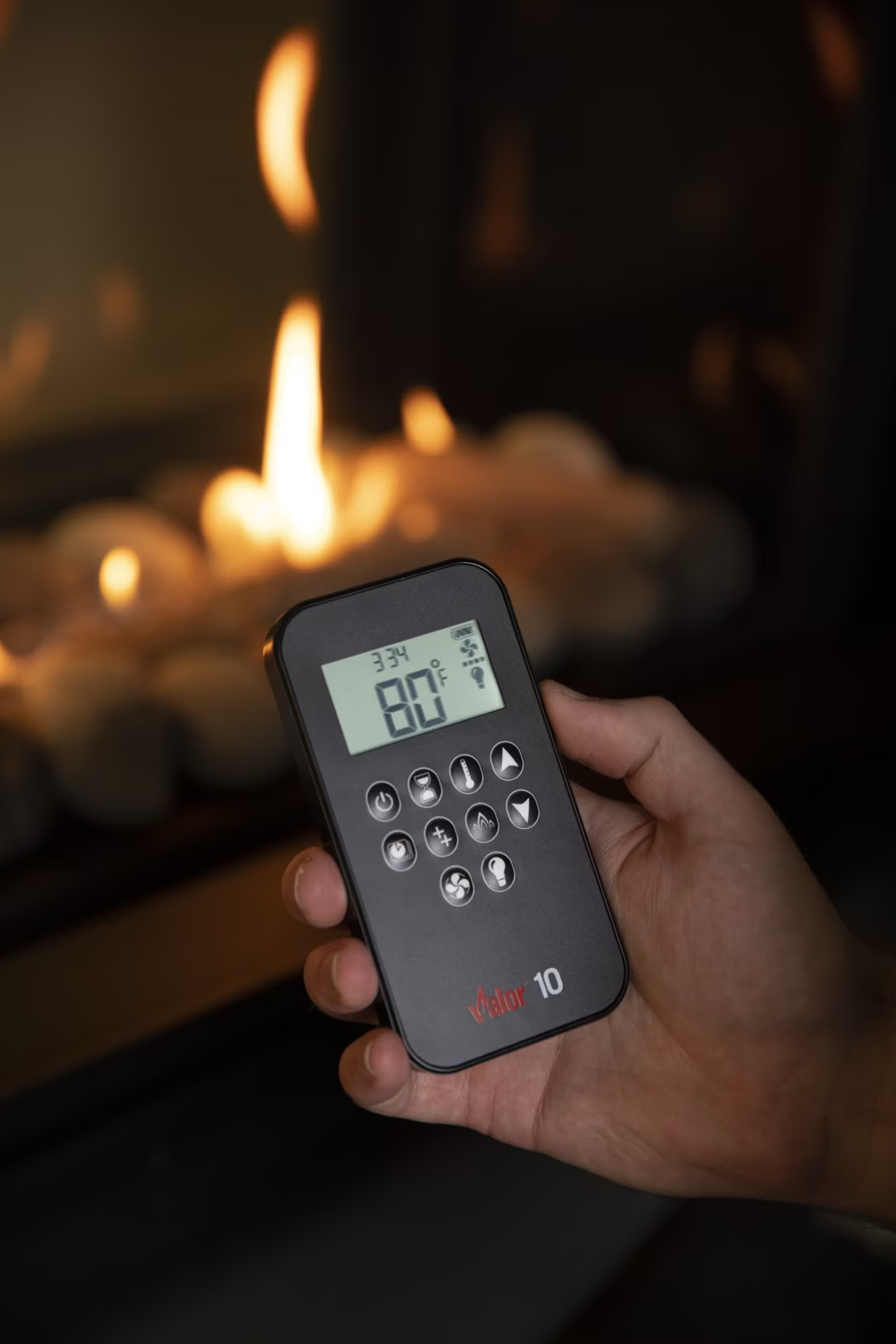
Most modern gas fireplaces will, which matters more in Burlingame than the mild climate might suggest—PG&E's Public Safety Power Shutoffs during fall wildfire-risk periods can cut electricity for a day or more even on the Peninsula. Units with intermittent pilot ignition (IPI) run on AA batteries that kick in automatically when the power drops, so the fireplace lights on demand just like normal. Valor fireplaces take it a step further: their pilot's thermocouple generates its own electricity, so there are no batteries to remember at all. Ask your local dealer about the ignition system before you buy, especially if backup heat during a PSPS event matters to you.
What's the difference between a gas fireplace, insert, and stove?
A gas fireplace is a fully built-in unit framed into a wall—the right call for new construction or a remodel without an existing chimney. A gas insert slides into an existing masonry firebox, which describes a large share of Burlingame's older housing stock in neighborhoods like the Easton Addition. A gas stove is a freestanding cast-iron or steel unit that sits on the floor, useful in rooms with no existing fireplace opening at all—increasingly common in the condos and townhomes near the Caltrain corridor and Broadway. Most Burlingame homeowners with an existing fireplace go with an insert; those without one lean toward a built-in fireplace or freestanding stove.
Do I need a permit to install a gas fireplace in Burlingame?
Yes. The City of Burlingame Building Division requires a building permit for the fireplace installation itself, plus a separate gas line permit if new piping is being run—both of which need to be pulled by a licensed contractor. Most established hearth dealers handle this paperwork as part of the installation, coordinating the gas line work, venting, and final inspection so you're not managing multiple trades and city sign-offs yourself.
Are vent-free gas fireplaces allowed in Burlingame?
California applies tighter restrictions to vent-free (unvented) gas appliances than many states, and most Bay Area jurisdictions, including San Mateo County, favor sealed direct-vent units. Direct-vent gas fireplaces draw combustion air from outside and exhaust it back outside, which keeps indoor air quality clean and satisfies code without exception. Given Burlingame's existing air-quality designation as a non-attainment area, direct-vent is the practical and most commonly installed choice—ask a local retailer if a vent-free unit is even an option for your specific room before planning around one.
How often should a gas fireplace be serviced?
Plan on an annual inspection, ideally before the foggy season sets in each fall. A technician checks the burner, pilot assembly, venting, and gas connections, and cleans the glass and firebox interior. It's a lighter lift than chimney sweeping for wood units, but skipping it lets dust and spider nests block the pilot orifice—a common service call in coastal homes near the Bay. Local gas appliance technicians typically charge $150 to $250 for the annual visit.
Gas fireplace or electric fireplace—which fits my Burlingame home better?
With PG&E's residential electric rate running around $0.317 per kWh—among the highest in the country—an electric fireplace costs more to operate hour for hour than gas, even though installs are cheaper (often $400 to $1,500) and require no venting or gas line at all. That makes electric a strong fit for condos and apartments along California Drive or near the Caltrain corridor where there's no chimney and no interest in gas plumbing. For homes with an existing masonry fireplace or where PG&E gas service is already run to the house, a gas insert or fireplace delivers a more authentic flame and lower operating cost over the life of the unit. Both are viable in Burlingame's mild climate—the decision usually comes down to whether you already have gas service and a chimney opening to work with.
What's the difference between an insert and a zero-clearance fireplace?
An insert is a fireplace that slides into a pre-existing wood-burning fireplace—if you don't have one, there's nothing to insert it into. A zero-clearance fireplace is built into a framed wall, which makes it the answer for remodels and new construction. Simple test: existing masonry fireplace means insert; blank or framed wall means zero-clearance.
Why is my open fireplace making my house colder?
Open fireplaces suck—literally. As the fire burns, it consumes air your furnace already paid to heat and pulls it out through the chimney, so the house is actually colder after the fire goes out than before you lit it. An insert fixes this: it seals the chimney, puts fixed glass across the front, and turns that hole in your house into a real heat source.
What is an in-home preview and do I need one?
It's a visit where a hearth professional measures your space, confirms the model you picked actually works in your home, and walks the specs—framing, gas line, venting, finish work—before anything is ordered. Some details you just can't know until you see the house. Never make a down payment without one; it's the single most-skipped step that burns buyers.
Can a fireplace actually lower my heating bill?
Yes—by creating a comfort zone. A furnace heats every square foot of the house just to warm the one room you're in; a gas fireplace on low burns roughly a sixth of the gas a typical furnace does. Set the furnace around 55–60 degrees as a baseline, then heat the rooms your family actually uses. Families who heat this way commonly save $20–$60 a month.
Nearby Dealers
Hearth shops serving Burlingame and the surrounding area.
Get matched with a gas fireplace dealer in Burlingame.
Tell us about your home and we'll match you with a trusted local dealer and send you a free Project Guide & Parts List—the exact fireplace or insert, vent kit, and installation plan for your Burlingame project.
Find Your Fireplace →