
Electric warmth built for Brawley's mild desert winters.
With winter lows averaging 41°F and one of the lightest winter heating loads around, Brawley doesn't need a furnace-replacing hearth—it needs clean, instant ambiance and the occasional supplemental warmth. Electric delivers both.
Every Project Starts From One of These Five Situations
A desert climate that barely asks for heat.
Brawley sits in the Imperial Valley at 114 feet below sea level, where summers push past 110°F and winters are short and mild—the average winter low is 41°F, and the city has a light winter heating load, one of the smallest around. Compare that to a place like Bismarck, ND, which has a heating load more than ten times as large, and it's clear Brawley's hearth needs are a different category entirely. Most homes here don't rely on a fireplace to survive the season; they want one for ambiance, a cozy focal point on the handful of genuinely cold nights, or a zero-hassle heat source for a bonus room or converted garage.
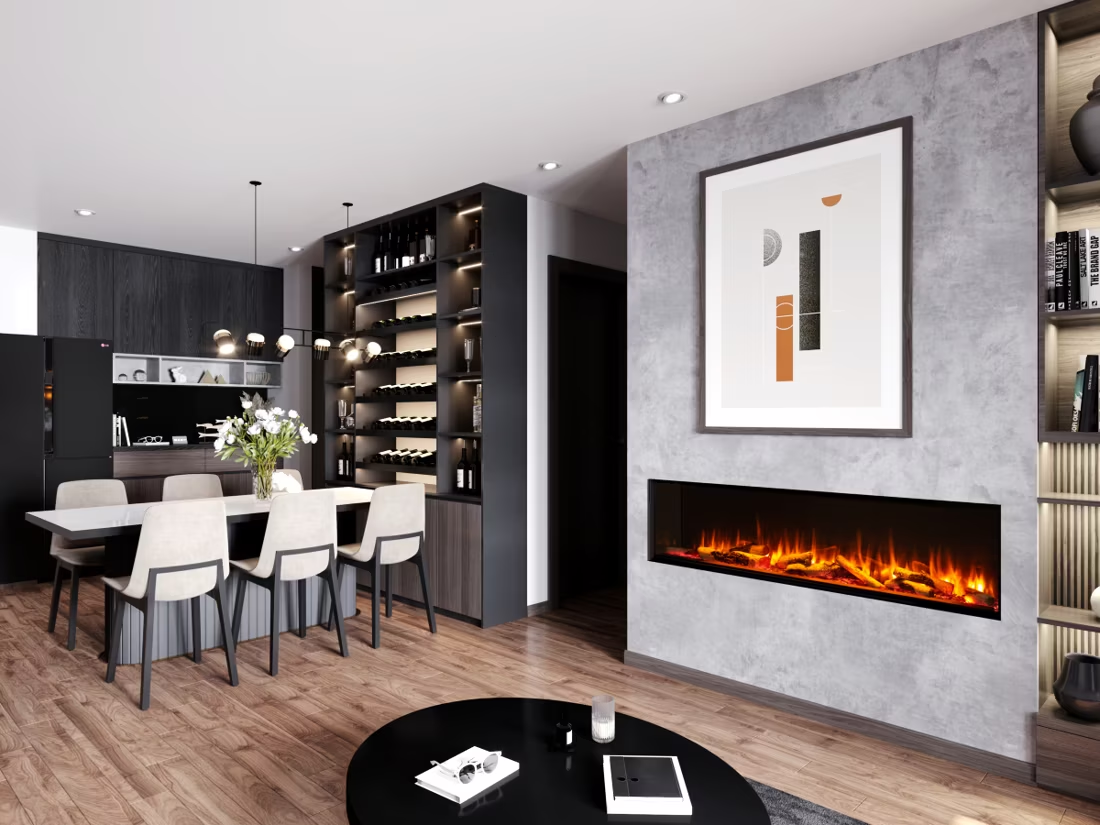
That's exactly where electric fireplaces earn their keep. There's no chimney, no venting, and no gas line to run—just a plug-in insert, mantel unit, or built-in wall model wired by an electrician if needed. Imperial Irrigation District serves electric power to Brawley at a residential rate of about $0.1791 per kWh, and because most households here run an electric fireplace occasionally rather than as a primary heat source, the actual cost to operate stays modest. It's also a clean option in a county where Imperial's non-attainment air quality status and periodic wildfire smoke already make wood burning something local air districts discourage—electric sidesteps that conversation entirely.
Three steps. No salesperson until you're ready.
Tell us about your project
Your zip code, your situation, and the fuel you're leaning toward—or let the answers point you to one.
See what's actually available
The brands dealers within 100 miles genuinely carry—real options, never a catalog mirage.
Get your dealer & Project Guide
A trusted local dealer, plus the free Project Guide & Parts List that names every component of the job.
Frequently Asked Questions
How much does an electric fireplace installation cost in Brawley?
A plug-in electric insert or freestanding unit typically runs $300 to $1,200 installed, since most models just need a standard outlet and drop into an existing opening or mantel surround. A built-in wall unit or a recessed linear electric fireplace that requires an electrician to run a dedicated 120V or 240V circuit runs higher, usually $1,500 to $2,800 depending on wall framing and finish work. Because there's no venting, chimney, or gas line involved, electric installs in Brawley are consistently the fastest and least invasive hearth project a homeowner can take on.
Does an electric fireplace even make sense in a climate this mild?
It's a fair question—Brawley's light winter heating load means this isn't a primary-heat decision the way it would be in a colder climate. Most local installs here are chosen for the visual warmth of a real-looking flame, supplemental heat for a home office, converted garage, or bonus room, and the occasional genuinely cold desert night when temperatures dip into the 30s. If you're expecting a fireplace to replace your HVAC system, it won't—but as a low-cost, code-simple way to add a heat source and a focal point to a room, it fits Brawley's climate well.
Do I need a permit to install an electric fireplace in Brawley?
A plug-in unit that uses an existing standard outlet typically doesn't require a permit. If your project involves a built-in wall unit, a new dedicated circuit, or any electrical panel work, the City of Brawley Building Division (or Imperial County Building Department for homes outside city limits) will require an electrical permit, and the work needs to be done by a licensed electrician. Most local dealers can tell you within a few minutes of hearing your model and wall setup whether your project crosses that line.
What will an electric fireplace cost to run on my electric bill?
Imperial Irrigation District bills residential customers around $0.1791 per kWh. A typical electric fireplace heater draws about 1,500 watts on its heat setting, so running it for a full hour costs roughly 27 cents. Most Brawley households use the flame effect far more often than the heater—the LED flame alone draws only 40 to 100 watts, so ambiance-only use costs pennies per hour. Given how few genuinely cold days Brawley sees, even daily use during winter evenings adds only a few dollars a month to an IID bill.
What's the difference between an electric insert, a mantel package, and a wall-mounted unit?
An electric insert drops into an existing fireplace opening—a common choice if a Brawley home has an old, rarely-used masonry or prefab wood fireplace that owners want to convert to something maintenance-free. A mantel package pairs a freestanding electric firebox with a surround, working anywhere near an outlet without any existing fireplace. A wall-mounted or built-in linear unit recesses into the wall for a modern, low-profile look but usually needs an electrician for the circuit. For most Brawley homes without an existing fireplace, the mantel package is the simplest and least expensive path.
Why would I choose electric over gas in Brawley?
Gas is a solid option here too, and plenty of Imperial Valley homes have it. Electric tends to win for renters, mobile and manufactured homes (common throughout Brawley and greater Imperial County), and anyone who wants zero venting and no gas line trenching. It's also the simpler choice for homes without natural gas service already run to the property, since a propane tank or new gas line adds real cost. If you specifically want higher heat output for a home office or workshop, gas is worth comparing—but for looks, low installed cost, and simplicity, electric usually wins in this climate.
Are wood-burning fireplaces a realistic option in Brawley?
They're uncommon here, and for good reason. Imperial County is a designated non-attainment area for particulate matter, largely from agricultural dust, and periodic wildfire smoke from statewide fires adds to the air quality pressure—local air districts actively discourage new wood-burning appliances. Combined with Brawley's mild winters, which don't generate the sustained cold that makes wood heat worthwhile, most homeowners who want that added heat source choose electric or gas instead. A small number of rural Imperial Valley properties still keep a wood stove for backup heat, but it's the exception, not the norm.
What size electric fireplace do I need?
Size in Brawley is driven almost entirely by the room and the look you want, not by heating demand the way it would be in a colder climate. A 30 to 40-inch unit suits a bedroom, home office, or den. A 50 to 60-inch linear model works well as a living room focal point or over a media console. Since most electric fireplaces here run more for ambiance than heat, don't oversize based on square footage the way you would with a wood or gas unit—pick based on the wall space and sightlines in the room.
How long do electric fireplaces last, and what maintenance do they need?
Most quality electric fireplace units last 10 to 15 years, with the heating element and LED flame components as the parts most likely to eventually need replacement or repair. Maintenance is minimal compared to wood or gas—no chimney sweeping, no annual gas line inspection, just an occasional dusting of the vents and heater intake to keep airflow clear. Brawley's dry desert air and occasional dust events mean it's worth wiping down the unit and vents a bit more often than you might in a humid climate, since fine dust can accumulate in the fan housing.
Can I put a TV above my fireplace?
Yes—with an asterisk. Fireplaces are hot and TVs don't like heat. Either put a mantel between them to deflect rising warmth, or choose a fireplace with heat-management technology that creates a cool zone on the wall above—the wall stays around 125 degrees, barely warm, while the room still gets full heat. If you like clean lines and don't want a mantel, heat management is the answer.
Do electric fireplaces actually produce heat?
Yes—most put out around 4,800–5,000 BTUs from a standard outlet, which comfortably warms a bedroom, office, or den as a comfort-zone heater. What they won't do is carry a whole house the way wood, gas, or pellet can. Think of electric as ambiance-first with honest supplemental heat: flames on with no heat in July, flames plus warmth in January.
Can a fireplace actually lower my heating bill?
Yes—by creating a comfort zone. A furnace heats every square foot of the house just to warm the one room you're in; a gas fireplace on low burns roughly a sixth of the gas a typical furnace does. Set the furnace around 55–60 degrees as a baseline, then heat the rooms your family actually uses. Families who heat this way commonly save $20–$60 a month.
Can I install a fireplace myself?
If you're putting a fire in your house on purpose, it's best to work with an expert. Unless you're genuinely experienced in framing, gas line, vent pipe, and the national code on clearances to combustibles, have a professional do it—and ideally the same company that sells you the fireplace, so warranty, service, and liability all live under one roof.
Electric Service in Brawley
An electric fireplace's heater draws about 1,500 watts—pennies per hour at local rates.
Imperial Irrigation District
Find your electric fireplace in Brawley.
Tell us a bit about your home and we'll match you with the right electric fireplace, insert, or wall unit—plus a free Project Guide & Parts List and a trusted local Brawley-area dealer who can install it correctly.
Find Your Fireplace →