
Instant Warmth, Built for Mild San Gabriel Valley Winters.
Arcadia doesn't need a furnace-grade heat source—it needs a fireplace that looks good, lights instantly, and holds up through a Santa Ana power shutoff. We'll match you with a trusted local dealer who knows the difference.
Every Project Starts From One of These Five Situations
Ambiance first, heat second—and gas delivers both.
At 447 feet in the San Gabriel Valley, Arcadia averages a winter low around 46°F and has a heating season so light it adds up to only a small fraction of what a place like Bozeman, MT sees in a single cold month. That mild climate is exactly why wood stoves and pellet stoves barely register here: with the South Coast Air Quality Management District classifying the region as a non-attainment area and wildfire smoke drifting down from the Angeles National Forest foothills most falls, burning cordwood for supplemental heat just doesn't pencil out the way it does in colder, less smoke-sensitive parts of the state.
Gas fills that gap. A direct-vent gas fireplace or insert gives Arcadia homeowners real, on-demand heat for the handful of genuinely cold nights each winter, plus the visual warmth of a fire the rest of the year—without adding to local air quality concerns. It's also a natural fit for the craftsman bungalows and Spanish Revival homes common in Arcadia's older neighborhoods, many of which already have a masonry fireplace and chimney that can be converted rather than rebuilt. With Southern California Edison residential rates running around 28 cents per kWh, gas heat output is also simply more cost-effective per BTU than running electric resistance heat through a long Southern California winter—mild as it is.
Three steps. No salesperson until you're ready.
Tell us about your project
Your zip code, your situation, and the fuel you're leaning toward—or let the answers point you to one.
See what's actually available
The brands dealers within 100 miles genuinely carry—real options, never a catalog mirage.
Get your dealer & Project Guide
A trusted local dealer, plus the free Project Guide & Parts List that names every component of the job.
Frequently Asked Questions
How much does a gas fireplace installation cost in Arcadia?
Most gas fireplace and insert installations in Arcadia run $5,000 to $12,000, with the spread driven by the venting path and whether new gas line work is required. Converting an existing masonry fireplace to a direct-vent gas insert using the current chimney as a chase tends to land on the lower end. A new built-in gas fireplace in a remodel—with framing, venting, and a fresh gas line run through an older home's walls—runs higher. Labor costs in the San Gabriel Valley also tend to sit above statewide averages, so get a firm in-home quote from a local dealer rather than relying on a national estimate.
Can I convert my existing fireplace to gas?
Yes, and it's one of the most common projects in Arcadia's older housing stock—the city has a lot of 1920s-1950s craftsman and Spanish Revival homes with a working masonry chimney but a fireplace nobody actually uses for wood. A direct-vent gas insert slides into that opening, runs a liner up the existing chimney, and taps into a nearby gas line. It typically runs $5,000 to $9,500 depending on whether the gas line already reaches the fireplace or needs to be extended from the meter or an existing appliance run.
Is natural gas available throughout Arcadia, or do I need propane?
Natural gas service is standard throughout Arcadia and the rest of the San Gabriel Valley—this isn't a rural service-area question the way it is in parts of the state. If your home already has gas appliances (a water heater, range, or furnace), running a line to a new fireplace location is a straightforward add for a licensed gas-fitter. Propane is essentially a non-factor here; it's reserved for portable or outdoor applications rather than home heating.
Will my gas fireplace still work if the power goes out?
This matters more in Arcadia than you might expect. Southern California Edison periodically initiates Public Safety Power Shutoffs in the San Gabriel foothills during high-wind, high-fire-risk conditions—and a standing pilot or IPI (intermittent pilot ignition) gas fireplace with battery backup will keep working through one of those outages, unlike your central HVAC. Most modern IPI units run on a set of AA batteries that kick in automatically. Valor fireplaces go a step further—their pilot assembly generates its own electricity through the thermocouple, so there's no battery to remember to replace. Worth asking about specifically if you're in a PSPS-affected zone near the foothills.
What's the difference between a gas fireplace, gas insert, and gas stove?
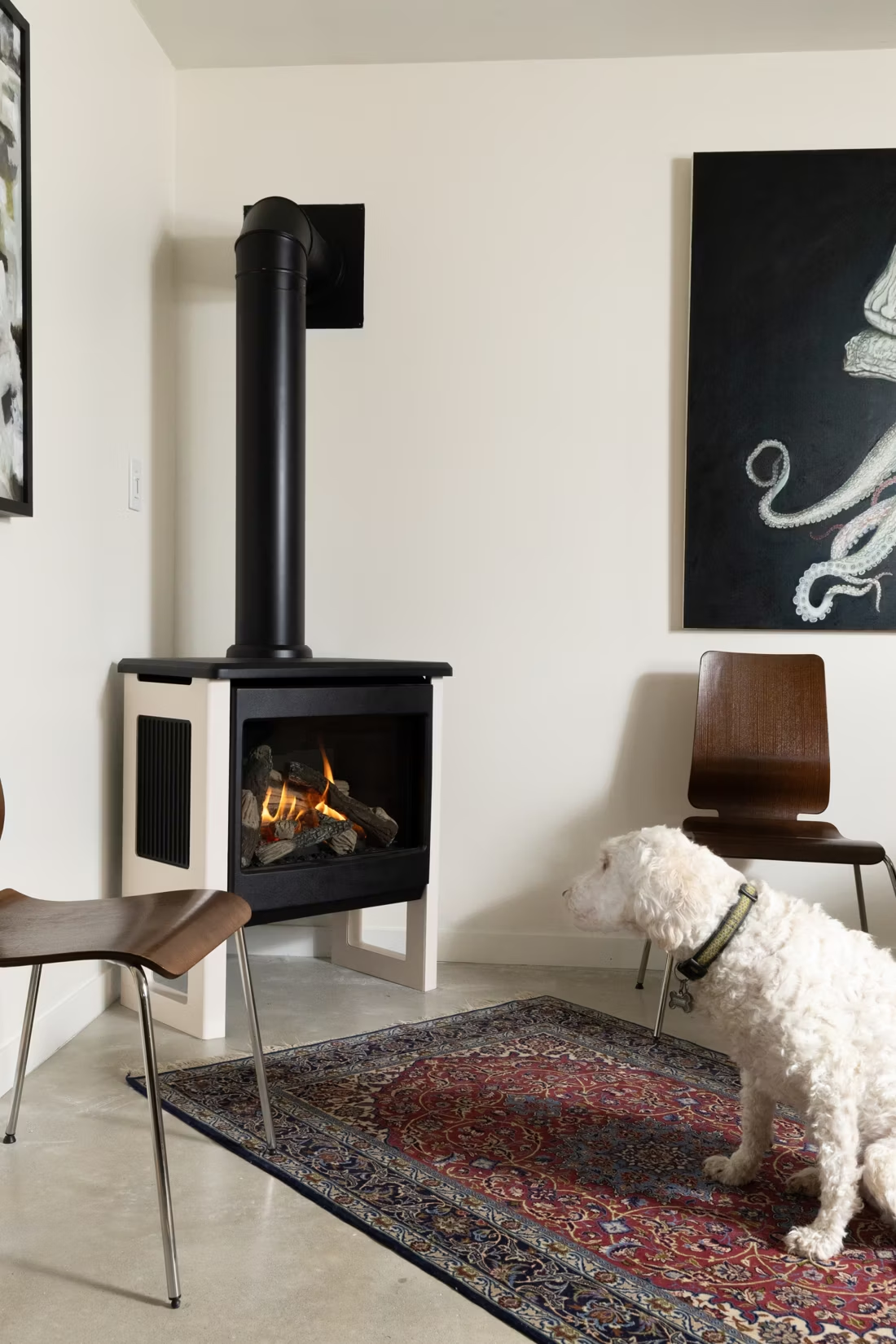
A gas fireplace is a fully built-in unit framed into a wall—the standard choice for new construction or a full remodel. A gas insert drops into an existing masonry fireplace opening and uses the chimney as its vent chase, which is why it's so common in Arcadia's older homes. A gas stove is a freestanding cabinet-style unit that sits on the floor, useful when you want supplemental heat in a room without an existing fireplace or chimney at all. For most Arcadia homeowners with a disused wood-burning fireplace, an insert is the simplest and least invasive upgrade.
Do I need a permit to install a gas fireplace in Arcadia?
Yes. The City of Arcadia Building Division requires a building permit for new gas fireplace installations, and any new or modified gas line requires sign-off from a licensed gas-fitter as part of that process. Most established local hearth dealers handle the permit application and inspection scheduling for you as part of the installation, which is one of the real advantages of going through a trusted local company instead of piecing the job together yourself.
Can I install a vent-free (ventless) gas fireplace in Arcadia?
California code is notably restrictive on vent-free gas appliances compared to many other states—unvented units are prohibited in a number of residential applications, and most licensed installers in Los Angeles County steer clients toward direct-vent units instead. Direct-vent gas fireplaces draw combustion air from outside and exhaust it back outside through a sealed system, so there's no debate about indoor air quality or state code compliance. Given the South Coast Air Quality Management District's non-attainment status, sealed direct-vent equipment is also simply the more defensible choice if air quality is a concern for your household.
How often does a gas fireplace need to be serviced?
Plan on an annual inspection, ideally in early fall before you start using it regularly. A qualified technician checks the burner, pilot assembly, venting, and gas connections, and cleans the glass and firebox interior—a much lighter lift than chimney sweeping for a wood stove, but still important, especially in an older Arcadia home where the gas line or venting may not have been touched since the original installation. Expect to pay somewhere in the $150-$250 range for a standard annual service call from a local hearth technician.
Gas vs. electric fireplace—which makes more sense for an Arcadia home?
With wood and pellet stoves essentially off the table given local air quality rules and Arcadia's mild climate, the real decision for most homeowners here is gas versus electric. Gas delivers genuine heat output and the look of a real flame, and at Southern California Edison's roughly 28-cent residential rate, it's noticeably cheaper to run for actual heating than electric resistance units. Electric fireplaces, on the other hand, need no venting or gas line at all, install in an afternoon, and work well in condos, HOA-restricted units, or rentals where gas line work isn't feasible. If you own the home and want real ambiance plus meaningful heat on Arcadia's occasional cold nights, gas is usually the better long-term choice. If you're renting or need a simple plug-in solution, electric wins on convenience.
Why is my open fireplace making my house colder?
Open fireplaces suck—literally. As the fire burns, it consumes air your furnace already paid to heat and pulls it out through the chimney, so the house is actually colder after the fire goes out than before you lit it. An insert fixes this: it seals the chimney, puts fixed glass across the front, and turns that hole in your house into a real heat source.
What's the difference between an insert and a zero-clearance fireplace?
An insert is a fireplace that slides into a pre-existing wood-burning fireplace—if you don't have one, there's nothing to insert it into. A zero-clearance fireplace is built into a framed wall, which makes it the answer for remodels and new construction. Simple test: existing masonry fireplace means insert; blank or framed wall means zero-clearance.
What is an in-home preview and do I need one?
It's a visit where a hearth professional measures your space, confirms the model you picked actually works in your home, and walks the specs—framing, gas line, venting, finish work—before anything is ordered. Some details you just can't know until you see the house. Never make a down payment without one; it's the single most-skipped step that burns buyers.
Can I install a fireplace myself?
If you're putting a fire in your house on purpose, it's best to work with an expert. Unless you're genuinely experienced in framing, gas line, vent pipe, and the national code on clearances to combustibles, have a professional do it—and ideally the same company that sells you the fireplace, so warranty, service, and liability all live under one roof.
Nearby Dealers
Hearth shops serving Arcadia and the surrounding area.
All Valley Distrib. Dba Marco Distrib
The Heat Source (Burrico) - Lancaster
Tropicana Outdoor Living
Find your gas fireplace in Arcadia.
Tell us about your home and your existing fireplace, if you have one, and we'll send you a free Project Guide & Parts List—the exact parts, including the vent kit, and our recommended local dealer for your Arcadia gas fireplace project.
Find Your Fireplace →