
Reliable, clean heat for Altadena homes—rebuilt or original.
Mild winters, wildfire-season power shutoffs, and a foothill community rebuilding after the Eaton Fire—gas fireplaces fit Altadena for reasons beyond just staying warm. Get matched with a trusted local dealer.
Every Project Starts From One of These Five Situations
Gas heat that works whether the power does or not.
Altadena sits at 1,418 feet against the base of the San Gabriel Mountains, bordering Angeles National Forest directly to the north. Winters here are mild—average lows around 46°F and a light winter heating load, just a fraction of what a place like Duluth, Minnesota logs in a single winter. Wood heat has never really taken hold here: it's flagged not-applicable for a reason, since most homes never need supplemental heat and the South Coast Air Quality Management District's non-attainment status and Rule 445 no-burn day restrictions make routine wood burning impractical anyway. Gas fills the gap instead, providing ambiance and the occasional real heat need without adding to particulate load on already-strained air quality days.
There's also a wildfire-specific reason gas matters here. Southern California Edison serves Altadena and regularly initiates Public Safety Power Shutoffs during Santa Ana wind events—the same conditions that produced the January 2025 Eaton Fire, which destroyed a large share of homes in the community. With SCE residential rates around $0.2825 per kWh, gas is also simply cheaper to run than electric resistance heat. For homes being rebuilt in the fire's footprint and for the craftsman bungalows that survived it, a direct-vent gas fireplace with battery-backup ignition offers heat and light that doesn't depend on the grid staying up.
Three steps. No salesperson until you're ready.
Tell us about your project
Your zip code, your situation, and the fuel you're leaning toward—or let the answers point you to one.
See what's actually available
The brands dealers within 100 miles genuinely carry—real options, never a catalog mirage.
Get your dealer & Project Guide
A trusted local dealer, plus the free Project Guide & Parts List that names every component of the job.
Frequently Asked Questions
How much does a gas fireplace installation cost in Altadena?
A typical gas fireplace installation in Altadena runs $4,000 to $9,500 depending on the unit and venting path. Homes already plumbed for natural gas—common in older Altadena craftsman houses that survived the Eaton Fire—sit on the lower end for a direct-vent insert into an existing masonry fireplace. New construction on a rebuilt lot without an existing gas line or chimney runs higher once framing, venting, and a fresh gas line are factored in. Because Altadena is unincorporated Los Angeles County, permits go through the LA County Department of Public Works Building and Safety Division, and local installers who are used to Eaton Fire rebuild volume can usually navigate that process faster than an out-of-area contractor.
Can I convert my existing wood fireplace to gas?
Yes, and it's a common request among Altadena homeowners whose original masonry fireplace survived the fire. A gas insert typically runs $4,000 to $8,000, using the existing chimney with a stainless liner rather than new venting. It's also a practical response to local air rules: SCAQMD's Rule 445 restricts wood burning on declared no-burn days, which happen more often here given the region's non-attainment status, so a gas conversion lets you keep a working fireplace without worrying about smoke restrictions or adding to wildfire-season particulate levels.
Do I need natural gas, or should I use propane?
Almost every home in Altadena has access to natural gas service through SoCalGas, which covers the San Gabriel Valley, so natural gas is the default for nearly all installations. Propane only comes into play for the small number of properties at the fringe of the foothills near Angeles National Forest where gas lines don't reach. If you already have a gas water heater, range, or furnace, adding a fireplace is generally a straightforward tie-in for your installer.
Will my gas fireplace work during a power outage or PSPS event?
Most modern gas fireplaces with IPI (intermittent pilot ignition) include a battery backup that kicks in automatically when the power drops, so the fireplace still lights on demand. That matters directly in Altadena, where Southern California Edison shuts off power to reduce wildfire risk during Santa Ana wind events—sometimes for a day or more. Valor's gas fireplaces take a different approach: the pilot's thermocouple generates its own electricity, so there are no batteries to remember at all. Ask your local dealer about the ignition system on any unit you're considering, especially if you're rebuilding and want reliable heat independent of the grid.
What's the difference between a gas fireplace, gas insert, and gas stove?
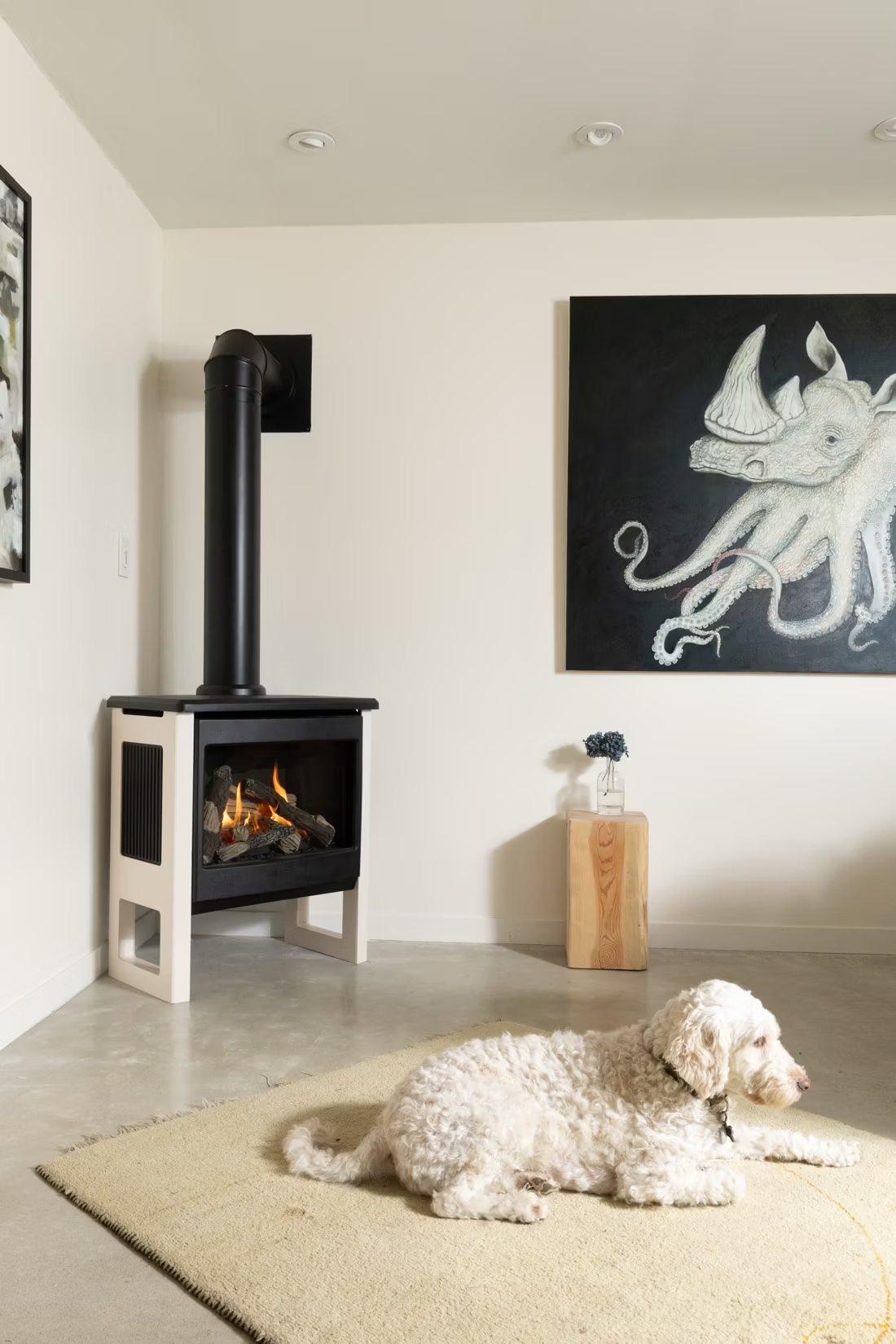
A gas fireplace is a fully built-in unit framed into a wall—the standard choice for Eaton Fire rebuilds and new construction without an existing hearth. A gas insert drops into an existing masonry fireplace opening and uses the chimney as its vent, which is the common route for Altadena's surviving 1920s and 1930s craftsman bungalows. A gas stove is a freestanding unit that sits on the floor like a wood stove but runs on gas—less common here, but occasionally used in additions or converted garages where a fireplace wasn't part of the original layout.
Do I need a permit to install a gas fireplace in Altadena?
Yes. Because Altadena is unincorporated, permits are issued through the Los Angeles County Department of Public Works Building and Safety Division rather than a city building department, and both a building permit and a gas line permit are required for new installations. Given the volume of Eaton Fire rebuild permits currently moving through the county system, working with a local installer who is already coordinating other rebuild projects can shorten the wait compared to a first-time filer.
What's the difference between vented and vent-free gas fireplaces?
Vented, direct-vent gas fireplaces draw combustion air from outside and exhaust it back outside through sealed venting—they're the standard choice statewide and pair well with California's Title 24 energy code, which favors sealed combustion appliances. Vent-free units burn fuel directly into the room without external venting; they're technically legal in California but come with strict room-sizing and ventilation requirements, and most local dealers steer Altadena homeowners toward vented units given that indoor air quality is already a concern here during wildfire smoke events. Adding an unvented combustion source to a household already managing smoke infiltration isn't something most installers recommend.
How often should my gas fireplace be serviced?
Plan on an annual inspection, typically $150 to $250, covering the burner, pilot, gas connections, and glass. For homes near the Eaton Fire burn scar, it's also worth having a technician check for ash or fine soot that may have worked into HVAC and fireplace components even in structures that weren't directly damaged—that kind of residue can affect burner performance and air quality if it isn't cleared out.
Should I consider wood instead of gas?
For most Altadena homes, no. Wood heat is uncommon here—winters are mild enough (just a light winter heating load) that supplemental heat is rarely a necessity, and SCAQMD's non-attainment status combined with Rule 445 no-burn days makes routine wood burning both restricted and, frankly, unwelcome on top of existing wildfire smoke concerns. A handful of foothill properties near Angeles National Forest still burn oak or Douglas fir occasionally in an existing fireplace, but the vast majority of homeowners here—especially those rebuilding after the Eaton Fire—choose gas or electric for both practicality and air quality reasons.
Are new gas fireplaces really better than old ones?
Two ways, and they're both big. Looks: modern gas fireplaces are realistic enough that it's hard to believe they aren't burning wood. Cost: old units burn a standing pilot year-round (roughly $200 a year), while new ones use pilot-on-demand ignition and modern burners. Add remote controls and thermostat operation, and the day-to-day experience isn't close.
Can I put a TV above my fireplace?
Yes—with an asterisk. Fireplaces are hot and TVs don't like heat. Either put a mantel between them to deflect rising warmth, or choose a fireplace with heat-management technology that creates a cool zone on the wall above—the wall stays around 125 degrees, barely warm, while the room still gets full heat. If you like clean lines and don't want a mantel, heat management is the answer.
Can I install a fireplace myself?
If you're putting a fire in your house on purpose, it's best to work with an expert. Unless you're genuinely experienced in framing, gas line, vent pipe, and the national code on clearances to combustibles, have a professional do it—and ideally the same company that sells you the fireplace, so warranty, service, and liability all live under one roof.
What is an in-home preview and do I need one?
It's a visit where a hearth professional measures your space, confirms the model you picked actually works in your home, and walks the specs—framing, gas line, venting, finish work—before anything is ordered. Some details you just can't know until you see the house. Never make a down payment without one; it's the single most-skipped step that burns buyers.
Nearby Dealers
Hearth shops serving Altadena and the surrounding area.
All Valley Distrib. Dba Marco Distrib
The Heat Source (Burrico) - Lancaster
Tropicana Outdoor Living
Find your gas fireplace in Altadena.
Tell us about your home—including whether it's a rebuild—and we'll put together a free Project Guide & Parts List with the right gas fireplace or insert, the exact venting components you'll need, and a trusted local dealer to install it.
Find Your Fireplace →