
Consistent warmth without the woodpile, built for Vancouver's air quality rules.
With winter lows averaging just 1.4°C and a long, damp heating season, Vancouver doesn't need a furnace-sized fire—it needs clean, steady heat that fits a narrow lot or a strata building. I'll match you with a trusted local dealer who knows the permits, the venting, and what's actually installable on your street.
Every Project Starts From One of These Five Situations
Mild winters, dense neighbourhoods, and a real air quality bylaw.
Vancouver's climate zone 4C marine air keeps winters mild by Canadian standards—an average winter low of just 1.4°C, nothing close to what Winnipeg or Edmonton see every January. But mild doesn't mean irrelevant: the rainy season stretches from November through March, and plenty of character homes in Kitsilano, Grandview-Woodland, and East Vancouver still lean on a secondary heat source to cut the damp chill without running a furnace sized for a much colder design temperature. Add tight lots, narrow side yards, and condos and townhomes with no room for a cordwood stack, and pellet heat solves a problem wood stoves increasingly can't in this city.
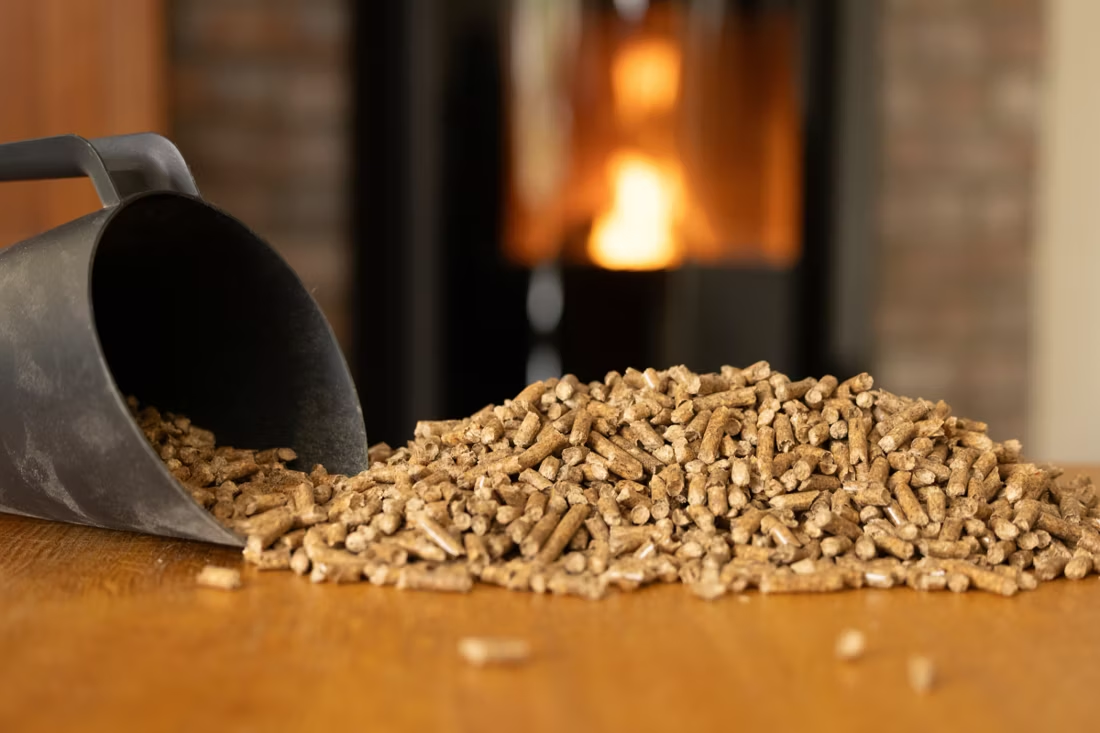
Metro Vancouver's Solid Fuel Burning Appliance regulations already push homeowners toward certified, low-emission equipment, and several regional districts run wood-stove exchange programs that specifically reward swapping an old, uncertified unit for something cleaner—pellet stoves usually qualify without question. Pinnacle Premium, milled in Armstrong, and Princeton Fuel Pellets, milled in Princeton, are the two BC brands most local dealers stock, running roughly $400-$575 a tonne. A typical install lands between $6,000 and $10,000 CAD, permitted through your municipal building department under the CSA B365 installation code, and most home insurers will still ask for a WETT inspection since a pellet stove is technically a solid-fuel appliance even though it never touches cordwood.
Three steps. No salesperson until you're ready.
Tell us about your project
Your postal code, your situation, and the fuel you're leaning toward—or let the answers point you to one.
See what's actually available
The brands dealers within 100 miles genuinely carry—real options, never a catalog mirage.
Get your dealer & Project Guide
A trusted local dealer, plus the free Project Guide & Parts List that names every component of the job.
Frequently Asked Questions
How much does a pellet stove installation cost in Vancouver?
Expect $6,000 to $10,000 CAD for a pellet stove or insert installation in Vancouver. A direct-vent insert into an existing masonry firebox in an older Kitsilano or Riley Park character home sits toward the lower end, since the chimney chase is already in place. A freestanding stove in a home with no existing fireplace, or a condo or townhouse install that needs a new through-wall vent core-drilled with strata sign-off, runs toward the top of that range. Your municipal building department permit is typically folded into a local dealer's quote either way.
Do I need a permit to install a pellet stove in Vancouver?
Yes. Pellet stove installs go through your municipal building department, and the work has to meet the CSA B365 installation code. Because a pellet stove is still classed as a solid-fuel appliance, most insurers also want a WETT inspection on file before they'll adjust your policy, even though there's no cordwood or creosote involved. A trusted local dealer who works with pellet equipment across Metro Vancouver regularly will already have both the permit process and the WETT inspector relationship sorted.
Where do pellets come from, and what do they cost in Vancouver?
Most Vancouver dealers stock Pinnacle Premium, milled in Armstrong, and Princeton Fuel Pellets, milled in Princeton—both BC brands that ship efficiently into the Lower Mainland. Pricing typically runs $400 to $575 a tonne depending on the season and whether you buy ahead in fall or reorder mid-winter. Storage is the real local wrinkle: a rowhouse or character home with a garage or crawlspace can keep a season's supply on hand, but condo and townhouse owners often buy in smaller batches through the winter since there's nowhere to stack a full tonne.
Is there a rebate for switching from an old wood stove to a pellet stove in Metro Vancouver?
Several regional districts across Metro Vancouver run wood-stove exchange programs that offer a rebate for retiring an old, uncertified wood stove and replacing it with a CSA or EPA-certified appliance, and pellet stoves almost always qualify. Given that Metro Vancouver's Solid Fuel Burning Appliance regulations already restrict uncertified units, swapping now avoids a future problem and can put real money back toward the install. Program funding and timing shift year to year, so check with your regional district directly and ask your dealer which current models are eligible.
Pellet stove vs. wood stove—which makes more sense for a Vancouver home?
Firewood cutting permits through FrontCounter BC and the BC Ministry of Forests are free and available year-round outside summer fire restrictions, but that access matters more if you're driving out to the Fraser Valley or the Interior than if you live on a standard Vancouver lot with no truck and no room to split and stack cordwood. Pellet stoves solve that: fuel arrives bagged, burns cleaner, and easily meets the certification bar Metro Vancouver's bylaw sets. Wood still wins if you want a stove that runs on zero electricity during an outage—pellet stoves need power for the auger and blower—but for most city lots, pellet is the lower-hassle choice.
Pellet vs. gas—should I go pellet if I already have natural gas at my house?
FortisBC gas service reaches most of Vancouver, so plenty of homeowners have the option either way. Gas wins on instant, thermostat-controlled heat and, with the right ignition system, keeps working through a power outage. Pellet stoves need electricity to run the auger and combustion blower, so they go dark in an outage unless you add a battery backup, but they give you a real, visible flame burning an actual fuel, which a lot of homeowners still want over a gas unit's cleaner-but-flatter burn. It comes down to whether ambiance or outage resilience matters more, and either fits comfortably within the $6,000-$10,000 pellet range or the $6,000-$15,000 gas range.
What size pellet stove do I need for a typical Vancouver home?
With winter lows rarely dropping much below freezing here, most Vancouver homes don't need the maximum-output stove a Prince George or Fort McMurray home would want. A small to mid-size pellet stove rated for 1,000 to 1,800 square feet comfortably heats a main living area in a typical Vancouver character home or townhouse used as a supplemental source. Larger detached homes running the stove as a primary heat source should size up, but a local dealer will confirm against your actual insulation and ceiling height rather than square footage alone.
Can I install a pellet stove in a Vancouver condo or strata townhouse?
Often yes, but it depends on your strata bylaws and whether a through-wall vent penetration is allowed on your building's exterior. Pellet stoves vent horizontally through an exterior wall rather than needing a full chimney, which makes them more workable in a condo than a wood stove, but you'll still need strata approval before any core-drilling happens. A local dealer experienced with Vancouver strata buildings can walk you through what documentation the strata council typically wants alongside your municipal building permit.
How much maintenance does a pellet stove need in Vancouver's climate?
Plan on daily ash removal from the burn pot during regular use and a full hopper, auger, and venting cleaning at least once a season—ideally before the rainy heating season ramps up in November. Vancouver's shorter, milder heating season compared to the Interior or the Prairies means less overall burn time and less buildup, but coastal humidity can still affect pellet quality if bags aren't stored dry, so keeping pellets off a damp garage floor matters more here than in a drier climate.
Why do fireplace quotes vary so much?
Because a fireplace is an iceberg—there's more behind the wall than in front of it. A low quote often covers only the unit; the full scope includes vent pipe, gas line or electrical, framing, and the tile or stone that has to come off and go back on. Make every bidder price the whole job. If a dealer can't speak to the full scope with confidence, that's your signal to keep looking.
Is it worth replacing an old fireplace that still sort of works?
Ask three questions: Is it ugly? Is it drafty? Does it actually work? Most old fireplaces fail at least two. Beyond looks, an old unit leaks air around the damper year-round and—if it's gas with a standing pilot—quietly burns a couple hundred dollars a year. A modern replacement seals the wall, heats the room, and changes how the whole space gets used.
Do I need a permit to install a fireplace?
In most jurisdictions, yes—fireplace and stove installations involve venting, clearances, and often gas or electrical work that gets permitted and inspected. That's a feature, not a hassle: the inspection protects your family and your homeowner's insurance. A professional installer pulls the permit, installs to code, and stands behind the inspection. If someone suggests skipping it, keep looking.
What do I measure to size a fireplace insert?
Four numbers tell you what fits: the front width, the front height, the back width, and the overall depth of your existing fireplace opening. Grab a tape measure, jot those down, and snap a photo of the wall—those two things do more to move your project forward than anything else you can do today.
Nearby Dealers
Hearth shops serving Vancouver and the surrounding area. Every listing shows whether it is a WhyFire partner, a dealer we have verified as authorized for the brands we recommend, or a local business carrying hearth products. No manufacturer pays for placement. How we verify dealers →
Vancouver Gas Fireplaces
The Fireplace Warehouse
Home Makeover Centre
Western Natural Gas
Evershine Fireplace Surrey
Real Fireplaces
Gas Guys Outdoor Designs
Oray Fireplaces
Gibson’s Building Supplies
Pellet Brands Stocked Around Vancouver
Typical price runs $400-$575 per ton—buy early-season for the best rates. Manufacturers will point you to the nearest stocking dealer.
Pinnacle Premium
Princeton Fuel Pellets
Get your free Project Guide & Parts List for a Vancouver pellet stove.
Tell me about your home—character house, townhouse, or condo—and I'll match you with a trusted local dealer and send a free Project Guide & Parts List with the exact vent kit and parts your project needs, sized for Metro Vancouver's air quality rules and your building's venting realities.
Find Your Fireplace →