
Reliable heat for a peninsula climate that rarely truly freezes.
Saanichton sits at about 67 metres on the Saanich Peninsula, where winter lows average around 2.2°C and a hard, sustained freeze is the exception. A pellet stove or insert still earns its keep here—clean-burning, easy to load, and available through a local dealer who knows the CSA B365 code and the Central Saanich permit process.
Every Project Starts From One of These Five Situations
Convenience heat for homes that already have gas and cheap hydro power.
Saanichton sits on the Saanich Peninsula in the Capital Regional District, where winters run mild by Canadian standards—average lows hover around 2.2°C and true cold snaps are rare. That's a different reality than places like Prince George or Winnipeg, where a serious primary heat source is non-negotiable. Here, a pellet stove is usually a supplemental or secondary source: real ambiance and steady, thermostatically controlled heat for the shoulder seasons and the odd cold snap, without the splitting and stacking that comes with a full wood-burning setup.
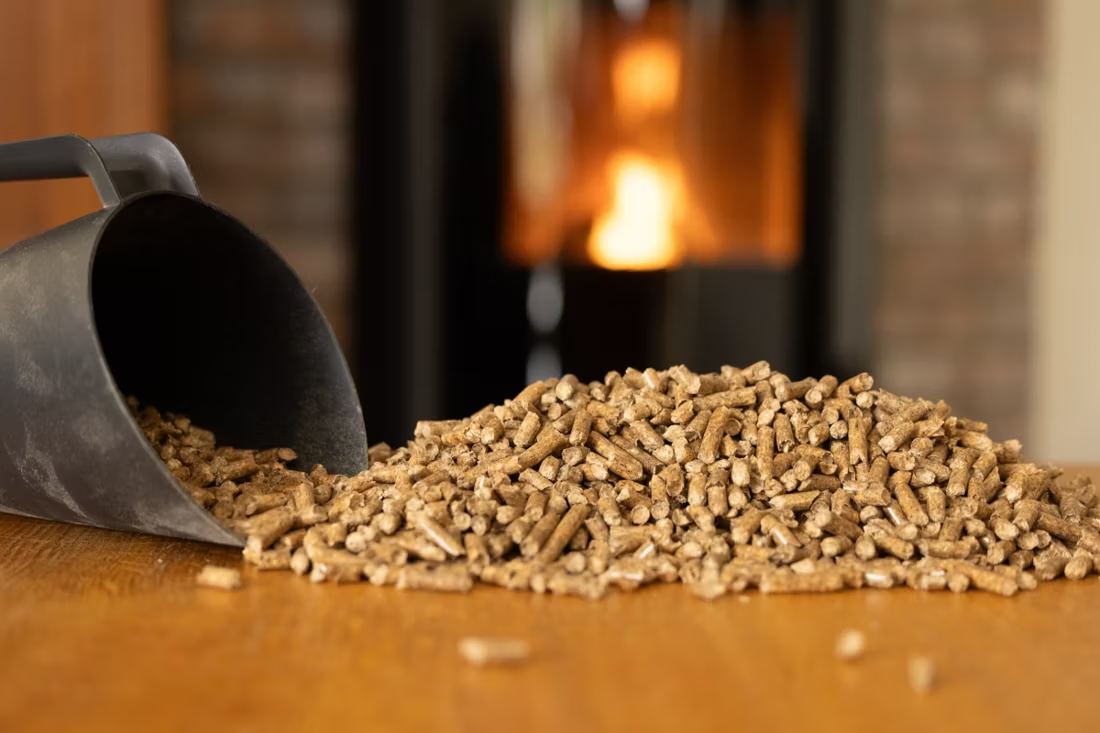
Because FortisBC (Gas) and Pacific Northern Gas both serve parts of the region, gas is a real alternative, and BC Hydro's residential rate—among the lowest in the country at roughly 11.4 cents per kWh—makes electric heat cheap too. Pellet holds its own anyway: households like the visible flame a gas insert can't quite match, the independence from gas pricing, and the option to source BC-milled fuel from producers like Pinnacle Premium in Armstrong or Princeton Fuel Pellets, typically $400 to $575 CAD a ton through local dealers. Any install still needs to meet the CSA B365 code, and most insurers ask for a WETT inspection on file, even though pellet appliances see a lot less creosote buildup than a wood stove burning Douglas fir or birch.
Three steps. No salesperson until you're ready.
Tell us about your project
Your postal code, your situation, and the fuel you're leaning toward—or let the answers point you to one.
See what's actually available
The brands dealers within 100 miles genuinely carry—real options, never a catalog mirage.
Get your dealer & Project Guide
A trusted local dealer, plus the free Project Guide & Parts List that names every component of the job.
Frequently Asked Questions
How much does a pellet stove or insert installation cost in Saanichton?
Plan on $6,000 to $10,000 CAD for most pellet installations in the area. An insert dropping into an existing masonry firebox—common in the older farmhouses and character homes scattered around Saanichton and Central Saanich—tends to land toward the lower end, since the chimney chase is already there. A freestanding stove that needs new wall venting and a fresh hearth pad runs closer to the top of that range. Either way, the District of Central Saanich building department requires a permit, and most local dealers include that paperwork in their quote.
Do I need a permit to install a pellet appliance in Saanichton?
Yes. Saanichton falls under the District of Central Saanich, and any new pellet stove or insert needs a building permit through the municipal building department along with an installation that meets the CSA B365 code. Insurers in the region commonly ask for a WETT inspection before they'll add a solid-fuel appliance to a homeowner's policy, so it's worth booking one even though pellet units run cleaner than a comparable wood stove.
Will a pellet stove keep working if the power goes out?
Not without a battery backup. Pellet stoves rely on an electric auger to feed fuel and a fan to circulate heat, so a straight BC Hydro outage—something the Saanich Peninsula sees a handful of times each winter when storms roll in off the Salish Sea—will shut a standard unit down. Several manufacturers offer a battery backup accessory that will carry a stove through a shorter outage; if outage resilience is a priority, ask your local dealer to spec one in, or consider keeping a wood-burning option as backup instead.
Pellet stove or wood stove—which makes more sense for a Saanichton property?
Wood still has an edge for anyone with land or access to a woodlot, since cutting permits through FrontCounter BC and the Ministry of Forests are free and species like Douglas fir, western larch, and lodgepole pine are common across the Island and interior. But splitting, stacking, and seasoning wood is real ongoing work. A pellet stove trades that labor for a bag or bulk delivery of BC-milled fuel and a hopper that only needs loading every day or so, which is why it's the more common choice for households who want the look and heat of a real fire on a mild peninsula climate without committing to a woodpile.
Pellet vs. gas fireplace—what fits better in Saanichton?
Both are genuinely available here, which isn't true everywhere in BC. FortisBC (Gas) and Pacific Northern Gas both run lines through parts of the Capital Regional District, so a direct-vent gas fireplace is a realistic option with instant on-off heat and no fuel to store. Pellet appliances take more day-to-day involvement—loading the hopper, emptying the ash pan—but deliver a genuine wood flame and aren't tied to gas pricing. A lot of homeowners choose gas for a main living area and add a pellet stove or insert elsewhere in the house for the ambiance and the backup fuel diversity.
Where can I buy pellets near Saanichton?
Pinnacle Premium, milled in Armstrong, and Princeton Fuel Pellets, out of Princeton, are the two regional brands most Vancouver Island dealers stock, generally running $400 to $575 a ton depending on the season and how far in advance you buy. Hearth dealers around the Saanich Peninsula and greater Victoria carry both by the bag or by the pallet, and buying a season's supply in late summer, before demand picks up, is the standard way locals avoid a fall price bump.
What size pellet stove do I need for a Saanichton home?
Because winters here rarely deliver a hard, sustained freeze, most Saanichton homes only need a small to mid-size pellet stove even when it's covering a good chunk of the daily heating load—unlike interior BC or the Prairies, where a much larger unit running around the clock is standard. Older, less-insulated farmhouses common around Central Saanich sometimes want a slightly bigger hopper and heat output than a newer, tightly built home of the same square footage, so a local dealer should size it against your actual insulation and layout rather than square footage alone.
How much maintenance does a pellet stove need?
Expect to empty the ash pan and clean the burn pot roughly weekly during steady winter use, refill the hopper every day or two depending on its size and how hard the stove is running, and book a full service and venting check once a year, ideally before the wet fall weather sets in on the peninsula. That's a lighter routine than a wood stove burning Douglas fir or birch needs, but skipping the annual service is still the most common reason a pellet stove starts jamming or running rough mid-winter.
Are there rebates for switching to a pellet stove in Saanichton?
Several BC regional districts run wood-stove exchange programs that offer a rebate when you retire an old, uncertified wood stove for a CSA or EPA-certified replacement, including pellet units, and the Capital Regional District has periodically participated. Funding and eligibility shift from year to year, so it's worth asking your local dealer what's currently open before you buy—they typically track which programs are active and can help with the paperwork.
Why do fireplace quotes vary so much?
Because a fireplace is an iceberg—there's more behind the wall than in front of it. A low quote often covers only the unit; the full scope includes vent pipe, gas line or electrical, framing, and the tile or stone that has to come off and go back on. Make every bidder price the whole job. If a dealer can't speak to the full scope with confidence, that's your signal to keep looking.
Is it worth replacing an old fireplace that still sort of works?
Ask three questions: Is it ugly? Is it drafty? Does it actually work? Most old fireplaces fail at least two. Beyond looks, an old unit leaks air around the damper year-round and—if it's gas with a standing pilot—quietly burns a couple hundred dollars a year. A modern replacement seals the wall, heats the room, and changes how the whole space gets used.
Why is my open fireplace making my house colder?
Open fireplaces suck—literally. As the fire burns, it consumes air your furnace already paid to heat and pulls it out through the chimney, so the house is actually colder after the fire goes out than before you lit it. An insert fixes this: it seals the chimney, puts fixed glass across the front, and turns that hole in your house into a real heat source.
What's the difference between an insert and a zero-clearance fireplace?
An insert is a fireplace that slides into a pre-existing wood-burning fireplace—if you don't have one, there's nothing to insert it into. A zero-clearance fireplace is built into a framed wall, which makes it the answer for remodels and new construction. Simple test: existing masonry fireplace means insert; blank or framed wall means zero-clearance.
Nearby Dealers
Hearth shops serving Saanichton and the surrounding area. Every listing shows whether it is a WhyFire partner, a dealer we have verified as authorized for the brands we recommend, or a local business carrying hearth products. No manufacturer pays for placement. How we verify dealers →
Silver Knight Heating Ltd
Merle's Masonry,Chimney Care And Stoves
Island Woodheat
Pellet Brands Stocked Around Saanichton
Typical price runs $400-$575 per ton—buy early-season for the best rates. Manufacturers will point you to the nearest stocking dealer.
Pinnacle Premium
Princeton Fuel Pellets
Get your free Project Guide & Parts List for a Saanichton pellet stove project.
Tell me about your Saanichton home and I'll match you with a trusted local dealer and send a free Project Guide & Parts List—sized to your space, with the hopper, vent kit, and parts specified, plus what the District of Central Saanich permit process looks like.
Find Your Fireplace →