
Find your fireplace across the Capital Regional District.
Wood, gas, pellet, and electric fireplace resources for the whole region—from downtown Victoria out through Saanich, Oak Bay, and Esquimalt to Sooke, Sidney, and the Gulf Islands. Pick a fuel and we'll match you with a local dealer who can help with your project, permits included.
Every Project Starts From One of These Five Situations
Mild marine winters, a 3.4°C average low, and a region still built around real wood heat.
The Capital Regional District covers the southern tip of Vancouver Island—Victoria, Saanich, Oak Bay, Esquimalt, Colwood, Langford, Sooke, Sidney, and the Southern Gulf Islands—with a population above 607,000 spread across some of the mildest winters in Canada. Average lows sit around 3.4°C, a climate that never approaches the deep cold of Prince George or the BC Interior, but all four fuel types still see standard, everyday use here. Local firewood dealers and Crown-land permit holders working through FrontCounter BC and the BC Ministry of Forests supply Douglas fir, paper birch, lodgepole pine, and western larch to households running wood stoves and inserts as a genuine heat source, not just ambiance—plenty of older Sooke and Saanich Peninsula homes still lean on wood for most of their winter heat.
Air quality behaves differently here than in the BC Interior—Victoria's marine exposure clears smoke quickly on most days—but the region isn't exempt from advisories, and several Vancouver Island regional districts run wood-stove exchange programs to retire old, uncertified units. Any new wood appliance needs current CSA or EPA certification, installation follows the CSA B365 code, and insurers commonly require a WETT inspection before they'll cover a wood-burning appliance at all. Natural gas from FortisBC reaches most of the urbanized core—Victoria, Saanich, Esquimalt, Langford—while properties farther out toward Sooke or on the Gulf Islands more often run on propane. Permits go through your local municipal building department; with more than a dozen municipalities and electoral areas making up the region, which office you deal with depends entirely on which side of which line your address sits on. This hub rolls up retailers, technicians, and fuel suppliers across the whole region—pick your fuel below for costs and local dealer matches specific to your address.
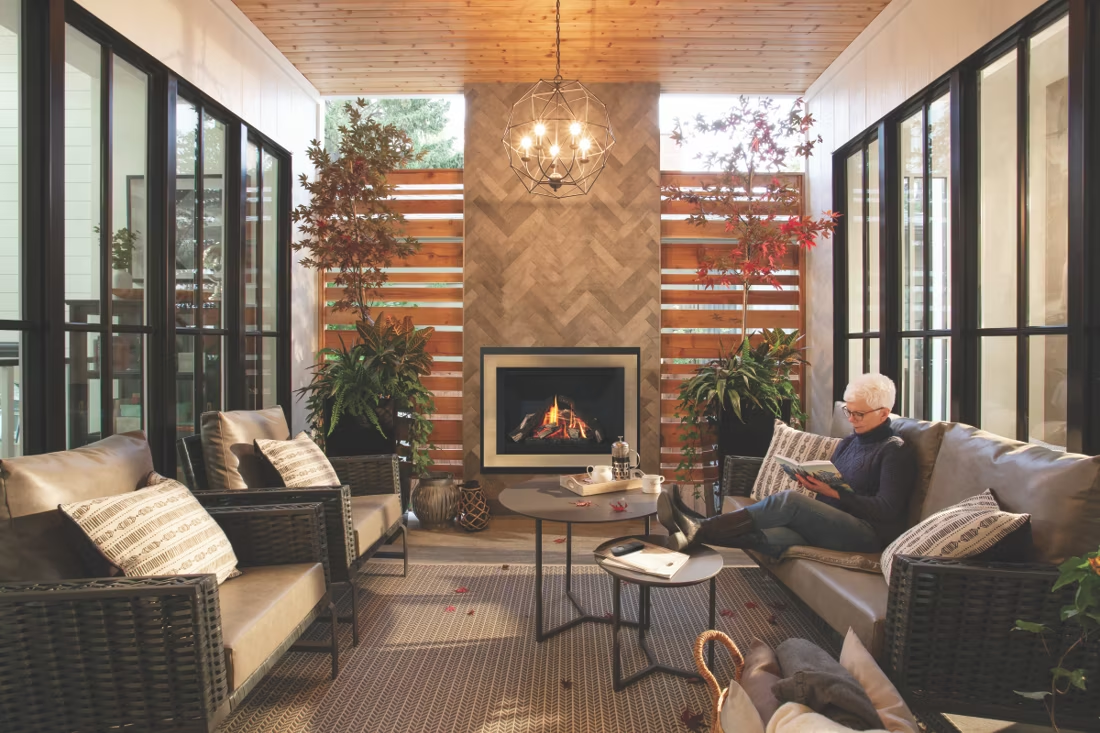
Four fuels. One honest answer for Capital.
Three steps. No salesperson until you're ready.
Tell us about your project
Your postal code, your situation, and the fuel you're leaning toward—or let the answers point you to one.
See what's actually available
The brands dealers within 100 miles genuinely carry—real options, never a catalog mirage.
Get your dealer & Project Guide
A trusted local dealer, plus the free Project Guide & Parts List that names every component of the job.
Frequently Asked Questions
Which fireplace fuel makes the most sense in the Capital Regional District?
All four fuels see genuine day-to-day use here, which isn't true everywhere in Canada. Wood remains the backbone fuel in the more rural corners of the region—Sooke, the Saanich Peninsula, and pockets of the Gulf Islands—where a CSA-certified stove burning Douglas fir or paper birch can comfortably carry a home through even the coldest snap the region sees. Gas is the default in the denser, more urban parts of Greater Victoria—Victoria, Saanich, Esquimalt, Langford—wherever FortisBC's mains network already reaches; it's the lowest-hassle option if your street is already served. Pellet stoves fill a real niche for homeowners who want wood's steady radiant heat without the felling, splitting, and stacking—Pinnacle Premium and Princeton Fuel Pellets are both readily available through regional suppliers. Electric fireplaces are genuinely popular here specifically because the climate is mild enough that a supplemental unit in a bedroom or living room covers most of what a household needs on the coldest nights, without carrying the full heating load.
Do I need a permit to install a wood stove in the Capital Regional District?
Yes. Building permits for any new wood stove, insert, or fireplace go through your local municipal building department—which office that is depends on whether you're in Victoria, Saanich, Oak Bay, Esquimalt, Langford, Sooke, or one of the other municipalities and electoral areas that make up the region. Installation has to follow the CSA B365 code, and the appliance itself needs current CSA or EPA certification—older, uncertified stoves are exactly what several Vancouver Island wood-stove exchange programs are trying to retire. Once it's in, most insurers will ask for a WETT inspection before they'll add a wood-burning appliance to your policy, and it's worth booking that inspection around the same time as your install so you're not chasing paperwork later. Gas installs need a licensed gas fitter and a separate permit for the gas line itself.
What's a WETT inspection and why does my insurer want one?
WETT stands for Wood Energy Technology Transfer, and it's the certification standard Canadian insurers lean on to decide whether they'll cover a wood-burning appliance at all. A WETT-certified inspector checks clearances to combustibles, chimney condition, and whether the stove or insert is CSA or EPA-certified—an older, uncertified unit, common in some of the region's older Sooke and Gulf Islands properties, often needs to be swapped out before an insurer will sign off. Most homeowners here get a WETT inspection done at the time of installation, and again whenever they switch insurers, list a home for sale, or haven't had one done in several years. It typically runs a few hundred dollars CAD and is worth booking through the same technician who services your chimney, since they already know the appliance.
Can I find one retailer that carries more than one fuel type?
Most retailers across the Capital Regional District carry at least two fuel types rather than specializing narrowly, which fits how households here actually heat—a lot of homes run a wood stove or gas fireplace as primary heat with an electric unit somewhere else in the house for convenience. A multi-fuel dealer lets you compare working wood, gas, and electric units side by side and talk through what actually fits your street, whether that's a FortisBC-served address in Saanich or a propane-and-woodlot property out past Sooke. We match you with the retailer whose lineup and service area genuinely fits your project rather than sending everyone to the same big name.
How does service and installation work for the Gulf Islands and outer parts of the region?
Retailers and service technicians are concentrated in and around Victoria but regularly work out to Langford, Colwood, Sooke, Sidney, and—via ferry—the Southern Gulf Islands. Expect a trip fee and a longer lead time for island properties, since a technician has to build ferry schedules into the day, and it's worth booking your annual WETT inspection or gas service in late summer before the fall rush rather than waiting for the first cold, wet week. For Gulf Islands homes running wood as primary heat, ask your technician about spare parts kept on hand locally, since a missed sailing can turn a same-day fix into a multi-day wait.
What does a fireplace installation typically cost in the Capital Regional District?
Costs depend on fuel and how much venting or gas-line work the job needs. Wood stove or insert installs typically run $4,000-$9,000 CAD once you include the WETT inspection, with more for full chimney work in new construction. Gas fireplaces, inserts, and stoves generally run $4,000-$10,000, with the wide range mostly explained by whether FortisBC service already reaches your address or a new gas line needs to be run. Pellet stove and insert installs usually land around $4,500-$7,500. Electric fireplaces are the exception—$200-$3,000 for the unit itself, plus $300-$1,000 in labour for anything beyond a simple plug-in placement. The region and fuel pages above break these down further with local retailer pricing.
How many BTUs do I need in a fireplace?
Wrong question—and the industry's favorite way to confuse you. More BTUs isn't better if the fireplace cooks you out of the room you spent thousands to enjoy. Think in terms you can verify: how many square feet the unit heats, whether it's primary or backup heat, and whether you want it running overnight. Those three answers size a fireplace correctly every time.
Will we actually use a fireplace once we have one?
In my own home, the room with the fireplace has never been the same—it became the social hub. Game nights, holidays, date nights after the kids are down: the fire is where the house gathers. There's a reason people in this industry joke that we're really in the romance and entertainment business. You won't wonder whether you'll use it; you'll wonder how the room worked before.
Can I put a TV above my fireplace?
Yes—with an asterisk. Fireplaces are hot and TVs don't like heat. Either put a mantel between them to deflect rising warmth, or choose a fireplace with heat-management technology that creates a cool zone on the wall above—the wall stays around 125 degrees, barely warm, while the room still gets full heat. If you like clean lines and don't want a mantel, heat management is the answer.
What fireplace styles should I know before shopping?
Four cover most of the market: screen-front traditional (mesh front, open feel, fits craftsman homes), traditional door set (the classic look you grew up with), modern linear (wide, low, the statement piece for entertaining), and clean face contemporary (no trim—your tile or stone runs right to the fire's edge). Walk in knowing those four terms and you're ahead of most buyers.
Stove and Fireplace Dealers in Capital
Listings include WhyFire partner dealers, dealers we have verified as authorized for the brands we recommend, and established local businesses that carry hearth products. Every listing shows which one it is. The ones marked Preferred run on WhyFire's software, so they can show you real pricing and book your appointment right here. No manufacturer pays for placement. How we verify dealers →
Silver Knight Heating Ltd
Merle's Masonry,Chimney Care And Stoves
Island Woodheat
Get matched with a local Capital Regional District dealer.
Pick your fuel below and we'll put together a free Project Guide & Parts List—the right unit, the vent kit it needs, and the local dealer we recommend for your project.
Find Your Fireplace →