
Find your fireplace across the North Okanagan.
Wood, gas, pellet, and electric fireplace resources for the whole region—from Vernon and Coldstream north through Armstrong and Enderby, out to Lumby, Cherryville, and Falkland. Pick a fuel and get matched with a local dealer who knows exactly what works in this valley.
Every Project Starts From One of These Five Situations
Mild valley winters, a wood-heat tradition, and winter inversions that shape what you can burn.
The Regional District of North Okanagan runs along the Okanagan Valley's northern reach, from Vernon and Coldstream in the south up through Armstrong and Enderby, with Lumby, Cherryville, and Falkland filling out the rural east side. Winters here are genuinely mild by BC Interior standards—average lows sit around -5°C, nowhere near the deep cold of Prince George further up the province or the Prairie winters of Edmonton and Winnipeg—but the valley still runs a real multi-month heating season, and locally cut Douglas fir, paper birch, lodgepole pine, and western larch remain the backbone of wood heat for a large share of rural households. Crown-land cutting permits go through FrontCounter BC and the BC Ministry of Forests, which keeps firewood affordable for anyone willing to buck their own supply.
What shapes hearth decisions here isn't the cold so much as the air. Like much of the BC Interior, the North Okanagan is prone to winter temperature inversions that trap cold air and woodsmoke in the valley bottom, which is why several regional districts in this part of the province run wood-stove exchange programs and require CSA or EPA-certified appliances for any new installation. Add CSA B365 as the governing installation code and a WETT inspection that most insurers expect before covering a wood appliance, and you've got a region where getting the paperwork right matters as much as picking the right stove. This hub rolls up hearth retailers, service technicians, and fuel suppliers across the whole region, from Vernon's dealer base out to Enderby, Lumby, and the smaller communities toward Cherryville and Falkland. Pick your fuel below for local dealers, install costs, and recommendations specific to your town.
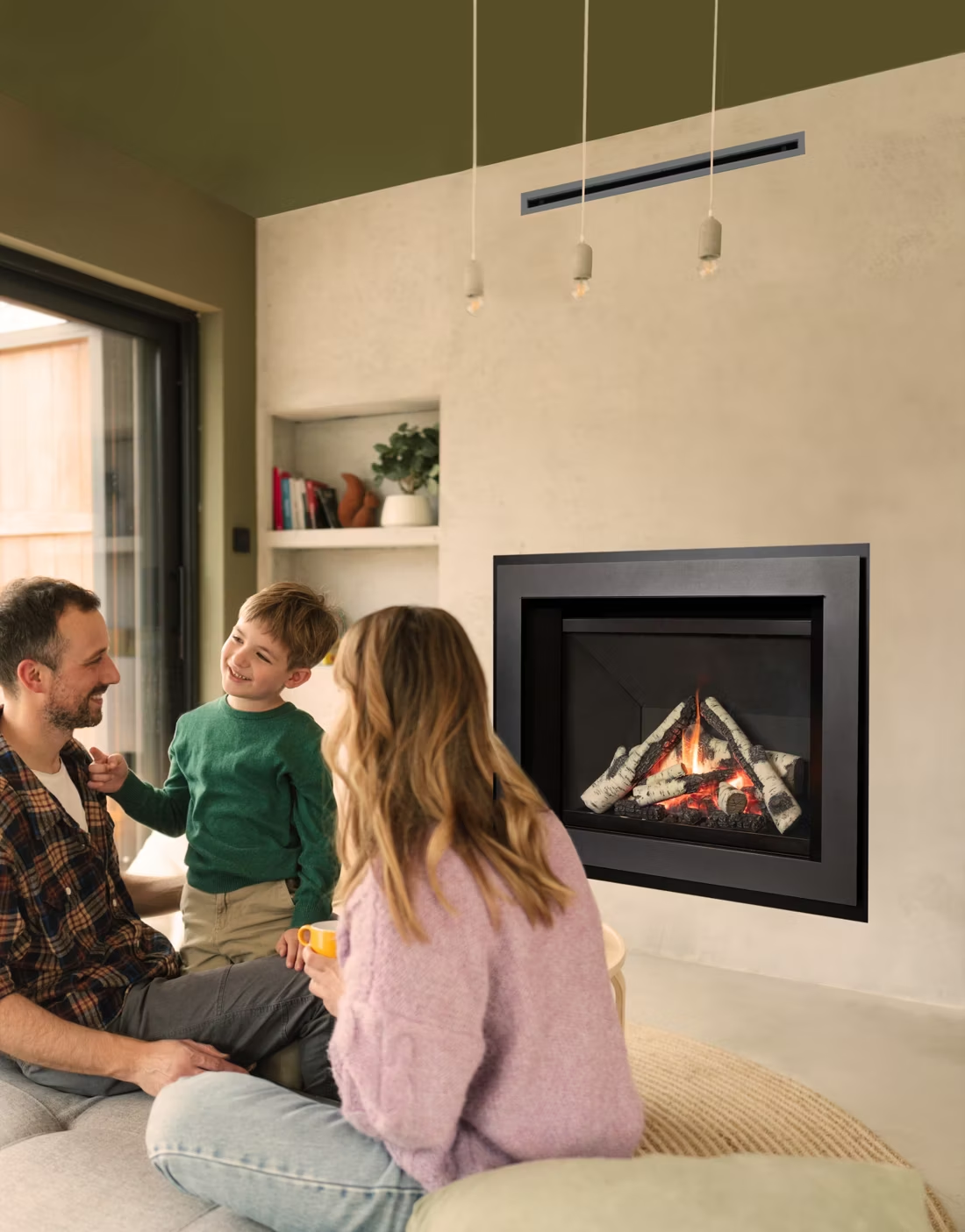
Four fuels. One honest answer for Regional District of North Okanagan.
Wood
69 models available near Regional District of North Okanagan.
Find your wood stove →Gas
111 models available near Regional District of North Okanagan.
Find your gas fireplace →Pellet
See what's available near Regional District of North Okanagan.
Find your pellet stove →Electric
See what's available near Regional District of North Okanagan.
Find your electric fireplace →Three steps. No salesperson until you're ready.
Tell us about your project
Your postal code, your situation, and the fuel you're leaning toward—or let the answers point you to one.
See what's actually available
The brands dealers within 100 miles genuinely carry—real options, never a catalog mirage.
Get your dealer & Project Guide
A trusted local dealer, plus the free Project Guide & Parts List that names every component of the job.
Frequently Asked Questions
Which fireplace fuel makes the most sense in the North Okanagan?
All four fuels are genuinely available here, but the right one depends on where in the region you sit. Wood remains the backbone fuel in rural pockets around Lumby, Cherryville, and Falkland—a solid stove burning Douglas fir, paper birch, lodgepole pine, or western larch can carry a home through the coldest nights, and Crown-land cutting permits through FrontCounter BC and the BC Ministry of Forests keep the fuel affordable for anyone willing to buck their own wood. Natural gas is well established through Vernon, Armstrong, and Enderby via FortisBC's network, making it the low-maintenance choice in town. Pellet stoves have a solid following too, partly because they sidestep the smoke-advisory concerns tied to wood-stove exchange season, and Pinnacle Premium and Princeton Fuel Pellets are both distributed regionally. Electric fireplaces do real work as supplemental heat almost everywhere—with average winter lows only around -5°C, they can genuinely carry a well-insulated home through the shoulder seasons, though most households still pair one with wood, gas, or pellet for the coldest stretches.
Do I need a permit to install a wood stove or gas fireplace in the North Okanagan?
Yes, in nearly every case. New wood stoves and inserts must be CSA or EPA-certified, installed to CSA B365, and permitted through your local municipal building department. Most insurers also require a WETT inspection before they'll cover a wood appliance, so budgeting for that inspection up front saves a headache later. Gas installations need a separate gas permit and a licensed gas fitter for the connection, also through the municipal building department. Pellet stove installs follow a similar permitting path to wood, without the insurance-driven WETT requirement in most cases. Electric fireplaces usually skip the permit process entirely unless you're hardwiring a built-in unit that needs a new circuit. Most retailers we match homeowners with handle this paperwork directly as part of the project.
What are the smoke advisories and wood-stove exchange programs about?
The North Okanagan sits in a valley that's prone to winter temperature inversions—cold, dense air settles at the bottom and traps woodsmoke close to the ground on still days, which is when local air quality officials issue smoke advisories. That's the reason several regional districts in this part of BC run wood-stove exchange programs, offering incentives to swap an old, uncertified stove for a modern CSA or EPA-certified unit that burns dramatically cleaner. It's also why any new wood appliance installed here has to meet current certification standards, not just older provincial minimums. None of this makes wood heat impractical—it just means the stove you install matters more here than the fuel choice itself.
Can I find a retailer that carries more than one fuel type?
Most North Okanagan hearth retailers carry two or three fuel types rather than specializing in just one, which fits how households here actually heat—wood or pellet as the primary source in rural areas, gas or electric as the convenient backup in town, or some combination of both given how mild the winter lows typically run. Multi-fuel dealers are useful if you're weighing options, since you can compare working wood, gas, and pellet displays side by side and talk through what actually fits your address, whether you're on FortisBC's gas network or relying on delivered pellets and cut firewood. We match you with the retailer whose lineup and service area genuinely fit your project.
How does installation and service work outside Vernon?
Installation crews and service techs are concentrated in and around Vernon but regularly travel out to Armstrong, Enderby, Coldstream, Lumby, and the more rural stretches toward Cherryville and Falkland. Expect a modest trip fee for the farthest calls, and expect scheduling to tighten once the first real cold snap hits and everyone remembers their chimney needs sweeping or their gas fireplace needs its annual check. Booking your WETT inspection or gas service in late summer, before the fall rush, is the easiest way to stay ahead of it—especially since insurers in this region often want that WETT paperwork current before renewing coverage on a home with a wood appliance.
What does a fireplace installation typically cost in the North Okanagan?
Costs vary by fuel and by how much venting or gas-line work is involved. Wood stove or insert installs typically run $4,000-$9,000 CAD, with a WETT inspection adding a few hundred dollars on top. Gas fireplaces, inserts, and stoves run roughly $4,500-$11,000 CAD depending on whether a new gas line needs to be run. Pellet stove or insert installs generally land at $4,000-$7,500 CAD. Electric fireplaces are the outlier—$200-$3,000 CAD for the unit itself, plus $400-$1,200 CAD in labour for anything beyond a simple plug-in placement. The region and fuel pages above break these numbers down further with local retailer pricing.
How many BTUs do I need in a fireplace?
Wrong question—and the industry's favorite way to confuse you. More BTUs isn't better if the fireplace cooks you out of the room you spent thousands to enjoy. Think in terms you can verify: how many square feet the unit heats, whether it's primary or backup heat, and whether you want it running overnight. Those three answers size a fireplace correctly every time.
Will we actually use a fireplace once we have one?
In my own home, the room with the fireplace has never been the same—it became the social hub. Game nights, holidays, date nights after the kids are down: the fire is where the house gathers. There's a reason people in this industry joke that we're really in the romance and entertainment business. You won't wonder whether you'll use it; you'll wonder how the room worked before.
Can I install a fireplace myself?
If you're putting a fire in your house on purpose, it's best to work with an expert. Unless you're genuinely experienced in framing, gas line, vent pipe, and the national code on clearances to combustibles, have a professional do it—and ideally the same company that sells you the fireplace, so warranty, service, and liability all live under one roof.
Why is my open fireplace making my house colder?
Open fireplaces suck—literally. As the fire burns, it consumes air your furnace already paid to heat and pulls it out through the chimney, so the house is actually colder after the fire goes out than before you lit it. An insert fixes this: it seals the chimney, puts fixed glass across the front, and turns that hole in your house into a real heat source.
Stove and Fireplace Dealers in Regional District of North Okanagan
Listings include WhyFire partner dealers, dealers we have verified as authorized for the brands we recommend, and established local businesses that carry hearth products. Every listing shows which one it is. The ones marked Preferred run on WhyFire's software, so they can show you real pricing and book your appointment right here. No manufacturer pays for placement. How we verify dealers →
Applewood Heating & Air Conditioning
Greenridge Supply
Salmon Arm Proair
Get matched with a local North Okanagan dealer.
Pick your fuel below and we'll put together a free Project Guide & Parts List—the right unit, the vent kit it needs, and the local dealer we recommend for your project.
Find Your Fireplace →