
Real flame-look heat for Okanagan valley homes, no venting required.
Winters here average around -5°C, mild by interior BC standards, and many North Okanagan homes just need supplemental heat and honest ambiance rather than a full combustion system. I match you with a trusted local dealer who knows which electric unit actually fits your wall, your circuit, and your strata rules, then sends over a free planning packet.
Every Project Starts From One of These Five Situations
A valley climate and a housing mix that suit electric heat well.
The Regional District of North Okanagan covers roughly 68,000 people spread across Vernon, Coldstream, Armstrong, Enderby, Lumby, and Spallumcheen, wrapped around Okanagan and Kalamalka Lakes. Climate zone 5B and an average winter low near -5°C put this valley on the mild end of BC's interior, closer to Kelowna than to the harder cold of Prince George or Kamloops in a deep snap. Plenty of local homes still burn Douglas fir, paper birch, lodgepole pine, and western larch in a wood stove or insert, but a lot of Vernon condos, Armstrong townhomes, and rural Enderby properties simply need a clean, controllable secondary heat source for a den, bedroom, or basement suite, and that's exactly the job an electric fireplace is built for.
Interior valleys like this one see winter inversions that trap wood smoke close to the ground, and several regional districts here run wood-stove exchange programs and require CSA or EPA-certified appliances for that reason. Electric sidesteps that entirely: zero emissions, no smoke advisory to worry about, and no WETT inspection to schedule for insurance. At $500 to $1,600 CAD installed, most electric units cost a fraction of a wood or gas project, run on a standard or dedicated 120V/240V circuit through BC Hydro, and can go into a strata unit or rental where a chimney or gas line was never an option in the first place.
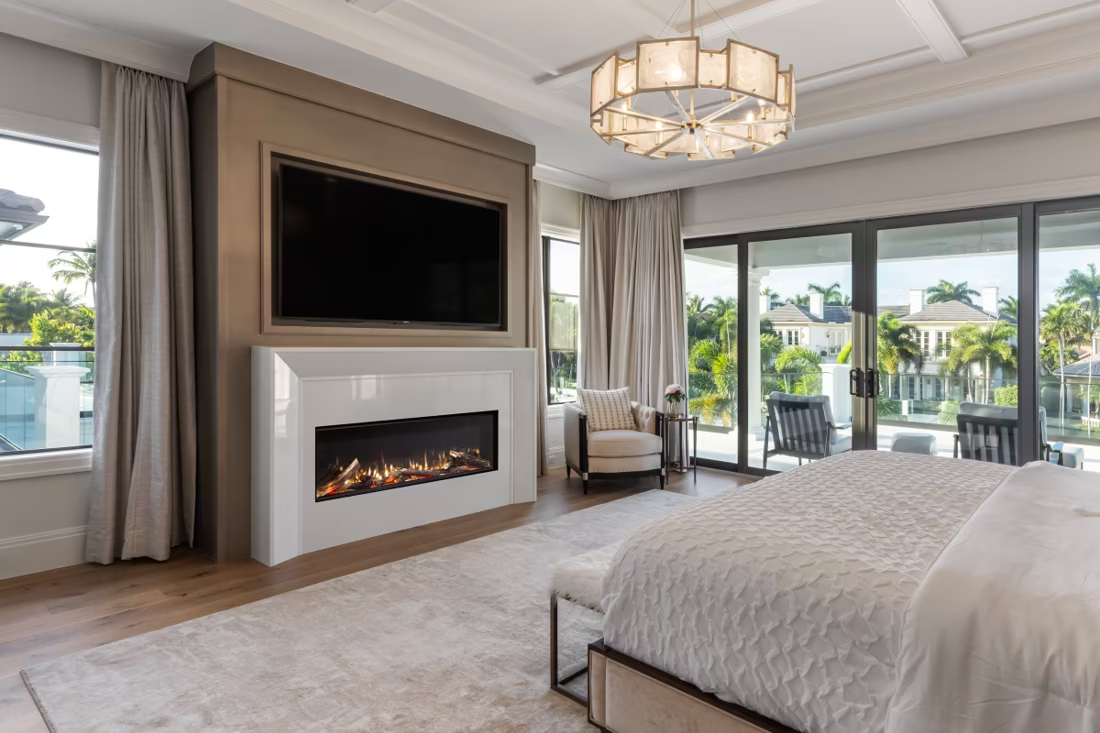
Three steps. No salesperson until you're ready.
Tell us about your project
Your postal code, your situation, and the fuel you're leaning toward—or let the answers point you to one.
See what's actually available
The brands dealers within 100 miles genuinely carry—real options, never a catalog mirage.
Get your dealer & Project Guide
A trusted local dealer, plus the free Project Guide & Parts List that names every component of the job.
Frequently Asked Questions
How much does an electric fireplace installation cost in the North Okanagan?
Most projects across Vernon, Coldstream, and the surrounding areas run $500 to $1,600 CAD. A plug-in freestanding unit or a simple wall-mount on an existing outlet sits at the low end. A built-in electric insert set into an old wood fireplace opening, or a unit that needs a dedicated 240V circuit run by an electrician, lands toward the top of that range. Refacing a dated masonry surround in an older Vernon or Armstrong home adds cosmetic cost on top of the appliance itself, but you're still well below what a wood or gas project runs here.
Do I need a permit to install an electric fireplace here?
Usually not for the appliance itself, since there's no venting or combustion involved and WETT inspection doesn't apply to electric units. Where a permit does come into play is if you're altering a wall, running a new dedicated circuit, or changing the structural opening of an old wood fireplace to fit an insert. In those cases your municipal building department, whether that's Vernon, Coldstream, or one of the electoral areas, may want a straightforward electrical or building permit, and a licensed electrician should handle any new circuit regardless of paperwork.
Is electric a real alternative during winter smoke advisories?
Yes, and it's one of the more practical reasons homeowners in this valley add one. Interior inversions here trap wood smoke close to the ground on the coldest, stillest days, which is exactly when local air quality advisories get called and some regional wood-stove exchange programs get referenced. An electric fireplace produces zero emissions and keeps running heat and ambiance in the main living space without touching an outdoor air quality number, which makes it a sensible supplement, or backup, alongside a wood stove in Lumby or Cherryville.
Is an electric fireplace powerful enough to actually heat a room here?
Most electric fireplaces are rated around 1,500 watts, roughly 5,100 BTU, which comfortably heats a single room or open den, especially given the North Okanagan's relatively mild average winter low of -5°C compared to colder BC interior points. They're not sized to carry a whole house through a hard cold snap the way a furnace or heat pump does, but for shoulder-season heating in September or April, or for taking the chill off a Vernon basement suite through winter, they do real work. Pair one with your existing furnace or heat pump rather than expecting it to replace your main heat source.
What's the difference between an electric insert, a wall-mount, and a freestanding electric stove?
An electric insert drops into an existing wood or gas fireplace opening and is the common choice for an older Vernon or Enderby home converting away from an unused wood firebox. A wall-mount hangs flush against drywall like a television and suits condos and newer builds around Coldstream where there's no existing chimney. A freestanding electric stove sits on the floor with a stove-body look and works well in a rec room or cabin near Sicamous where you want the cast-iron aesthetic without any venting. A local dealer can tell you which one actually fits your wall cavity and electrical setup before you buy anything.
Natural gas is available here, so why would I choose electric over a gas fireplace?
Natural gas service does reach much of the North Okanagan, and a gas fireplace installation here typically runs $6,000 to $15,000 CAD once you factor in a gas line, venting, and framing. Electric skips all of that: no gas line, no venting, no combustion permit, and a fraction of the install cost. What you give up is genuine high-output heat and the live-flame look some homeowners want in a primary living space. For a main-floor great room that needs to carry real heat, gas or wood is often still the better call; for a secondary room, rental unit, or a straightforward ambiance upgrade, electric is usually the more sensible spend.
What does it cost to run an electric fireplace on BC Hydro rates?
A typical 1,500-watt unit running on the heat setting for a few hours an evening adds a modest amount to a BC Hydro bill, generally a few dollars a week at average residential rates, and less than that if you mostly run the flame effect without the heater engaged. Because BC Hydro's residential rates are tiered, households already running a heat pump or electric baseboards through a cold stretch will see the fireplace's contribution more clearly on a step-two rate month than in a milder shoulder-season month.
How much maintenance does an electric fireplace need?
Very little compared to wood or gas. There's no chimney to sweep, no WETT inspection to book for insurance, and no annual gas line check. Maintenance is mostly dusting the unit, occasionally cleaning the glass front, and replacing an LED module every several years if the flame effect dims. That low-maintenance profile is a big part of why electric shows up so often in Vernon and Armstrong rental properties and secondary suites, where nobody wants to manage a burn permit or a cutting-permit-and-cordwood routine.
Is electric the only real fireplace option for a condo or rental unit in Vernon?
For most strata buildings and rentals, yes. Wood appliances need a WETT inspection and a chimney path that condos rarely have, and gas fireplaces need a gas line and venting that strata bylaws and building layouts often don't accommodate. Electric needs neither, which is why it's become the default for Vernon condos, Coldstream townhomes, and basement suites across the region. A local dealer can confirm what your unit's electrical panel can support before you commit to a hardwired insert versus a simple plug-in model.
How much does an electric fireplace cost to run?
With the heater on, a typical unit draws about 1,500 watts—at average electric rates that's roughly 20 cents an hour. Run the flame effect alone and it costs pennies; the flames are LED-driven and use about as much power as a light bulb. There's no pilot light, no fuel delivery, and essentially no maintenance.
What fireplace styles should I know before shopping?
Four cover most of the market: screen-front traditional (mesh front, open feel, fits craftsman homes), traditional door set (the classic look you grew up with), modern linear (wide, low, the statement piece for entertaining), and clean face contemporary (no trim—your tile or stone runs right to the fire's edge). Walk in knowing those four terms and you're ahead of most buyers.
Can I put a TV above my fireplace?
Yes—with an asterisk. Fireplaces are hot and TVs don't like heat. Either put a mantel between them to deflect rising warmth, or choose a fireplace with heat-management technology that creates a cool zone on the wall above—the wall stays around 125 degrees, barely warm, while the room still gets full heat. If you like clean lines and don't want a mantel, heat management is the answer.
Do electric fireplaces actually produce heat?
Yes—most put out around 4,800–5,000 BTUs from a standard outlet, which comfortably warms a bedroom, office, or den as a comfort-zone heater. What they won't do is carry a whole house the way wood, gas, or pellet can. Think of electric as ambiance-first with honest supplemental heat: flames on with no heat in July, flames plus warmth in January.
Stove and Fireplace Dealers in Regional District of North Okanagan
Listings include WhyFire partner dealers, dealers we have verified as authorized for the brands we recommend, and established local businesses that carry hearth products. Every listing shows which one it is. The ones marked Preferred run on WhyFire's software, so they can show you real pricing and book your appointment right here. No manufacturer pays for placement. How we verify dealers →
Applewood Heating & Air Conditioning
Greenridge Supply
Salmon Arm Proair
Electric Service in Regional District of North Okanagan
An electric fireplace's heater draws about 1,500 watts—pennies per hour at local rates.
Bc Hydro
FortisBC (Electric)
Get your free Project Guide & Parts List for an electric fireplace in the North Okanagan.
Tell me about your home, your wall, and how you plan to use the fireplace, and I'll match you with a trusted local North Okanagan dealer and send over a free Project Guide & Parts List, the exact unit and parts for your electric project, no big-box guesswork.
Find Your Fireplace →