
Keep Your Family Warm and Safe—No Matter What
Prince Rupert's winter lows average just -0.8°C, one of the mildest readings on BC's North Coast, but the same Pacific storms that bring the rain also bring the region's real heating challenge: multi-day power outages. I'll match you with a trusted local dealer who knows the WETT inspection, the CSA B365 code, and what actually holds up in this damp coastal climate.
Every Project Starts From One of These Five Situations
Mild temperatures, but a coast that loses power for days.
Prince Rupert sits on BC's North Coast at the mouth of the Skeena River, and the numbers surprise people who assume the north means brutal cold: winter lows average just -0.8°C, and the marine air off Chatham Sound keeps hard freezes rare. It's a different climate than Prince George, several hours inland, where continental cold settles in for months at a time. What Prince Rupert has instead is rain, wind, and Pacific storms strong enough to knock out power for days along this stretch of coast.
That's the real driver behind wood heat here: Douglas fir, paper birch, lodgepole pine, and western larch are the species most local burners split, sourced through free cutting permits from FrontCounter BC and the BC Ministry of Forests, available year-round outside summer fire restrictions. A CSA or EPA-certified stove keeps working when BC Hydro lines go down in a windstorm, which matters more on this coast than the thermometer does. Any installation needs to meet the CSA B365 code through the municipal building department, and most insurers here ask for a WETT inspection before they'll write a policy on a wood-burning appliance.
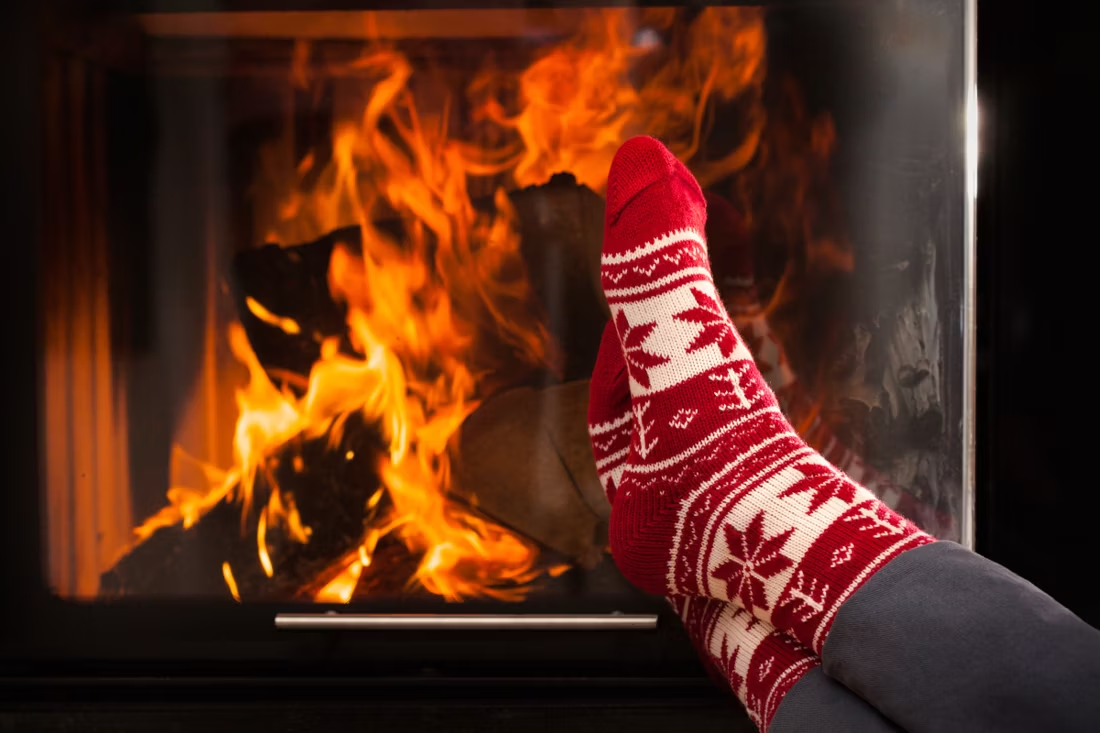
Firewood Cutting Permits Near Prince Rupert
FrontCounter Bc / Bc Ministry Of Forests
Three steps. No salesperson until you're ready.
Tell us about your project
Your postal code, your situation, and the fuel you're leaning toward—or let the answers point you to one.
See what's actually available
The brands dealers within 100 miles genuinely carry—real options, never a catalog mirage.
Get your dealer & Project Guide
A trusted local dealer, plus the free Project Guide & Parts List that names every component of the job.
Frequently Asked Questions
How much does a wood stove installation cost in Prince Rupert?
Most installations run $6,000 to $12,000 CAD. The spread mostly comes down to venting: a straightforward insert into an existing masonry chimney in one of the older homes near downtown or Seal Cove sits toward the low end, while a full Class A stainless chimney system for a home without existing masonry runs higher, especially given how much this coast's damp, salt-laden air demands corrosion-resistant components. Your municipal building department requires a permit either way, and most local installers include that in the quote.
What size wood stove makes sense for a Prince Rupert home?
With winter lows averaging just -0.8°C, this is one of the milder coastal climates in the province, and oversizing is the more common mistake here than undersizing. A small to medium stove, rated for roughly 1,000 to 1,800 square feet, is plenty for most Prince Rupert living areas, since you're not fighting the kind of sustained deep cold that interior towns like Prince George deal with all winter. A local dealer will still size against your specific home's insulation and ceiling height rather than square footage alone, particularly in older, less-insulated houses near the waterfront.
Do I need a permit to install a wood stove in Prince Rupert?
Yes. Installation needs to go through the municipal building department and meet the CSA B365 installation code. Most hearth dealers who work in Prince Rupert handle that paperwork as part of the job. Separately, plan on a WETT inspection once the stove is in, since most BC insurers require one to cover a wood-burning appliance, and it's worth having that documentation ready before you call your provider.
Wood stove or wood insert—which fits my house?
A lot of it comes down to what's already there. Many of the older homes around downtown Prince Rupert and Seal Cove were built with a masonry fireplace, and an insert that slides into that existing firebox is usually the simpler, less expensive route since the chimney structure and chase are already in place. A freestanding stove makes more sense in newer construction without an existing masonry opening, since it vents up through new Class A pipe and can go almost anywhere clearances allow.
Where do I get a firewood cutting permit near Prince Rupert?
FrontCounter BC and the BC Ministry of Forests issue cutting permits, and on Crown land they're free, with cutting allowed year-round outside of summer fire restrictions. Douglas fir, paper birch, lodgepole pine, and western larch are the species most permit holders bring home, though depending on where you're cutting, some of that supply comes from farther inland along Highway 16 rather than directly off the coast. It's worth checking current restriction status before a summer cutting trip, since fire season can suspend permits temporarily.
What's the best wood stove for a place like Prince Rupert?
Given how much this coast relies on wood heat for storm-outage backup rather than deep-cold survival, a mid-size, non-catalytic stove from a BC-based maker like Pacific Energy is a common, low-maintenance choice for local dealers to install. Blaze King's catalytic models, which can hold a long, slow burn overnight, are worth considering if you're using wood as your primary heat rather than backup—useful during the multi-day outages that Pacific storms sometimes cause along this stretch of coast. Whatever you choose, it needs to carry CSA or EPA certification to pass inspection and qualify for insurance.
How often should my chimney be swept in Prince Rupert?
An annual inspection before the wet season ramps up in October is the standard recommendation, and it holds here even though Prince Rupert's winters are milder than most of interior BC. The catch is humidity: this coast sees some of the highest rainfall totals in the province, and damp, less-than-fully-seasoned firewood—a common issue when wood sits outside under near-constant rain—builds creosote faster than well-dried cordwood. If you're burning several cords a season, a mid-winter check is worth the cost.
Does my home insurance require anything special for a wood stove in Prince Rupert?
Most BC insurers will ask for a WETT inspection report before covering a wood-burning appliance, confirming it was installed to the CSA B365 code by someone qualified. This is a routine step, not a red flag—most local hearth dealers arrange the WETT inspection as part of the installation and can hand you the paperwork your insurance provider needs. Skipping it is one of the more common reasons a claim gets denied after the fact, so it's worth doing at install time rather than after.
Wood vs. natural gas—which makes more sense in Prince Rupert?
Prince Rupert is actually one of the few North Coast communities with natural gas service, through Pacific Northern Gas and FortisBC, so a gas fireplace is a genuine, convenient option here in a way it isn't in a lot of nearby coastal towns. Gas wins on push-button convenience and doesn't need a woodpile. Wood wins when a Pacific storm takes down BC Hydro lines, since a CSA-certified wood stove keeps producing heat with zero electricity—a real consideration on a coast where multi-day outages aren't rare. Many households here keep a wood stove specifically for that resilience and use gas or electric heat as their day-to-day source.
Why do fireplace quotes vary so much?
Because a fireplace is an iceberg—there's more behind the wall than in front of it. A low quote often covers only the unit; the full scope includes vent pipe, gas line or electrical, framing, and the tile or stone that has to come off and go back on. Make every bidder price the whole job. If a dealer can't speak to the full scope with confidence, that's your signal to keep looking.
Louvered or clean face—which fireplace front is better?
Louvered fronts have grill work above and below the glass for airflow, move heat a little better with a fan, and suit traditional mantels. Clean face designs drop the louvers entirely so finish work runs to the fire's edge—they fit both modern and traditional rooms. When we did our own home we chose clean face: a big viewing area beat a little extra airflow. It depends on your room, not on a rulebook.
What's the difference between an insert and a zero-clearance fireplace?
An insert is a fireplace that slides into a pre-existing wood-burning fireplace—if you don't have one, there's nothing to insert it into. A zero-clearance fireplace is built into a framed wall, which makes it the answer for remodels and new construction. Simple test: existing masonry fireplace means insert; blank or framed wall means zero-clearance.
Why is a fireplace insert so efficient?
An insert does two things: it seals the chimney completely, so you stop losing air you already paid to heat, and it radiates warmth into the room through the firebox and glass. Most add a heat-exchange fan that pulls cool room air underneath, wraps it around the hot firebox, and pushes it back out warm. Your home is more efficient before you've even lit the first fire.
Nearby Dealers
Hearth shops serving Prince Rupert and the surrounding area. Every listing shows whether it is a WhyFire partner, a dealer we have verified as authorized for the brands we recommend, or a local business carrying hearth products. No manufacturer pays for placement. How we verify dealers →
Tyee Building Supplies Ltd
Aqua Plumbing & Heating Ltd.
Bernie's Sales
Get your free Project Guide & Parts List for a Prince Rupert wood heat project.
Tell me about your home and I'll match you with a trusted local dealer and send a free Project Guide & Parts List—sized for this coast's mild-but-stormy winters, with the WETT-ready vent kit and parts specified.
Find Your Fireplace →