
Find your fireplace across the North Coast region.
Wood, gas, pellet, and electric fireplace resources for every community on the North Coast—from Prince Rupert's harbour to Haida Gwaii's villages. Pick a fuel and we'll match you with a local dealer who actually installs it out here.
Every Project Starts From One of These Five Situations
Mild marine winters, heavy rain, and homes built to fight dampness, not deep cold.
The North Coast Regional District runs from Prince Rupert on the BC mainland out across Hecate Strait to the Haida Gwaii archipelago, taking in Port Edward, Kitkatla, Metlakatla, and the Haida Gwaii communities of Old Massett, Masset, Skidegate, and Queen Charlotte (Daajing Giids). This is climate zone 5C: a wet, temperate coastal climate where the average winter low hovers around -0.8°C—genuinely mild next to interior BC towns like Smithers or Prince George, and nowhere near the deep cold of Winnipeg or Fort McMurray. What defines a North Coast winter isn't the thermometer, it's the rain: months of low grey skies, wind off the water, and dampness that works its way into wood framing and chimneys alike. Douglas fir, paper birch, lodgepole pine, and western larch are the wood species most local households burn, much of it cut under permits from FrontCounter BC and the BC Ministry of Forests.
Because winters here are damp more than deep-frozen, heating choices lean on keeping a house dry and steady rather than fighting extreme lows. Wood stoves remain common in rural areas and on Haida Gwaii, where a CSA or EPA-certified appliance and a WETT inspection are typically required before an insurer will sign off—some regional districts in this part of BC also run wood-stove exchange programs to get older, smokier stoves out of circulation. Natural gas reaches Prince Rupert and Port Edward through Pacific Northern Gas, but most outlying communities, including all of Haida Gwaii, run on propane instead. Pellet stoves have a following too, with Pinnacle Premium and Princeton Fuel Pellets both distributed regionally, and electric fireplaces work well as supplemental heat in homes already carrying wood or gas as the primary source. This hub rolls up retailers, service techs, and fuel suppliers across the whole North Coast—pick your fuel below for local dealers, install notes, and recommendations specific to your community.
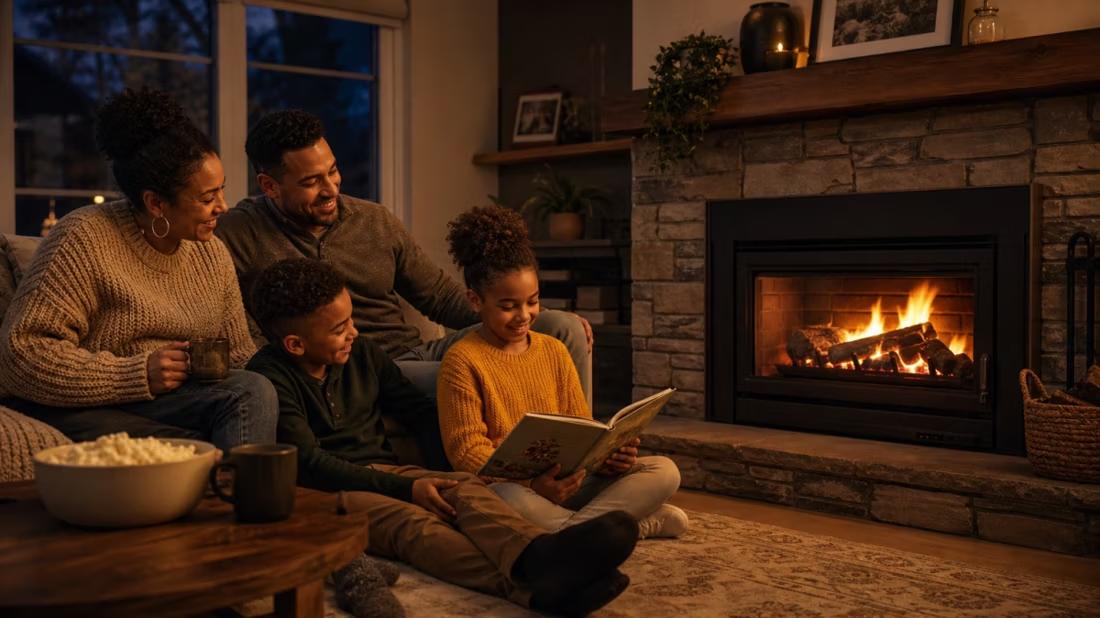
Four fuels. One honest answer for North Coast.
Three steps. No salesperson until you're ready.
Tell us about your project
Your postal code, your situation, and the fuel you're leaning toward—or let the answers point you to one.
See what's actually available
The brands dealers within 100 miles genuinely carry—real options, never a catalog mirage.
Get your dealer & Project Guide
A trusted local dealer, plus the free Project Guide & Parts List that names every component of the job.
Frequently Asked Questions
Which fireplace fuel makes the most sense on the North Coast?
It depends more on where you live than how cold it gets, since winter lows here rarely drop far below zero. In Prince Rupert and Port Edward, where Pacific Northern Gas runs mains service, a gas fireplace or insert is often the easiest primary or supplemental heat source—no wood to split, no chimney to sweep as often. Out on Haida Gwaii and in the smaller mainland communities without gas mains, wood stoves burning Douglas fir, paper birch, lodgepole pine, or western larch remain the practical backbone, especially where firewood is cut locally under a FrontCounter BC permit. Pellet stoves using Pinnacle Premium or Princeton Fuel Pellets are a solid middle option if you want automated feed and steady heat without splitting wood, though pellet bags need dry, covered storage given how much it rains here. Electric fireplaces are common as a supplemental unit in a bedroom or living room already heated by wood or gas, but on their own they're not sized to carry a home through the wet, wind-driven cold of a North Coast winter.
Do I need a permit to install a wood stove on the North Coast?
Yes. Building permits for wood stoves and inserts go through your local municipal building department, and the installation itself has to meet the CSA B365 installation code regardless of which community you're in. Most insurers on the North Coast also require a WETT inspection before they'll cover a wood-burning appliance, particularly on older homes in Prince Rupert or the Haida Gwaii villages where chimneys may predate current code. A trusted local dealer typically handles the permit paperwork and can point you to a WETT-certified inspector as part of the project, so it's rarely something a homeowner has to sort out alone.
What's this about wood-stove exchange programs and certified appliances?
Several regional districts in this part of BC, including areas around the North Coast, run wood-stove exchange programs that offer a rebate toward swapping an old, uncertified stove for a new CSA or EPA-certified unit. It matters here because winter inversions and smoke advisories can settle into low-lying valleys and communities, trapping smoke from older, smokier stoves close to the ground. A modern certified stove burns the same Douglas fir or lodgepole pine far more completely, which cuts smoke output substantially without giving up heat. If you're replacing an older stove, it's worth asking your dealer whether an exchange rebate applies to your community before you buy.
Is natural gas actually available out here, or is it mostly propane?
Both, depending on where you are. Pacific Northern Gas runs mains service into Prince Rupert and Port Edward, so a true natural gas fireplace or insert is a realistic option for homes in those cores. Once you're outside that service area—Kitkatla, Metlakatla, and all of Haida Gwaii—there's no gas main, and a gas fireplace means running on bottled or bulk propane instead. The appliance itself is often the same unit either way; it's the fuel line and tank setup that differs, and a local dealer will know which supply option actually applies to your address before recommending a model.
How does installation and service work for communities on Haida Gwaii?
Retailers and service techs based in Prince Rupert regularly take on projects across Haida Gwaii, but everything—stove, insert, parts, technician—has to cross Hecate Strait by ferry, and increasingly by air freight for smaller parts. That adds lead time and usually a trip or freight fee on top of the base project cost, so it's worth booking your work or your annual chimney sweep well before the fall ferry schedule tightens up. For homes in Masset, Old Massett, Skidegate, or Queen Charlotte, ask your dealer directly about turnaround time and whether they stock spare parts locally versus ordering them in, since a delayed part can mean weeks rather than days during peak season.
What does a fireplace installation typically cost on the North Coast?
Costs run close to provincial averages but with a modest premium for freight to remote communities. Wood stove or insert installs typically land around $4,500-$9,000 CAD, including a WETT inspection; gas fireplace or insert installs run roughly $5,000-$12,000 CAD depending on whether Pacific Northern Gas mains reach your address or a propane tank and line need to go in. Pellet stove installs generally fall between $4,500-$8,000 CAD. Electric fireplaces are the most affordable entry point—$300-$3,500 CAD for the unit, plus $500-$1,500 CAD in labour for anything beyond a simple plug-in placement. Add a few hundred dollars on top for any project shipping to Haida Gwaii or the more remote mainland communities.
How many BTUs do I need in a fireplace?
Wrong question—and the industry's favorite way to confuse you. More BTUs isn't better if the fireplace cooks you out of the room you spent thousands to enjoy. Think in terms you can verify: how many square feet the unit heats, whether it's primary or backup heat, and whether you want it running overnight. Those three answers size a fireplace correctly every time.
Will we actually use a fireplace once we have one?
In my own home, the room with the fireplace has never been the same—it became the social hub. Game nights, holidays, date nights after the kids are down: the fire is where the house gathers. There's a reason people in this industry joke that we're really in the romance and entertainment business. You won't wonder whether you'll use it; you'll wonder how the room worked before.
Does a fireplace add value to my home?
On average, a fireplace adds back to the home about the same amount you spent installing it. Add the monthly savings from heating the rooms you actually use instead of the whole house—often hundreds of dollars a year—and the value case is strong before you even count what a fire does for how your family uses the room.
Can I install a fireplace myself?
If you're putting a fire in your house on purpose, it's best to work with an expert. Unless you're genuinely experienced in framing, gas line, vent pipe, and the national code on clearances to combustibles, have a professional do it—and ideally the same company that sells you the fireplace, so warranty, service, and liability all live under one roof.
Stove and Fireplace Dealers in North Coast
Listings include WhyFire partner dealers, dealers we have verified as authorized for the brands we recommend, and established local businesses that carry hearth products. Every listing shows which one it is. The ones marked Preferred run on WhyFire's software, so they can show you real pricing and book your appointment right here. No manufacturer pays for placement. How we verify dealers →
Tyee Building Supplies Ltd
Aqua Plumbing & Heating Ltd.
Bernie's Sales
Get matched with a local North Coast dealer.
Pick your fuel below and we'll put together a free Project Guide & Parts List—the right unit, the vent kit it needs, and the local North Coast dealer we recommend for your project.
Find Your Fireplace →