
Consistent heat for Port McNeill's long, damp winters.
Winter lows here average just 1.8°C, but the north Island's marine season drags on wet and grey for months. I'll match you with a trusted local dealer who knows what actually vents and fits on a Port McNeill street.
Every Project Starts From One of These Five Situations
Heat that fits a forestry town's rhythm.
Port McNeill sits at just 12 metres elevation on the northern tip of Vancouver Island, and its climate zone 5C profile is mild by Canadian standards, an average winter low of 1.8°C, nothing like the deep freezes that hit Prince George or Fort McMurray each January. What the north Island lacks in extreme cold it makes up for in duration and dampness: a long, wet heating season and the Pacific windstorms that regularly knock out BC Hydro service for a day or more along the exposed Highway 19 corridor. That combination rewards a heat source that's clean, steady, and doesn't depend on split cordwood drying out in a climate where wood rarely seasons well outdoors.
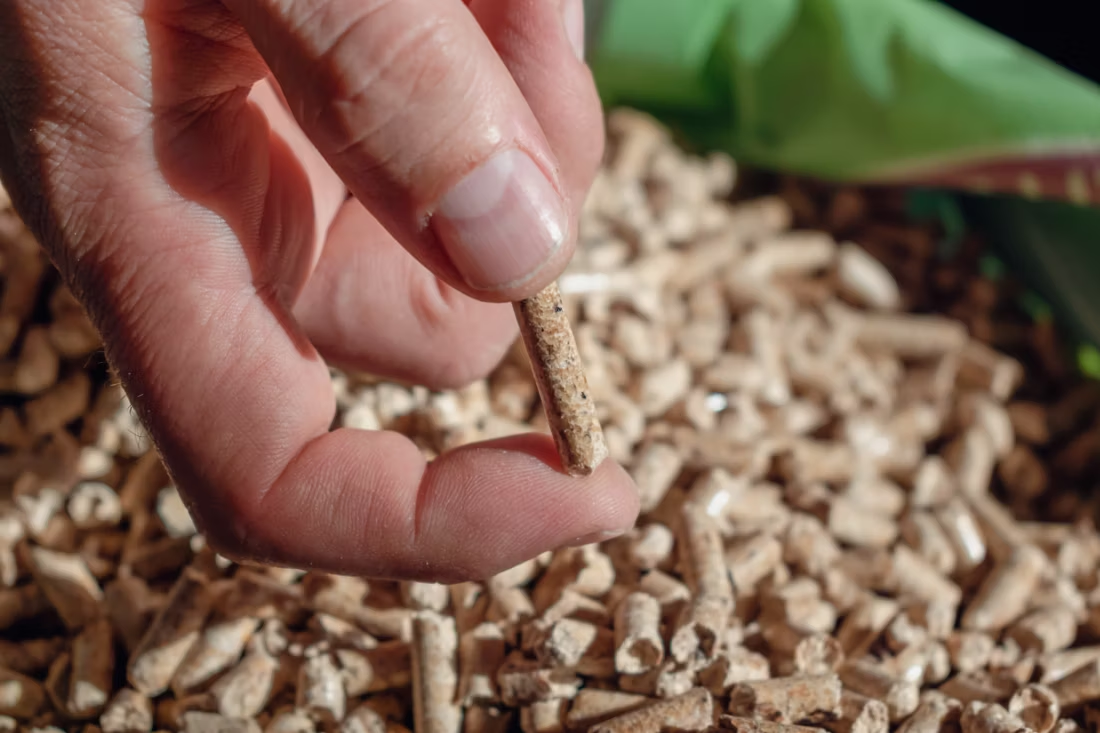
This is a forestry town first, home to mills and logging operations through the Nimpkish Valley, so residents are comfortable around wood fuel, and pellets made from BC mill residuals fit that economy naturally. Pinnacle Premium, milled in Armstrong, and Princeton Fuel Pellets are the two brands most north Island hearth dealers stock, typically running $400-$575 a ton. FortisBC and Pacific Northern Gas both run lines through Port McNeill, so gas is a real option on many streets, but a lot of households still choose pellet for its cleaner burn and lower moisture-management hassle than stacked cordwood, especially under CSA B365 code with a WETT inspection typically required for insurance on any solid-fuel appliance.
Three steps. No salesperson until you're ready.
Tell us about your project
Your postal code, your situation, and the fuel you're leaning toward—or let the answers point you to one.
See what's actually available
The brands dealers within 100 miles genuinely carry—real options, never a catalog mirage.
Get your dealer & Project Guide
A trusted local dealer, plus the free Project Guide & Parts List that names every component of the job.
Frequently Asked Questions
How much does a pellet stove installation cost in Port McNeill?
Most installs run $6,000 to $10,000 CAD. An insert dropping into an existing masonry chimney lands toward the lower end, since the chase and hearth are already in place. A freestanding unit needing new PL-vent pipe through an exterior wall, common in newer Port McNeill homes built without a fireplace, pushes toward the top of that range. The municipal building department requires a permit either way, and installation has to follow CSA B365 code, which most local dealers fold into the quote.
Why do Port McNeill homeowners choose pellet over cordwood?
A lot of it comes down to the coastal damp. Cordwood needs a full season to dry properly, and in a climate this wet, poorly seasoned Douglas fir or lodgepole pine throws more creosote and smoke than it should. Bagged pellets from Pinnacle Premium or Princeton Fuel Pellets arrive kiln-dried and burn consistently regardless of how soggy the woodshed got that winter. You still need a WETT inspection for insurance purposes, but pellet appliances generally burn cleaner and need less flue maintenance than an open cordwood stove.
Will a pellet stove still work during a power outage?
Not without backup. Pellet stoves rely on electricity to run the auger and combustion blower, and the north Island sees its share of multi-day BC Hydro outages when Pacific storms roll through the exposed coastline near Port McNeill. A small battery backup or portable generator keeps a pellet unit running through most outages, and it's worth asking your dealer about UPS options when you're pricing the install. Homes that want zero dependence on grid power during a storm often keep a wood stove as the true backup and use pellet for daily convenience.
Where do I buy pellets near Port McNeill?
Pinnacle Premium, produced in Armstrong in the BC interior, and Princeton Fuel Pellets out of Princeton are the two brands most local hearth dealers and hardware suppliers on the north Island carry, typically priced $400 to $575 a ton depending on the season and how far the load has to travel. Because the coastal air holds so much moisture, storage matters more here than in a dry interior town: pellets need to stay in a sealed, indoor space rather than a damp shed, or they'll swell and jam the auger.
Do I need a permit for a pellet stove in Port McNeill?
Yes. New installs go through the municipal building department and must follow CSA B365 installation code. Most insurers also want a WETT inspection on file before they'll cover a solid-fuel appliance, pellet included, even though pellet stoves burn considerably cleaner than an open cordwood fire. A dealer who regularly installs on the north Island will already know the local building department's paperwork and can usually schedule the WETT inspection as part of the project.
What size pellet stove do I need for a Port McNeill home?
Climate zone 5C here is mild compared to Interior BC towns like Prince George, with an average winter low around 1.8°C, so most Port McNeill homes don't need the largest units on the market. A mid-size stove rated for 1,200 to 2,000 square feet handles a typical north Island house through the wet season. Larger open-concept homes near the water, where wind exposure drives up heat loss, sometimes need the next size up. A local dealer will factor in your ceiling height and window exposure rather than sizing off square footage alone.
Do winter smoke advisories affect pellet stoves in this region?
Several BC regional districts run wood-stove exchange programs and require CSA or EPA-certified appliances during winter inversions in interior valleys, and pellet stoves are usually the cleanest-burning option available in those exchanges. Port McNeill's coastal position doesn't trap smoke the way interior valleys around the Regional District of Mount Waddington's inland communities sometimes do, but if you're upgrading from an old uncertified cordwood stove, a certified pellet unit is typically the easiest appliance to get approved.
Port McNeill has natural gas service—does pellet heat still make sense?
FortisBC and Pacific Northern Gas both maintain lines into town, so a gas fireplace is a realistic option for a lot of Port McNeill addresses. Pellet still holds appeal for homeowners who want a visible flame with wood character rather than a gas burner, for properties out toward the Nimpkish Valley that sit off the gas corridor, and for anyone who likes the idea of heating with a fuel made from BC mill residuals in a town whose economy runs on forestry.
How much maintenance does a pellet stove need on the north Island?
Plan on an annual service from a WETT-certified technician who checks the auger, hopper, gaskets, and exhaust venting, plus weekly ash removal during the heaviest burn months. The damp coastal air makes venting seals worth a closer look here than in a dry interior climate—moisture intrusion around exterior wall penetrations shows up faster in Port McNeill than it would in a town like Prince George. Between services, a quick glass wipe and hopper top-up is about all a pellet stove asks for.
Why do fireplace quotes vary so much?
Because a fireplace is an iceberg—there's more behind the wall than in front of it. A low quote often covers only the unit; the full scope includes vent pipe, gas line or electrical, framing, and the tile or stone that has to come off and go back on. Make every bidder price the whole job. If a dealer can't speak to the full scope with confidence, that's your signal to keep looking.
Is it worth replacing an old fireplace that still sort of works?
Ask three questions: Is it ugly? Is it drafty? Does it actually work? Most old fireplaces fail at least two. Beyond looks, an old unit leaks air around the damper year-round and—if it's gas with a standing pilot—quietly burns a couple hundred dollars a year. A modern replacement seals the wall, heats the room, and changes how the whole space gets used.
Why is my open fireplace making my house colder?
Open fireplaces suck—literally. As the fire burns, it consumes air your furnace already paid to heat and pulls it out through the chimney, so the house is actually colder after the fire goes out than before you lit it. An insert fixes this: it seals the chimney, puts fixed glass across the front, and turns that hole in your house into a real heat source.
What's the difference between an insert and a zero-clearance fireplace?
An insert is a fireplace that slides into a pre-existing wood-burning fireplace—if you don't have one, there's nothing to insert it into. A zero-clearance fireplace is built into a framed wall, which makes it the answer for remodels and new construction. Simple test: existing masonry fireplace means insert; blank or framed wall means zero-clearance.
Nearby Dealers
Hearth shops serving Port McNeill and the surrounding area. Every listing shows whether it is a WhyFire partner, a dealer we have verified as authorized for the brands we recommend, or a local business carrying hearth products. No manufacturer pays for placement. How we verify dealers →
Shop Rite
Sunco Plywood Sales
Builders Warehouse
Pellet Brands Stocked Around Port McNeill
Typical price runs $400-$575 per ton—buy early-season for the best rates. Manufacturers will point you to the nearest stocking dealer.
Pinnacle Premium
Princeton Fuel Pellets
Get your Port McNeill pellet project mapped out.
Tell me about your home and I'll match you with a trusted local dealer and send a free Project Guide & Parts List, sized for the north Island's damp winters, with the vent kit and parts specified.
Find Your Fireplace →