
Ambient heat for a coastline that barely dips below freezing.
Oyster River sits low and close to the water in the Comox Valley region, where winter lows average around -0.5°C. An electric fireplace suits that climate honestly: no chimney, no cordwood, and a running cost tied to some of the lowest residential power rates in the country through BC Hydro.
Every Project Starts From One of These Five Situations
A mild shoreline that doesn't need a cord of firewood to stay warm.
At just 24 metres of elevation and right on the water, Oyster River sees a genuinely mild climate zone 4C winter—average lows barely below zero, nothing like the sustained cold of Prince George a few hundred kilometres north on the same highway. Wood is still cut locally from Douglas fir, paper birch, lodgepole pine, and western larch, and gas service through FortisBC and Pacific Northern Gas reaches plenty of homes in the region, but a lot of Oyster River households—especially smaller waterfront cabins, rental suites, and manufactured homes along the river—don't need a full combustion heating system for a climate this forgiving.
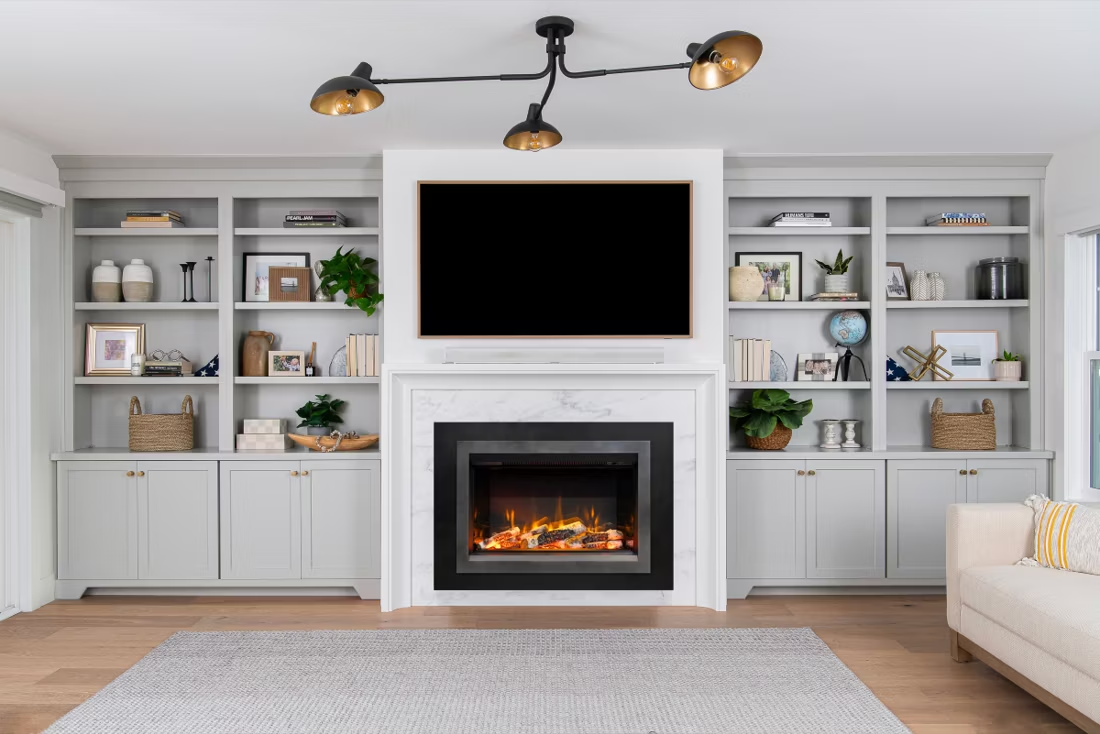
That's where electric fireplaces earn their place. There's no flue to run, no WETT inspection to schedule, and no wood to split and stack—just a unit that plugs in or hardwires and starts producing heat and flame instantly. With BC Hydro's residential rate sitting around 11.4 cents per kilowatt-hour, running one as supplemental zone heat in a bedroom, basement suite, or sunroom addition costs a fraction of what a comparable gas or wood install would run, and the installs themselves typically wrap up in a single afternoon rather than a multi-day project.
Three steps. No salesperson until you're ready.
Tell us about your project
Your postal code, your situation, and the fuel you're leaning toward—or let the answers point you to one.
See what's actually available
The brands dealers within 100 miles genuinely carry—real options, never a catalog mirage.
Get your dealer & Project Guide
A trusted local dealer, plus the free Project Guide & Parts List that names every component of the job.
Frequently Asked Questions
How much does an electric fireplace installation cost in Oyster River?
Most electric fireplace projects here run $500 to $1,600 CAD, which is a different world from the $6,000-plus you'd typically see for a wood or gas system. A simple plug-in insert or wall-mount unit sits at the low end. A recessed, hardwired built-in—the more common choice for a living room renovation or a new addition along the river—runs toward the top of that range once an electrician ties it into a dedicated circuit. Either way, there's no chimney or venting work to price in, which is a big part of why the cost stays modest.
What does it cost to run an electric fireplace day to day?
With BC Hydro's residential rate around 11.4 cents per kilowatt-hour, a typical electric insert running on its heater setting for a few hours an evening adds only a few dollars a month to a power bill—noticeably cheaper than an equivalent gas fireplace run through FortisBC (Gas) or Pacific Northern Gas. Homes on FortisBC (Electric) service in parts of the Comox Valley region see similar rates. Running the unit on flame-only mode with the heater off costs next to nothing, which is why a lot of Oyster River owners use these year-round for ambiance and only switch on the heat through the cooler months.
Do I need a permit to install an electric fireplace in Oyster River?
Most plug-in units need no permit at all. A hardwired built-in that requires new wiring or a dedicated circuit typically needs an electrical permit through the municipal building department, and any local electrician doing the work will pull that as a matter of course. Because there's no combustion involved, you can skip the WETT inspection that insurers often require for wood stoves and inserts here—one of the practical advantages of going electric in a mild climate like this one.
Electric vs. gas—which makes more sense for an Oyster River home?
Gas is available in parts of the region through FortisBC (Gas) and Pacific Northern Gas, and a gas fireplace or insert can genuinely carry a room as a primary heat source, typically running $6,000 to $15,000 installed. Electric can't match that BTU output, but for Oyster River's mild coastal winters—average lows barely below zero—most homes don't need a primary combustion appliance in the first place. An electric unit at $500 to $1,600 covers the ambiance and light supplemental heat that most living rooms and bedrooms here actually want, at a fraction of the cost and with no gas line to run.
Why choose electric over wood in a place surrounded by good burning timber?
Douglas fir, paper birch, lodgepole pine, and western larch are all cut locally, and FrontCounter BC issues free cutting permits year-round outside summer fire restrictions, so wood heat remains a genuinely practical, low-cost option in the Comox Valley region. But wood asks for a chimney, a WETT-inspected install, and ongoing splitting and stacking—real commitments for a climate that rarely drops much below freezing. Electric skips all of that. It's the right call for a second living space, a rental suite, or anyone who wants fire and heat without taking on a wood-burning system they won't lean on hard most winters.
How much space will an electric fireplace actually heat?
Most electric inserts and built-ins are rated to comfortably heat 400 to 1,000 square feet as supplemental zone heat, which fits well with how they're used around Oyster River—one room, a basement suite, or an addition, rather than the whole house. If you're trying to heat a larger open-concept main floor, a local dealer can point you toward a higher-output unit or suggest pairing electric ambiance in one room with a different primary heat source elsewhere in the home.
What happens to an electric fireplace during a power outage?
It stops working entirely, flame effect and heat both, since there's no battery backup on standard residential units. Coastal storms off the Comox Valley region do knock out power here occasionally, so a household relying on electric heat as anything more than supplemental warmth should have a backup plan—a wood stove, a gas unit, or at minimum a portable heater—for the handful of outage days a typical winter brings.
Can I install an electric fireplace in a manufactured home or rental unit near the river?
Yes, and it's one of the more common requests in Oyster River given how many manufactured homes and waterfront rental cabins sit along the river corridor. Electric units don't require any chimney penetration or structural changes, which matters in homes where running new venting isn't practical or allowed under a strata or park agreement. A wall-mount or small built-in insert on a dedicated circuit is usually the simplest path, and a local electrician can confirm what the panel can handle.
Where can I actually see electric fireplace options installed near Oyster River?
Rather than guessing from a big-box showroom an hour's drive south, the better move is getting matched with a local, manufacturer-authorized dealer who installs regularly in the Comox Valley region and knows what electrical panels and wiring situations are common in homes here. I don't sell fireplaces or take money from any manufacturer to steer you toward their brand—I just connect you with a dealer who can tell you what's realistically installable at your address.
How much does an electric fireplace cost to run?
With the heater on, a typical unit draws about 1,500 watts—at average electric rates that's roughly 20 cents an hour. Run the flame effect alone and it costs pennies; the flames are LED-driven and use about as much power as a light bulb. There's no pilot light, no fuel delivery, and essentially no maintenance.
What fireplace styles should I know before shopping?
Four cover most of the market: screen-front traditional (mesh front, open feel, fits craftsman homes), traditional door set (the classic look you grew up with), modern linear (wide, low, the statement piece for entertaining), and clean face contemporary (no trim—your tile or stone runs right to the fire's edge). Walk in knowing those four terms and you're ahead of most buyers.
Do electric fireplaces actually produce heat?
Yes—most put out around 4,800–5,000 BTUs from a standard outlet, which comfortably warms a bedroom, office, or den as a comfort-zone heater. What they won't do is carry a whole house the way wood, gas, or pellet can. Think of electric as ambiance-first with honest supplemental heat: flames on with no heat in July, flames plus warmth in January.
Does an electric fireplace need a vent or chimney?
No—that's its superpower. An electric fireplace needs a wall and an outlet, period. No vent pipe, no gas line, no clearances to design around, which is why it works in bedrooms, offices, apartments, and walls where venting a gas or wood unit would be impractical or impossible. Installation is typically the simplest and least expensive of any fireplace type.
Nearby Dealers
Hearth shops serving Oyster River and the surrounding area. Every listing shows whether it is a WhyFire partner, a dealer we have verified as authorized for the brands we recommend, or a local business carrying hearth products. No manufacturer pays for placement. How we verify dealers →
Bennett Sheet Metal & Heating Ltd.
Electric Service in Oyster River
An electric fireplace's heater draws about 1,500 watts—pennies per hour at local rates.
Bc Hydro
FortisBC (Electric)
Get your free Project Guide & Parts List for an Oyster River electric fireplace.
Tell me about your home and I'll match you with a trusted local dealer serving the Comox Valley region and send a free Project Guide & Parts List sized to your space, with the exact parts your project needs.
Find Your Fireplace →