
Keep Your Family Warm and Safe—No Matter What
At 453 metres in the Regional District of Central Kootenay, Ootischenia sees a relatively mild average winter low of -3.7°C, but valley inversions and smoke advisories still shape how wood heat gets used here. I'll match you with a trusted local dealer and a free Project Guide & Parts List sized to your home.
Every Project Starts From One of These Five Situations
A mild valley climate with real smoke-advisory rules.
Ootischenia sits along the Columbia River flats near Castlegar, in the Regional District of Central Kootenay, at 453 metres elevation. Winters here are comparatively mild for the BC Interior—an average low of just -3.7°C, nothing like the deep freezes that hit Prince George or Fort McMurray—but the valley still traps cold air and woodsmoke on calm days, producing the winter inversions and smoke advisories that show up regularly across West Kootenay towns like Castlegar, Trail, and Nelson. That combination of moderate cold and real air-quality rules shapes how wood heat gets used and regulated here.
Local burners split Douglas fir, paper birch, lodgepole pine, and western larch, all common on the Crown land surrounding the valley. FrontCounter BC and the BC Ministry of Forests issue free cutting permits year-round, though summer fire restrictions close the woods during the driest months. Because Ootischenia sits in an inversion-prone stretch of the Columbia-Kootenay confluence, the Regional District of Central Kootenay leans on CSA/EPA-certified appliances and wood-stove exchange incentives to keep winter smoke manageable, and most households treat a certified stove or insert as the baseline rather than an upgrade. Natural gas service from FortisBC and Pacific Northern Gas reaches parts of the area, but plenty of rural acreages around Ootischenia still rely on a wood stove as primary or backup heat, especially given how often winter storms can interrupt power in the valley.
Firewood Cutting Permits Near Ootischenia
FrontCounter Bc / Bc Ministry Of Forests
Three steps. No salesperson until you're ready.
Tell us about your project
Your postal code, your situation, and the fuel you're leaning toward—or let the answers point you to one.
See what's actually available
The brands dealers within 100 miles genuinely carry—real options, never a catalog mirage.
Get your dealer & Project Guide
A trusted local dealer, plus the free Project Guide & Parts List that names every component of the job.
Frequently Asked Questions
How much does a wood stove installation cost in Ootischenia?
Expect $6,000 to $12,000 CAD for a full installation. A wood insert going into an existing masonry firebox on one of the older farmhouses along the valley flats usually lands toward the low end, since the chimney chase is already there. A freestanding stove in a newer build or an addition, needing fresh Class A pipe run through a wall or roof, runs closer to the top of that range. Either way, plan on a permit through the local building department and a CSA B365-compliant install, since insurers in the Kootenays routinely ask for a WETT inspection before they'll cover a wood-burning appliance.
Do I need a permit to install a wood stove in Ootischenia?
Yes. New installations go through the local building department, and the appliance and venting need to meet the CSA B365 installation code. Because Ootischenia sits in an area regional insurers treat as inversion-prone, most companies also want a WETT inspection on file before they'll write or renew a policy that covers a wood stove or insert—a step a local dealer will typically build into your project timeline rather than something you chase down after the fact.
Where do I get a firewood cutting permit near Ootischenia?
FrontCounter BC and the BC Ministry of Forests issue cutting permits for the Crown land surrounding the Columbia and Kootenay valleys, and in this region they're free. The season runs year-round, though summer fire restrictions typically close cutting access during the driest, highest fire-risk weeks. Douglas fir and lodgepole pine are the two species most permit holders bring home, with paper birch and western larch rounding out a typical woodshed.
What wood species burn best in a Kootenay valley stove?
Douglas fir and western larch are the local favorites for heat output—dense, high in BTUs, and widely available on Crown land around Ootischenia. Lodgepole pine burns hotter and faster, useful for shoulder-season fires in October or April when you don't want a long overnight burn. Paper birch is prized for its clean-burning coals and pleasant smell, though it burns faster than fir or larch, so most local woodsheds mix species rather than relying on one.
How do winter inversions affect wood burning in Ootischenia?
The Columbia and Kootenay valleys trap cold, stagnant air on calm winter days, which concentrates woodsmoke and regularly triggers smoke advisories across the West Kootenay, including around Castlegar and Ootischenia. The Regional District of Central Kootenay responds with wood-stove exchange programs that help homeowners retire older, uncertified stoves, and CSA/EPA-certified appliances are effectively the standard for any new install. A certified stove burns cleaner and produces a fraction of the particulate an old pre-1990s model does, which matters on the advisory days when older units get asked to stay cold.
Wood or gas—which makes more sense for a home in Ootischenia?
FortisBC (Gas) and Pacific Northern Gas both serve parts of the area, so gas is a real option here, typically running $6,000 to $15,000 CAD installed. Wood remains popular anyway, partly because BC Hydro outages during valley windstorms are common enough that a wood stove keeps working when the power and the furnace don't, and partly because free cutting permits from FrontCounter BC make fuel cost close to zero if you're willing to cut and split it yourself. A lot of households here run gas as the everyday convenience fuel and keep a certified wood stove as backup.
What is a WETT inspection and do I actually need one?
WETT stands for Wood Energy Technology Transfer, and it's the certification most BC insurers ask for before covering a home with a wood stove, insert, or fireplace—particularly in areas like the Regional District of Central Kootenay where wood heat is common. An inspector checks clearances, chimney condition, and CSA B365 compliance, and a passing report is usually what your insurer needs on file to keep your policy in place or approve a new one. Most local dealers can arrange the inspection as part of your project rather than leaving you to schedule it separately.
What size wood stove do I need for a home near Ootischenia?
With winter lows averaging a comparatively mild -3.7°C—nothing like the sustained deep cold of Prince George or Fort McMurray—most Ootischenia homes do fine with a small to medium stove rated for 1,000 to 1,800 square feet, sized to whichever room or main living area it's heating. Rural properties heating a larger farmhouse or a home with high ceilings and older single-pane windows, common along the valley flats, often step up to a medium-large stove so it can hold a burn through the coldest nights without constant reloading. A local dealer will size it against your actual floor plan and insulation rather than square footage alone.
Are there rebates for upgrading an old wood stove in this region?
Yes. The Regional District of Central Kootenay periodically runs wood-stove exchange programs that offer rebates for retiring an old, uncertified stove in favor of a new CSA or EPA-certified model—funding and eligibility shift from year to year, so it's worth checking current availability before you buy. Beyond the rebate itself, upgrading also solves the insurance question: a certified stove with a WETT inspection is what most companies want on file anyway, so the timing often works out for households already due for a replacement.
Why do fireplace quotes vary so much?
Because a fireplace is an iceberg—there's more behind the wall than in front of it. A low quote often covers only the unit; the full scope includes vent pipe, gas line or electrical, framing, and the tile or stone that has to come off and go back on. Make every bidder price the whole job. If a dealer can't speak to the full scope with confidence, that's your signal to keep looking.
Louvered or clean face—which fireplace front is better?
Louvered fronts have grill work above and below the glass for airflow, move heat a little better with a fan, and suit traditional mantels. Clean face designs drop the louvers entirely so finish work runs to the fire's edge—they fit both modern and traditional rooms. When we did our own home we chose clean face: a big viewing area beat a little extra airflow. It depends on your room, not on a rulebook.
Do I have to leave the stove door cracked open to start a fire?
On many stoves, yes—a new fire needs extra air, and cracking the door a couple inches is how most stoves get it. But some modern stoves offer an automatic startup air system: engage it when you light, and timed air jets feed the fire for the first 20 minutes with the door fully shut, then close automatically. It's mechanical—like an egg timer, no electricity—and it means you can load it, light it, and walk away.
Why is my open fireplace making my house colder?
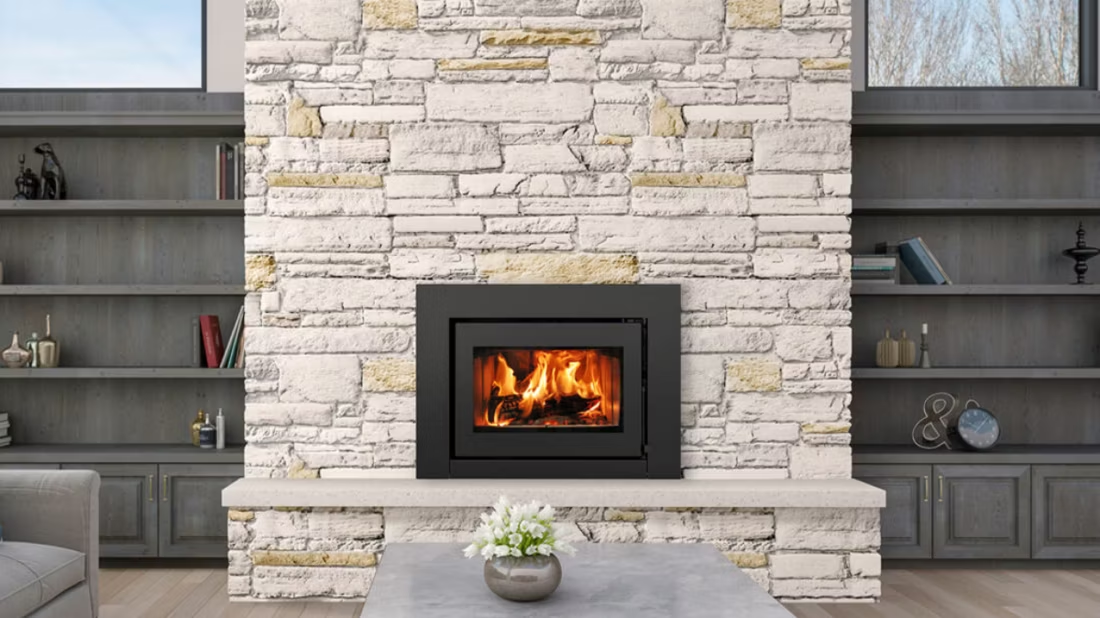
Open fireplaces suck—literally. As the fire burns, it consumes air your furnace already paid to heat and pulls it out through the chimney, so the house is actually colder after the fire goes out than before you lit it. An insert fixes this: it seals the chimney, puts fixed glass across the front, and turns that hole in your house into a real heat source.
Nearby Dealers
Hearth shops serving Ootischenia and the surrounding area. Every listing shows whether it is a WhyFire partner, a dealer we have verified as authorized for the brands we recommend, or a local business carrying hearth products. No manufacturer pays for placement. How we verify dealers →
Flush Away Plumbing
Oak And Clay Interiors
All Elements Industries
Pyramid Building Supplies
Peltzer Heating Ltd
Nakusp Home Hardware
Get your Ootischenia wood heat project mapped out.
Tell me about your home and I'll match you with a trusted local dealer and send a free Project Guide & Parts List—sized for the Kootenay valley's inversion rules and your insurer's WETT requirements, with the vent kit and parts specified.
Find Your Fireplace →