
Find your fireplace in the Northern Rockies Regional Municipality.
Wood, gas, pellet, and electric fireplace resources for Fort Nelson and every community along this stretch of the Alaska Highway. Pick a fuel and get matched with a local dealer who can actually get parts and service out here.
Every Project Starts From One of These Five Situations
Zone 7C winters, -24.6°C lows, and a region built around serious heat.
The Northern Rockies Regional Municipality is centered on Fort Nelson, roughly 400 kilometres north of Fort St. John along the Alaska Highway, with outlying communities like Toad River and Muncho Lake tucked into the Rockies foothills. At Zone 7C—the coldest climate zone used in BC's building code—and an average winter low of -24.6°C, winters here sit in the same territory as Whitehorse or Fort McMurray: a heating season that runs from September into May, with stretches of deep, still cold that make heat retention the whole game. Douglas fir, paper birch, lodgepole pine, and western larch are the wood species most households burn, much of it self-cut under permits from FrontCounter BC / BC Ministry of Forests, which keeps wood heat both affordable and deeply practical this far from a big-box supply chain.
What's unusual for a community this size and this far north is that piped natural gas actually reaches homes in Fort Nelson itself, a legacy of the region's own gas fields—so gas fireplaces and furnaces are a genuine option here, not just a rural propane workaround. Interior valleys around Fort Nelson still see winter inversions and smoke advisories, which is why several regional districts nearby run wood-stove exchange programs and why any new wood appliance needs to be CSA or EPA-certified. Every wood, gas, or pellet installation runs through the municipal building department under the CSA B365 code, and most insurers here will ask for a WETT inspection before they'll cover a wood-burning appliance. This hub rolls up hearth retailers, service technicians, and fuel suppliers across the whole region—from Fort Nelson out to Toad River, Muncho Lake, and Prophet River. Pick your fuel below for local dealers, install costs, and recommendations built around what actually works at -24.6°C.
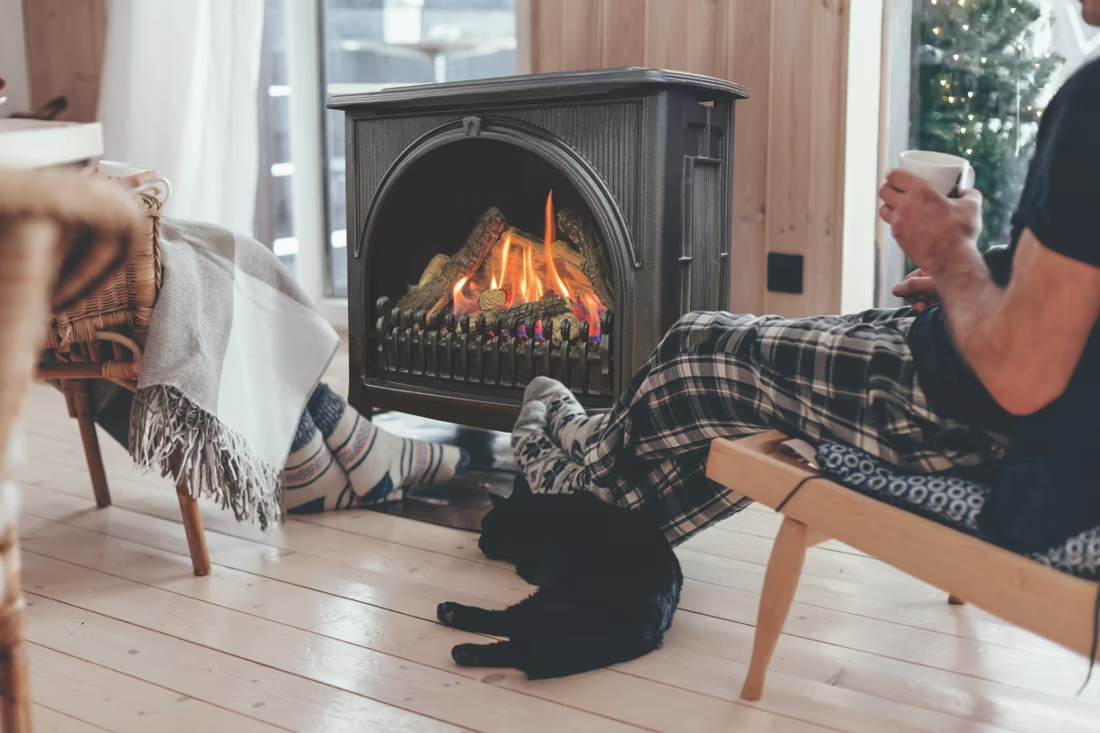
Four fuels. One honest answer for Northern Rockies Regional Municipality.
Wood
See what's available near Northern Rockies Regional Municipality.
Find your wood stove →Gas
24 models available near Northern Rockies Regional Municipality.
Find your gas fireplace →Pellet
See what's available near Northern Rockies Regional Municipality.
Find your pellet stove →Electric
See what's available near Northern Rockies Regional Municipality.
Find your electric fireplace →Three steps. No salesperson until you're ready.
Tell us about your project
Your postal code, your situation, and the fuel you're leaning toward—or let the answers point you to one.
See what's actually available
The brands dealers within 100 miles genuinely carry—real options, never a catalog mirage.
Get your dealer & Project Guide
A trusted local dealer, plus the free Project Guide & Parts List that names every component of the job.
Frequently Asked Questions
Which fireplace fuel makes the most sense in the Northern Rockies Regional Municipality?
All four fuels are used here, which is unusual for a community this remote—but the right choice still depends on where you sit and how much you want a fuel supply chain of your own. Wood remains the backbone in Fort Nelson and the outlying communities: a cutting permit from FrontCounter BC / BC Ministry of Forests gets you access to Douglas fir, paper birch, lodgepole pine, and western larch, and a properly sized catalytic stove will hold overnight through -24.6°C lows without much trouble. Gas is a legitimate option in Fort Nelson itself, since piped natural gas actually reaches the townsite thanks to the region's own gas fields—that's not something most communities this far north can say. Pellet stoves run on regional brands like Pinnacle Premium and Princeton Fuel Pellets and appeal to homeowners who want wood-stove ambiance without cutting and hauling their own supply. Electric fireplaces show up almost everywhere as a supplemental unit, but with a heating season this long and this cold, nobody's relying on one as their only heat source.
Do I need a permit to install a wood stove or gas fireplace here?
Yes. Any new wood, gas, or pellet appliance goes through the municipal building department, and installations are governed by the CSA B365 code, which covers everything from clearances to combustibles to venting. Gas installs additionally need a licensed gas fitter for the connection itself. Most of the hearth retailers we match homeowners with handle this paperwork directly as part of the project, which matters more here than in a bigger centre—there's no walk-in permit counter down the street, so a dealer who already knows the municipal process saves real time.
What is a WETT inspection, and will I actually need one?
A WETT inspection is a safety check of a wood-burning installation performed by a certified inspector, and most insurers serving the Northern Rockies Regional Municipality will require one before they'll cover a wood stove, insert, or fireplace—especially on older homes or after any change of ownership. Given how many households here run wood as a primary or major heat source, it's worth building the inspection cost into your project budget up front rather than discovering it's required after your policy renewal gets flagged. A local dealer familiar with CSA B365 installs can typically arrange the inspection as part of the job.
I've heard about smoke advisories and stove exchange programs—do those apply here?
Interior valleys around Fort Nelson do see winter inversions, where cold, still air traps wood smoke close to the ground, and nearby regional districts have run wood-stove exchange programs to get older, uncertified stoves out of circulation. Any new wood appliance installed here needs to be CSA or EPA-certified, which cuts particulate output substantially compared to an older non-certified stove. If you're replacing an old stove, it's worth asking your dealer whether an exchange rebate is currently available—the programs come and go, but a certified replacement is worth the cost either way for how much cleaner and more efficient it burns.
How does installation and service work when the nearest big centre is hours away?
Most hearth retailers and service technicians for this region are based in Fort Nelson and drive out to Toad River, Muncho Lake, and Prophet River as needed, sometimes bundling several stops from one trip up or down the Alaska Highway. Expect a trip charge for the more remote addresses, and expect to book your annual chimney sweep or gas inspection well before the cold sets in—scheduling tightens up fast once temperatures start dropping toward -24.6°C and everyone wants their heat source checked at once. For genuinely isolated properties, ask your dealer about spare igniters or backup parts on hand, since a storm on the highway can turn a same-week service call into a much longer wait.
What does a fireplace installation typically cost in this region?
Costs run a bit higher here than in a larger BC centre, largely because of travel time and the remoteness of parts supply. Wood stove or insert installs typically run $5,500-$10,000 CAD, more if a WETT inspection turns up chimney work that needs doing first. Gas fireplace and insert installs generally land at $6,000-$13,000, depending on how far the gas line needs to run from the meter. Pellet stove or insert installs usually fall between $5,000-$8,500. Electric fireplaces remain the budget option—$300-$3,500 CAD for the unit itself, plus modest labour unless you're wiring in a new circuit for a built-in. The region + fuel pages above break these down further with local dealer pricing.
How many BTUs do I need in a fireplace?
Wrong question—and the industry's favorite way to confuse you. More BTUs isn't better if the fireplace cooks you out of the room you spent thousands to enjoy. Think in terms you can verify: how many square feet the unit heats, whether it's primary or backup heat, and whether you want it running overnight. Those three answers size a fireplace correctly every time.
Will we actually use a fireplace once we have one?
In my own home, the room with the fireplace has never been the same—it became the social hub. Game nights, holidays, date nights after the kids are down: the fire is where the house gathers. There's a reason people in this industry joke that we're really in the romance and entertainment business. You won't wonder whether you'll use it; you'll wonder how the room worked before.
Can I put a TV above my fireplace?
Yes—with an asterisk. Fireplaces are hot and TVs don't like heat. Either put a mantel between them to deflect rising warmth, or choose a fireplace with heat-management technology that creates a cool zone on the wall above—the wall stays around 125 degrees, barely warm, while the room still gets full heat. If you like clean lines and don't want a mantel, heat management is the answer.
What fireplace styles should I know before shopping?
Four cover most of the market: screen-front traditional (mesh front, open feel, fits craftsman homes), traditional door set (the classic look you grew up with), modern linear (wide, low, the statement piece for entertaining), and clean face contemporary (no trim—your tile or stone runs right to the fire's edge). Walk in knowing those four terms and you're ahead of most buyers.
Stove and Fireplace Dealers in Northern Rockies Regional Municipality
Listings include WhyFire partner dealers, dealers we have verified as authorized for the brands we recommend, and established local businesses that carry hearth products. Every listing shows which one it is. The ones marked Preferred run on WhyFire's software, so they can show you real pricing and book your appointment right here. No manufacturer pays for placement. How we verify dealers →
Trapper Den's Wildlife Emporium
Get matched with a trusted dealer in the Northern Rockies Regional Municipality.
Pick your fuel below and we'll put together a free Project Guide & Parts List—the right unit, the vent kit it needs, and the local dealer we recommend for your project.
Find Your Fireplace →