
Electric fireplace warmth for a region that averages minus 25 on a cold night.
Centred on Fort Nelson along the Alaska Highway, this is one of the coldest, most sparsely populated municipalities in British Columbia. An electric fireplace here is real warmth and real ambiance for a room, not a replacement for whatever is already keeping the house at temperature through a long subarctic winter. I match you with a trusted local dealer who will tell you honestly where electric heat fits in your home.
Every Project Starts From One of These Five Situations
One of Canada's harshest climate zones, and a small, spread-out community.
The Northern Rockies Regional Municipality sits in climate zone 7C, among the coldest building-code zones anywhere in Canada, with winter lows averaging -24.6°C—winters that rival Whitehorse, YT, in both length and severity. With just over 2,600 residents spread across a vast stretch of the Alaska Highway corridor around Fort Nelson, most homes here are heated by natural gas, a legacy of the area's gas industry that made service available even in a community this remote, with wood as a common backup given how far help can be when a storm knocks out the road or the power. Electric heat has a real role in this mix, but it is a supporting one.
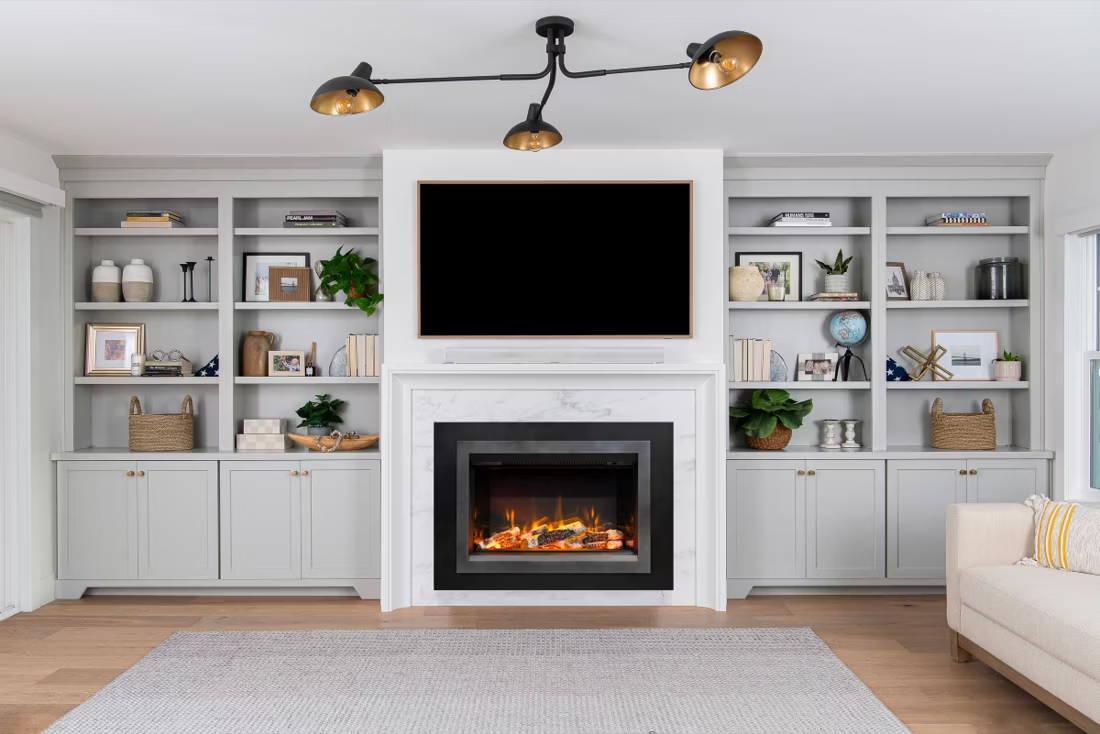
An electric fireplace or insert in this region is almost always a zone-heat or ambiance appliance: a family room addition, a basement suite, a cabin along the highway, or a supplemental unit in a home already running on gas or wood. At $500-$1,600 CAD installed, it is by far the least expensive fuel option on this page, needs no chimney, no gas line, and no combustion venting, and a plug-in unit typically requires no permit at all. A built-in, hardwired unit does call in a licensed electrician and a sign-off from the municipal building department, but it skips the CSA B365 wood-appliance code and the WETT inspection that insurers ask for on a wood stove—a real simplification if your goal is supplemental heat without extra paperwork.
Three steps. No salesperson until you're ready.
Tell us about your project
Your postal code, your situation, and the fuel you're leaning toward—or let the answers point you to one.
See what's actually available
The brands dealers within 100 miles genuinely carry—real options, never a catalog mirage.
Get your dealer & Project Guide
A trusted local dealer, plus the free Project Guide & Parts List that names every component of the job.
Frequently Asked Questions
How much does an electric fireplace installation cost in the Northern Rockies Regional Municipality?
Most electric fireplace and insert projects here run $500-$1,600 CAD. A plug-in unit dropped into an existing opening sits at the low end, since it needs nothing more than a standard outlet. A built-in wall unit or an insert that requires a dedicated 240V circuit run by a licensed electrician lands higher, and mantel surround or trim carpentry adds more on top. Because the municipality is so spread out along the Alaska Highway, homes well outside Fort Nelson proper may see a modest travel charge from an installer based in town.
Can an electric fireplace actually heat my house through winter here?
Not as the sole heat source, and I would be doing you a disservice to suggest otherwise. With winter lows averaging -24.6°C and a heating season that stretches from fall well into spring, resistance electric heat simply cannot compete on cost or output with the natural gas or wood systems most homes here already rely on for whole-house heating. Where an electric fireplace earns its keep is supplemental warmth: a chilly family room, a basement suite, or a space where running new gas line or a wood chimney isn't practical. Pair it with your existing furnace or stove rather than expecting it to replace one.
Do I need a permit to install an electric fireplace in the Northern Rockies Regional Municipality?
A simple plug-in unit generally doesn't require a permit since it's just an appliance on an existing circuit. A built-in unit wired to a new dedicated circuit does need an electrical permit, coordinated through the municipal building department, and the wiring itself has to be done by a licensed electrician. Either way, there's no CSA B365 solid-fuel code to satisfy and no WETT inspection to schedule, which is one of the appeals of electric over wood or a solid-fuel insert for a straightforward add-on project.
What happens to my electric fireplace during a power outage?
It stops working, full stop—there's no pilot light or battery backup keeping it going. That matters in a region this remote, where a storm along the Alaska Highway corridor or a line issue can mean an outage stretching well past what you'd see in a city. Most households here that lean on electric heat for a room keep a wood stove or a gas appliance as their real backup, since either of those can keep running, or at least keep a room livable, when the grid goes down.
What kind of electric fireplace actually holds up here?
Look for a unit with a genuine fan-forced heater rated at 1,500 watts rather than one sold purely on flame effect, and size it to the room rather than the wall it fills. Brands like Dimplex, Napoleon, and Amantii show up regularly through dealers serving northern BC and hold up well as supplemental heaters in a cold-climate home. A local dealer can walk you through whether a wall-mount, a built-in insert, or a freestanding cabinet unit fits your space and your existing heating setup best.
Electric, gas, or wood—what's the right call for a home in the Northern Rockies?
All three see real use here, but for different jobs. Natural gas, available even in a community this size thanks to the area's gas industry, is what most homes lean on for primary heat, typically $6,000-$15,000 CAD installed. Wood—Douglas fir, paper birch, lodgepole pine, and western larch are the local species, cut under free, year-round FrontCounter BC permits with summer fire restrictions—remains the go-to backup when the power or the gas line is out. Electric, at $500-$1,600 CAD, is the easiest and cheapest to add but the weakest heat source of the three, best suited to a single room or as a supplement to whatever is already heating the house.
Does an electric fireplace affect my home insurance the way a wood stove does?
Generally no, and that's one of the quieter advantages of going electric. Wood-burning appliances here commonly need a WETT inspection before an insurer will sign off, and installation has to follow the CSA B365 code. Electric units skip both of those requirements entirely since there's no combustion involved—your insurer will still want to know about a new hardwired appliance and dedicated circuit, but you're not dealing with the same solid-fuel scrutiny.
When's the best time to schedule an electric fireplace installation here?
Aim for late summer or early fall, before the coldest stretch sets in and before winter road conditions along the Alaska Highway make scheduling trickier. With a population under 3,000 spread across a large area, there are only so many local electricians and dealers to go around, and their calendars fill up fast once people start thinking about the coming winter. Booking early also gives you room to plan a built-in unit around any electrical panel work that turns up.
What size electric fireplace do I need for my room?
Most 1,500-watt electric fireplace inserts are rated to comfortably supplement a room in the 400-500 square foot range, less if the space has poor insulation or large windows facing the highway-side weather. Don't size it against your whole home's square footage—that's not the job it's built for here. A local dealer can look at your specific room, your existing heat source, and how well the space is insulated before recommending a unit, rather than sizing off a generic chart.
How much does an electric fireplace cost to run?
With the heater on, a typical unit draws about 1,500 watts—at average electric rates that's roughly 20 cents an hour. Run the flame effect alone and it costs pennies; the flames are LED-driven and use about as much power as a light bulb. There's no pilot light, no fuel delivery, and essentially no maintenance.
What fireplace styles should I know before shopping?
Four cover most of the market: screen-front traditional (mesh front, open feel, fits craftsman homes), traditional door set (the classic look you grew up with), modern linear (wide, low, the statement piece for entertaining), and clean face contemporary (no trim—your tile or stone runs right to the fire's edge). Walk in knowing those four terms and you're ahead of most buyers.
Can I put a TV above my fireplace?
Yes—with an asterisk. Fireplaces are hot and TVs don't like heat. Either put a mantel between them to deflect rising warmth, or choose a fireplace with heat-management technology that creates a cool zone on the wall above—the wall stays around 125 degrees, barely warm, while the room still gets full heat. If you like clean lines and don't want a mantel, heat management is the answer.
Do electric fireplaces actually produce heat?
Yes—most put out around 4,800–5,000 BTUs from a standard outlet, which comfortably warms a bedroom, office, or den as a comfort-zone heater. What they won't do is carry a whole house the way wood, gas, or pellet can. Think of electric as ambiance-first with honest supplemental heat: flames on with no heat in July, flames plus warmth in January.
Stove and Fireplace Dealers in Northern Rockies Regional Municipality
Listings include WhyFire partner dealers, dealers we have verified as authorized for the brands we recommend, and established local businesses that carry hearth products. Every listing shows which one it is. The ones marked Preferred run on WhyFire's software, so they can show you real pricing and book your appointment right here. No manufacturer pays for placement. How we verify dealers →
Trapper Den's Wildlife Emporium
Electric Service in Northern Rockies Regional Municipality
An electric fireplace's heater draws about 1,500 watts—pennies per hour at local rates.
Bc Hydro
FortisBC (Electric)
Get your free Project Guide & Parts List for an electric fireplace project in the Northern Rockies Regional Municipality.
Tell me about your home, what's already heating it, and where you want supplemental warmth, and I'll match you with a trusted local dealer and send a free Project Guide & Parts List—the exact equipment and electrical specs for your project, with an honest read on what electric heat can and can't do in a minus 24.6°C climate.
Find Your Fireplace →