
Simple heat for a coastal climate where winter lows barely touch freezing.
With a winter low average around 0.1°C and mild marine air off the Salish Sea, Yellow Point doesn't ask much of a heat source most nights. I'll match you with a trusted local dealer who knows what circuit work and clearances your property actually needs.
Every Project Starts From One of These Five Situations
A mild climate that lets electric carry more of the load.
North Oyster/Yellow Point sits in climate zone 4C at just 44 metres elevation, and the numbers show a genuinely mild pocket of the Island: an average winter low of 0.1°C and a comparatively short heating season. That's a different world from Prince George or Fort McMurray, where wood is load-bearing heat for months at a stretch. Here, an electric fireplace can realistically handle a family room on its own, or add instant, thermostat-controlled warmth to a sunroom or bedroom addition without touching the main heating system.
This is a rural, low-density community served by BC Hydro and FortisBC (Electric), and plenty of properties here are on septic, well water, and long driveways rather than city services—which is also why fall and winter windstorms off the Strait of Georgia can knock out power for hours at a time. A lot of local households pair a plug-in or built-in electric unit for everyday ambiance and easy heat with a wood stove or insert for backup, especially since Douglas fir and western larch are both common on Island properties and FrontCounter BC issues cutting permits at no cost. Natural gas through FortisBC and Pacific Northern Gas reaches some corridors too, so electric here tends to be one piece of a mixed-fuel setup rather than the only heat in the house.
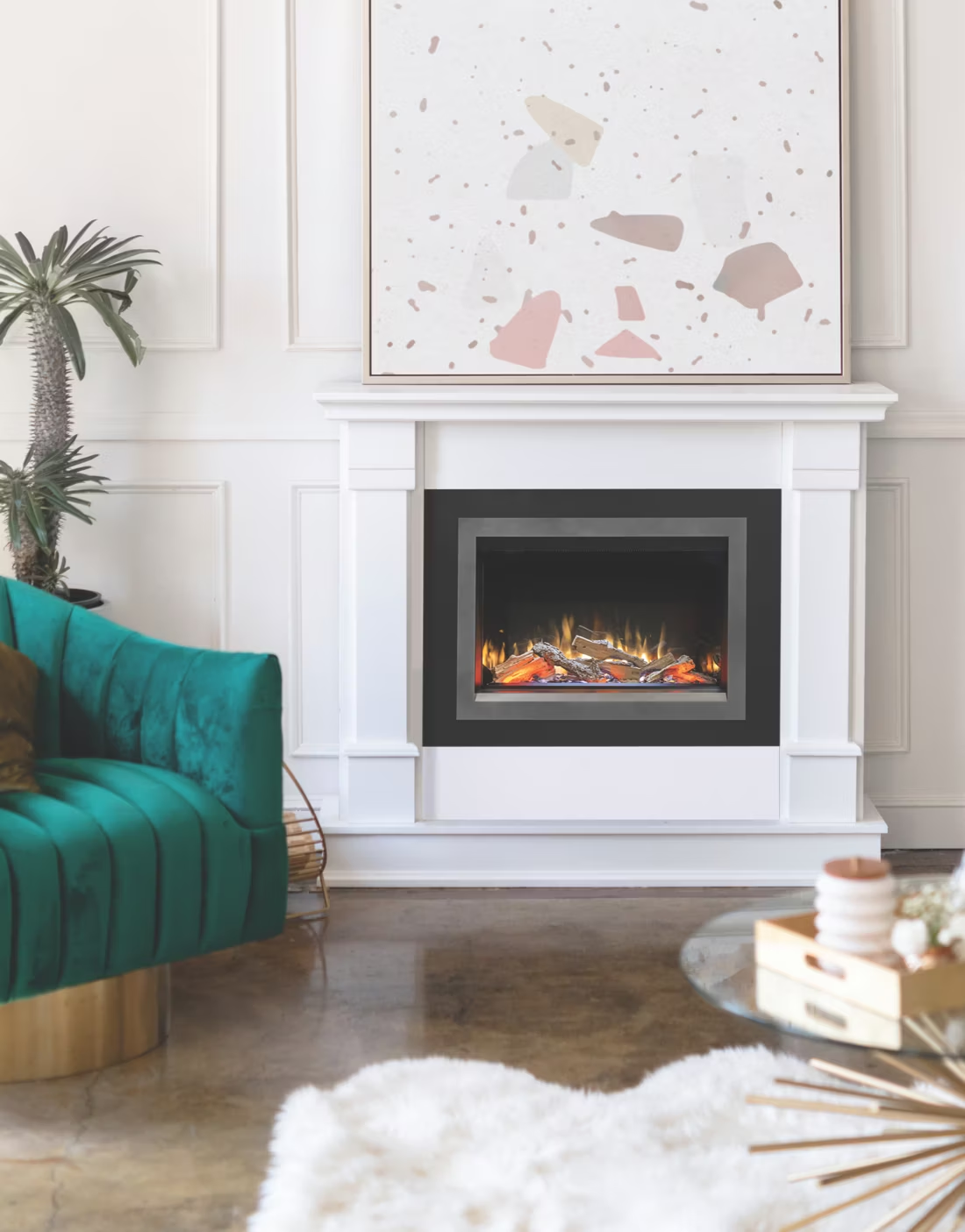
Three steps. No salesperson until you're ready.
Tell us about your project
Your postal code, your situation, and the fuel you're leaning toward—or let the answers point you to one.
See what's actually available
The brands dealers within 100 miles genuinely carry—real options, never a catalog mirage.
Get your dealer & Project Guide
A trusted local dealer, plus the free Project Guide & Parts List that names every component of the job.
Frequently Asked Questions
How much does an electric fireplace installation cost in North Oyster/Yellow Point?
Most installs run $500 to $1,600 CAD, and the spread comes down to whether you're plugging into an existing outlet or having an electrician run a new dedicated circuit for a built-in wall unit. A freestanding or mantel-style electric fireplace that uses a standard 120V outlet sits at the low end. A recessed, built-in insert framed into a wall—common in newer additions and renovated living rooms out this way—needs its own circuit and sometimes a small amount of framing work, which pushes the cost toward the top of that range.
Do I need a permit for an electric fireplace here?
It depends on the unit. A plug-in electric fireplace generally doesn't trigger a permit since it's no different from any other appliance on a household circuit. A built-in unit tied to a new dedicated circuit typically needs an electrical permit, and any structural framing changes go through the municipal building department covering your area. Unlike wood appliances, electric units aren't subject to CSA B365 installation code or WETT inspection requirements, which simplifies both the install and the insurance conversation.
Will my electric fireplace still work during a power outage?
No, and this is worth planning around given where you live. North Oyster and Yellow Point are rural enough that fall and winter windstorms off the Strait of Georgia regularly knock out BC Hydro service for hours, sometimes longer. An electric fireplace, however efficient, goes dark the moment the power does. That's why a lot of households in this area keep a wood stove or insert as backup heat—Douglas fir and paper birch are both readily available locally, and FrontCounter BC issues cutting permits year-round at no cost outside summer fire restrictions.
How much does it cost to run an electric fireplace day to day?
At the BC Hydro residential rate of roughly 11.4 cents per kilowatt-hour, a typical 1,500-watt electric fireplace running on its heater setting costs around 17 cents an hour, or a little under $2 for a full evening of use. Most units let you run the flame effect with the heater off, which draws only a fraction of that, so you can have ambiance most nights and reserve full heat output for the colder snaps that do occasionally reach this part of Vancouver Island.
What size electric fireplace do I need for a Yellow Point home?
Given the mild winter average here, most electric units are sized more for the room they're in than for whole-home heating. A compact model rated for 400 to 1,000 square feet comfortably supplements a living room or den. Larger rural properties with open-concept great rooms sometimes add a second unit in a bedroom wing rather than oversizing one fireplace, since electric units heat the room they're in and don't distribute warmth through ductwork the way a furnace or heat pump does.
Electric vs. gas—which makes more sense for my property?
Gas installs here run $6,000 to $15,000 CAD and need either a FortisBC (Gas) or Pacific Northern Gas line, or a propane tank if you're off the main. Electric installs run $500 to $1,600 and only need household wiring, which is why electric is the far more common choice for a secondary room or an ambiance-focused upgrade. Gas still wins where a household wants meaningful heat output that doesn't depend on grid power staying up—a real consideration here given how often windstorms interrupt BC Hydro service.
Why would someone here choose wood over electric?
Fuel cost and outage resilience are the two big reasons. A cutting permit through FrontCounter BC is free year-round outside summer fire restrictions, and Douglas fir, paper birch, lodgepole pine, and western larch are all common on Island properties, so a wood stove can heat a home for the price of splitting and hauling rounds. It also keeps working when the power doesn't, which matters on a peninsula that loses electricity during fall storms. The tradeoff is upfront cost—wood installs run $6,000 to $12,000 CAD—plus the CSA B365 code compliance and WETT inspection insurers typically ask for. Electric skips all of that but goes dark with the grid.
How much maintenance does an electric fireplace need?
Very little, which is part of the appeal for a lot of Yellow Point homeowners already managing a wood stove or a heat pump. There's no chimney, no venting, and no WETT inspection to schedule. Most upkeep is dusting the unit, occasionally cleaning the front glass or lens, and replacing an LED module every several years if the flame effect dims—a job most local dealers can quote in a few minutes rather than a full service call.
Are there rebates available for electric fireplaces or heating upgrades here?
Electric fireplaces themselves generally aren't rebate-eligible since they're a supplemental appliance rather than a home's primary heating system, but if you're weighing an electric fireplace alongside a broader heating upgrade, CleanBC and BC Hydro have offered incentives for heat pumps and electrification projects that a local contractor can check against your address. Worth asking your dealer whether any current program applies to your specific project when you're getting quotes.
How much does an electric fireplace cost to run?
With the heater on, a typical unit draws about 1,500 watts—at average electric rates that's roughly 20 cents an hour. Run the flame effect alone and it costs pennies; the flames are LED-driven and use about as much power as a light bulb. There's no pilot light, no fuel delivery, and essentially no maintenance.
What fireplace styles should I know before shopping?
Four cover most of the market: screen-front traditional (mesh front, open feel, fits craftsman homes), traditional door set (the classic look you grew up with), modern linear (wide, low, the statement piece for entertaining), and clean face contemporary (no trim—your tile or stone runs right to the fire's edge). Walk in knowing those four terms and you're ahead of most buyers.
Do electric fireplaces actually produce heat?
Yes—most put out around 4,800–5,000 BTUs from a standard outlet, which comfortably warms a bedroom, office, or den as a comfort-zone heater. What they won't do is carry a whole house the way wood, gas, or pellet can. Think of electric as ambiance-first with honest supplemental heat: flames on with no heat in July, flames plus warmth in January.
Does an electric fireplace need a vent or chimney?
No—that's its superpower. An electric fireplace needs a wall and an outlet, period. No vent pipe, no gas line, no clearances to design around, which is why it works in bedrooms, offices, apartments, and walls where venting a gas or wood unit would be impractical or impossible. Installation is typically the simplest and least expensive of any fireplace type.
Nearby Dealers
Hearth shops serving North Oyster/Yellow Point and the surrounding area. Every listing shows whether it is a WhyFire partner, a dealer we have verified as authorized for the brands we recommend, or a local business carrying hearth products. No manufacturer pays for placement. How we verify dealers →
Delco Fireplaces (Vancouver Island) Ltd
Island Woodheat
Electric Service in North Oyster/Yellow Point
An electric fireplace's heater draws about 1,500 watts—pennies per hour at local rates.
Bc Hydro
FortisBC (Electric)
Get your free Project Guide & Parts List for a North Oyster/Yellow Point electric fireplace.
Tell me about your home, whether you're on BC Hydro or FortisBC, and how you'd like to use the room, and I'll match you with a trusted local dealer and send a free Project Guide & Parts List with the exact unit, circuit needs, and parts your project calls for.
Find Your Fireplace →