
Zone heat that matches the Cowichan Valley's mild winters.
With winter lows averaging around 2°C, the Cowichan Valley almost never asks a heating appliance to fight off a hard freeze the way an interior BC or prairie town does. That makes a well-placed electric fireplace a legitimate way to heat the rooms you actually live in. I'll match you with a trusted local dealer who can size the unit and the circuit correctly, from Duncan to Ladysmith to Lake Cowichan.
Every Project Starts From One of These Five Situations
The mildest heating season in Canada, real heat where you need it.
The Cowichan Valley Regional District runs from the Malahat down through Shawnigan Lake, Mill Bay, and Cobble Hill, across Duncan and North Cowichan, out to Ladysmith and Chemainus, and up to Lake Cowichan and the smaller communities along Cowichan Lake. It sits in climate zone 4C, a marine climate that gives the region some of the gentlest winters anywhere in the country—an average winter low near 2°C, compared to the minus 25°C or colder that a place like Prince George or Fort McMurray deals with most of the season. That difference matters for fuel choice. A home here doesn't need a stove capable of holding a fire through a minus 30°C night; it needs consistent, controllable heat for the rooms in daily use, and a properly sized electric fireplace or insert can genuinely carry that load rather than just supply ambiance.
Plenty of Cowichan Valley homes still burn Douglas fir, western larch, or paper birch, and FortisBC natural gas service reaches much of Duncan and North Cowichan, so electric isn't the only option on the table. But it's become the practical choice for secondary suites, additions, condos along Trunk Road, and cottages around Cowichan Lake, especially where the region's wood-stove exchange programs and CSA-certified appliance rules make a combustion install more involved than a homeowner wants. Electric skips the WETT inspection, the CSA B365 install code, and the chimney altogether—a BC Hydro-fed unit and a properly sized circuit are the main requirements, which is a big part of why it shows up so often in renovations and rental units across the region.
Three steps. No salesperson until you're ready.
Tell us about your project
Your postal code, your situation, and the fuel you're leaning toward—or let the answers point you to one.
See what's actually available
The brands dealers within 100 miles genuinely carry—real options, never a catalog mirage.
Get your dealer & Project Guide
A trusted local dealer, plus the free Project Guide & Parts List that names every component of the job.
Frequently Asked Questions
How much does an electric fireplace installation cost in the Cowichan Valley?
Most installations across the region run $500 to $1,600 CAD. A plug-in insert or wall-mount unit dropped into an existing opening in a Duncan or Chemainus home sits at the low end, since it just needs a standard outlet. A hardwired built-in linear unit set into new framing, with a dedicated 240-volt circuit run by a licensed electrician, lands toward the top of that range. Homes further out toward Youbou or Honeymoon Bay may see a small travel charge if the installer is coming from Duncan or Ladysmith.
Do I need a permit for an electric fireplace in the Cowichan Valley?
Usually just an electrical permit through your municipal building department—Duncan, North Cowichan, and Ladysmith each handle their own, and electoral areas within the regional district route through the same provincial electrical inspection process. Because there's no combustion involved, you skip the CSA B365 wood-appliance code and the WETT inspection that insurers often ask for on a wood stove. A licensed electrician typically pulls the permit as part of running the new circuit, so most homeowners never deal with the paperwork directly.
Is electric really enough heat for a Cowichan Valley winter, or is it just for looks?
For the room it's installed in, a properly sized electric fireplace can genuinely function as the primary heat source here, which isn't true in most of Canada. With winter lows averaging around 2°C rather than deep sub-freezing cold, a 1,500-watt unit can comfortably hold a living room or bedroom through even the coldest snap the region sees. Where it falls short is whole-home heating during a hard cold snap or a multi-day outage, so most homeowners pair it with a furnace, heat pump, or a wood stove elsewhere in the house for backup.
What size electric fireplace do I need?
Most models sold locally are rated for roughly 400 to 1,000 square feet on their electric heater setting, which covers a typical Cowichan Valley living room or bedroom addition without issue. Larger open-concept spaces in newer North Cowichan or Ladysmith builds sometimes call for two smaller units or a heat-pump-based supplemental system instead of one oversized fireplace. A local dealer will look at your room's layout, ceiling height, and window exposure rather than sizing off square footage alone.
What brands are available through Cowichan Valley dealers?
Dimplex, Napoleon, and Amantii show up most often in showrooms from Duncan to Ladysmith, covering everything from simple insert-style units to full linear built-ins for a feature wall. Because Find My Fireplace doesn't take manufacturer money to steer you toward a particular line, the recommendation you get is based on what a local, manufacturer-authorized dealer actually stocks and can service, not on who paid for placement.
What happens to my electric fireplace during a power outage?
It goes dark, full stop—unlike a wood stove or many gas units, an electric fireplace has no function without grid power. That matters on Vancouver Island, where winter windstorms regularly knock out BC Hydro service along the Malahat and around Shawnigan Lake and Cowichan Lake, sometimes for a day or more. If backup heat during an outage is a real concern for your household, most local dealers will recommend keeping or adding a wood stove or a battery-backed gas unit in at least one room alongside the electric fireplace.
How much maintenance does an electric fireplace need?
Very little compared to a combustion appliance. There's no annual chimney sweep, no WETT inspection, and no venting to check. Plan on wiping down the glass, vacuuming the vent grille to keep dust out of the fan, and occasionally checking the connections on a hardwired unit. That low-maintenance profile is a big reason electric shows up so often in rental suites and vacation cottages around Cowichan Lake, where nobody is around to keep up with a wood-burning schedule.
Insert, wall-mount, or built-in linear—which fits my home?
An insert works best if you're replacing an old wood-burning firebox in an existing Duncan-area home and want to keep the surround. A wall-mount unit suits a condo or secondary suite where there's no existing opening and simplicity matters. A built-in linear fireplace, framed into a wall during a renovation or addition, gives the cleanest look for a new feature wall in a North Cowichan or Ladysmith build. A local dealer will walk the space and tell you which configuration actually works with your framing and circuit access.
Are there rebates for an energy-efficient electric fireplace here?
BC Hydro periodically runs conservation incentives tied to CleanBC programs that can apply to efficient electric heating equipment, and eligibility changes from year to year, so it's worth asking your local dealer what's currently active before you buy. Separately, some homeowners switching away from an older, uncertified wood stove find that pairing the removal with a new electric unit in the same room qualifies them for a regional exchange incentive—a detail worth raising with your dealer during the quote.
How much does an electric fireplace cost to run?
With the heater on, a typical unit draws about 1,500 watts—at average electric rates that's roughly 20 cents an hour. Run the flame effect alone and it costs pennies; the flames are LED-driven and use about as much power as a light bulb. There's no pilot light, no fuel delivery, and essentially no maintenance.
What fireplace styles should I know before shopping?
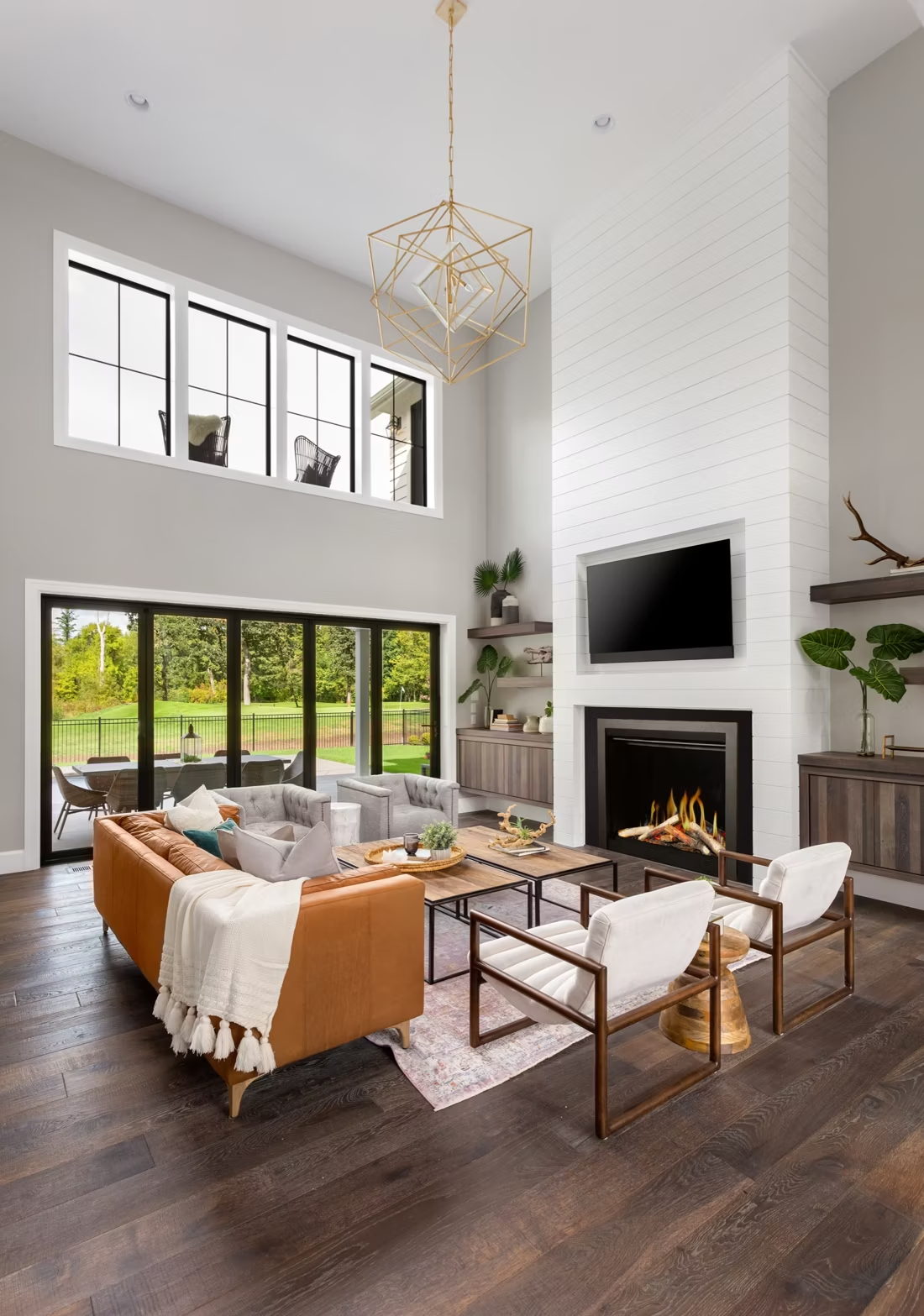
Four cover most of the market: screen-front traditional (mesh front, open feel, fits craftsman homes), traditional door set (the classic look you grew up with), modern linear (wide, low, the statement piece for entertaining), and clean face contemporary (no trim—your tile or stone runs right to the fire's edge). Walk in knowing those four terms and you're ahead of most buyers.
Does an electric fireplace need a vent or chimney?
No—that's its superpower. An electric fireplace needs a wall and an outlet, period. No vent pipe, no gas line, no clearances to design around, which is why it works in bedrooms, offices, apartments, and walls where venting a gas or wood unit would be impractical or impossible. Installation is typically the simplest and least expensive of any fireplace type.
Can I put a TV above my fireplace?
Yes—with an asterisk. Fireplaces are hot and TVs don't like heat. Either put a mantel between them to deflect rising warmth, or choose a fireplace with heat-management technology that creates a cool zone on the wall above—the wall stays around 125 degrees, barely warm, while the room still gets full heat. If you like clean lines and don't want a mantel, heat management is the answer.
Stove and Fireplace Dealers in Cowichan Valley
Listings include WhyFire partner dealers, dealers we have verified as authorized for the brands we recommend, and established local businesses that carry hearth products. Every listing shows which one it is. The ones marked Preferred run on WhyFire's software, so they can show you real pricing and book your appointment right here. No manufacturer pays for placement. How we verify dealers →
Island Woodheat
Electric Service in Cowichan Valley
An electric fireplace's heater draws about 1,500 watts—pennies per hour at local rates.
Bc Hydro
FortisBC (Electric)
Get your free Cowichan Valley electric fireplace Project Guide & Parts List.
Tell me about your home, your postal code, and the room you're heating, and I'll match you with a trusted local Cowichan Valley dealer and send over a free Project Guide & Parts List—the exact unit, circuit requirements, and recommended installer for your electric fireplace project, no big-box guesswork.
Find Your Fireplace →