
Consistent heat for the North Coast's long, wet winters.
Across Prince Rupert, Port Edward, and the smaller communities strung along the North Coast, a pellet stove or insert delivers steady, thermostat-set heat through a mild but relentlessly damp and windy winter. I match homeowners with a trusted local dealer who knows what actually ships reliably into a coastal community this remote, and hands you a plan before you buy anything.
Every Project Starts From One of These Five Situations
A marine climate that rewards consistency over brute force.
The North Coast regional district runs along BC's Pacific edge from Prince Rupert and Port Edward out toward Kitkatla, Hartley Bay, and Lax Kw'alaams, with roughly 14,700 residents spread across a landscape defined more by rain, wind, and tide than by deep cold. Winters here average around -0.8°C at the low end, mild compared with interior BC towns like Prince George, let alone the prairies, but the climate zone 5C designation reflects a different kind of heating demand: long stretches of damp, grey, windy days that keep a heating appliance running for months even though the thermometer rarely drops far below freezing. A pellet stove's automated feed and thermostat control suit that pattern well, holding a steady output through weeks of overcast weather without anyone splitting or stacking wood on a rain-soaked deck.
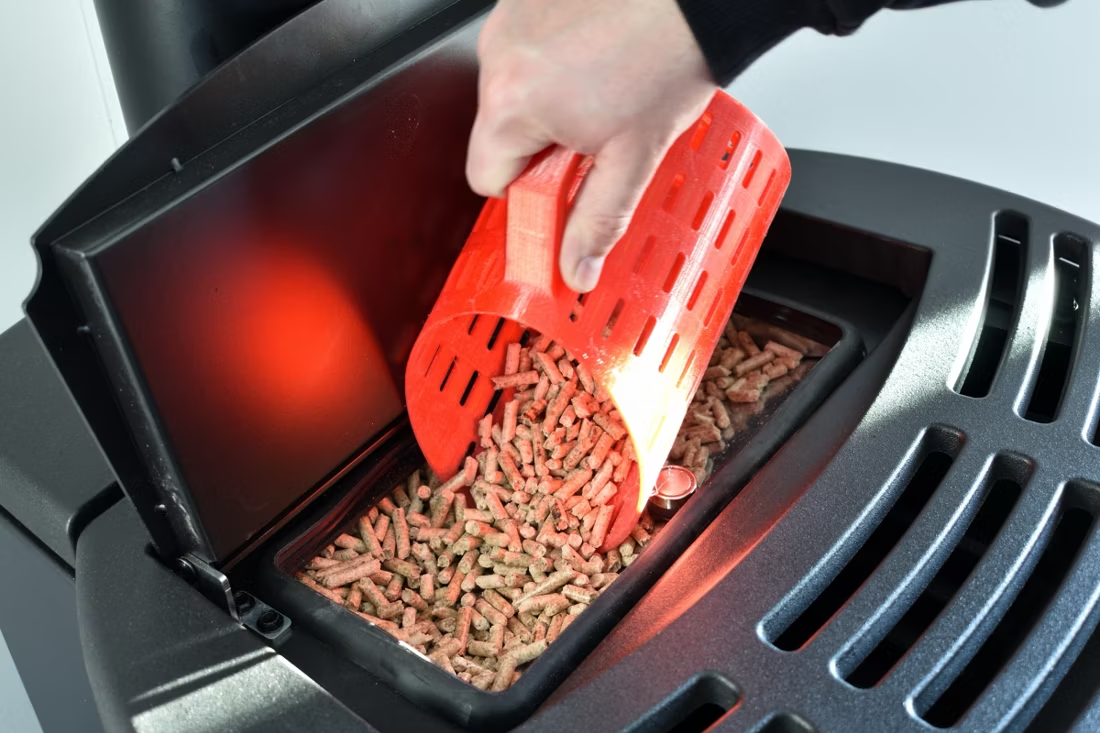
Local wood species, Douglas fir, paper birch, lodgepole pine, and western larch, are all workable in a wood stove, and FrontCounter BC and the BC Ministry of Forests issue free personal-use cutting permits year-round, with restrictions only during summer fire season, but pellet heat sidesteps the cutting, hauling, and drying altogether. Pinnacle Premium and Princeton Fuel Pellets are the two brands North Coast dealers stock most consistently, running $400-$575 per ton depending on how far a shipment has to travel up the coast. The tradeoff worth knowing before you buy: pellet stoves need continuous electricity to run the auger and blower, so a storm-related outage—not unusual on this stretch of coast—will stop the stove unless it's paired with a battery backup or generator, something a local dealer can spec into the project.
Three steps. No salesperson until you're ready.
Tell us about your project
Your postal code, your situation, and the fuel you're leaning toward—or let the answers point you to one.
See what's actually available
The brands dealers within 100 miles genuinely carry—real options, never a catalog mirage.
Get your dealer & Project Guide
A trusted local dealer, plus the free Project Guide & Parts List that names every component of the job.
Frequently Asked Questions
How much does a pellet stove installation cost on the North Coast?
Installed pellet stove and insert projects across the region typically run $6,000 to $10,000 CAD. That range covers the appliance, venting, and a hearth pad meeting code clearances, and it climbs toward the top end for a full insert conversion with a stainless liner run up an existing masonry chimney, or for homes in Kitkatla, Hartley Bay, or other fly-in and boat-access communities where freight adds real cost to both the appliance and the installer's time. Prince Rupert and Port Edward, with year-round road and ferry access, tend to land toward the lower half of that range.
Where do I buy pellets on the North Coast, and how should I store them?
Pinnacle Premium and Princeton Fuel Pellets are the two brands most consistently available through North Coast dealers and hardware suppliers, running roughly $400 to $575 per ton depending on freight from the mill. Because this stretch of coast sees persistent rain and high humidity, storage matters more here than it does inland. Bags left in a damp garage or uncovered shed will absorb moisture, swell, and jam an auger fast. Plan on a dry, ventilated indoor storage spot, and buy a season's supply early rather than relying on frequent small deliveries once fall storms start disrupting shipping schedules.
Do I need a permit or inspection for a pellet stove installation?
Yes. Installations go through your municipal building department and must meet the CSA B365 installation code, the same standard that applies to wood appliances. Most local dealers pull this permit as part of the job. Separately, ask your home insurer whether they require a WETT inspection. Many BC insurers still ask for one on any solid-fuel appliance, including pellet stoves, even though WETT-certified technicians are trained primarily on wood systems. Getting that inspection lined up at the time of the project, rather than after a claim, is the easier path.
What size pellet stove do I need for a North Coast home?
Sizing here comes down more to square footage and how leaky an older Prince Rupert or Port Edward home is than to extreme cold, since winter lows average only around -0.8°C. A stove rated for 1,200-1,800 square feet handles most single-family homes as a primary heat source; open-concept living areas or older homes with less insulation often do better sized up a step so the auger isn't running at maximum feed rate through every damp, windy stretch. A dealer who visits the home can also account for how exposed the site is to coastal wind, which pulls heat out of a house faster than a sheltered inland lot would.
Pellet stove or wood stove, which makes more sense on the North Coast?
Both are standard, workable choices here. Wood has a real cost advantage if you're willing to cut your own. FrontCounter BC and the BC Ministry of Forests issue free personal-use permits year-round, with restrictions only during summer fire season, and Douglas fir, paper birch, lodgepole pine, and western larch are all locally available species. Wood also keeps working through a power outage, which matters on a coastline that loses power to winter storms most years. Pellet stoves trade that off for convenience: no splitting, no seasoning wood for a year before burning, and a consistent, thermostat-held output that suits the region's long grey stretches. Many North Coast households end up with a wood stove for backup and resilience and a pellet insert or stove for daily, low-effort heat.
Pellet stove or natural gas fireplace, how do I choose?
Natural gas is available across serviced parts of the region, and a gas fireplace project typically runs $6,000 to $15,000 CAD versus $6,000 to $10,000 for pellet. Gas wins on outage resilience if you choose a unit with battery-backed ignition, since it needs no electricity to run the burner itself; pellet stoves need continuous power for the auger and blower, so they go cold in a storm outage unless backed up. Where gas usually loses is the tactile, visible flame many North Coast homeowners still want from a stove. Pellet appliances give you that flame view along with automated, set-and-forget operation that a lot of gas inserts don't match as closely.
How often does a pellet stove need maintenance?
Plan on a full annual service before the heating season starts, plus regular ash removal from the burn pot every few days to weekly depending on use. Given the North Coast's damp climate, keep an eye on the venting and outdoor cap for moisture intrusion or salt-air corrosion if the home sits close to the water in Prince Rupert or along the harbour front. Coastal air is harder on exterior venting components than an inland install would see, so ask your dealer to spec venting rated for that exposure.
Are there rebates available for a pellet stove upgrade on the North Coast?
CleanBC and several BC utilities offer periodic rebates for replacing an older, uncertified wood or oil appliance with a cleaner-burning unit, and pellet stoves generally qualify since they're inherently low-emission compared with older wood stoves. Several regional districts in the province also run wood-stove exchange programs that include pellet appliances as an eligible upgrade option. Programs and amounts change year to year, so ask your local dealer what's currently active before finalizing a model; it can shift the math between a mid-range and a higher-efficiency unit.
Is pellet fuel reliably available in smaller North Coast communities?
In Prince Rupert and Port Edward, dealers keep Pinnacle Premium and Princeton Fuel Pellets in regular stock. In smaller, boat- or fly-in-access communities like Kitkatla or Hartley Bay, supply depends on barge and freight schedules, which can tighten in late fall and winter storm season. Homeowners in those communities typically order a full season's pellets in late summer or early fall rather than restocking through winter, and a local dealer can help plan quantity based on your stove's rated consumption and how much dry storage space you have.
Why do fireplace quotes vary so much?
Because a fireplace is an iceberg—there's more behind the wall than in front of it. A low quote often covers only the unit; the full scope includes vent pipe, gas line or electrical, framing, and the tile or stone that has to come off and go back on. Make every bidder price the whole job. If a dealer can't speak to the full scope with confidence, that's your signal to keep looking.
Is it worth replacing an old fireplace that still sort of works?
Ask three questions: Is it ugly? Is it drafty? Does it actually work? Most old fireplaces fail at least two. Beyond looks, an old unit leaks air around the damper year-round and—if it's gas with a standing pilot—quietly burns a couple hundred dollars a year. A modern replacement seals the wall, heats the room, and changes how the whole space gets used.
What do I measure to size a fireplace insert?
Four numbers tell you what fits: the front width, the front height, the back width, and the overall depth of your existing fireplace opening. Grab a tape measure, jot those down, and snap a photo of the wall—those two things do more to move your project forward than anything else you can do today.
Are pellet stoves loud?
They make some noise—there are two fans running plus an auger motor that turns as it feeds pellets. But there's a real range: premium models are engineered quiet, and the best offer a whisper-quiet mode you can comfortably watch TV next to. If noise matters in your room, ask to hear a stove running before you buy—it's a five-minute test that saves years of annoyance.
Stove and Fireplace Dealers in North Coast
Listings include WhyFire partner dealers, dealers we have verified as authorized for the brands we recommend, and established local businesses that carry hearth products. Every listing shows which one it is. The ones marked Preferred run on WhyFire's software, so they can show you real pricing and book your appointment right here. No manufacturer pays for placement. How we verify dealers →
Tyee Building Supplies Ltd
Aqua Plumbing & Heating Ltd.
Bernie's Sales
Pellet Brands Stocked Around North Coast
Typical price runs $400-$575 per ton—buy early-season for the best rates. Manufacturers will point you to the nearest stocking dealer.
Pinnacle Premium
Princeton Fuel Pellets
Get your free Project Guide & Parts List for a pellet stove on the North Coast.
Tell me about your home, your community, and how you plan to use the stove, and I'll match you with a trusted local North Coast dealer and send a free Project Guide & Parts List—the exact parts, including the vent kit, for your pellet project.
Find Your Fireplace →