
Instant warmth for a coastline that rarely freezes hard.
Nanoose Bay sits on Vancouver Island's east coast with an average winter low of just -0.4°C. At BC Hydro's residential rate of about 11.4 cents per kilowatt-hour, an electric fireplace adds real ambience and zone heat without a chimney or vent kit. I'll match you with a trusted local dealer who knows what's installable in your home.
Every Project Starts From One of These Five Situations
Zone heat sized for a mild marine winter.
Nanoose Bay, part of the Regional District of Nanaimo, sits at just 44 metres elevation on the sheltered east side of Vancouver Island. Winters here average a low of -0.4°C—a fraction of what places like Prince George or Winnipeg see through a normal January—and the heating season is comparatively short and mild. That climate reality changes the math on fireplace choice: a household here rarely needs a stove engineered to hold a fire through a -30°C night. What most homeowners actually want is supplemental warmth and ambience in a specific room, which is exactly what an electric fireplace is built for.
BC Hydro and FortisBC (Electric) both serve the area, and at roughly 11.4 cents per kilowatt-hour, running a 1,500-watt electric insert or wall-mount unit for an evening costs pennies. Installed electric fireplaces here typically run $500 to $1,600 CAD, well under the $6,000-plus most wood, gas, or pellet installs require, since there's no chimney, no gas line, and often no permit beyond a simple electrical hookup for a built-in unit. Wood is still common in Nanoose Bay—Douglas fir, paper birch, lodgepole pine, and western larch are the species most local burners split, and cutting permits through FrontCounter BC are free—but for a sunroom, bedroom, or a strata unit where venting isn't practical, electric is often the more sensible fit.
Three steps. No salesperson until you're ready.
Tell us about your project
Your postal code, your situation, and the fuel you're leaning toward—or let the answers point you to one.
See what's actually available
The brands dealers within 100 miles genuinely carry—real options, never a catalog mirage.
Get your dealer & Project Guide
A trusted local dealer, plus the free Project Guide & Parts List that names every component of the job.
Frequently Asked Questions
How much does an electric fireplace installation cost in Nanoose Bay?
Most installs land between $500 and $1,600 CAD. A plug-in insert or freestanding unit that just needs a standard outlet sits at the low end—you can often set one up yourself. A built-in wall unit or a linear fireplace framed into new construction, which needs a dedicated 240-volt circuit run by a licensed electrician, pushes toward the top of that range. Either way, it's a fraction of the $6,000-plus most wood or gas installs run here, since there's no chimney, gas line, or venting involved.
Do I need a permit to install an electric fireplace in Nanoose Bay?
Usually not for a plug-in insert or freestanding unit—it's treated like any other appliance. A built-in unit wired to a dedicated circuit typically needs an electrical permit, and since Nanoose Bay is unincorporated, that goes through the Regional District of Nanaimo's building department rather than a city hall. What you won't need is a WETT inspection or CSA B365 sign-off—those apply to wood-burning appliances, not electric, which is one less hoop for anyone converting an old wood-burning setup.
Will an electric fireplace actually heat a room in Nanoose Bay, or is it just for looks?
Most units sold for BC homes put out real supplemental heat—typically 4,000 to 5,000 BTU, enough to comfortably warm a bedroom, den, or sunroom. Given that Nanoose Bay's average winter low sits at just -0.4°C, that's usually enough for a single room without leaning on the furnace or heat pump. What it won't do is heat a whole house through a cold snap the way a wood stove or gas insert is designed to—it's a zone-heating tool, not a primary system, which fits how a lot of Vancouver Island homes already run their heat pumps as the main source.
Electric vs. gas vs. wood—what makes the most sense for a Nanoose Bay home?
Gas is well-supported here through FortisBC's network and typically runs $6,000-$15,000 CAD installed, with the benefit of higher heat output and instant-on convenience. Wood, often Douglas fir or western larch cut under a free FrontCounter BC permit, costs $6,000-$12,000 installed but requires a WETT inspection for insurance and a chimney to maintain. Electric is the outlier at $500-$1,600 CAD, with no venting and no permit beyond a possible electrical hookup—the tradeoff is lower heat output, which is a fair trade in a climate that rarely demands sustained high-BTU heat.
What types of electric fireplaces should I consider for my home?
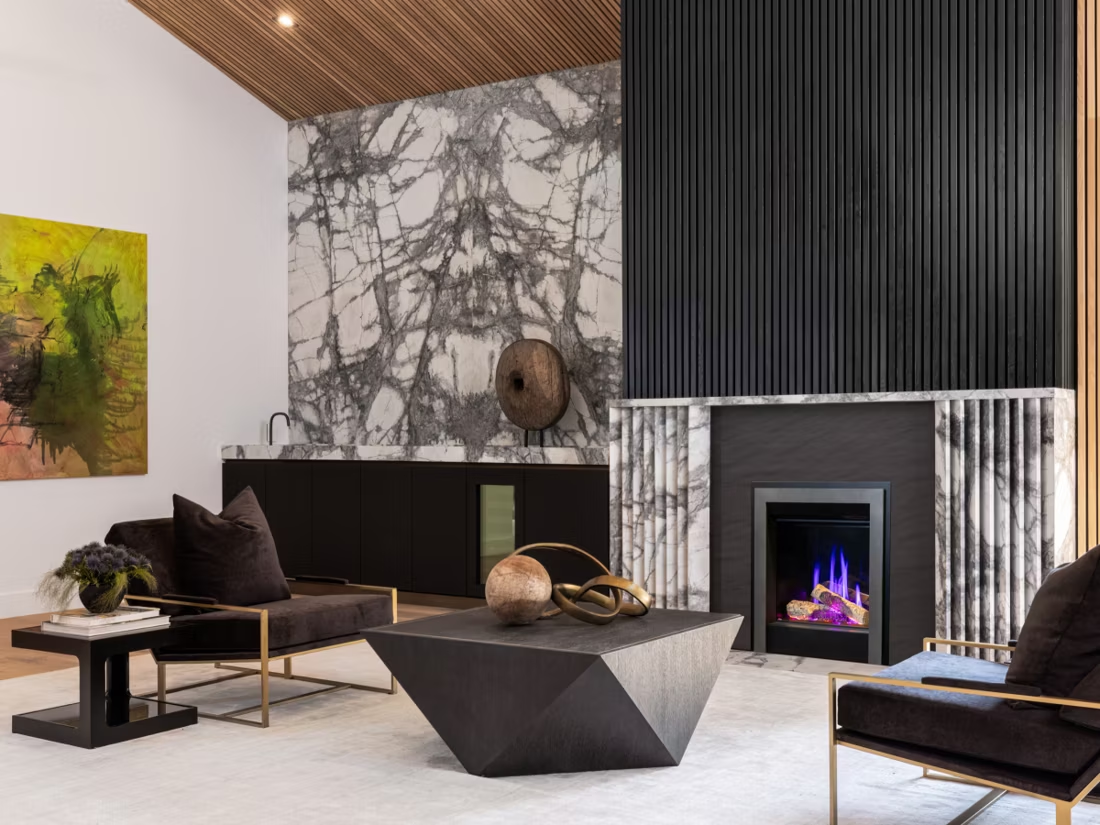
The three common formats are inserts that slot into an existing masonry firebox (a popular upgrade for older Nanoose Bay homes that inherited a wood fireplace they no longer use), wall-mounted linear units that hang like a flat-screen and suit newer builds and waterfront homes with a view-focused living room, and freestanding stove-styled units that mimic a wood stove's look without any venting. A local dealer can walk you through which format fits your wall structure and whether you need an electrician for the circuit.
How much does it actually cost to run an electric fireplace with BC Hydro rates?
At BC Hydro's residential rate of about 11.4 cents per kilowatt-hour, a typical 1,500-watt electric fireplace costs roughly 17 cents an hour to run on full heat, and less on ambience-only or lower settings. Leaving one on for a full evening—say four hours—costs well under a dollar. That's part of why electric has become a go-to for supplemental heat in Nanoose Bay: it's cheap enough to run daily in a favorite room without meaningfully moving the needle on a monthly bill.
Are there rebates available for electric fireplaces or heat pumps in Nanoose Bay?
CleanBC and BC Hydro periodically run rebate programs aimed at electrification and heat pumps rather than fireplaces specifically, so an electric fireplace on its own usually isn't rebate-eligible. Where it pays off is pairing one with a heat pump you already have or are installing—the fireplace handles the ambience and quick zone heat in one room while the heat pump, which may qualify for a current rebate, covers the rest of the house. A local dealer can point you to whatever programs FortisBC or BC Hydro are running this season.
Can I install an electric fireplace in a strata unit or rental in Nanoose Bay?
Yes, and it's one of the more common reasons homeowners choose electric here. Because there's no venting, no chimney, and no gas line, most strata bylaws and rental agreements that restrict wood or gas appliances don't apply to a plug-in or hardwired electric unit. That makes it a practical option for the townhome and strata developments that have grown around Nanoose Bay in recent years, where a resident wants the look and warmth of a fireplace without touching the building's exterior or venting.
How much maintenance does an electric fireplace need?
Very little compared to wood or gas. There's no chimney to sweep, no WETT inspection to schedule, and no burner or pilot assembly to service. Most upkeep is just dusting the unit and occasionally replacing an LED module or heating element after years of daily use—a call to your dealer, not an annual appointment. For homeowners in Nanoose Bay who want fireplace ambience without adding another appliance to maintain each fall before burning season, that's a real part of the appeal.
How much does an electric fireplace cost to run?
With the heater on, a typical unit draws about 1,500 watts—at average electric rates that's roughly 20 cents an hour. Run the flame effect alone and it costs pennies; the flames are LED-driven and use about as much power as a light bulb. There's no pilot light, no fuel delivery, and essentially no maintenance.
What fireplace styles should I know before shopping?
Four cover most of the market: screen-front traditional (mesh front, open feel, fits craftsman homes), traditional door set (the classic look you grew up with), modern linear (wide, low, the statement piece for entertaining), and clean face contemporary (no trim—your tile or stone runs right to the fire's edge). Walk in knowing those four terms and you're ahead of most buyers.
Do electric fireplaces actually produce heat?
Yes—most put out around 4,800–5,000 BTUs from a standard outlet, which comfortably warms a bedroom, office, or den as a comfort-zone heater. What they won't do is carry a whole house the way wood, gas, or pellet can. Think of electric as ambiance-first with honest supplemental heat: flames on with no heat in July, flames plus warmth in January.
Does an electric fireplace need a vent or chimney?
No—that's its superpower. An electric fireplace needs a wall and an outlet, period. No vent pipe, no gas line, no clearances to design around, which is why it works in bedrooms, offices, apartments, and walls where venting a gas or wood unit would be impractical or impossible. Installation is typically the simplest and least expensive of any fireplace type.
Nearby Dealers
Hearth shops serving Nanoose Bay and the surrounding area. Every listing shows whether it is a WhyFire partner, a dealer we have verified as authorized for the brands we recommend, or a local business carrying hearth products. No manufacturer pays for placement. How we verify dealers →
Delco Fireplaces (Vancouver Island) Ltd
Hornby Island Co-Op
Electric Service in Nanoose Bay
An electric fireplace's heater draws about 1,500 watts—pennies per hour at local rates.
Bc Hydro
FortisBC (Electric)
Get your free Project Guide & Parts List for a Nanoose Bay electric fireplace.
Tell me about your home and which room you want to warm up, and I'll match you with a trusted local dealer and send a free Project Guide & Parts List—sized to your space, with the right unit and circuit requirements spelled out before you buy.
Find Your Fireplace →