
Steady heat for a steep, storm-prone stretch of Howe Sound.
Lions Bay's winters are mild on paper, with an average low around -0.1°C, but the windstorms that roll up Howe Sound knock out power along this cliffside stretch of the Sea-to-Sky corridor more often than the temperature would suggest. I'll match you with a trusted local dealer who knows how to fit a pellet system into a steep lot and send you a free plan for the project.
Every Project Starts From One of These Five Situations
Clean, controllable heat on a mountainside with little room to spare.
Perched on the slopes above Howe Sound between West Vancouver and Squamish, Lions Bay doesn't see the long deep freezes that homes in Prince George or Winnipeg plan around. The average winter low sits near -0.1°C, and the heating season here is real but comparatively short. What Lions Bay does deal with is wet, windy weather off the Sound, and the kind of storms that bring down trees on the single narrow highway and power lines serving the village. That combination of mild temperatures and a genuine outage risk shapes what makes sense to install here.
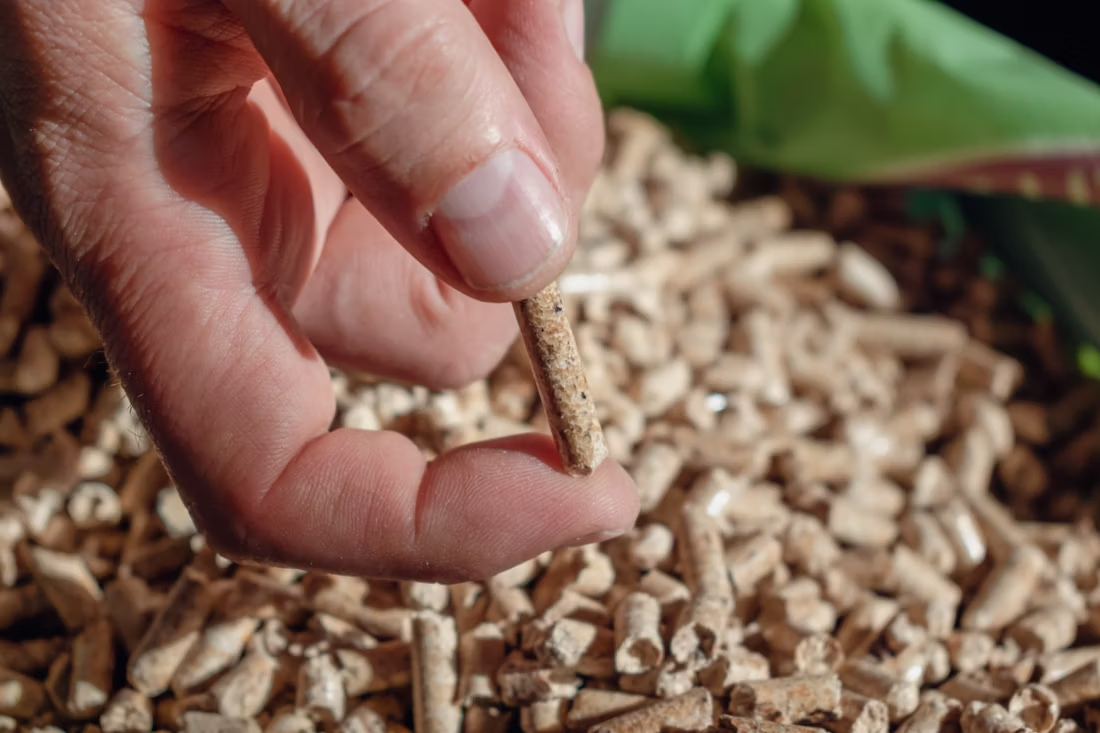
Pellet appliances suit a lot of Lions Bay homes because they burn cleanly, hold a steady temperature without tending, and need far less storage than a wood supply on a steep, narrow lot where flat ground is scarce. Fuel comes from BC interior producers like Pinnacle Premium and Princeton Fuel Pellets, trucked down the corridor and running roughly $400-$575 a ton. The tradeoff is that a pellet stove's auger and blower run on electricity, so on a corridor where BC Hydro outages happen, it's worth planning for a battery backup option with your dealer. Any install still needs a permit through the municipal building department, follows the CSA B365 installation code, and typically wants a WETT inspection on file for insurance, same as a wood appliance.
Three steps. No salesperson until you're ready.
Tell us about your project
Your postal code, your situation, and the fuel you're leaning toward—or let the answers point you to one.
See what's actually available
The brands dealers within 100 miles genuinely carry—real options, never a catalog mirage.
Get your dealer & Project Guide
A trusted local dealer, plus the free Project Guide & Parts List that names every component of the job.
Frequently Asked Questions
How much does a pellet stove installation cost in Lions Bay?
Most pellet installs here run $6,000 to $10,000 CAD. Where you land in that range often comes down to access as much as the equipment: Lions Bay's switchback driveways and split-level lots can add labour and trucking time that a flat-lot install in a bigger town wouldn't need. An insert going into an existing masonry opening tends to land at the lower end; a freestanding unit needing new venting through an exterior wall or roof, common in some of the newer homes higher up the slope, runs closer to the top.
Do I need a permit to install a pellet stove in Lions Bay?
Yes. The municipal building department handles permitting for Lions Bay, and the installation has to follow the CSA B365 code regardless of whether the unit is wood or pellet-fired. Most insurers also ask for a WETT inspection on file before they'll cover a solid-fuel appliance, pellet stoves included, so budget a bit of extra time for that step. A local dealer who installs regularly in the village should already have both the permit paperwork and the WETT inspector relationship sorted.
Will a pellet stove still work if the power goes out?
Not without help. The auger that feeds pellets and the blower that pushes heat into the room both run on electricity, and Howe Sound windstorms are a known cause of outages along this section of the corridor when trees come down on the lines. Some pellet models accept a small battery backup that keeps the unit running through a multi-hour outage; longer outages generally need a generator. If outage resilience without any backup gear matters more to you than pellet's convenience, it's worth discussing a wood appliance instead with your dealer, since wood needs no power at all.
Where do the pellets actually come from, and where do I store them?
Most pellets burned in Lions Bay come from BC interior producers, Pinnacle Premium and Princeton Fuel Pellets among them, trucked down the Sea-to-Sky Highway and typically priced around $400-$575 a ton. Storage is the real planning question on a lot like this: with narrow, sloped properties and limited flat ground, most homes here keep pellets in a garage corner or a dry crawlspace rather than a dedicated shed. A dealer sizing your stove can also help estimate how many bags you'll realistically need on hand through the season.
What size pellet stove do I need for a Lions Bay home?
With an average winter low around -0.1°C, Lions Bay's heating season is milder than most of BC's interior, so a lot of homes here do fine with a small to mid-size pellet stove rather than a unit built for extended deep cold. The bigger sizing factor is usually the home itself: older cabins along the waterfront with less insulation may want more output than a newer, tightly built home higher on the slope. Your dealer will size against your actual square footage and insulation rather than the outdoor temperature alone.
Pellet or gas—which makes more sense in Lions Bay?
Both are workable here since FortisBC's gas network reaches the corridor. Gas installs run $6,000 to $15,000 CAD and give you instant, thermostatically controlled heat with no fuel deliveries or storage to manage, and select models with battery-based ignition keep working in an outage. Pellet installs are typically less expensive to put in, at $6,000 to $10,000, and burn a renewable, locally trucked fuel, but the stove itself needs continuous power to run. If outage resilience is the deciding factor, ask your dealer about gas units with battery ignition; if fuel cost and a cleaner-burning appliance matter more, pellet is the better fit.
Pellet vs. wood—which is the better fit for a steep Lions Bay lot?
Wood is genuinely popular in this part of BC, and Douglas fir, paper birch, lodgepole pine, and western larch are all common regional species, but a full cord or two of split wood takes real flat storage space that a lot of Lions Bay properties simply don't have. Pellet stoves need only a fraction of that footprint, burn more consistently without tending, and are easier to keep compliant with the CSA/EPA-certification expectations tied to winter air quality advisories in the wider region. Wood still wins if you want zero dependence on the power grid; pellet wins on space and daily convenience.
Should I get a pellet insert or a freestanding pellet stove?
A pellet insert slides into an existing masonry firebox and reuses the chimney chase, which suits the handful of older Lions Bay homes built with a conventional wood fireplace. A freestanding pellet stove sits on a hearth pad and vents through a new wall or roof penetration, which is more often the route for newer homes on the upper slopes that were never built with a masonry fireplace. Both fall within the $6,000-$10,000 install range; the insert usually lands toward the lower end since less new venting is involved.
How much maintenance does a pellet stove need in Lions Bay's damp climate?
Plan on cleaning the burn pot and ash area every one to two weeks during regular use, and a full annual service, ideally before the wet season sets in, that covers the auger, hopper, and venting. Lions Bay's marine climate means more humidity in the air than the BC interior, which can affect pellet quality if bags aren't kept dry, so storage matters as much as the stove itself. A dealer who services pellet units regularly on this corridor can also check your venting for the kind of wind-driven rain intrusion that's common on exposed lots above the Sound.
Why do fireplace quotes vary so much?
Because a fireplace is an iceberg—there's more behind the wall than in front of it. A low quote often covers only the unit; the full scope includes vent pipe, gas line or electrical, framing, and the tile or stone that has to come off and go back on. Make every bidder price the whole job. If a dealer can't speak to the full scope with confidence, that's your signal to keep looking.
Is it worth replacing an old fireplace that still sort of works?
Ask three questions: Is it ugly? Is it drafty? Does it actually work? Most old fireplaces fail at least two. Beyond looks, an old unit leaks air around the damper year-round and—if it's gas with a standing pilot—quietly burns a couple hundred dollars a year. A modern replacement seals the wall, heats the room, and changes how the whole space gets used.
Can a pellet stove heat a whole house?
It genuinely can. I burned a pellet stove as my only heat source for years after a furnace died, and it kept the entire house warm. Pellets feed automatically from a hopper, so you get wood-heat economics with thermostat-style control. Two honest caveats: it needs weekly cleaning during the season, and most models need electricity to run—ask about battery backup if outages are a concern.
What does it take to replace an existing fireplace?
Fireplaces are like icebergs—bigger behind the wall than in front of it. Replacement means removing the surrounding tile or stone (the finish material laps onto the fireplace face), pulling the old unit, setting the new one in the same enclosure, and re-finishing the wall. A hearth professional can determine what's behind your wall without demolition during an in-home preview.
Nearby Dealers
Hearth shops serving Lions Bay and the surrounding area. Every listing shows whether it is a WhyFire partner, a dealer we have verified as authorized for the brands we recommend, or a local business carrying hearth products. No manufacturer pays for placement. How we verify dealers →
Gibson’s Building Supplies
Home Makeover Centre
Coastal Wood And Gas Guy Heating And Installations Ltd
Vancouver Gas Fireplaces
The Fireplace Warehouse
Pellet Brands Stocked Around Lions Bay
Typical price runs $400-$575 per ton—buy early-season for the best rates. Manufacturers will point you to the nearest stocking dealer.
Pinnacle Premium
Princeton Fuel Pellets
Get your free Project Guide & Parts List for a Lions Bay pellet stove.
Tell me about your home, its access, and how it's heated now, and I'll match you with a trusted local dealer and send a free Project Guide & Parts List, sized for a mild but storm-prone stretch of Howe Sound, with the vent kit and parts specified.
Find Your Fireplace →