
Zone heat that flips on the moment a Bulkley Valley cold snap hits.
Houston sits at 590 metres with winter lows averaging -12°C, and BC Hydro's residential rate is one of the lowest in the country. I'll match you with a trusted local dealer and send a free planning packet sized to your room.
Every Project Starts From One of These Five Situations
Low BC Hydro rates make electric heat a smart add-on here.
Houston sits in the Bulkley Valley at 590 metres, in climate zone 7C, where winter lows average -12°C and cold snaps colder than that aren't unusual—a winter closer in character to Prince George than to the mild coastal image most people carry of British Columbia. Wood has always been the practical backbone of heat here: Douglas fir, paper birch, lodgepole pine, and western larch are all common on the Crown land ringing town, and FrontCounter BC issues cutting permits free of charge year-round outside summer fire restrictions. Pacific Northern Gas and FortisBC also run mains gas through much of the town core, so a lot of homes already heat with gas or wood as their primary source. Electric fireplaces slot into that mix as a supplemental or zone-heat option rather than a whole home's only heat source, which is a realistic role given how cold a Bulkley Valley night can get.
What makes electric worth a real look here is BC Hydro's residential rate, currently about 11.4 cents per kWh—among the lowest in Canada, and noticeably cheaper to run than an equivalent electric setup would be in most other provinces. A wall-mount unit or insert in a basement suite, rental, or bedroom typically installs for $500 to $1,600, needs no chimney or venting, and skips the WETT inspection insurers commonly require for wood appliances. The municipal building department still wants a permit if a new dedicated circuit is being added, and an electrician usually handles that in the same visit that hangs the unit.
Three steps. No salesperson until you're ready.
Tell us about your project
Your postal code, your situation, and the fuel you're leaning toward—or let the answers point you to one.
See what's actually available
The brands dealers within 100 miles genuinely carry—real options, never a catalog mirage.
Get your dealer & Project Guide
A trusted local dealer, plus the free Project Guide & Parts List that names every component of the job.
Frequently Asked Questions
How much does an electric fireplace cost to install in Houston?
Typical installs run $500 to $1,600. A plug-in freestanding or wall-mount unit that just needs a standard outlet sits at the low end. A built-in insert or linear unit that needs a new dedicated 240V circuit run by a licensed electrician lands toward the top. Either way, the municipal building department only gets involved if new wiring is being added—there's no venting or chimney inspection to coordinate, which is the main reason electric installs move faster than wood or gas projects in town.
Can an electric fireplace heat my whole house through a Houston winter?
Not reliably. With winter lows averaging -12°C and real cold snaps dropping well below that, an electric fireplace is best treated as zone heat for one room rather than a home's primary source. Most Houston households pairing electric with something more robust—a wood stove burning local Douglas fir or lodgepole pine, or a gas furnace on the Pacific Northern Gas or FortisBC system—for whole-home heating, then use the electric unit for ambiance or to take the chill off a bedroom or basement suite without running the furnace all night.
Do I need a permit to install an electric fireplace in Houston?
Only if new electrical work is involved. The municipal building department typically requires a permit when an electrician adds a dedicated circuit for a built-in unit, but there's no chimney permit and no WETT inspection to schedule since it isn't a combustion appliance. What does matter is buying a CSA-certified unit—code requires it, and it's also what most home insurers expect to see on file.
Electric vs. wood—which makes more sense for a Houston home?
Wood still wins on raw heat output and cost of fuel, especially with FrontCounter BC issuing free cutting permits year-round outside summer fire restrictions and Douglas fir, paper birch, lodgepole pine, and western larch all growing on the Crown land around town. Electric wins on simplicity and on smoke advisory days—Interior valleys here see winter inversions where regional districts ask people to hold off burning, and an electric unit keeps running with zero particulate output. A lot of households end up with both: wood or a pellet stove as the workhorse, electric for a second room or the nights air quality is a concern.
Electric vs. gas—how do they compare in Houston?
Gas installs run $6,000 to $15,000 through Pacific Northern Gas or FortisBC's Houston service area and deliver steady, whole-room heat output that holds up through a long cold season. Electric installs run $500 to $1,600 and are far simpler to add, but the heat output per unit is lower and running cost per hour is generally higher than gas even with BC Hydro's favourable 11.4 cent rate. Electric tends to make the most sense for a secondary suite, a room without an existing gas line, or a home where running new gas piping isn't practical.
What will it cost to run an electric fireplace in Houston?
At BC Hydro's residential rate of roughly 11.4 cents per kWh, a typical 1,500-watt insert used for a few hours most evenings runs in the neighbourhood of $20 to $40 CAD a month—noticeably cheaper than the same habit would cost in provinces with higher electricity rates. Running it as a full-time primary heat source through a Houston winter would push that number much higher, which is the practical argument for treating electric as supplemental rather than the whole plan.
What types of electric fireplace units work in a Houston home?
Older homes near the town centre with an existing masonry firebox often take an electric insert that slides right into the opening without touching the chimney structure. Newer builds and additions more commonly go with a linear wall-mount unit, which doesn't need a hearth at all. For camps and cabins out along the Morice or Bulkley corridors that don't have baseboard or forced-air backup, a freestanding electric stove is a low-fuss way to add heat without running gas line or a chimney to a seasonal building.
Will my electric fireplace still work during a power outage?
No—an electric unit is entirely dependent on the grid, and rural stretches around Houston do lose BC Hydro power during winter storms, sometimes for hours at a stretch. Households that want heat they can count on regardless of the grid typically keep a wood stove or insert as backup, since Douglas fir and lodgepole pine are both readily available and cutting permits through FrontCounter BC cost nothing. Electric is a fine everyday choice, but it isn't a storm-resilience plan on its own.
Where does an electric fireplace make the most sense in Houston—a rental suite, a cabin, or the main living room?
Basement suites and rental units are a strong fit, since there's no venting to run and a landlord can add ambiance and a little supplemental heat without touching the home's main heating system. Seasonal cabins along the Bulkley or Morice benefit too, especially where running gas line isn't worth it for occasional use. In a main living room already served by a wood stove or gas furnace, an electric unit tends to work best as a second heat source in a bedroom or den, or as a smoke-free option on the days regional air quality advisories are in effect.
How much does an electric fireplace cost to run?
With the heater on, a typical unit draws about 1,500 watts—at average electric rates that's roughly 20 cents an hour. Run the flame effect alone and it costs pennies; the flames are LED-driven and use about as much power as a light bulb. There's no pilot light, no fuel delivery, and essentially no maintenance.
What fireplace styles should I know before shopping?
Four cover most of the market: screen-front traditional (mesh front, open feel, fits craftsman homes), traditional door set (the classic look you grew up with), modern linear (wide, low, the statement piece for entertaining), and clean face contemporary (no trim—your tile or stone runs right to the fire's edge). Walk in knowing those four terms and you're ahead of most buyers.
Do electric fireplaces actually produce heat?
Yes—most put out around 4,800–5,000 BTUs from a standard outlet, which comfortably warms a bedroom, office, or den as a comfort-zone heater. What they won't do is carry a whole house the way wood, gas, or pellet can. Think of electric as ambiance-first with honest supplemental heat: flames on with no heat in July, flames plus warmth in January.
Does an electric fireplace need a vent or chimney?
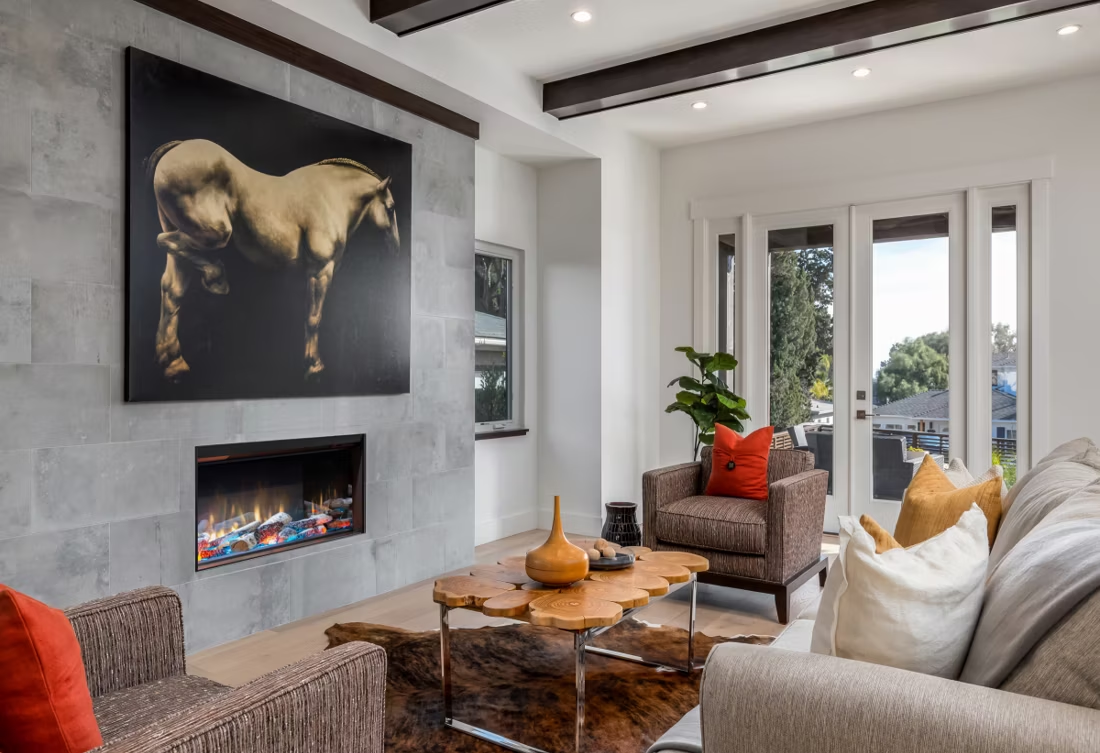
No—that's its superpower. An electric fireplace needs a wall and an outlet, period. No vent pipe, no gas line, no clearances to design around, which is why it works in bedrooms, offices, apartments, and walls where venting a gas or wood unit would be impractical or impossible. Installation is typically the simplest and least expensive of any fireplace type.
Nearby Dealers
Hearth shops serving Houston and the surrounding area. Every listing shows whether it is a WhyFire partner, a dealer we have verified as authorized for the brands we recommend, or a local business carrying hearth products. No manufacturer pays for placement. How we verify dealers →
Quality Appliances & Fireplace Center Ltd
Starland Supply
Dado Construction
Electric Service in Houston
An electric fireplace's heater draws about 1,500 watts—pennies per hour at local rates.
Bc Hydro
FortisBC (Electric)
Get your free Project Guide & Parts List for a Houston electric fireplace project.
Tell me about your home and whether you're on BC Hydro or FortisBC electric, and I'll match you with a trusted local dealer and send a free Project Guide & Parts List with the exact unit and parts your project needs.
Find Your Fireplace →