
Every fuel, every town in Bulkley-Nechako.
Wood, gas, pellet, and electric fireplace resources across the whole region—from the Bulkley Valley around Smithers to the Nechako Plateau towns of Vanderhoof, Burns Lake, and Fort St. James. Pick a fuel and get matched with a local dealer who actually installs it here.
Every Project Starts From One of These Five Situations
Long interior winters near -10.9°C, valley inversions, and a region built on wood heat.
The Regional District of Bulkley-Nechako stretches from the Bulkley Valley around Smithers west to Houston and Telkwa, east across the Nechako Plateau through Vanderhoof, Fraser Lake, Burns Lake, and Fort St. James, and north to Granisle on Babine Lake. Winters here average a low near -10.9°C, placing the region in climate zone 7C—a season of steady cold roughly comparable to what Prince George sees just over the mountains to the east, though the valley bottoms here often run colder still on clear, calm nights. Douglas fir, paper birch, lodgepole pine, and western larch are the wood species most households burn, much of it cut under permits through FrontCounter BC and the BC Ministry of Forests on the crown land that surrounds nearly every community in the region.
What shapes hearth choices here is valley geometry: cold air settles into the Bulkley and Nechako bottoms overnight, trapping smoke and triggering the winter inversions and advisories that several regional districts, including this one, manage with wood-stove exchange programs and a hard requirement for CSA or EPA-certified appliances. Natural gas service reaches many of the larger communities, which is why gas fireplaces and inserts are a genuine mainstream option in towns like Smithers and Vanderhoof, not just a backup to wood. Pellet stoves running Pinnacle Premium or Princeton Fuel Pellets have a real following too, especially in homes without easy road access to crown-land firewood. This hub rolls up hearth retailers, service technicians, and fuel suppliers across the whole region—pick your fuel below for local dealers, install costs, and the unit that actually fits your address and elevation.
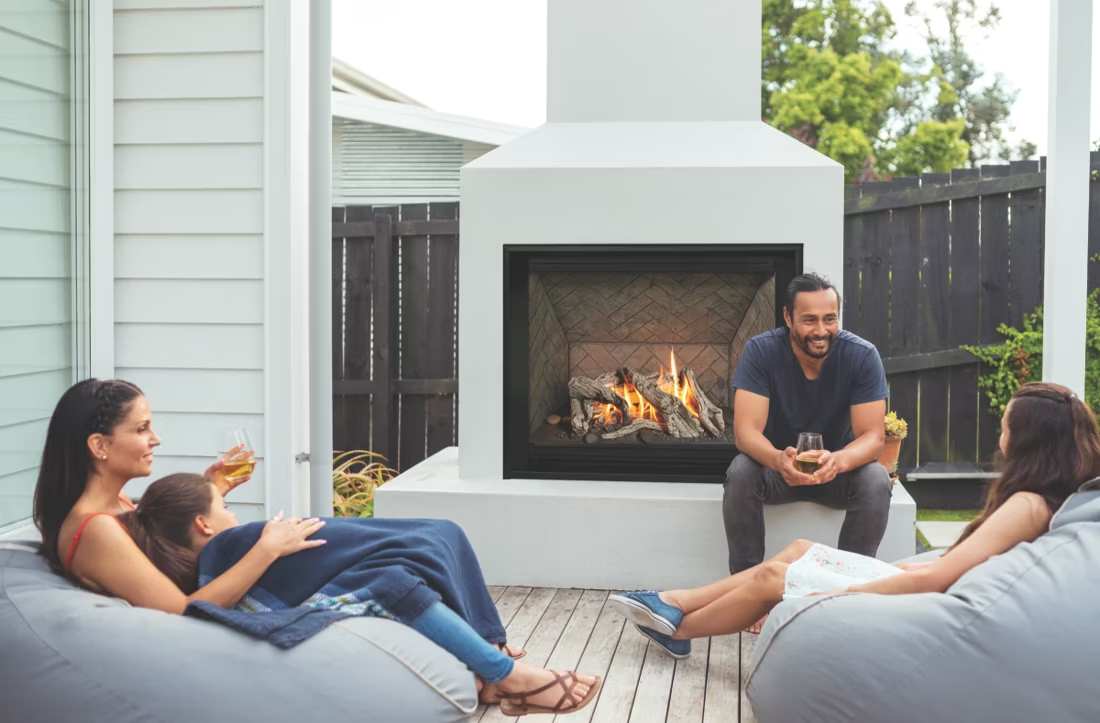
Four fuels. One honest answer for Regional District of Bulkley-Nechako.
Wood
69 models available near Regional District of Bulkley-Nechako.
Find your wood stove →Gas
104 models available near Regional District of Bulkley-Nechako.
Find your gas fireplace →Pellet
See what's available near Regional District of Bulkley-Nechako.
Find your pellet stove →Electric
See what's available near Regional District of Bulkley-Nechako.
Find your electric fireplace →Three steps. No salesperson until you're ready.
Tell us about your project
Your postal code, your situation, and the fuel you're leaning toward—or let the answers point you to one.
See what's actually available
The brands dealers within 100 miles genuinely carry—real options, never a catalog mirage.
Get your dealer & Project Guide
A trusted local dealer, plus the free Project Guide & Parts List that names every component of the job.
Frequently Asked Questions
Which fireplace fuel makes the most sense in Bulkley-Nechako?
All four fuels see genuine, standard use here, which isn't true everywhere in interior BC. Wood remains the backbone in rural areas around Burns Lake, Fraser Lake, and Fort St. James—Douglas fir, paper birch, lodgepole pine, and western larch are all common species, and FrontCounter BC issues the crown-land cutting permits that keep firewood affordable. Where natural gas service reaches, particularly in Smithers and Vanderhoof, gas fireplaces and inserts are a mainstream, low-maintenance choice for a household that doesn't want to manage a woodpile through a winter averaging -10.9°C. Pellet stoves running Pinnacle Premium or Princeton Fuel Pellets suit homes that want wood-stove ambiance with less daily tending, and they're a common upgrade path for households in wood-stove exchange programs replacing an older, uncertified unit. Electric fireplaces are supplemental rather than primary heat almost everywhere in the region, but they work well in a bedroom, basement, or a home already heated by wood or gas.
Do I need a permit to install a wood stove in Bulkley-Nechako?
Yes. Installations fall under the municipal building department in incorporated communities like Smithers, Burns Lake, and Vanderhoof, and the CSA B365 installation code governs clearances, venting, and setup no matter where in the region you live. New or replacement wood stoves need to be CSA or EPA-certified—this gets enforced closely here because of the winter inversions that settle into valley bottoms and concentrate smoke on still nights. Most insurance companies will also ask for a WETT inspection before they'll cover a wood-burning appliance, so it's worth booking one even if your municipality doesn't formally require it. Gas installations need a licensed gas fitter and a separate gas permit; pellet stoves are permitted similarly to wood but without the same insurance scrutiny. A local dealer helping with your project typically manages this paperwork as part of the job.
What are the winter inversions and smoke advisories I keep hearing about?
The Bulkley and Nechako valleys both trap cold, dense air on calm winter nights, and that same stillness holds wood smoke close to the ground instead of letting it disperse. When conditions get bad enough, regional air quality officials issue smoke advisories, and several regional districts, Bulkley-Nechako among them, run wood-stove exchange programs that help homeowners trade an old, uncertified stove for a CSA or EPA-certified replacement that burns far cleaner. That's one of the main reasons a modern certified stove or insert makes sense here even if you're replacing a unit that still technically works—it burns less wood for the same heat and puts out a fraction of the smoke during exactly the still, cold nights when inversions are worst.
Can I find one retailer that carries more than one fuel type?
Most retailers serving Bulkley-Nechako carry two or three fuel types rather than specializing narrowly, which fits how households here actually heat—a lot of homes run wood or pellet as primary heat with a gas fireplace or electric unit somewhere else in the house. A multi-fuel dealer lets you compare a working wood stove, gas insert, and pellet unit side by side and talk through what actually fits your address, whether you're on the natural gas network in Smithers or Vanderhoof or relying on propane and crown-land firewood further out. We match you with the dealer whose lineup and service radius genuinely covers your town, not whichever retailer is biggest.
How does service work if I live outside Smithers or Vanderhoof?
Installation crews and service techs are concentrated in Smithers and Vanderhoof but regularly travel out to Burns Lake, Houston, Telkwa, Fraser Lake, Fort St. James, and Granisle. Expect a modest trip charge for the farthest calls, and expect scheduling to tighten up fast once temperatures start dropping toward that -10.9°C average low—booking your annual chimney sweep, WETT inspection, or gas service in late summer, well before the first hard frost, keeps you ahead of the rush. For properties well off the highway corridor, ask your dealer about keeping spare gaskets or igniter parts on hand, since a winter storm can push a return service call back by several days.
What does a fireplace installation typically cost in Bulkley-Nechako?
Costs depend on the fuel and how much venting or gas-line work the job needs (all figures in Canadian dollars). Wood stove or insert installs typically run $4,000-$9,000, more if new chimney work is required for a home without an existing flue. Gas fireplaces, inserts, and stoves generally run $4,000-$10,000 depending on whether you're extending a gas line or converting an existing wood-burning fireplace. Pellet stove or insert installs usually land around $4,500-$7,500. Electric fireplaces are the outlier—the unit itself often runs $300-$3,000, with $400-$1,200 in labour for anything beyond a simple plug-in placement. The region and fuel pages above break these numbers down further with local retailer pricing.
How many BTUs do I need in a fireplace?
Wrong question—and the industry's favorite way to confuse you. More BTUs isn't better if the fireplace cooks you out of the room you spent thousands to enjoy. Think in terms you can verify: how many square feet the unit heats, whether it's primary or backup heat, and whether you want it running overnight. Those three answers size a fireplace correctly every time.
Will we actually use a fireplace once we have one?
In my own home, the room with the fireplace has never been the same—it became the social hub. Game nights, holidays, date nights after the kids are down: the fire is where the house gathers. There's a reason people in this industry joke that we're really in the romance and entertainment business. You won't wonder whether you'll use it; you'll wonder how the room worked before.
What does it take to replace an existing fireplace?
Fireplaces are like icebergs—bigger behind the wall than in front of it. Replacement means removing the surrounding tile or stone (the finish material laps onto the fireplace face), pulling the old unit, setting the new one in the same enclosure, and re-finishing the wall. A hearth professional can determine what's behind your wall without demolition during an in-home preview.
I know I want a fireplace—where do I actually start?
Do two things today: snap a photo of the wall or fireplace you want to transform, and take a tape measure to the space—width, height, depth. Those two artifacts answer most of a hearth professional's first questions. Then settle fuel (wood, gas, pellet, or electric) and set a realistic budget: $3,900–$5,500 covers fireplace, vent, and basic install for most homes.
Stove and Fireplace Dealers in Regional District of Bulkley-Nechako
Listings include WhyFire partner dealers, dealers we have verified as authorized for the brands we recommend, and established local businesses that carry hearth products. Every listing shows which one it is. The ones marked Preferred run on WhyFire's software, so they can show you real pricing and book your appointment right here. No manufacturer pays for placement. How we verify dealers →
Starland Supply
Quality Appliances & Fireplace Center Ltd
Dado Construction
Get matched with a local Bulkley-Nechako dealer.
Pick your fuel below and we'll put together a free Project Guide & Parts List—the right unit, the vent kit it needs, and the local dealer we recommend for your project.
Find Your Fireplace →