
Clean, automated heat for a ferry-served coast.
Halfmoon Bay's winters are mild by Canadian standards, with lows averaging around 3.6°C, but Pacific storms still knock out power along this stretch of the Sunshine Coast. I'll match you with a trusted local dealer who knows the venting, the permits, and what a pellet appliance needs to hold up here.
Every Project Starts From One of These Five Situations
Mild winters, real demand for steady backup heat.
At just 21 metres of elevation on the exposed side of the Sunshine Coast, Halfmoon Bay sits in a mild, marine-influenced climate zone 4C where nights rarely drop far below freezing. That's a much gentler winter than interior BC towns or prairie communities like Prince George or Winnipeg see, but the damp Pacific season here still runs long, and a lot of local homes want a heat source that keeps working through the wind-and-rain storms that regularly take down power lines along the Sunshine Coast Highway corridor.
Pellet appliances suit that need well: automated feed, thermostatic control, and a clean, consistent burn without the splitting and stacking that wood demands, even though Douglas fir, paper birch, lodgepole pine, and western larch are all abundant and free to cut under a FrontCounter BC permit. The inversions and smoke advisories that shape stove rules in BC's interior valleys are less of a factor on this open, marine-cooled stretch of coast, but the province's push toward CSA-certified appliances still applies, and most Sunshine Coast insurers want documentation on file regardless of which solid-fuel unit you install. FortisBC (Gas) and Pacific Northern Gas both run lines through parts of the corridor, but plenty of Halfmoon Bay properties sit off the mapped gas grid, which is one more reason bagged pellet fuel from Pinnacle Premium or Princeton Fuel Pellets has a steady local following.
Three steps. No salesperson until you're ready.
Tell us about your project
Your postal code, your situation, and the fuel you're leaning toward—or let the answers point you to one.
See what's actually available
The brands dealers within 100 miles genuinely carry—real options, never a catalog mirage.
Get your dealer & Project Guide
A trusted local dealer, plus the free Project Guide & Parts List that names every component of the job.
Frequently Asked Questions
How much does a pellet stove installation cost in Halfmoon Bay?
Most installs run $6,000 to $10,000 CAD. A pellet insert going into an existing masonry firebox or chimney chase, which some of the older Halfmoon Bay waterfront cabins still have, lands toward the low end. A freestanding pellet stove needing a new through-wall vent kit and hearth pad, more typical in newer builds without a chimney, runs closer to the top. Because appliances and parts generally arrive by truck and ferry from Lower Mainland suppliers, it's worth confirming lead times with your dealer before locking in an install date ahead of the fall.
Where do I buy pellets on the Sunshine Coast, and what should I budget?
Pinnacle Premium and Princeton Fuel Pellets are the two brands most commonly stocked by suppliers serving this stretch of the coast, typically running $400 to $575 CAD per tonne depending on availability and season. Because Halfmoon Bay is reached by the Langdale and Earls Cove ferry routes, a lot of local households buy a season's supply in early fall rather than reordering mid-winter, when ferry-dependent freight can add delays right when a cold snap hits. A typical Halfmoon Bay home burns somewhere in the range of two to three tonnes over a full heating season, depending on size and how well insulated the place is.
Do I need a permit to install a pellet stove in Halfmoon Bay?
Yes. Building permits for solid-fuel appliances here go through the Sunshine Coast Regional District building department, and installs need to meet the CSA B365 installation code. Even though pellet units burn cleaner and simpler than a wood stove, many local insurers still ask for a WETT inspection or equivalent documentation before they'll write a policy that covers a solid-fuel appliance, so hang onto your dealer's compliance paperwork. Most local dealers pull the permit and handle that documentation as part of the job.
Pellet vs. wood stove—which makes more sense for a Sunshine Coast home?
Wood has real appeal here: FrontCounter BC and the BC Ministry of Forests issue cutting permits at no cost year-round, aside from summer fire restrictions, and Douglas fir, paper birch, lodgepole pine, and western larch are all common on Sunshine Coast lots. But splitting, stacking, and tending a wood stove is a genuine chore, and pellet stoves trade that labour for automated feed and thermostat control, plus far less ash and creosote to manage. A lot of Halfmoon Bay retirees and part-time cabin owners choose pellet specifically because it heats reliably without daily upkeep, while full-time residents with easy access to a woodlot sometimes stick with wood for the fuel cost alone.
What happens to my pellet stove during a power outage?
It stops working. Pellet stoves rely on electricity to run the auger, igniter, and blower, and the overhead lines feeding Halfmoon Bay and the rest of the Sunshine Coast corridor are prone to outages during winter windstorms. Most dealers here can pair a pellet unit with a battery backup rated for eight to twelve hours, which covers a typical short outage, or you can run a small generator during longer ones. Some households keep a wood stove or fireplace as a true no-power backup and use pellet for day-to-day convenience heat.
Is natural gas or pellet the better fit for my Halfmoon Bay property?
FortisBC (Gas) and Pacific Northern Gas both extend service through parts of the Sunshine Coast, but a lot of rural and forested lots around Halfmoon Bay sit outside the mapped distribution line and rely on propane tanks for gas appliances instead. Pellet sidesteps that question entirely since it only needs bagged fuel delivered or picked up locally, no gas line or propane contract required, and at $400 to $575 CAD per tonne it's competitive with propane heating costs for many area homes. Worth checking FortisBC's service coverage for your specific address before deciding between the two.
What size pellet stove do I need for Halfmoon Bay's climate?
With winter lows averaging around 3.6°C rather than the deep freezes that towns like Prince George or Winnipeg see, most Halfmoon Bay homes don't need oversized capacity. A small to mid-size pellet stove or insert rated for roughly 1,200 to 1,800 square feet handles most single-family homes here as primary or supplemental heat. Larger open-concept waterfront homes with high ceilings and a lot of glass facing the water lose heat faster through those windows and often do better with a unit at the top of that range, or a mid-size insert your dealer sizes against your actual floor plan rather than square footage alone.
How much maintenance does a pellet stove need in a coastal climate?
Weekly ash removal and a quarterly clean of the hopper and auger are standard, with a full professional service, including a venting and gasket check, once a year, ideally in September before the wet season sets in. The one wrinkle specific to a marine climate like Halfmoon Bay's: damp air can degrade bagged pellets if they're stored in an open carport or an unheated shed with poor ventilation. Keep Pinnacle Premium or Princeton Fuel Pellets bags off the ground and in a dry, sealed space, since pellets that absorb moisture swell, crumble, and can jam an auger.
Are there rebates for a pellet stove upgrade on the Sunshine Coast?
Programs shift from year to year, but CleanBC and utility-run efficiency incentives have periodically offered rebates for replacing older, less efficient wood or oil appliances with a cleaner-burning pellet unit, and pellet inserts often qualify. Because funding cycles and eligibility change, the most reliable way to find out what's active right now is through a local dealer who installs on the Sunshine Coast regularly and keeps current on which rebates apply to your specific upgrade.
Why do fireplace quotes vary so much?
Because a fireplace is an iceberg—there's more behind the wall than in front of it. A low quote often covers only the unit; the full scope includes vent pipe, gas line or electrical, framing, and the tile or stone that has to come off and go back on. Make every bidder price the whole job. If a dealer can't speak to the full scope with confidence, that's your signal to keep looking.
Is it worth replacing an old fireplace that still sort of works?
Ask three questions: Is it ugly? Is it drafty? Does it actually work? Most old fireplaces fail at least two. Beyond looks, an old unit leaks air around the damper year-round and—if it's gas with a standing pilot—quietly burns a couple hundred dollars a year. A modern replacement seals the wall, heats the room, and changes how the whole space gets used.
What's the difference between an insert and a zero-clearance fireplace?
An insert is a fireplace that slides into a pre-existing wood-burning fireplace—if you don't have one, there's nothing to insert it into. A zero-clearance fireplace is built into a framed wall, which makes it the answer for remodels and new construction. Simple test: existing masonry fireplace means insert; blank or framed wall means zero-clearance.
How often does a pellet stove need cleaning?
A clean pellet stove is a happy pellet stove. Plan on cleaning the burn pot about once a week when you're burning regularly—ash and clinkers gum up the air holes just like a pellet barbecue. Most pellet stove problems trace back to skipped cleaning that nobody explained up front. Some designs make it easy with a trapdoor burn pot: pull a lever and the gunk drops into the ash pan.
Nearby Dealers
Hearth shops serving Halfmoon Bay and the surrounding area. Every listing shows whether it is a WhyFire partner, a dealer we have verified as authorized for the brands we recommend, or a local business carrying hearth products. No manufacturer pays for placement. How we verify dealers →
Coastal Wood And Gas Guy Heating And Installations Ltd
Gibson’s Building Supplies
Delco Fireplaces (Vancouver Island) Ltd
Pellet Brands Stocked Around Halfmoon Bay
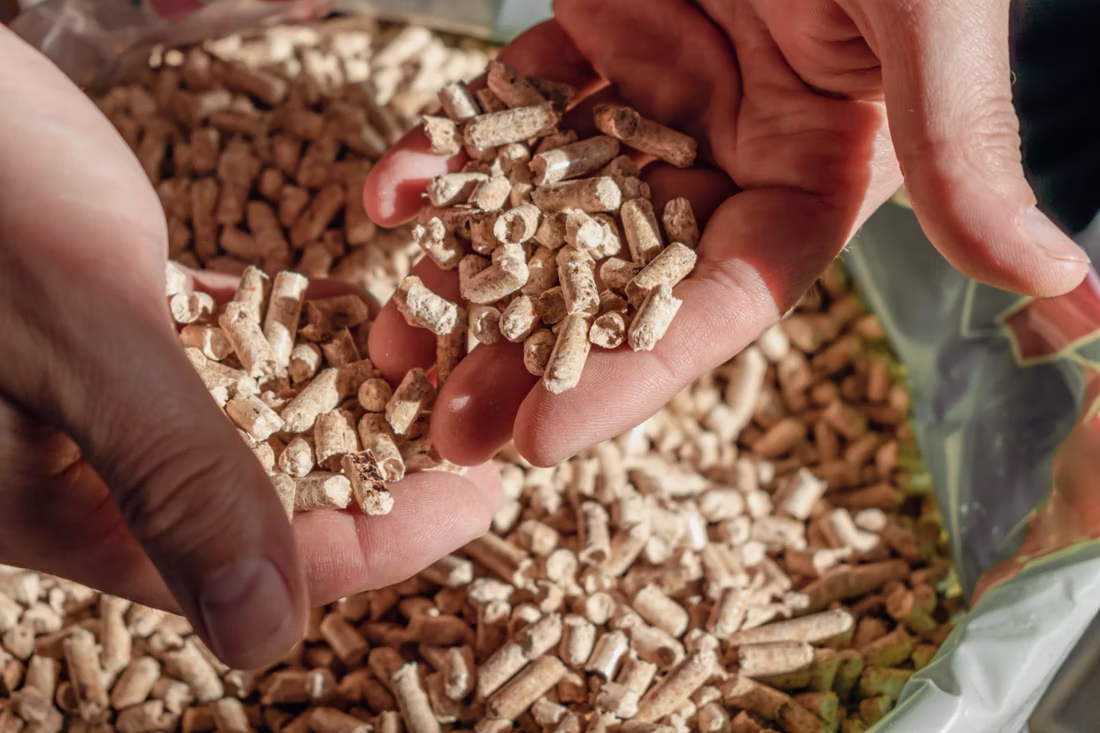
Typical price runs $400-$575 per ton—buy early-season for the best rates. Manufacturers will point you to the nearest stocking dealer.
Pinnacle Premium
Princeton Fuel Pellets
Get your free Project Guide & Parts List for a Halfmoon Bay pellet project.
Tell me about your home and your address on the Sunshine Coast, and I'll match you with a trusted local dealer who can advise on sizing, source the parts, and help coordinate the work, plus send a free Project Guide & Parts List with the exact vent kit and parts your project needs.
Find Your Fireplace →