
Pellet heat built for a valley that holds winter smoke close to the ground.
Grindrod sits at 355 metres in the North Okanagan, where winter inversions can trap wood smoke against the valley floor for days. I'll match you with a trusted local dealer who can size a pellet stove or insert that heats cleanly through the cold months, then send a free plan for the parts and venting your project needs.
Every Project Starts From One of These Five Situations
Clean combustion for a smoke-conscious valley.
Grindrod isn't a brutally cold town by BC Interior standards—winter lows average around -6.6°C, milder than the deep cold of Prince George further north. What defines the local heating conversation is the valley itself: cold air pools along the Shuswap River bottomlands here, and on still winter days that pooled air traps wood smoke instead of letting it disperse. The Regional District of North Okanagan, like several Interior regional districts, has run wood-stove exchange programs and leans on CSA/EPA-certified appliance requirements specifically because of these inversion episodes.
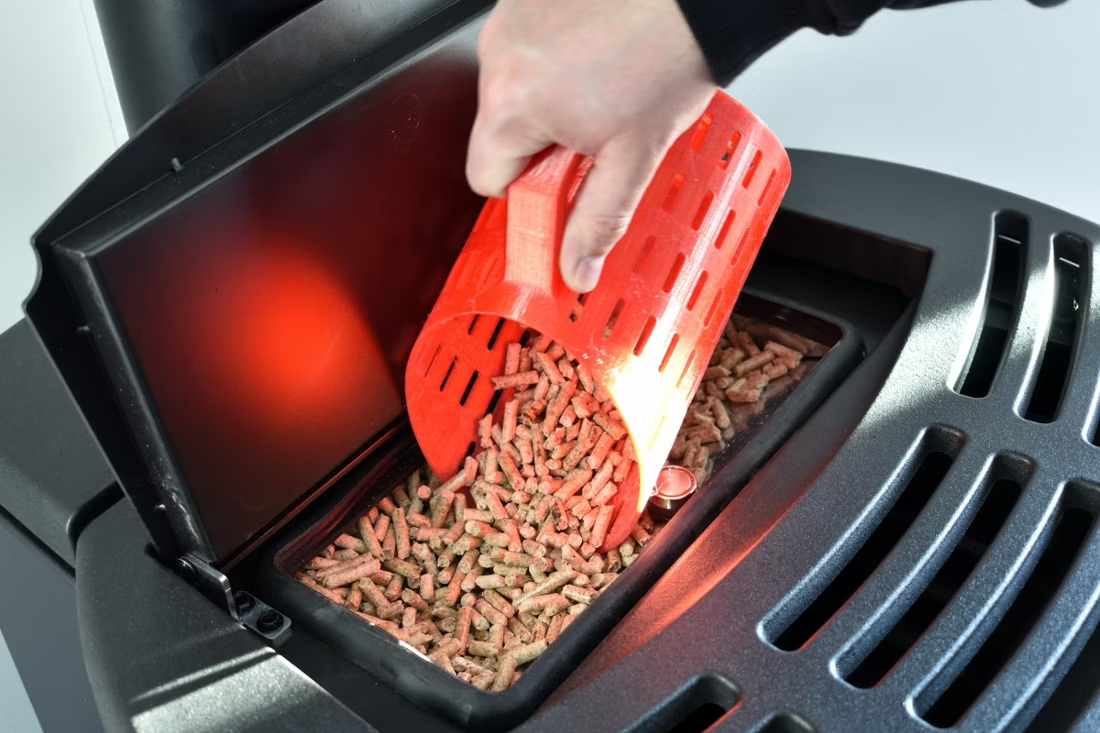
Pellet appliances fit that reality well. They burn manufactured pellets—locally available brands like Pinnacle Premium and Princeton Fuel Pellets run roughly $400-$575 CAD a tonne—at combustion efficiencies and particulate levels that stay well under what a conventional wood stove burning Douglas fir or lodgepole pine puts out on a bad inversion day. FortisBC (Gas) and Pacific Northern Gas both serve natural gas into parts of the North Okanagan, so gas is a real option for some Grindrod addresses, but plenty of rural properties here sit off the gas main entirely, which is where a pellet stove or insert becomes the practical clean-burning choice over open wood heat.
Three steps. No salesperson until you're ready.
Tell us about your project
Your postal code, your situation, and the fuel you're leaning toward—or let the answers point you to one.
See what's actually available
The brands dealers within 100 miles genuinely carry—real options, never a catalog mirage.
Get your dealer & Project Guide
A trusted local dealer, plus the free Project Guide & Parts List that names every component of the job.
Frequently Asked Questions
How much does a pellet stove installation cost in Grindrod?
Most pellet stove and insert installations in Grindrod run $6,000 to $10,000 CAD, generally less than a wood system's $6,000-$12,000 range since pellet venting is smaller-diameter and simpler to run. An insert into an existing masonry firebox sits toward the lower end; a freestanding stove needing a new hearth pad and wall or roof penetration lands higher. The municipal building department handles the permit, and CSA B365 governs how the appliance and venting get installed.
Where do I buy pellets near Grindrod, and what do they cost?
Pinnacle Premium and Princeton Fuel Pellets are the two brands most North Okanagan dealers stock, typically $400 to $575 CAD a tonne depending on the season and how early you order. Buying a season's supply—usually 2 to 3 tonnes for a modest Grindrod home—before the first cold snap in October or November tends to beat late-winter prices, and it means you're not chasing pallets when everyone else in the valley has the same idea.
Do I need a permit to install a pellet stove in Grindrod?
Yes. Installations go through the municipal building department, and the appliance and its venting need to meet CSA B365. Most insurers in this part of BC also want a WETT inspection on file for solid-fuel appliances, pellet stoves included, before they'll issue or renew a homeowner's policy—it's worth booking that inspection as part of the install rather than scrambling for it later.
Pellet stove or wood stove—which makes more sense in Grindrod?
Wood is cheaper to run if you're already set up to process Douglas fir, paper birch, lodgepole pine, or western larch off your own or a neighbor's property, and FrontCounter BC issues cutting permits on Crown land for free, year-round outside of summer fire restrictions. But wood smoke is exactly what drives the North Okanagan's winter inversion advisories, and the regional district's wood-stove exchange program exists because of it. A pellet stove burns cleaner on those still, cold days, needs less daily tending, and doesn't require you to split and stack cords—the tradeoff is a fuel bill instead of free wood.
Pellet vs. gas—does it matter that FortisBC serves this area?
It depends on your address. FortisBC (Gas) and Pacific Northern Gas both run lines into parts of the North Okanagan, but Grindrod is small and rural enough that a meaningful share of properties sit off the main entirely, which makes gas a non-option regardless of preference. Where gas is available, it wins on convenience and, for millivolt models, on running through a power outage. Pellet stoves need continuous electricity for the auger and combustion blower, so if your property is prone to winter outages during Okanagan storms, that's worth weighing before you choose.
What size pellet stove do I need for a Grindrod home?
Grindrod's winter lows average around -6.6°C—cold, but nowhere near what Prince George or Fort McMurray see—so most homes here are well served by a small to medium pellet stove rated for 1,000 to 2,000 square feet rather than a maximum-output unit. Older, less-insulated farmhouses along the valley floor sometimes need the larger end of that range to hold heat through a damp inversion week, but a local dealer sizing against your actual insulation and layout, not just square footage, will get it right.
What does pellet stove venting look like for a Grindrod install?
Pellet appliances vent through a smaller-diameter PL vent pipe rather than a full masonry chimney, which is one reason install costs run lower than wood—most installs terminate through an exterior wall rather than the roof. The venting still has to meet CSA B365 clearances and manufacturer specs, and a WETT inspection afterward is standard practice for insurance purposes on solid-fuel appliances in this part of BC, pellet units included.
Is there a local dealer in Grindrod, or do I need to go to Vernon or Salmon Arm?
Grindrod itself is small—under 1,600 people—so most of the hearth dealers who actually service this stretch of the North Okanagan are based in Salmon Arm, Vernon, or Enderby and drive out for the work. That's normal for a town this size and doesn't mean you get worse service; it means matching with the right dealer matters more, since they need to know Grindrod's valley conditions and be willing to make the trip for follow-up service, not just the initial sale.
Are there rebates for switching to a pellet stove in Grindrod?
The Regional District of North Okanagan has run wood-stove exchange programs that periodically include pellet upgrades alongside wood-to-wood swaps, and CleanBC efficiency incentives through FortisBC have covered qualifying heating upgrades in past program years. Both are worth checking before you buy, since funding cycles and eligible models change year to year—a local dealer who installs in this region day to day usually knows what's currently open and what paperwork it needs.
Why do fireplace quotes vary so much?
Because a fireplace is an iceberg—there's more behind the wall than in front of it. A low quote often covers only the unit; the full scope includes vent pipe, gas line or electrical, framing, and the tile or stone that has to come off and go back on. Make every bidder price the whole job. If a dealer can't speak to the full scope with confidence, that's your signal to keep looking.
Is it worth replacing an old fireplace that still sort of works?
Ask three questions: Is it ugly? Is it drafty? Does it actually work? Most old fireplaces fail at least two. Beyond looks, an old unit leaks air around the damper year-round and—if it's gas with a standing pilot—quietly burns a couple hundred dollars a year. A modern replacement seals the wall, heats the room, and changes how the whole space gets used.
Do I need a permit to install a fireplace?
In most jurisdictions, yes—fireplace and stove installations involve venting, clearances, and often gas or electrical work that gets permitted and inspected. That's a feature, not a hassle: the inspection protects your family and your homeowner's insurance. A professional installer pulls the permit, installs to code, and stands behind the inspection. If someone suggests skipping it, keep looking.
What do I measure to size a fireplace insert?
Four numbers tell you what fits: the front width, the front height, the back width, and the overall depth of your existing fireplace opening. Grab a tape measure, jot those down, and snap a photo of the wall—those two things do more to move your project forward than anything else you can do today.
Nearby Dealers
Hearth shops serving Grindrod and the surrounding area. Every listing shows whether it is a WhyFire partner, a dealer we have verified as authorized for the brands we recommend, or a local business carrying hearth products. No manufacturer pays for placement. How we verify dealers →
Salmon Arm Proair
Applewood Heating & Air Conditioning
Greenridge Supply
Pellet Brands Stocked Around Grindrod
Typical price runs $400-$575 per ton—buy early-season for the best rates. Manufacturers will point you to the nearest stocking dealer.
Pinnacle Premium
Princeton Fuel Pellets
Get your free Project Guide & Parts List for a Grindrod pellet project.
Tell me about your home and whether you're on the FortisBC gas main or off it, and I'll match you with a trusted local dealer serving the North Okanagan and send a free Project Guide & Parts List—sized for the valley's inversion-prone winters, with the vent kit and parts specified.
Find Your Fireplace →