
Steady heat where winter lows average -24.6°C.
Fort Nelson sits in climate zone 7C, one of the coldest zones in the National Building Code, at 415 metres elevation along the Alaska Highway. I'll match you with a trusted local dealer who knows what pellet appliance venting and hopper capacity actually holds up through a Northern Rockies winter.
Every Project Starts From One of These Five Situations
Convenience built for a long, severe season.
Northern Rockies Regional Municipality sits in climate zone 7C, the coldest zone in Canada's National Building Code, and Fort Nelson's numbers back that up: winter lows average -24.6°C, with cold snaps routinely pushing well past -40°C along the Alaska Highway corridor. At 415 metres elevation, the heating season here runs from September through April, longer than in most of the province. That kind of stretch rewards an appliance that holds a steady, programmable burn without the daily splitting and stacking cordwood demands from Douglas fir, paper birch, lodgepole pine, or western larch.
Natural gas is available in Fort Nelson through FortisBC (Gas) and Pacific Northern Gas, and plenty of homes already heat with it, but pellet stoves and inserts remain a solid choice for supplemental heat or a wood-free primary source, especially in interior valleys where winter inversions bring smoke advisories that put pressure on open wood burning. Pellet fuel itself runs higher here than in southern BC, typically $400-$575 a tonne for brands like Pinnacle Premium or Princeton Fuel Pellets, since freight up the Alaska Highway adds to the price. The tradeoff worth knowing: a pellet stove's auger and blower need continuous power, so in a town where extreme cold can strain the BC Hydro grid, some households pair pellet heat with a battery backup or keep a wood stove as a fallback.
Three steps. No salesperson until you're ready.
Tell us about your project
Your postal code, your situation, and the fuel you're leaning toward—or let the answers point you to one.
See what's actually available
The brands dealers within 100 miles genuinely carry—real options, never a catalog mirage.
Get your dealer & Project Guide
A trusted local dealer, plus the free Project Guide & Parts List that names every component of the job.
Frequently Asked Questions
How much does a pellet stove installation cost in Fort Nelson?
Most pellet installs in Fort Nelson run $6,000 to $10,000 CAD. An insert dropping into an existing masonry firebox with a straightforward vent run sits toward the low end, while a freestanding stove needing a new through-wall or through-roof vent kit in a home without an existing chimney lands higher. Every install needs a permit through the municipal building department, and CSA B365 governs the installation regardless of which unit you choose.
What size pellet stove do I need for a Fort Nelson home?
With winter lows averaging -24.6°C and routine drops well below that, undersizing is the bigger risk. A unit rated for 1,000 to 1,500 square feet suits a well-insulated newer home or a supplemental setup, but most main living spaces here do better with a stove in the 1,800 to 2,400 square foot range so it can run a long, steady burn through the coldest stretches without constant hopper refills. A local dealer will size it against your actual insulation and ceiling height, not just the floor plan.
Do I need a permit or inspection for a pellet stove in Fort Nelson?
Yes. New installs go through the municipal building department and must meet CSA B365 installation code. Insurers commonly ask for a WETT inspection on solid-fuel appliances, including pellet stoves, before they'll issue or renew a homeowner's policy, so it's worth booking that inspection as part of the install rather than treating it as an afterthought.
Where do I buy pellet fuel in Fort Nelson, and how much should I stock up?
Pinnacle Premium and Princeton Fuel Pellets are the regional brands most local dealers carry, typically running $400 to $575 a tonne, higher than southern BC because of the freight distance up the Alaska Highway. Given the length of the heating season here, most households buy their season's supply in one or two deliveries before deep winter makes the roads harder to manage, rather than restocking bag by bag through January.
Pellet stove vs. wood stove—which makes more sense here?
Wood has an edge on raw fuel cost since FrontCounter BC issues free cutting permits year-round, with summer fire restrictions, for Douglas fir, paper birch, lodgepole pine, and western larch on nearby Crown land, and a wood stove keeps working without electricity. A pellet stove trades that self-sufficiency for push-button convenience and a cleaner burn, which matters on the smoke-advisory days that interior valleys see during winter inversions. Many households here use both, wood as the primary or backup source, pellet for the zones where daily convenience matters more than fuel cost.
What happens to my pellet stove during a power outage?
It stops. The auger feeding pellets into the firebox and the blower distributing heat both run on electricity, and Fort Nelson does see outages tied to extreme cold events straining the BC Hydro grid. Homeowners who rely on pellet as a primary heat source often add a small battery backup sized for the stove's draw, or keep a wood stove or fireplace elsewhere in the house as a cold-weather fallback.
Pellet vs. gas—which should I choose in Fort Nelson?
Gas, through FortisBC (Gas) or Pacific Northern Gas, gives you instant heat with no hopper to refill, and install costs run $6,000 to $15,000 CAD depending on line work and venting. Pellet installs typically run $6,000 to $10,000 and don't require gas service at all, which matters for homes off the FortisBC or Pacific Northern Gas footprint. If your street already has gas, the choice usually comes down to preference; if it doesn't, pellet is often the more practical clean-burning option over hauling and splitting cordwood.
How much maintenance does a pellet stove need through a Fort Nelson winter?
Plan on emptying the ash pan every few days during steady winter use and a full professional service once a year, ideally in late summer before the first cold snap. Given the length of the heating season here, often running from September into April, a pellet stove here logs more burn hours than one in most of the province, so keeping the hopper, auger, and venting clean matters more, not less.
Are pellet stoves affected by winter smoke advisories in this area?
Less so than open wood burning. Interior valleys around Fort Nelson see winter inversions and smoke advisories, and several regional districts run wood-stove exchange programs that push older uncertified wood appliances out of service. A CSA/EPA-certified pellet stove burns cleaner and typically isn't the target of those restrictions, which is part of why pellet appliances have gained ground here even in a community where gas service is available.
Why do fireplace quotes vary so much?
Because a fireplace is an iceberg—there's more behind the wall than in front of it. A low quote often covers only the unit; the full scope includes vent pipe, gas line or electrical, framing, and the tile or stone that has to come off and go back on. Make every bidder price the whole job. If a dealer can't speak to the full scope with confidence, that's your signal to keep looking.
Is it worth replacing an old fireplace that still sort of works?
Ask three questions: Is it ugly? Is it drafty? Does it actually work? Most old fireplaces fail at least two. Beyond looks, an old unit leaks air around the damper year-round and—if it's gas with a standing pilot—quietly burns a couple hundred dollars a year. A modern replacement seals the wall, heats the room, and changes how the whole space gets used.
Do I need a permit to install a fireplace?
In most jurisdictions, yes—fireplace and stove installations involve venting, clearances, and often gas or electrical work that gets permitted and inspected. That's a feature, not a hassle: the inspection protects your family and your homeowner's insurance. A professional installer pulls the permit, installs to code, and stands behind the inspection. If someone suggests skipping it, keep looking.
What do I measure to size a fireplace insert?
Four numbers tell you what fits: the front width, the front height, the back width, and the overall depth of your existing fireplace opening. Grab a tape measure, jot those down, and snap a photo of the wall—those two things do more to move your project forward than anything else you can do today.
Nearby Dealers
Hearth shops serving Fort Nelson and the surrounding area. Every listing shows whether it is a WhyFire partner, a dealer we have verified as authorized for the brands we recommend, or a local business carrying hearth products. No manufacturer pays for placement. How we verify dealers →
Trapper Den's Wildlife Emporium
Pellet Brands Stocked Around Fort Nelson
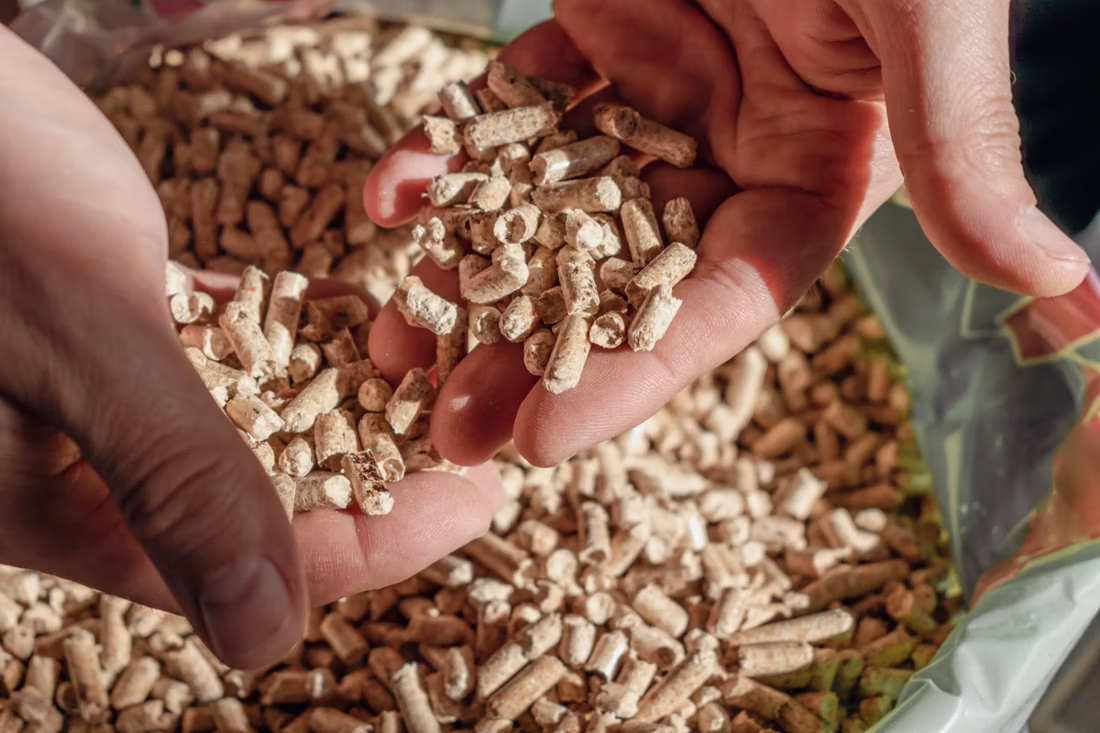
Typical price runs $400-$575 per ton—buy early-season for the best rates. Manufacturers will point you to the nearest stocking dealer.
Pinnacle Premium
Princeton Fuel Pellets
Get your free Project Guide & Parts List for a Fort Nelson pellet project.
Tell me about your home and I'll match you with a trusted local dealer and send a free Project Guide & Parts List—sized for climate zone 7C winters, with the vent kit and hopper capacity specified for your space.
Find Your Fireplace →